Home » The Chuckwagon: An Enduring Legacy
Bill Museum Adventure Ron

The Chuckwagon: An Enduring Legacy

Origins of the Chuckwagon

The chuckwagon, invented in 1866 by rancher and “Father of the Texas Panhandle” Mr. Charles Goodnight, became the central gathering point for cowboys on long cattle drives across the American West. Before the chuckwagon, cowboys ate around pack mules or makeshift setups. Typically, they only ate what they could carry in saddlebags or on their person, such as biscuits and jerky. Mr. Goodnight, a Texas rancher, realized the necessity for a rolling kitchen and in 1866—after enduring lengthy cattle drives in the post-Civil War cattle boom—he purchased an old Army surplus Studebaker wagon, outfitting it with compartments and shelves designed for storing food, tools, firewood, water, and cookware (among other things). He reinforced the wagon for rough terrain, thereby giving cattlemen and cowboys their first true “chuck wagon,” named for Mr. Goodnight himself. The name also neatly aligns with the cowboy word “chuck,” meaning food, reflecting the wagon’s purpose as a mobile kitchen.

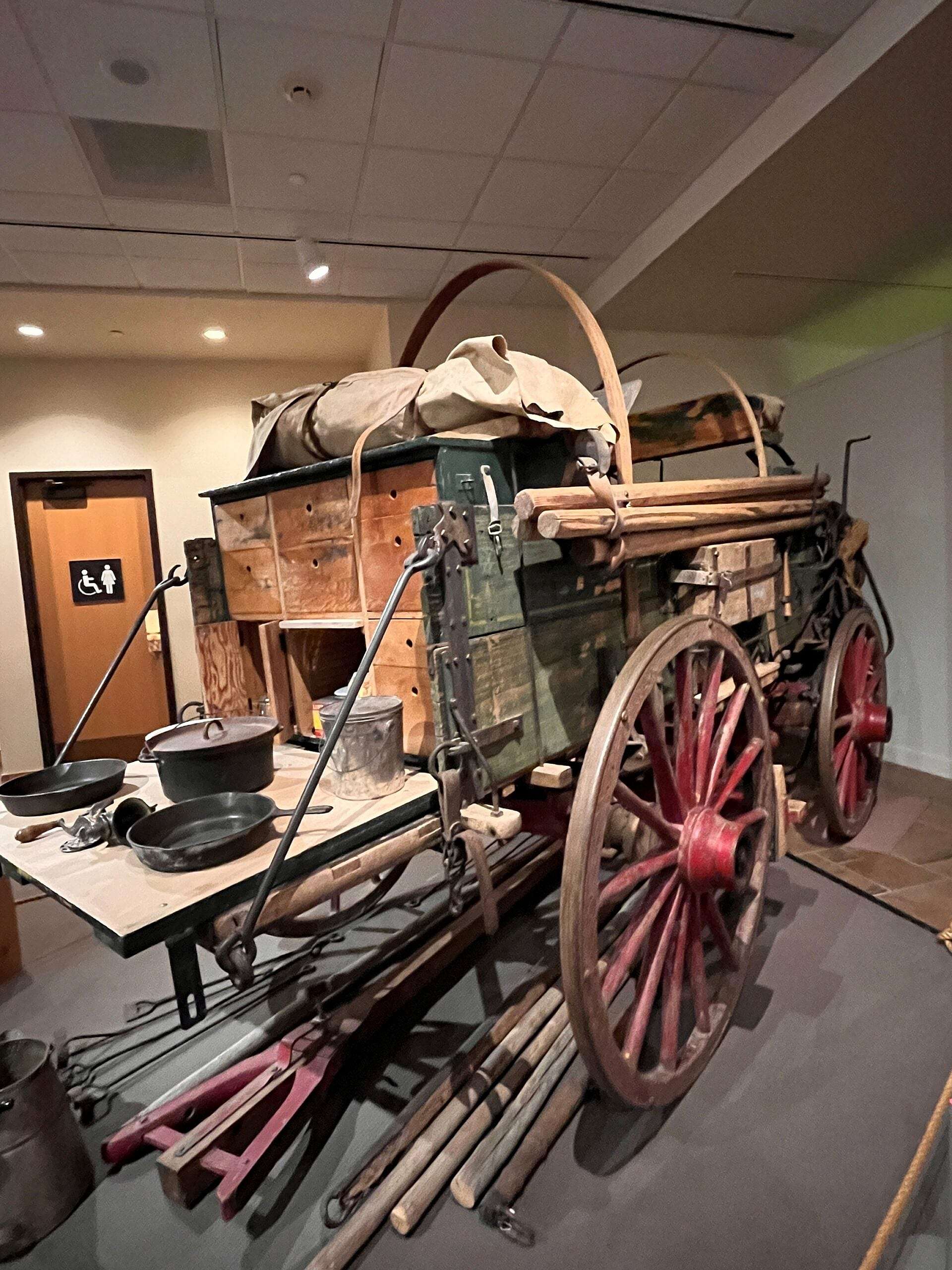
Mess wagon with green painted box and red painted undercarriage and wheels. Running gear, 19th century. Box manufactured by Columbus. Used as a mess wagon on the Muddy Creek (or Mill Iron) Ranch near Hardin, Montana until 1967. 1.69.2046.1; McCracken Research Library
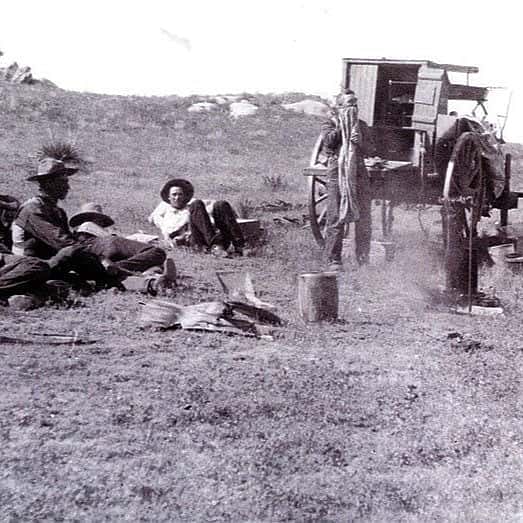
Bobby Burns puts coffee grounds in the coffee pot held over the fire by a branding iron. MS 3 Charles Belden Collection, McCracken Research Library. PN.67.97b

The Chuckwagon on the Trail

Soon this unique mobile pantry became a staple on open range cattle drives across the West. Cowboys who spent significant time on the trail relied upon it for more than just good grub and Arbuckles coffee; it became a universal commissary that they trusted for essentials from sewing kits and hatchets to wagon grease and water barrels. Considering that a cattle drive could take upwards of three months, the chuckwagon became the life-giving hub of activity among cowboys, with the cook playing an integral role in supporting the drive. The National Ranching Heritage Center at Texas Tech University notes that “cooks prepared three meals a day—always with hot, strong coffee—and also drove the chuckwagon, pitched camp, and served as banker, barber, doctor, dentist, referee, and more. Each night, the cook’s final task was to turn the wagon’s tongue north to signal the direction the crew would travel in the morning.” The chuckwagon served multiple purposes for cowboys on the open range: place for meals, conversation, and rest after a long day on the range.

N.C. Wyeth and the Chuckwagon in Art

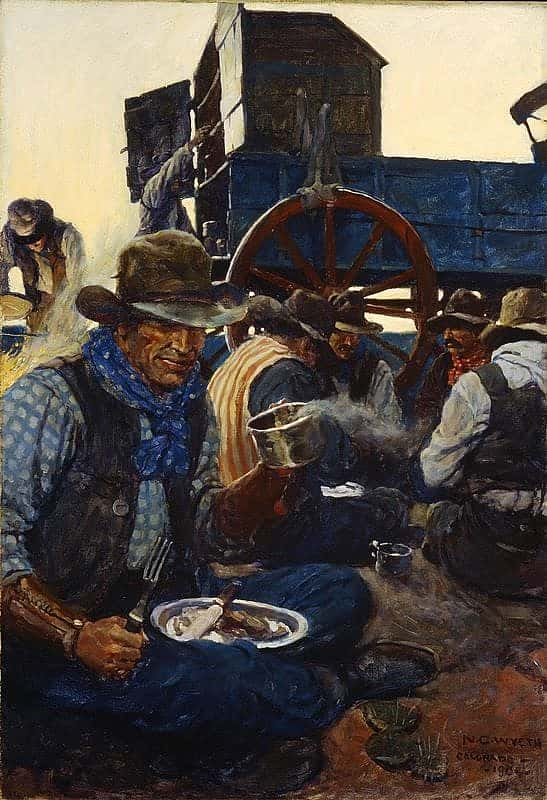
The Center of the West maintains strong connections to chuckwagon history, beginning with Western artwork. As a student of Howard Pyle’s renowned Brandywine School for artists, N.C. Wyeth desired to better understand life out west so that he could create accurate depictions of it in his paintings. Former Whitney Western Art Museum Curator Sarah Boehme, Ph.D. writes, “Wyeth knew he needed to see the West himself, to gain the personal knowledge that would create ideas for his art.” In October 1904, he set out for the Gil Ranch near Denver, Colorado where he spent a few weeks as a cowpoke, participating fully in fall round-up activities. Here he experienced the rugged life that only the West could provide—roping, riding, and enjoying meals from the back of a chuckwagon. This later inspired one of his famous paintings, The Lee of the Grubwagon, now hanging in the Buffalo Bill Museum at the Center of the West, a gift of John M. Schiff. In his account of life at Gil Ranch—A Day with the Round-up: An Impression—Wyeth recalls returning to camp after a long day of driving cattle: “We grouped about the [chuck] wagon, sitting on the tongues, on unrolled beds, anywhere, perfectly contented, watching the cook prepare the evening meal. The odor of coffee scented the air, and I was as hungry and tired as I never was before.” Both Wyeth’s painting and his words enrich the combined sense of historical reality and mythos surrounding the chuckwagon and its cultural impact on the American West.

N.C. Wyeth: The Lee of the Grub-Wagon
N.C. Wyeth: The Lee of the Grubwagon, 1904. 46.83 Whitney Western Art Museum

The Muddy Creek Ranch Wagon

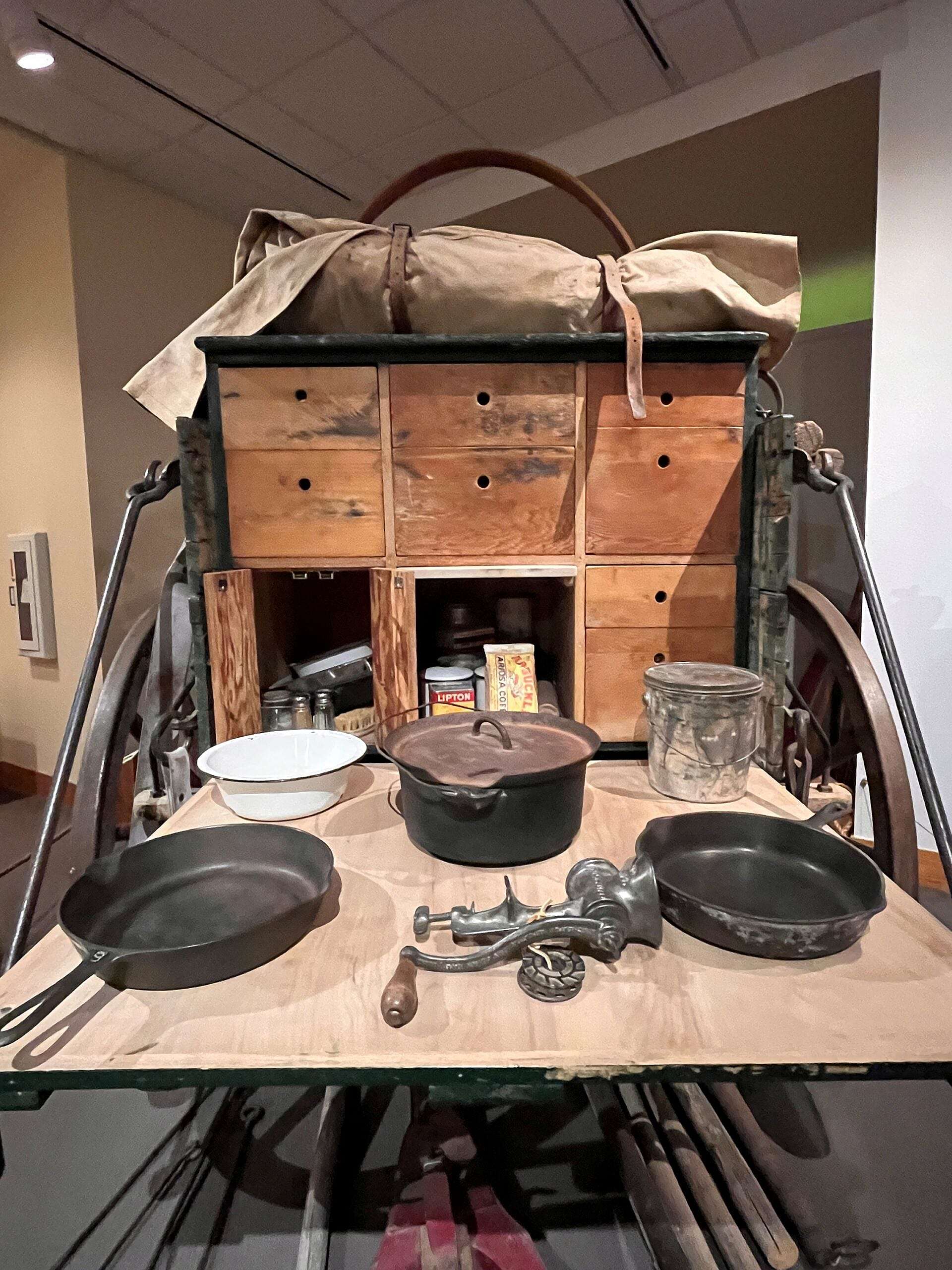
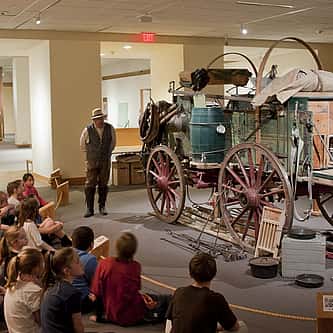
The Buffalo Bill Museum houses an historic chuckwagon with a storied past. Used on the Muddy Creek Ranch near Hardin, MT until 1967 and outfitted with nineteenth century running gear, this Columbus wagon—likely sold by International Harvester at the turn of the century—has an elevated seat and two arched hoops for the canvas cloth covering (for shade and protection). A generous bequest of the Harvey W. Willcutt Estate, this historic gem features a chuck box, storage chest, and a tool box that includes original cooking utensils and accessories. The rear gate comes equipped for a cook stove. Visitors can take a step back in time with this iconic and well-preserved frontier relic that the Center of the West featured in its Cowboy exhibition in 1975.

Mess wagon with green painted box and red painted undercarriage and wheels. Running gear, 19th century. Box manufactured by Columbus. Used as a mess wagon on the Muddy Creek (or Mill Iron) Ranch near Hardin, Montana until 1967. 1.69.2046.1; McCracken Research Library

Hands-On Chuckwagon Experiences

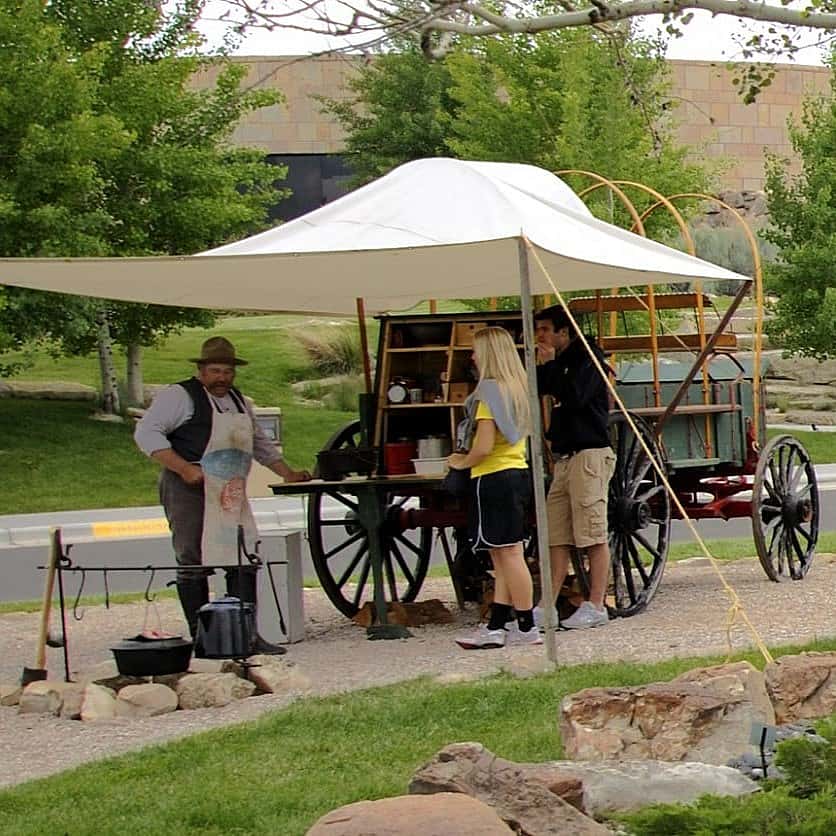
In an effort to bring history to life, visitors to the Center of the West can enjoy two different in-person chuckwagon experiences during the summer months. On our front lawn, the Center invites guests to sample authentic chuckwagon fare cooked over a live campfire in a Dutch oven as our cowboy cook Ron Reed shares details about our well-preserved frontier wagon, drawing on his decades of experience and knowledge. Come for the fascinating history lesson, and stay for the mouth-watering biscuits and beans. Additionally, several evenings during the week guests can engage with western history through food and storytelling during a full course chuckwagon dinner prepared by the award-winning 2 Mules Chuckwagon, featured on Guy Fieri’s All-American Road Trip. The menu features steak, biscuits, beans, salad, and a one-of-a-kind Dutch oven cobbler dessert—an immersive Western dining experience that brings western lore to life.

An Enduring Symbol

The chuckwagon endures as a symbol of community, sustenance, and travel on the open range, and continues to inspire a greater understanding of the spirit of the American West. The Center of the West’s objects, artifacts, artworks, and programs not only help to preserve the unique history of the chuckwagon, but also bring its history to life for visitors of all ages.

Ron Reed cooks up biscuits and beans for visitors at the Center of the West
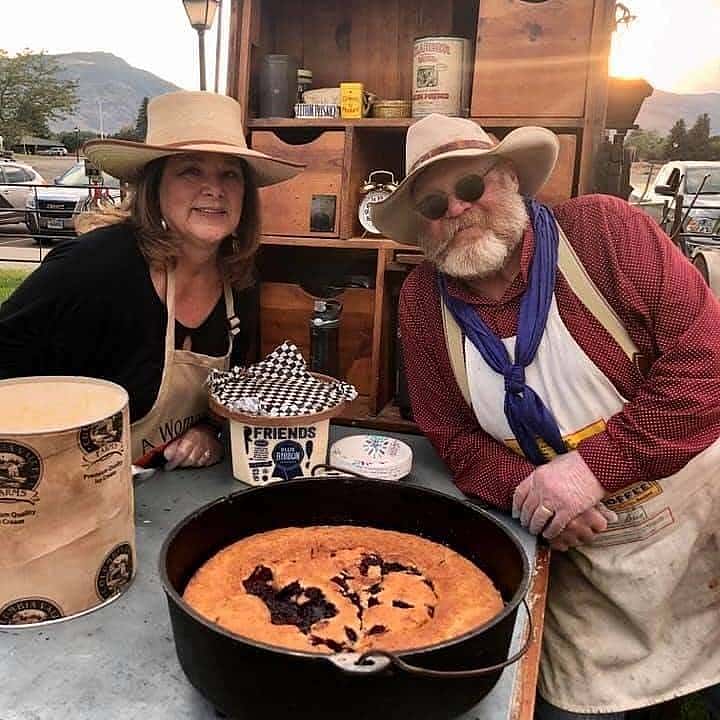
Debbie and Rich with their delicious cobbler
Debbie and Rich Herman of 2 Mules Chuckwagon with their delicious Dutch oven cobbler

Written By

Jane Gilvary avatar

Jane Gilvary

Jane Gilvary is a Content Specialist in the Public Relations Department at the Center of the West. She writes and manages web content and serves as editor of the Center’s monthly e-newsletter, Western Wire. Outside of work, Jane enjoys exploring Wyoming’s backcountry and discovering its hidden treasures.

You May Also Like