
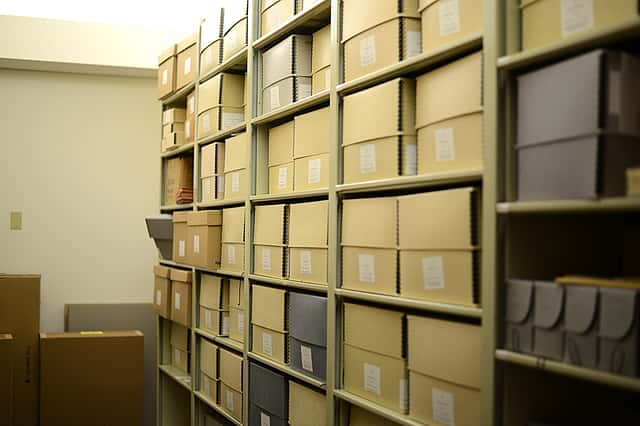
Behind the Boxes: What an Archivist Really Does

January 5, 2026
When I tell people I’m an archivist, there are usually two reactions I get. The first, and by far my favorite, is a puzzled look followed by, “Did you say you’re an anarchist?” (No but wrangling some of these collections can feel a little rebellious at times.)
The second is equally entertaining: “So… you spend your days reading other people’s mail?” Technically, yes, but it’s much cooler than it sounds. My favorite graduation gift was a mug that reads “Let me read your grandmother’s mail.” I show it off often, because a little archives humor is always welcome.
Most people who have only heard of archivists in passing think we just organize old papers. But archives and archivists are so much more than that. We’re the caretakers of history’s receipts, secrets, and stories, preserving everything from love letters to ledgers, so future generations understand how we got here.
If you’ve ever wondered what happens to the letters, photos, and journals that museums don’t display — that’s where we come in.
So, what exactly does an archivist do? Let’s dig in!
What Does an Archivist Actually Do?
Think of an archivist as part historian, part detective, and part meticulous organizer. We’re the ones sorting through boxes of letters, photographs, maps, and forgotten papers, deciding what’s worth preserving for the long haul.
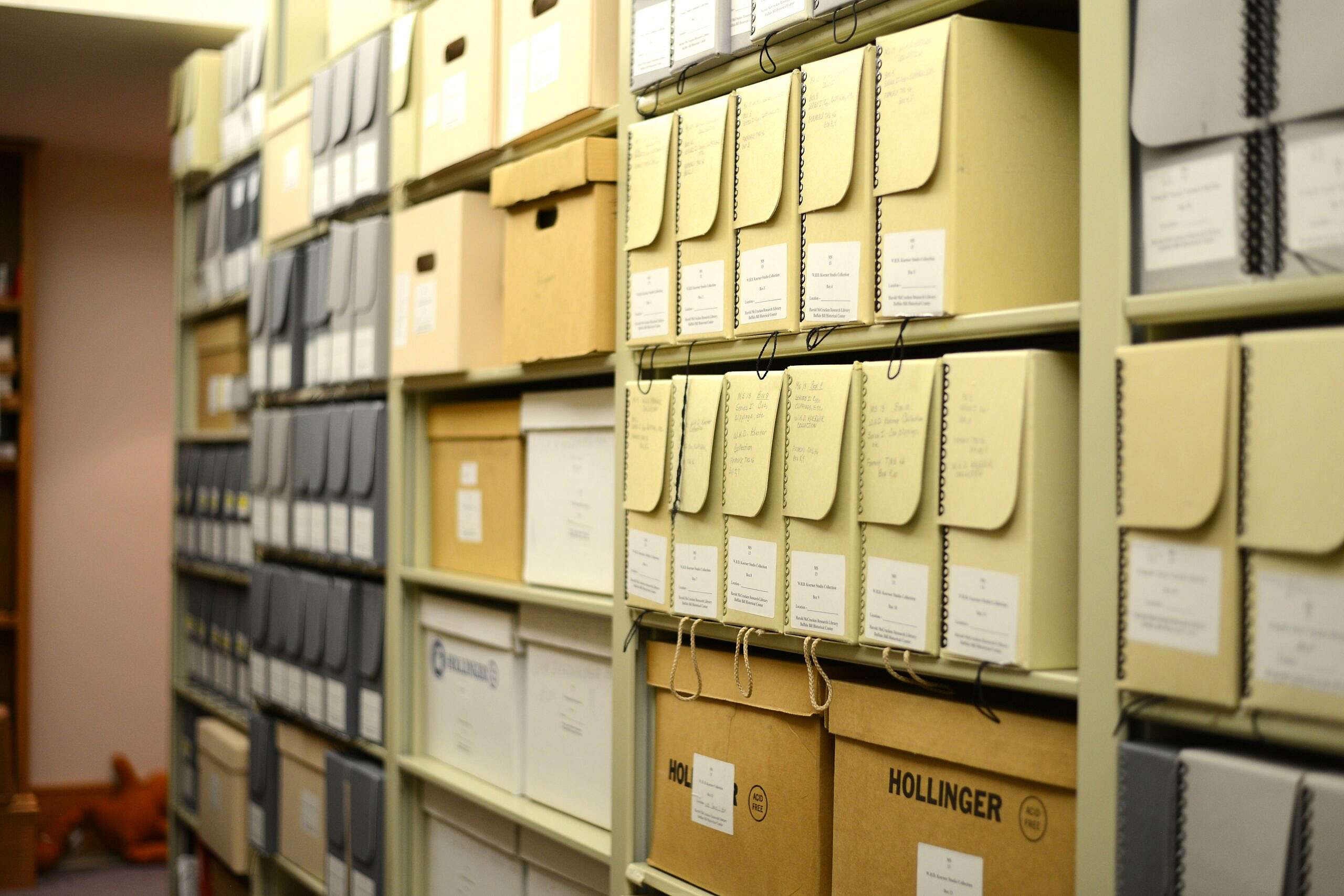
It might surprise you that not everything makes the cut. A big part of our job is determining whether something has what we call enduring archival value, meaning it holds lasting historical, legal, administrative, or evidential importance. Some materials, like business ledgers or journals from historical figures, are easy “yeses.” Others, like a nearly illegible note scribbled on a napkin, are trickier calls. That’s what makes the work so interesting! Archivists are the stewards of history, and every decision to keep or let go shapes what stories survive into the future.
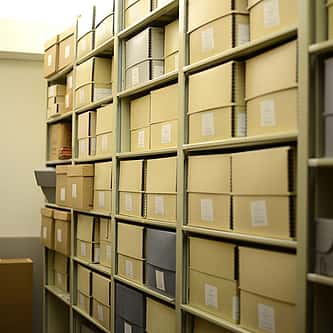
Once a collection is accepted (or accessioned), the real organizing begins. Archivists arrange and describe materials so future researchers can actually find what they’re looking for. This involves everything from rehousing items in acid-free folders and photograph sleeves to creating detailed finding guides.
Think of a finding guide as part table of contents, part map. Sometimes we describe at the folder level (listing what’s in each folder within a box), and sometimes at the item level (listing every single item). The deeper the description, the easier it is for researchers to uncover hidden gems.
Of course, archives aren’t just dusty boxes and typewritten letters anymore. These days, archivists also preserve digital materials including emails, photographs, and born-digital files, making sure history doesn’t vanish as technology changes.
In a museum setting, all that behind-the-scenes work comes full circle. Archivists support exhibitions, publications, and researchers. The next time you’re walking through the Buffalo Bill Center of the West and notice a label quoting a letter from 1910 or a photo with a long number like “P.327.01.023,” you’re looking at the results of archival work. The “P” stands for photograph, followed by the collection number and its exact location in the archive. So next time you’re at the museum, see if you can spot which labels or images came straight from the archives. You might be surprised how often we’re hiding in plain sight!
A Day in the Life (aka It’s Not All Dusty Boxes)
No two days in the archive are ever the same, which is exactly what keeps this job interesting! Some days start with a box of photographs that haven’t seen the light of day in decades; others start with an email from a researcher halfway across the country looking for their great-great-grandfather who toured with Buffalo Bill’s Wild West.
Here’s a peek behind the curtain at what an archivist’s day can look like:
Preserving
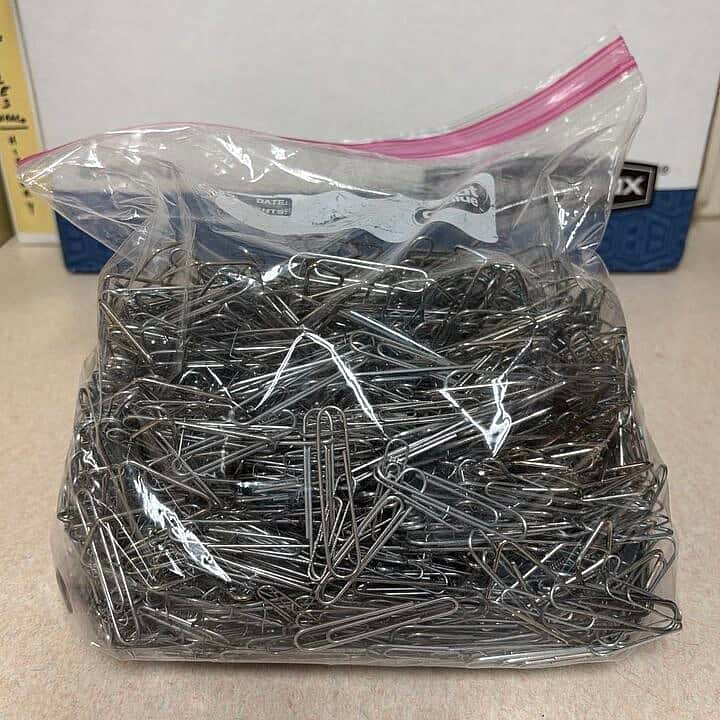
Before we can make any materials available to researchers, we need to make sure they’ll last. That means monitoring temperature and humidity in the vaults, rehousing items in acid-free folders and photo sleeves and occasionally spending an entire day removing rusty staples and paper clips from a collection.
You’d be amazed at how many paper clips we remove each year. (This bag is from just one portion of a large collection I’m working on — look at all those paper clips!)
It’s not glamorous work, but to the right person, it’s oddly satisfying. Think of it as a historical spa treatment for archival documents.
Arranging
Once items are stable and rehoused, it’s time to give them an order.
If we’re lucky, a collection arrives in its original order, or the way the creator intended the materials to be used or viewed. Maybe that means by topic, chronologically, or alphabetically. However it’s organized, that’s part of the story, and we preserve it as-is.
More often, though, collections arrive in complete disarray, and it’s our job to find structure within the chaos. Each collection is different. A topical organization might work best for unidentified animal photographs, while correspondence spanning decades might be best arranged chronologically. It’s ultimately up to the archivist to determine what makes the most sense.
Describing
Once everything’s arranged, it’s time to describe what we have. Cataloging, labeling, and writing finding guides are all part of the art of bringing order to chaos. This is where we create the roadmap that helps researchers (and future archivists) find what they’re looking for.
Description often involves a bit of detective work, too. Identifying people in historical photographs, tracing the provenance of a collection, or realizing that the “unknown man in a suit” is someone whose name is on a building downtown — every discovery we make, big or small, connects us to another thread of history.
This is where we get into the nitty gritty of folder and item level description and add all this information into our online finding guide system. Curious what a finding guide looks like? Check out some of our collection guides here.
Providing Access
Archives aren’t meant to sit in the dark. Far from it actually. The entire purpose of archives is to be used. Archivists work with researchers, curators, exhibit designers, and the public to share these stories in meaningful ways.
Sometimes that means helping a curator identify people in a historic photograph. Other times it’s answering a call from someone who remembers seeing a family member’s portrait on display fifteen years ago. Every question, every project, and every “aha!” moment keeps the archives alive.
Why Do Archives Matter?
At the end of the day, everything we do in the archives is about one thing: preserving history. Every photograph, letter, and ledger we care for is a piece of the past, and together, these pieces tell the story of our community.
Without archives and archivists, these stories could easily fade away. We’d lose the handwritten notes that show how people truly spoke, the candid photographs capturing everyday moments, and the records that explain how our town came to be. Archives help us make sure those stories are never lost in time.
It’s easy to think of history as big, grand moments, but what really brings history to life are the small, everyday details. A rancher’s journal, a performer list from Buffalo Bill’s Wild West, or a poem written for a child—these personal touches make history feel real and relatable. That’s exactly what we’re here for.
In the end, that’s what makes our work meaningful. Every item in the archive is a reminder that the past isn’t gone; it’s just waiting for someone to open the box and rediscover it.
McCracken Research Library Archives
Curious what the McCracken Research Library has in our archives? You can browse our finding guides here or check out our digital collections here.
Have any questions? You can email the archivist at [email protected], or our Research Assistant, Nathan Bender, at [email protected].
Written By
Cassandra Day
Cassandra Day is the Archivist of the McCracken Research Library at the Buffalo Bill Center of the West, where she specializes in the preservation, interpretation, and accessibility of historical records. She holds a Bachelor of Arts in History from Georgia Southern University and a Master of Science in Archival Studies from Clayton State University. Additionally, she is a Certified Archivist through the Academy of Certified Archivists. Her research interests include World War II and Cold War codebreaking, oral history methodologies and best practices, and the exploration of regional identities through rodeo. She is passionate about making archival materials accessible and engaging while preserving the voices and stories that shape our understanding of the past.
You May Also Like
John Colter: America’s Intrepid Mountain Man
Jan 23, 2026

The Dawn of Westward Expansion Most historians agree that westward...
Buckle Up, Cowboy: How the Western Belt Buckle Became an Icon
Oct 22, 2025

Buckle-Obsessed When we were thinking of thematic sections for our...
Sheep Wagons and the Shaping of the American West
Feb 17, 2026
A lone shepherd on Wyoming’s high plains awakens to the...
Brida Gafford: The Wild Life of a Rodeo Superstar
Mar 04, 2026

“So they let you dress up like a cowgirl and...
Inside the Reading Room: What to Know Before You Visit
Feb 12, 2026
The McCracken Research Library has a reading room that is...
The Birth of the American Long Rifle
Feb 18, 2026

If any firearm were to define the colonial and foundational...
How the Rocky Mountains Formed: A Journey Through Changing Scientific Ideas
Dec 11, 2025

"Science is finding out where we're wrong." -J. Robert Oppenheimer...
Why These Objects? A Closer Look at the Buffalo Nation Spotlights
Jan 29, 2026

As the opening of the Buffalo Nation spotlights approaches, a...
Buffalo Bill Center of the West Mourns the Death of Photographer and Storyteller Ken Blackbird
Jan 07, 2026
He had a talent for narration, showering his audience with...
Armed in the Colonies: Firearms, Militia, and Early American Law
Mar 16, 2026
American society has always been connected to firearms culture in...
Research Made Easy: Exploring the McCracken Research Library’s Collections
Mar 23, 2026
Archival and library research can feel overwhelming for even the...