Home » John Colter: America’s First Mountain Man
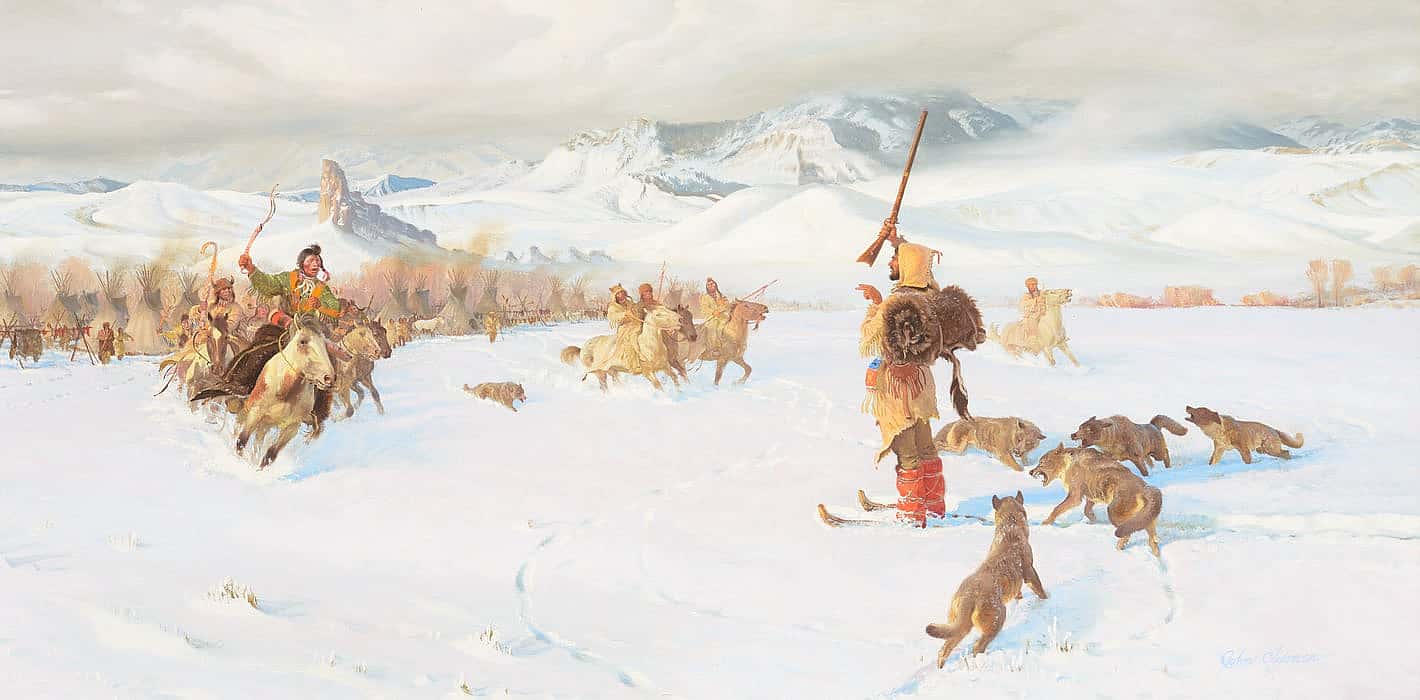
John Clymer 1907 – 1989 John Colter Visits the Crows 1807 (1975) oil on canvas 24 × 48 inches; Coeur d’Alene Art Auction

John Colter: America’s First Mountain Man

The Dawn of Westward Expansion

Most historians agree that westward expansion began in 1783 when the Treaty of Paris gave our fledgling nation control of all lands from the Atlantic Ocean to the Mississippi River. Westward settlement accelerated under President Thomas Jefferson with Lewis and Clark’s Corps of Discovery expedition to find the Northwest Passage to the Pacific Ocean. Lewis and Clark opened the door to the American frontier, setting the stage for daring exploits and historic discoveries by a fearless young man from Staunton, Virginia.

John Colter Joins Lewis and Clark

During this period of westward expansion, a hard-charging and rough-hewn lad from Virginia named John Colter enlisted as a private in the U.S. Army in Maysville, Kentucky in 1803. Around this same time, Meriwether Lewis and William Clark arrived in Kentucky to begin preparations for their now legendary three-year expedition that changed the course of American history. Colter asked to join the expedition and became one of the acclaimed “nine young men from Kentucky,” a term coined by Nicholas Biddle, the prominent statesman from Philadelphia who advised Meriwether Lewis during preparations for the expedition.

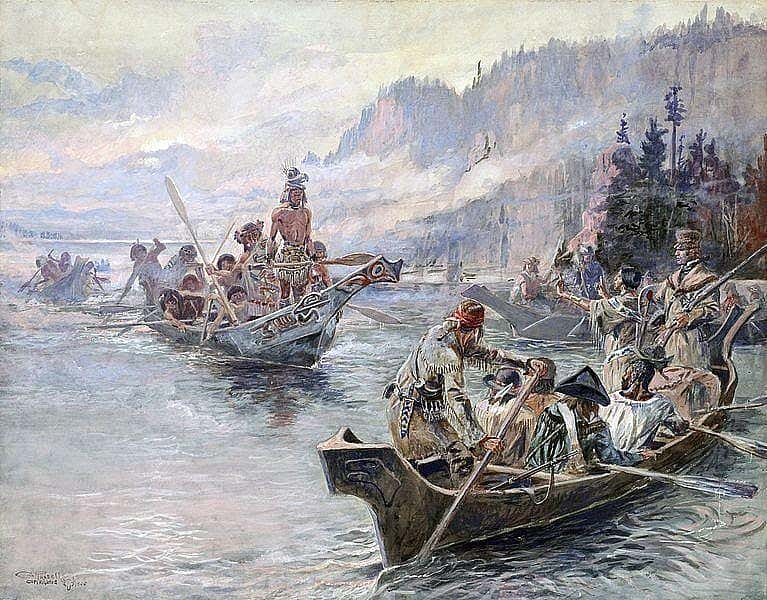
Charles M. Russell, Lewis and Clark on the Lower Columbia, 1905. Watercolor on paper, 1961.195, Amon Carter Museum of American Art, Fort Worth, Texas.

Early Troubles at Camp Dubois

Early on, Colter’s headstrong nature got him into trouble. At Camp Dubois, where the Corps of Discovery trained in the months preceding their departure, artist and historian Michael Haynes records that “Colter got drunk on New Year’s Eve,” “was court-martialed for unknown reasons,” and “disobeyed orders.” Robert Anglin and Larry Morris report in Gloomy Terrors and Hidden Fires: The Mystery of John Colter and Yellowstone that Colter “begged forgiveness and promised to do better. No punishment was mentioned in the record,” hinting that the expedition leaders probably excused such disorder, and even expected it from such hard-edged men likely to thrive during the frontier hardships they would encounter.

Colter Proves His Mettle

Colter changed his attitude and in his three years with Lewis and Clark’s Corps of Discovery, Anglin and Morris report that he established himself as an expert hunter who “could hear the slightest noise made in the forest at a great distance and …was always disturbed by any noise he could not account for. He knew the ways of every bird and animal in the woods, and was familiar with the sounds and cries made by them.” In addition, his tracking skills proved invaluable to Lewis and Clark—relying upon Colter to track Private Shannon, who had lost his way retrieving horses. Colter left an indelible mark on Lewis and Clark who trusted him to find safe routes through mountain passes, retrieve lost or stolen horses, and judiciously manage conflicts with Indians. On the Corps of Discovery’s return trip to St. Louis in 1806, Colter met two enterprising trappers—Dickson and Hancock—and asked to leave the group to join these men in their quest for beaver pelts. So enamored by the West and not ready to return to civilized life, Colter departed Lewis and Clark’s expedition and began his storied career as America’s first mountain man.

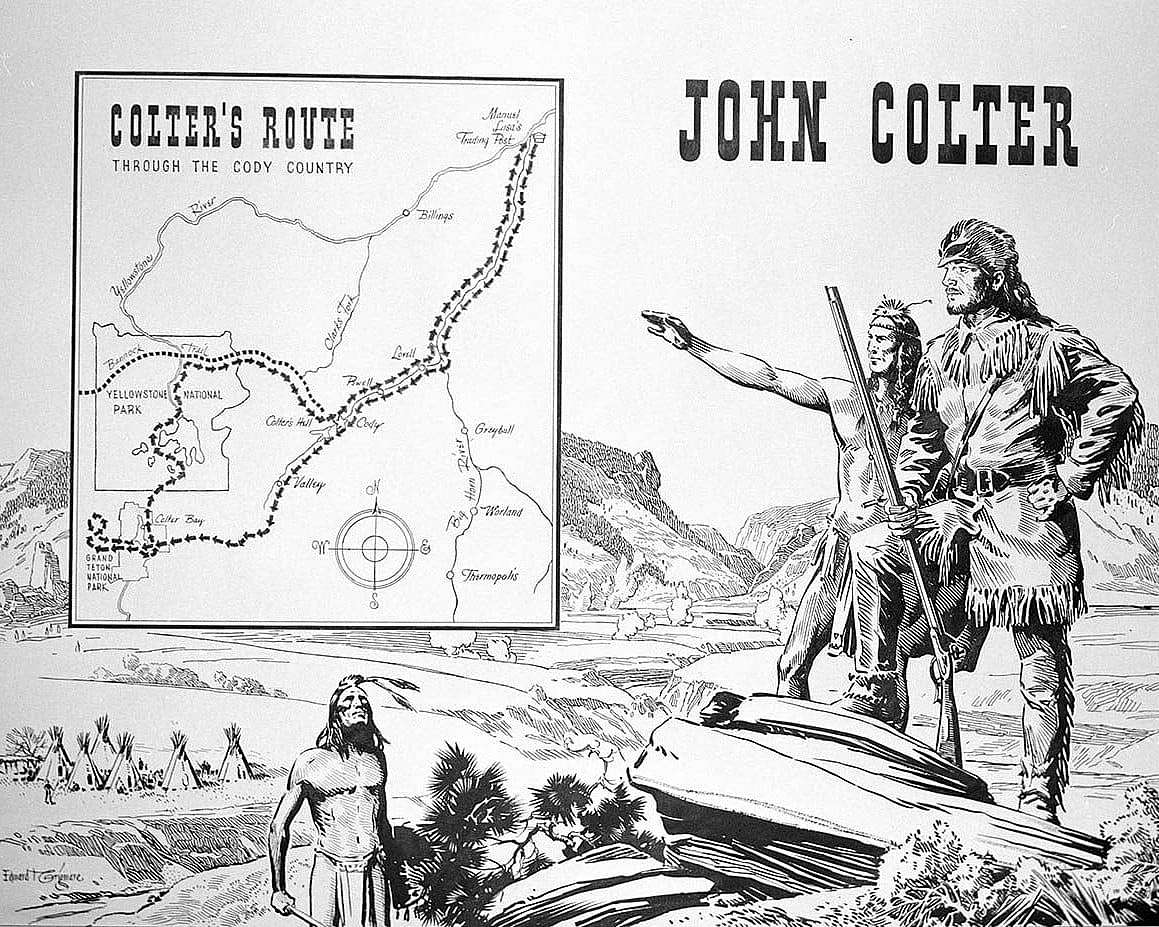
Cody artist Ed Grigware (1889-1960) sketched this map of John Colter's travels in Cody Country. MS 089 Jack Richard Photograph Collection, McCracken Research Library. PN.89.18.3085.20
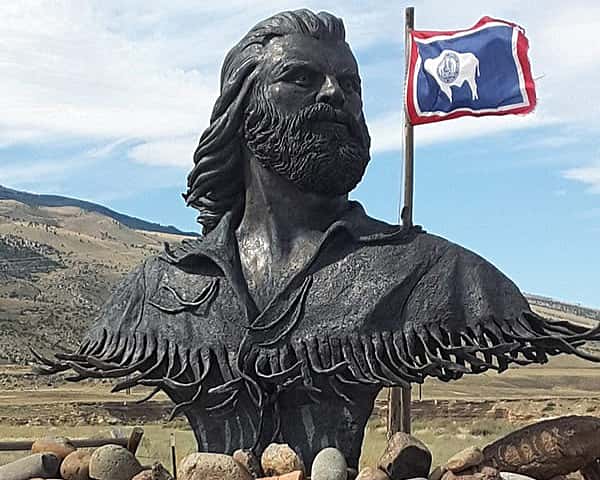
Bust of John Colter at Old Trail Town, Cody, WY. Photo courtesy of Dewey Vanderhoff

America's First Mountain Man

Colter’s ill-fated partnership with Dickson and Hancock lasted only three months, but his frontier exploits had only just begun. After parting with the beleaguered fur trappers in early 1807, Colter paddled up the Platte River, encountered a fur trading expedition led by Spanish-born Manuel Lisa, and joined Lisa’s party as a freelance trapper. Lisa sent Colter on what became an historic solo scouting campaign—covering roughly one thousand miles and lasting months—that took him far and wide in the Northwest Rockies. He traveled south to Thermopolis, then west along the South Fork of the Shoshone River, across the Continental Divide, into the Jackson Hole Valley, then Yellowstone, and across the Absaroka Range before making his way back to Lisa’s camp at Fort Raymond, now present-day Billings, Montana. Colter kept no journals or records of his travels, but explorer and writer Henry Brackenridge provides valuable insight about Colter’s journey, highlighting his determination and grit: “This man, with a pack of thirty pounds weight, his gun and some ammunition, went upwards of five hundred miles to the Crow nation; gave them information, and proceeded from them to several other tribes.” Brackenridge also notes that Colter suffered a gunshot wound to the leg at the hands of some Blackfeet Indians, but returned to Lisa’s camp “entirely alone and without assistance, several hundred miles.”

Colter's Hell

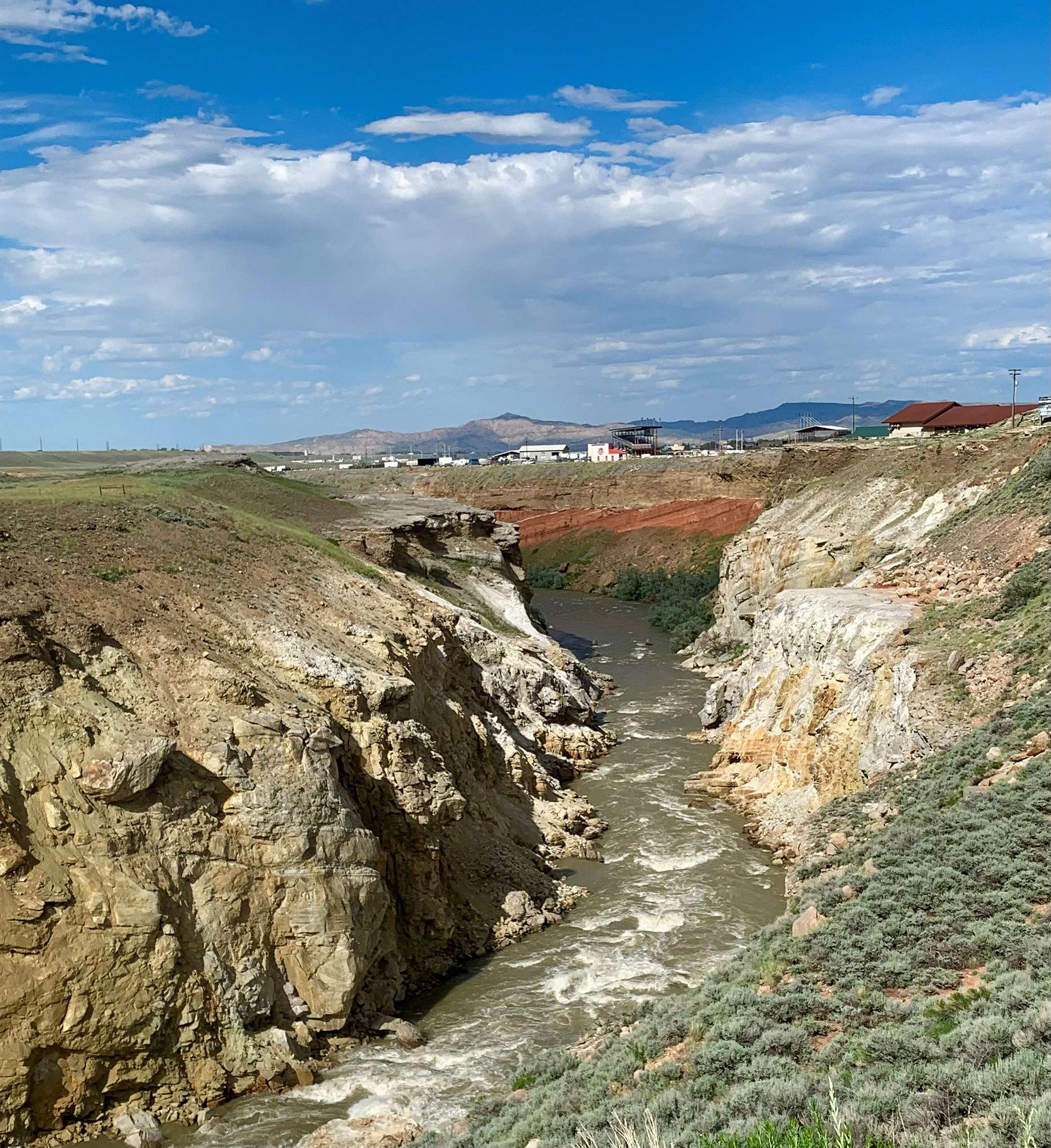
At some point on his excursion through the Absaroka’s, John Colter discovered an active geothermal area along the Shoshone River replete with hot springs and geyser cones—in what is now Cody, Wyoming. Listed on the National Register of Historic Places, “Colter’s Hell” begins near the dam at the Buffalo Bill Reservoir and runs through the Shoshone River Canyon, past the rodeo grounds and Old Trail Town and into the heart of Cody. Historical markers at this geologic wonder cite travertine cones, sulfur-bearing hot springs, deep sinkholes, and even a dormant boiling tar spring. Many first doubted Colter’s eyewitness accounts of this geothermal area, considering them tall tales of a weary explorer. However, later expeditions through the area, which included the Hayden Geological Survey in 1870, corroborated Colter’s account, solidifying his place in American frontier lore.

Colter's Hell on the Shoshone River in Cody, WY. Rodeo grounds in the background.

Colter's Run

Perhaps no other event in Colter’s frontier exploits demonstrates his legacy as an indefatigable and tenacious mountain man more than what historians have termed “Colter’s Run.” During the winter of 1808, Colter teamed up with another trapper named Potts in pursuit of beaver pelts on the Jefferson Fork of the Missouri, deep in Blackfeet territory. Historian H.W. Brands explains in Dreams of Eldorado that much to Colter’s dismay “a band of several hundred Blackfeet appeared on the shore” and demanded both men to approach the riverbank and disembark. Colter complied, but Potts rebelled by shooting one of the Blackfeet. Brands reports that “Thereupon a hundred bullets rained upon and through Potts, killing him in seconds…His heart and other internal organs were cut out and thrust in Colter’s face.”

Colter now faced the enraged mob alone. They stripped him naked and concocted a plan for his gruesome end. In Astoria, Washington Irving describes the Blackfeet chief’s directions to Colter: “The chief, however, was for nobler sport. He seized Colter by the shoulder, and demanded if he could run fast. The unfortunate trapper was too well acquainted with Indian customs not to comprehend the drift of the question. He knew he was to run for his life, to furnish a kind of human hunt to his persecutors.” Naked, cold, and facing certain doom, Colter would have to outrun the entire band of angry Blackfeet over a stretch of five miles to reach the Madison Fork where perhaps he could make an escape on the river.

Exposed and barefoot Colter took off running, outpacing most of the Blackfeet, save one fleet-footed brave with a spear. The two tussled, Colter broke the spear in two, stabbed the Blackfeet pursuer, and seized his blanket. The remaining Blackfeet, inflamed by Colter’s actions, continued in their unflagging pursuit. Bleeding from his nose and mouth, Colter outsmarted the band at the Madison River by wading into a vacant beaver lodge. There he remained for hours until the tribe had moved on, at which point he emerged to find his bearings. H.W. Brands writes, “During the next eleven days he traveled three hundred miles across the plain, subsisting on roots and tree bark. He finally arrived at Manuel’s Fort in the Bighorn River, exhausted, emaciated, and dirty, but alive.” Colter’s escape catapulted him to legendary status and solidified his place in American frontier history as an intrepid mountain man.

John Clymer 1907 – 1989 John Colter Visits the Crows 1807 (1975) oil on canvas 24 × 48 inches; Coeur d’Alene Art Auction
John Clymer; 1907 – 1989; John Colter Visits the Crows 1807 (1975); oil on canvas 24 × 48 inches; Coeur d’Alene Art Auction

Remembering Colter in Art and Sculpture

Colter’s remarkable wilderness exploits have inspired several western artists who have sought to celebrate and preserve his frontier legacy. Most notably, Jackson artist John Clymer, known for his well-researched and accurate depictions of westerns scenes, painted John Colter Visits the Crows in 1975. This detailed and sweeping oil on canvas sold for over four hundred thousand dollars at the Coeur d’Alene Art Auction in 2019. It depicts a tense situation between Colter and a band of Crow indians along the South Fork of the Shoshone River. Colter stands in deep snow with a raised rifle signifying his peaceful intentions as the Crow approach on horseback.

The American Mountain Men erected a bronze bust of Colter at Old Trail Town in Cody, Wyoming in 1978. Colter’s bust is among several at the site erected to honor legendary figures of the mountain man era. Some of the other figures honored include Jim Bridger, George Drouillard, and Jedediah Strong Smith.

From the Corps of Discovery to his famous escape from the Blackfeet, Colter survived and persevered where many others might have perished. His bold exploits still echo through the Northwest Rockies leaving a lasting legacy for the ages.

Written By

Jane Gilvary avatar

Jane Gilvary

Jane Gilvary is a Content Specialist in the Public Relations Department at the Center of the West. She writes and manages web content and serves as editor of the Center’s monthly e-newsletter, Western Wire. Outside of work, Jane enjoys exploring Wyoming’s backcountry and discovering its hidden treasures.

You May Also Like