
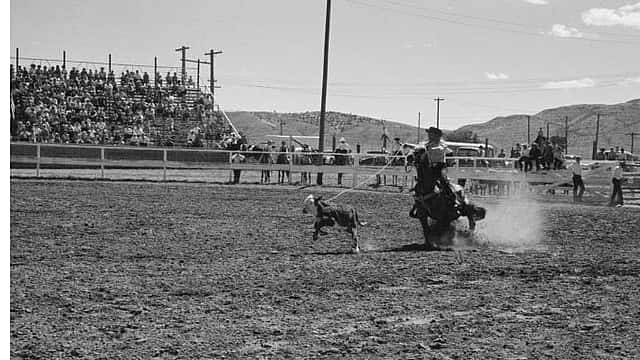
Brida Gafford: The Wild Life of a Rodeo Superstar

March 4, 2026
“So they let you dress up like a cowgirl and when you say “I’m going to be a cowgirl when I grow up” they laugh and say, “Ain’t she cute.” Then one day they tell you, “Look, honey, cowgirls are only play. You can’t really be one.”
Robbins, Tom. 1977. Even Cowgirls Get the Blues. New York: Bantam. Page 148.
Wilbert Turner was walking past the train station in Miles City, Montana one night in 1909 when he saw a little girl standing forlornly by herself, staring into a window. She was making pictures in the dust of the window with her finger and crying. This was an era where kids could be out on their own, but this was a little different.
“I’m nobody’s little girl,” she said, when the man asked.
Brida Randall had arrived in the West. Born June 4, 1896, to an oft-married mother, she was taken in by her grandparents at the age of nine. Let Brida tell the story of how this worked out. “I felt I had too much bossing around and a year later, I ran away from home. Of course, my grandparents brought me right back, but every time I’d get mad at my grandmother I would threaten to run away and join the circus as a lady rider.”
Brida made good on her threat. Her grandfather had given her $50 for schoolbooks and clothes. She took the money and bought a train ticket – west, as far west as she could go, which was Miles City. Not the first person to try that stunt, Brida’s education ended with the fourth grade.
Taken in by Mr. Turner and his wife, Brida came to the attention of Billy Richardson when he saw her on a horse. Richardson put Brida in flat races. Slight of build and rawhide tough, she was perfect. Billy was further impressed when he saw Brida on a bucking horse. “I always loved horses,” Brida said. “I started riding at the age of two.”
The West has always been a place for reinvention, and in 1909 you could do it a little easier. There is no evidence that Brida ever saw or heard from her birth family again. By 1910 she was already entering rodeos. “I got bumped off on my head,” she said of her first, “but I won second in the flat races.” Rodeo seems to have a way of getting into people. This was the first appearance in an athletic career that would last twenty-seven years.
Given her predilections, Brida was probably wise to remove herself from more civilized environs. In the Victorian era, women were not supposed to compete in sports. Not only did physicians think it would make girls “masculine,” they also supposed that sitting astride a horse was harmful to women’s reproductive systems. At the time, women were advised not to ride bicycles because it was too much physical activity for them. They would risk, “uterine displacement, spinal shock, pelvic damage, and hardened abdominal muscles.”
“Horseback riding is physically unhygienic for women, except when the sidesaddle is employed,” said one doctor. This information went over the heads of a whole generation of Western cowgirls. Far from media influences and standards of middle-class propriety, women on ranches worked with the men, roping, branding, breaking horses. Toughness and grit were admired in anyone, male or female. A woman who could rope and ride was highly sought after as a mate.
At the age of seventeen, Brida married Henry Shimek. This is the second of her myriad last names. Henry and Brida moved to Nebraska, where they enjoyed farming until Henry died in the 1918 flu epidemic. By 1921 Brida was in Midwest, Wyoming, where she worked as a cook at The Midwest Boarding House. The area thronged with old field workers. Soon this area would become famous as the center of the Teapot Dome scandal. Brida said, “If you were looking for a man, this was the place to find one. We served 700 every meal.”
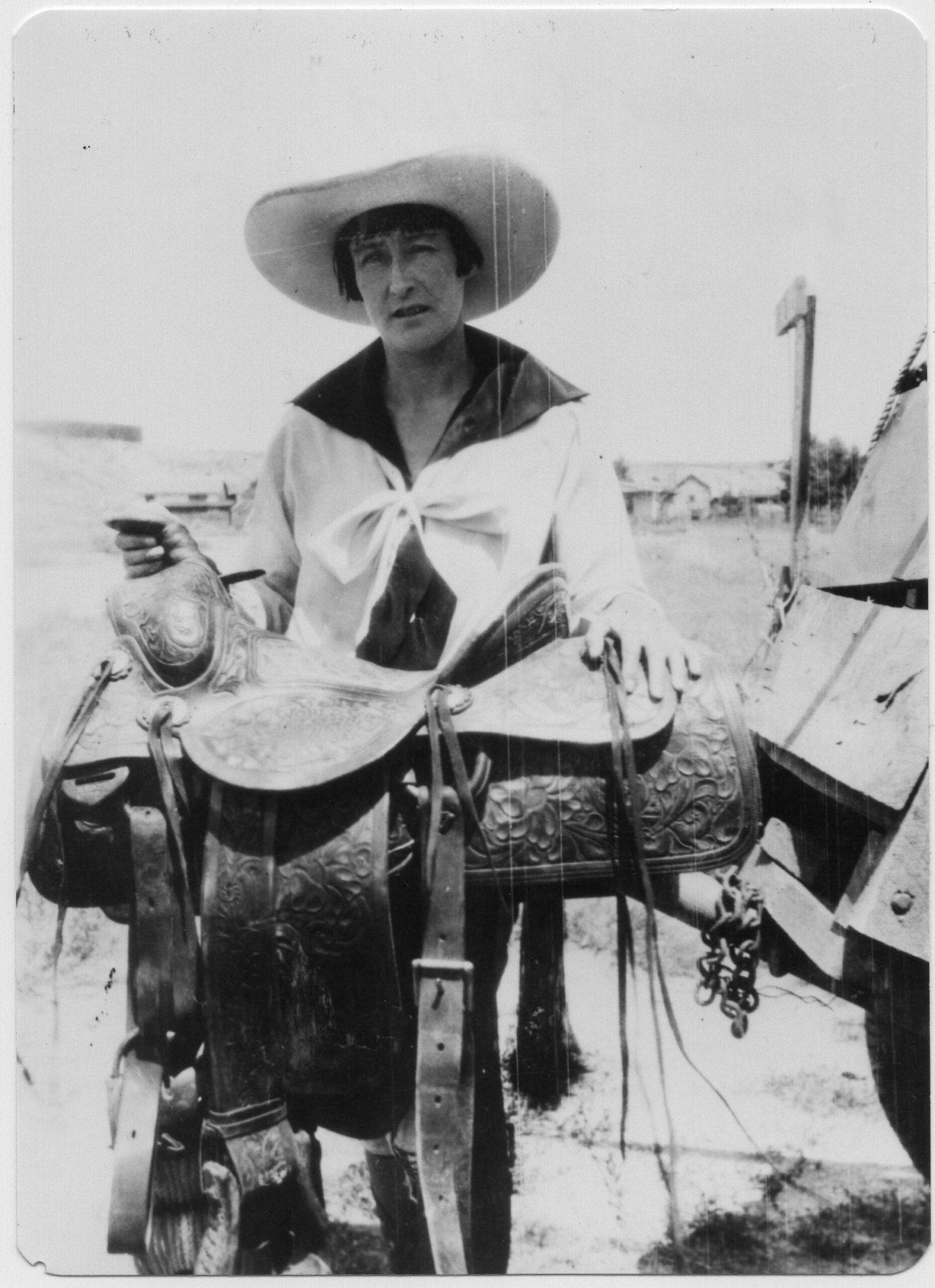
Apparently this second-husband bagging plan didn’t work out. After two months, she saddled up and headed for the Fourth of July Cody Stampede Rodeo. “I told my boss I had a sore toe,” she said.
In these days rodeo existed in a nascent form. The first organized rodeo was Buffalo Bill’s Wild West “Old Glory Blow Out” in North Platte, Nebraska over the Fourth of July in 1882, but the sport had been gradually growing for years as cowboys at roundups naturally competed with each other. Early rodeos consisted of makeshift arenas, and contestants traveled not by train or pickup truck, but by horse. Brida set out for Cody from Midwest, a distance of over 200 miles, riding a horse, trailing a pack horse with her bedroll on.
“I went on up to Montana, then back, to Cheyenne. There was hardly a fence in those days, and I would stop at ranchers’ and homesteaders’ places to eat my meals. They were always glad for company, and sometimes I’d stay a few days and lend a hand. I’d feel sorry for some poor housewife with a pack of kids, and I’d stay and help her catch up on her work.”
This went on. Rodeo superstar Fanny Sperry Steele saw Brida get bucked off a horse called White Diamond at the Miles City Roundup. She landed on her head, a dull thud resounding through the arena. Out cold. Fanny and her husband were sitting in a café after when Brida walked in. “I’m okay,” she said. “Just knocked out for a few minutes. About all I got is a darn nasty goose egg on the back of my head. I took the five dollar second place money in the first day’s bucking is all.”
Brida seemed to be impervious to pain. She only suffered one broken bone in her life, not in a rodeo arena, but when her horse stepped in a badger hole while she was riding to Jackson. By and by she went to a doctor, who told her she had a broken wrist. She thought it didn’t hurt much. “I don’t seem to feel pain like other people,” she said.
The history of women in rodeo is confusing and problematic to an outsider. In the early years, women competed in all events, sometimes directly against men. These men viewed the female contestants in a fraternal light, treating them as equals. Mostly. In 1914 Bertha Blancett came within four points of winning the All-Around Title at the Pendleton Round-Up. This caused the rodeo committee to change the qualifications for winning to ensure that while a cowgirl could place second, only a cowboy could win the All-Around Championship of the World.
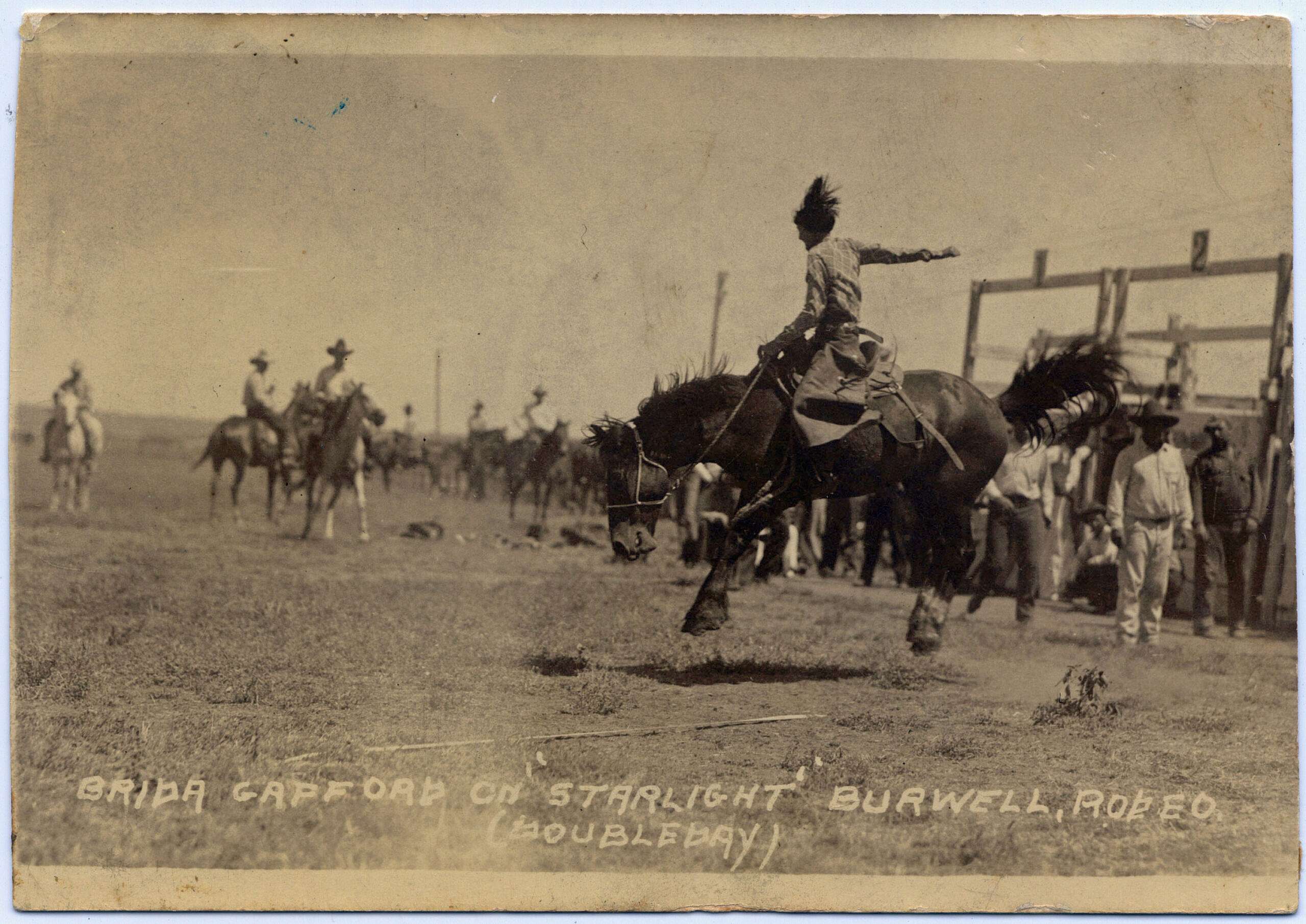
Removed from urban influences, women like Brida Gafford saw themselves as athletes, not advocates for social change. Apolitical, they seemed to take no notice of issues of the day like the women’s suffrage movement, or the battle for the prohibition of alcohol. In early pictures of female rodeo contestants, they are generally smiling broadly and the relish they take in their physical existence seems to peel off the page. Photos of Brida astride a bucking bronco show her laughing happily.
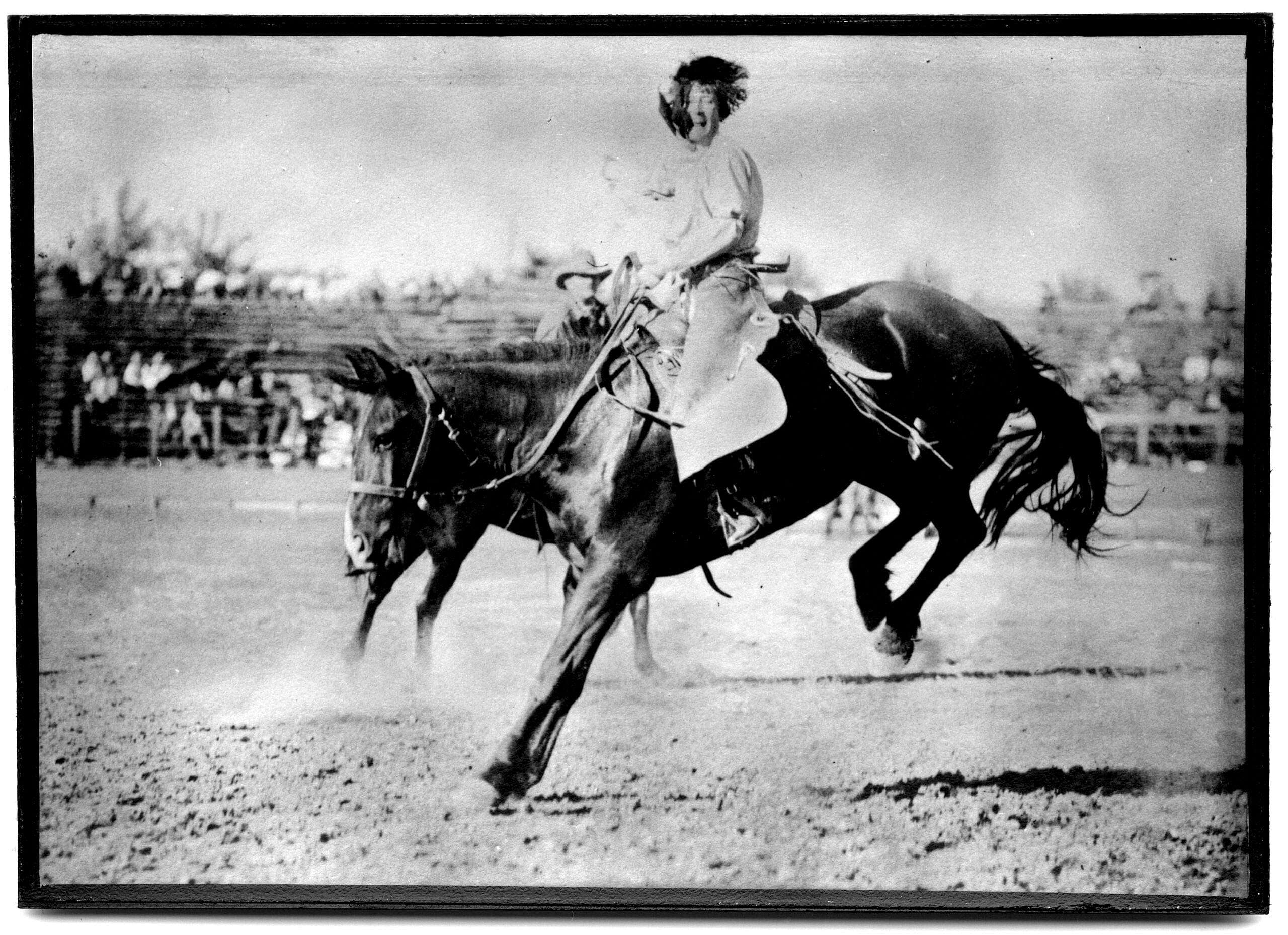
Making her way east, Brida suffered a serious wreck at a rodeo in Chicago. “I was bucked off a bronc and I hung up; he drug me around so bad that it hurt me considerable.”
She decided to take it easy for a while, at least by her standards. This consisted in signing up for the Miller Brother’s 101 Ranch Wild West Show. Wild West shows were considered a step down for rodeo cowboys and cowgirls, with their scripted events. Brida rode Roman style, a foot on the back of two different horses, while she leapt the lot over an automobile or other barrier, but claimed she didn’t enjoy it. Her internal injuries put her in the hospital in Georgia, and she would have died there. They told her she would. Brida wanted to die in Wyoming. Finally they put her on a sleeper train back here, where she… recovered. She lived with friends Bill and Ethel Whitney on the Ogallala Ranch until she felt better. “You know they don’t talk like us in Georgia,” she told her friends.
At this point, she hadn’t even reached the peak of her career. She married Roy Gafford in 1926, and together they homesteaded a ranch near Douglas. When spring came, however, she was off. In 1928 she won the World’s Championship at Madison Square Garden in New York. “And I’d been scared to go to that town, because I’d heard so many tales about gangsters.” She went back. Between 1928 and 1937, she appeared in every Madison Square Garden Rodeo but one, placing every time. She placed in Boston nine times, and won the World’s Championship for Lady Bronc Riders at Cheyenne Frontier Days in 1927.
So, Brida spent her summers in a whirlwind of horses, action, and travel; she spent her winters at an isolated ranch with no electricity or plumbing. Many of her compatriots in rodeo lived the same way. But changes were taking place around them. In 1929 Bonnie McCarroll was bucked off and killed at the Pendleton Round-Up. One of the biggest rodeos, this brought national attention. McCarroll was a superstar, and this was to be her last ride; she and her husband were making a little more money, just a little, before they retired to their ranch.
Some date the removal of women from rough stock events in rodeo from this event, some don’t. For rodeo contestants, working conditions were poor and fraud rampant. This came to a head in Boston in 1936, when cowboys bought tickets and sat in the stands at Boston Garden in their high-heeled boots while people off the street got kicked around by horses. This resulted in the formation of the Cowboy Turtles Association, which eventually became the Professional Rodeo Cowboys Association. Promoters countered by forming the Rodeo Association of America. These groups drew up standardized rules that had to be followed to secure accreditation, and somewhere in the mix the women’s rough stock events were eliminated.
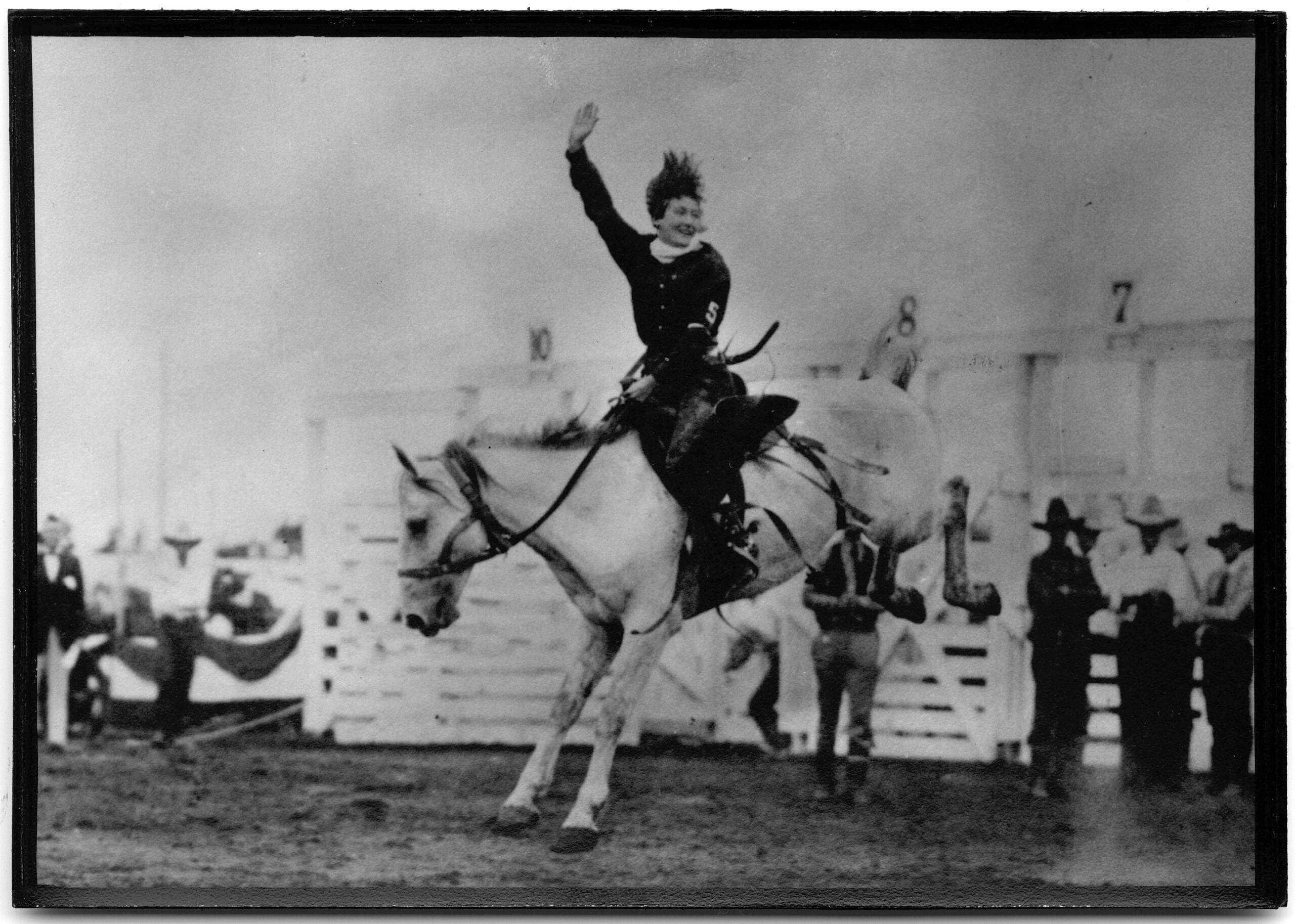
You could say that Brida Gafford was born at the right time. After she won her third World’s Championship, in 1937, she decided, “I’d better quit if I want to hold myself together. I had seen too many bronc riders who were all crippled and broke up, and had to beg for a living, and none of that was for me. I wanted to quit while I was winning too, and while I held the World Title.”
The last woman to ride a bronc at Madison Square Garden was in 1941. Brida was already gone, to her remote ranch. She and Roy had an on and off again relationship, and eventually off, but they continued to run cows together.
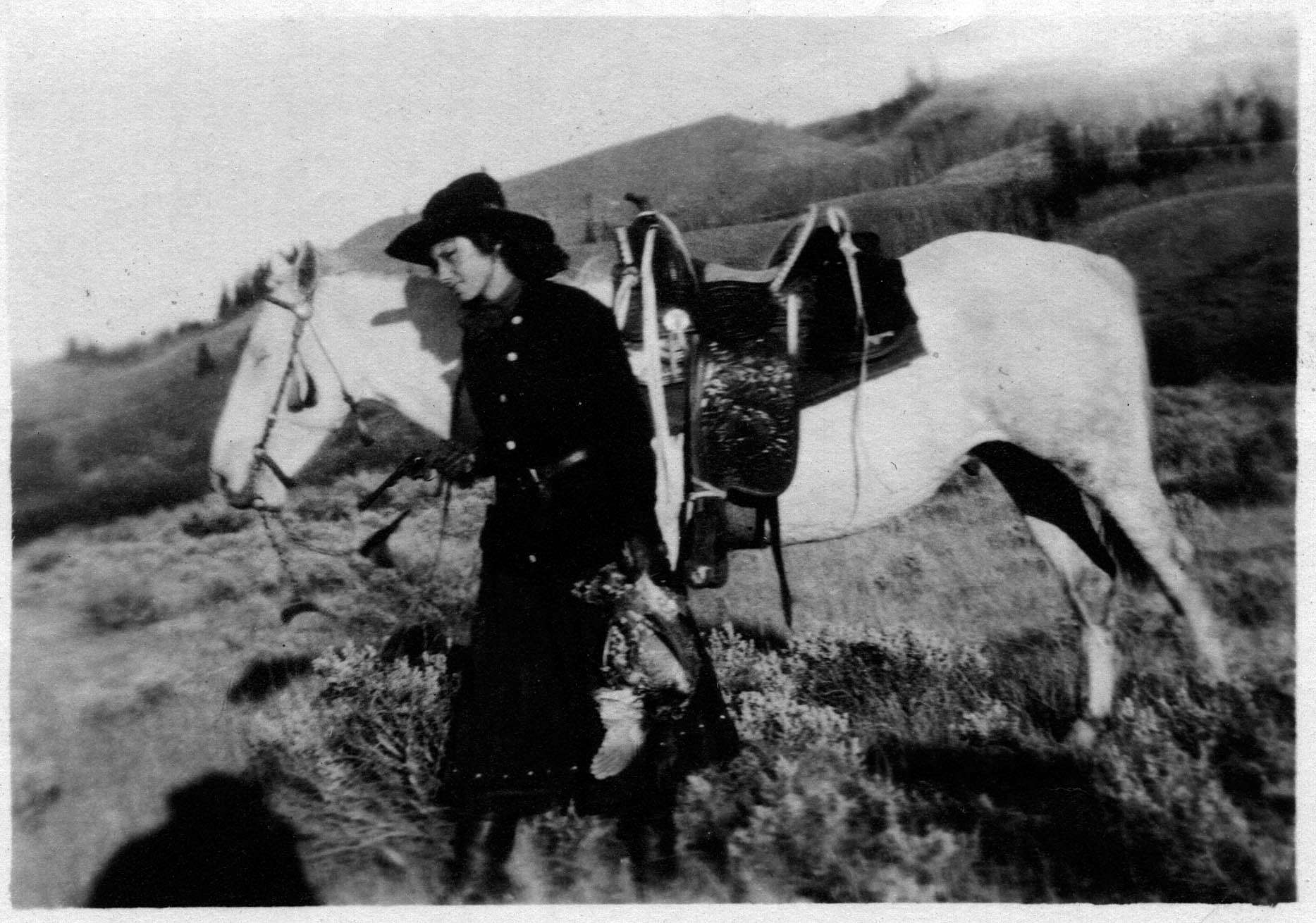
Addicted to adrenaline but not attention, Brida ran her own ranch for decades with little help. She trapped coyotes, sewed her own clothes, grew her own vegetables, and lived an almost completely self-sufficient lifestyle into the 1970s. Without electricity, she amused herself by reading Wild West magazines by kerosene lamp, and listening to her battery-powered radio. During the historic blizzard of 1949 she was snowed in for weeks; she survived by shooting jackrabbits with a pistol to eat and melting snow on her stovetop to drink. Velma Mattix, in The Casper Star-Tribune, wrote, “She seems absolutely untiring and gets up at about 4:30 AM to begin her day. Says she never needs much sleep and six hours is just lots of sleep.”
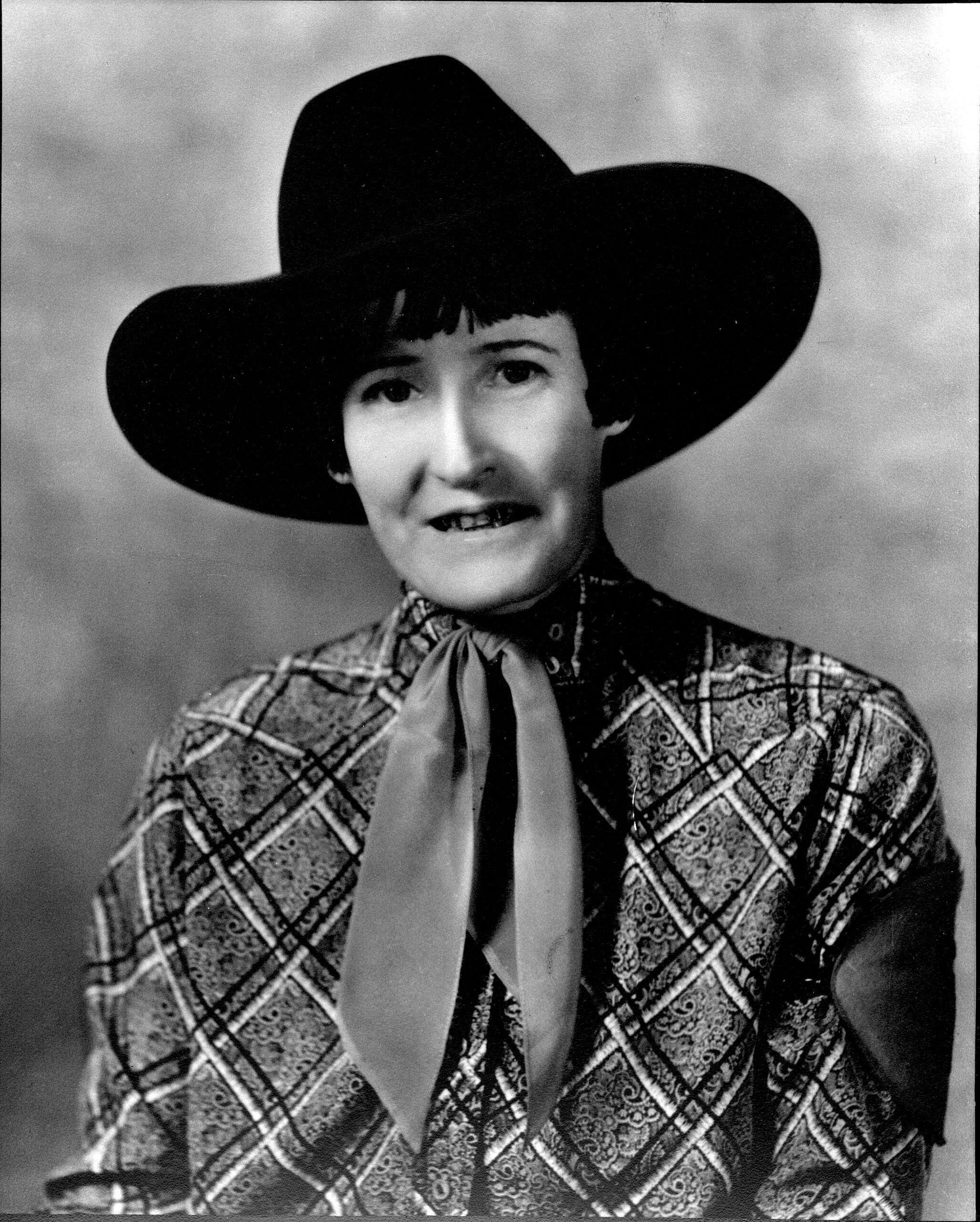
One morning a cowhand found her face down on the kitchen floor. An old rodeo injury had caused adhesions. After getting back from surgery, she did have a phone put in. A private line, it only went to the neighboring ranch.
“I heard of her long before I met her,” said rancher Billie Beaton. Brida was known in the area for her expertise with horses. When I asked neighboring rancher and rodeo star Frank Shepperson what she was like, he said she was “Pretty tough.” He recalled how Brida ran one neighbor off with her pistol. “She was gonna gut-shoot him,” Frank says, “because they ate her place out with some sheep.” When Charlie Kingman was born in the Midwest Oil Company Infirmary, he came out with a black eye and a split lip. Brida commented to Charlie’s dad that Charlie would be a rodeo rider sure: he already knew how to fight.
Brida stuck it out at her ranch until the very end. She died in June of 1978. “I get all tickled inside when spring comes, and the birds are singing and the grass comes green, and the new calves are born.”
Velma wrote, “Her excitement about tales of Alaskan ghost towns is catching. She is determined she is going to Alaska and explore some of the old gold mining camps. And she just might.”
Written By
Eric Rossborough
Eric has been rooting around the West since he took a job at the McCracken Research Library. Eric comes here from Wisconsin, where he worked at a public library, and enjoyed working on prescribed fires and fishing for bass and bluegills. He has a lifelong interest in natural history and the Old West.
You May Also Like
Buffalo Bill Center of the West Mourns the Death of Photographer and Storyteller Ken Blackbird
Jan 07, 2026

He had a talent for narration, showering his audience with...
Advertising the Frontier Myth: Poster Art of Buffalo Bill’s Wild West
May 17, 2024

In 1835, P.T. Barnum bought a human being. Barnum saw...
Inside the Reading Room: What to Know Before You Visit
Feb 12, 2026

The McCracken Research Library has a reading room that is...
Armed in the Colonies: Firearms, Militia, and Early American Law
Mar 16, 2026

American society has always been connected to firearms culture in...
Behind the Boxes: What an Archivist Really Does
Jan 05, 2026
When I tell people I’m an archivist, there are usually...
A Broadway Guy: the Second Life of Bat Masterson
Aug 13, 2025
When Bat Masterson and his brother Ed heard of a...
The Harry Yount Enigma: Yellowstone’s First Park Ranger
Apr 05, 2024
Buried among the sublime passes of the Sierra Nevada are...
Why These Objects? A Closer Look at the Buffalo Nation Spotlights
Jan 29, 2026
As the opening of the Buffalo Nation spotlights approaches, a...
Philip R. Goodwin, or, A Child Prodigy Runs Afoul of the 20th Century
Apr 21, 2025
It was December, and I had just walked into the...
Research Made Easy: Exploring the McCracken Research Library’s Collections
Mar 23, 2026
Archival and library research can feel overwhelming for even the...
The Birth of the American Long Rifle
Feb 18, 2026
If any firearm were to define the colonial and foundational...