
The Draper Natural History Museum Build-a-Bison Workshop

May 3, 2026
You may have heard rumors that the Buffalo Bill Center of the West is planning a special institution-wide exhibit titled Buffalo Nation. Scheduled to open in August 2026, this immersive and dynamic exhibit celebrates the impact and legacy of bison on the people, cultures, and environments that define the American West. The natural history-focused portion of the exhibit examines the roles bison play in influencing and modifying their environment.
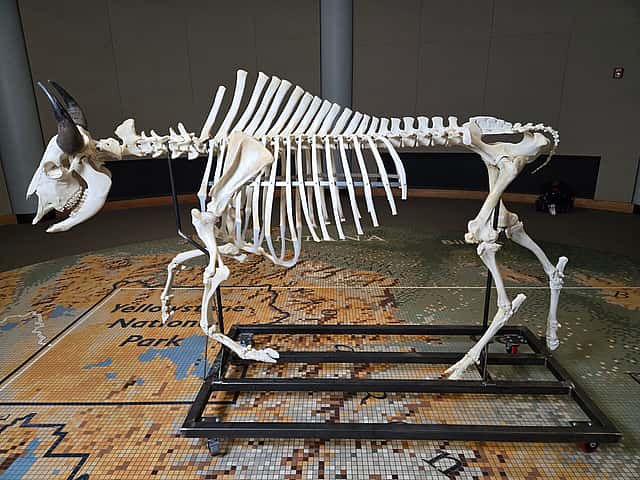
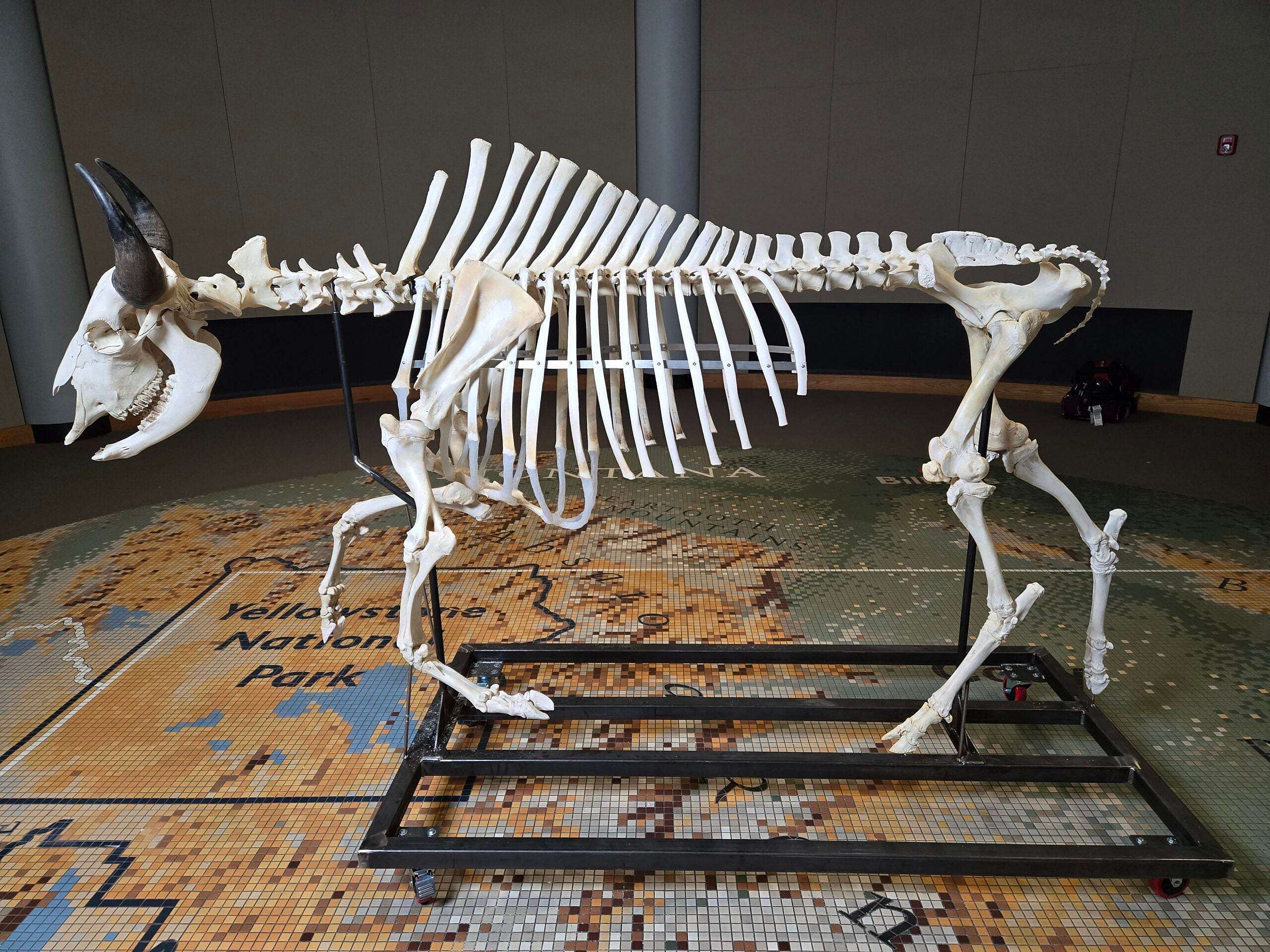
A bison skeleton, articulated by Draper Natural History Museum staff, volunteers, and Center staff and interns is a featured centerpiece of the Ecological Influencer section of the Buffalo Nation exhibit. But what is an articulated skeleton and where did this bison come from?
What is Articulation?
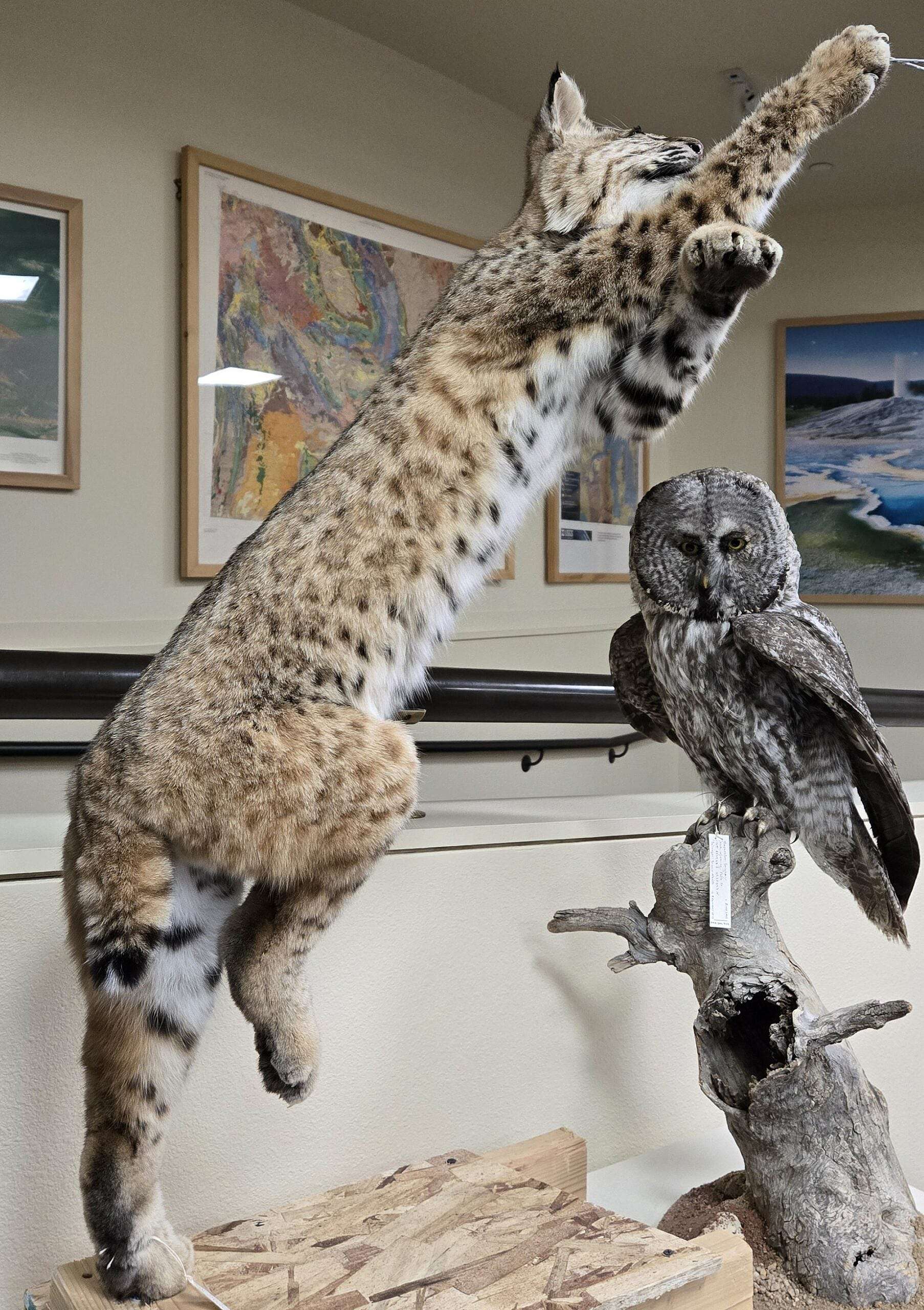
In the context of natural history museums, articulation is the process of reassembling or reconstructing a skeleton in its natural form – or how the bones are arranged when connected by soft tissues (muscles, ligaments, tendons, and skin). There are several common ways museums prepare an animal specimen. Preparators may choose to taxidermize the animal in a dynamic or engaging pose, create a “study skin” where they replace the body cavity and soft tissues with cotton and sew the specimen back together, or skeletonize the carcass. The method a preparator chooses often depends on the condition and rareness of the specimen.
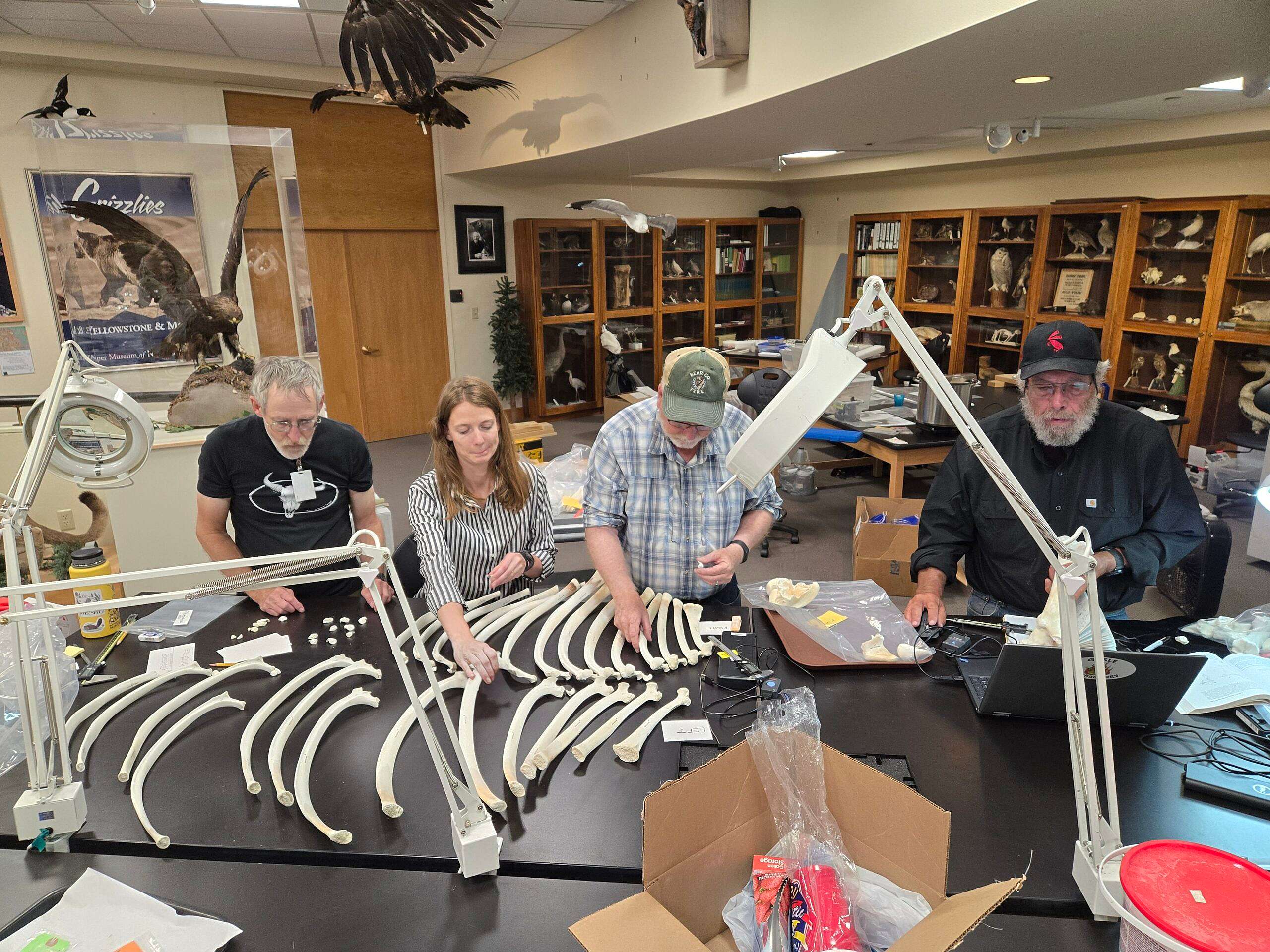
Museum scientists use skeletal preparations to compare anatomy and analyze skeletal structure. Early preparators preferred to skeletonize specimens, particularly for large-bodied organisms until preservation methods associated with taxidermy and museum specimens became refined and less hazardous.
Early Taxidermy Practices Underestimated Health Risks
Today we would think twice before manufacturing or wearing garments contaminated with heavy metals like arsenic, mercury, or lead. However, beginning in the 17th and up into the 20th Centuries, mercury was widely used to produce and treat beaver felt hats, which were quite popular and considered fashionable among upper and middle-class people of Western Europe.
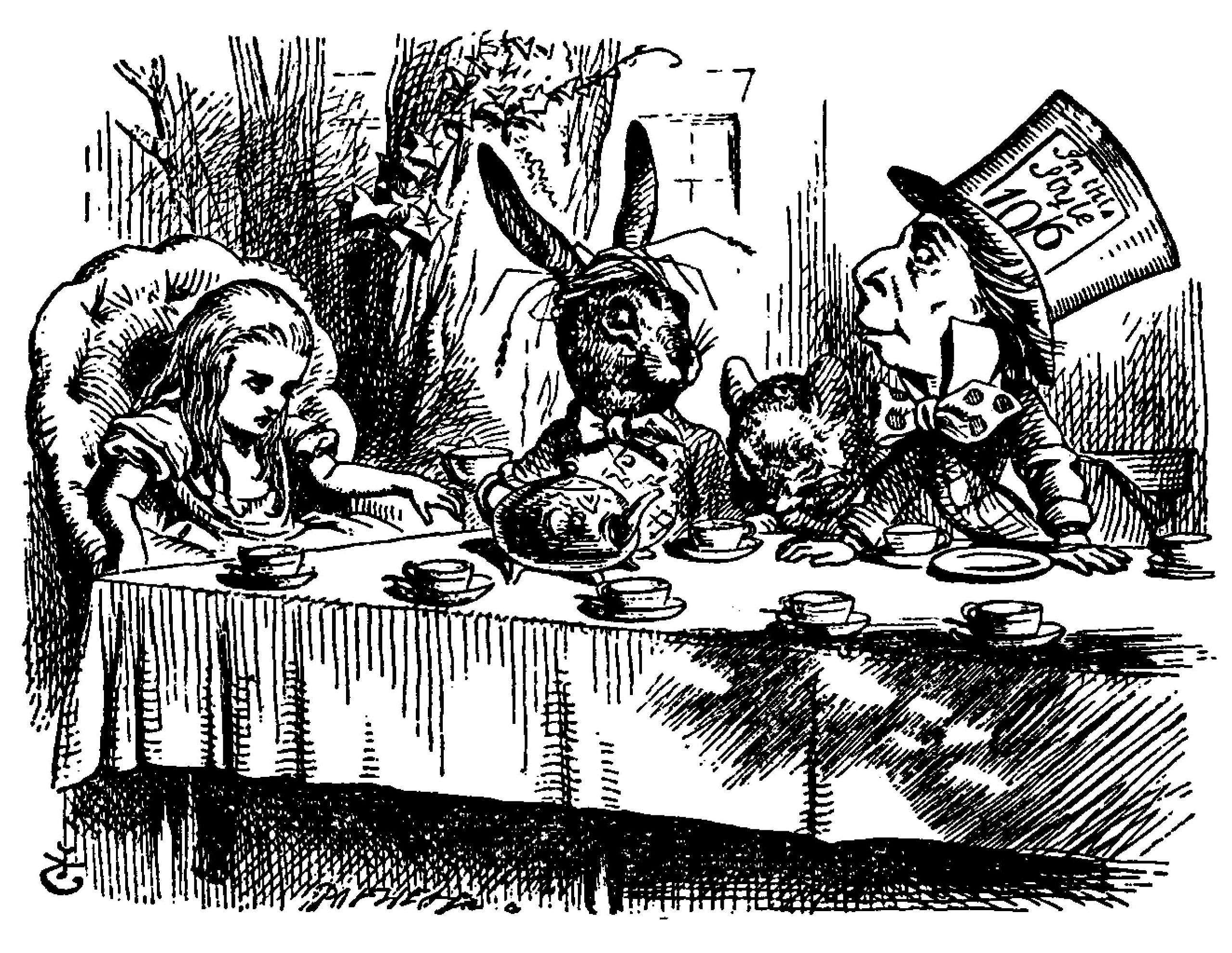
Indeed, the phrase “mad as a hatter ” or the quirky character known as The Mad Hatter in Alice in Wonderland originates from the chronic exposure to mercury vapors during the preparation process.
Specimen preparation using heavy metals fell out of favor to less risky preparation methods. Preparing skeletons was more innocuous. Preparators could boil, macerate, or feed the bones to insect colonies, and clean the bones with gentle degreasers. By the 1950s, preparators and the taxidermy community largely phased out the use of toxic compounds (e.g., arsenic, mercury, and lead) in taxidermy preparation. Refining the procedure resulted in a shift away from skeleton preparation and back to taxidermy in museum settings. One major benefit of taxidermy is the ability to recreate lifelike mounts, which have become ubiquitous in museums and educational centers around the globe.
Merging Art and Science
Both taxidermy and articulation necessitate acute attention to detail and the ability to deconstruct and recreate animals in a nature-like state. This requires the preparator(s) to understand biology and anatomy, the species they are working with, and the context of mount.
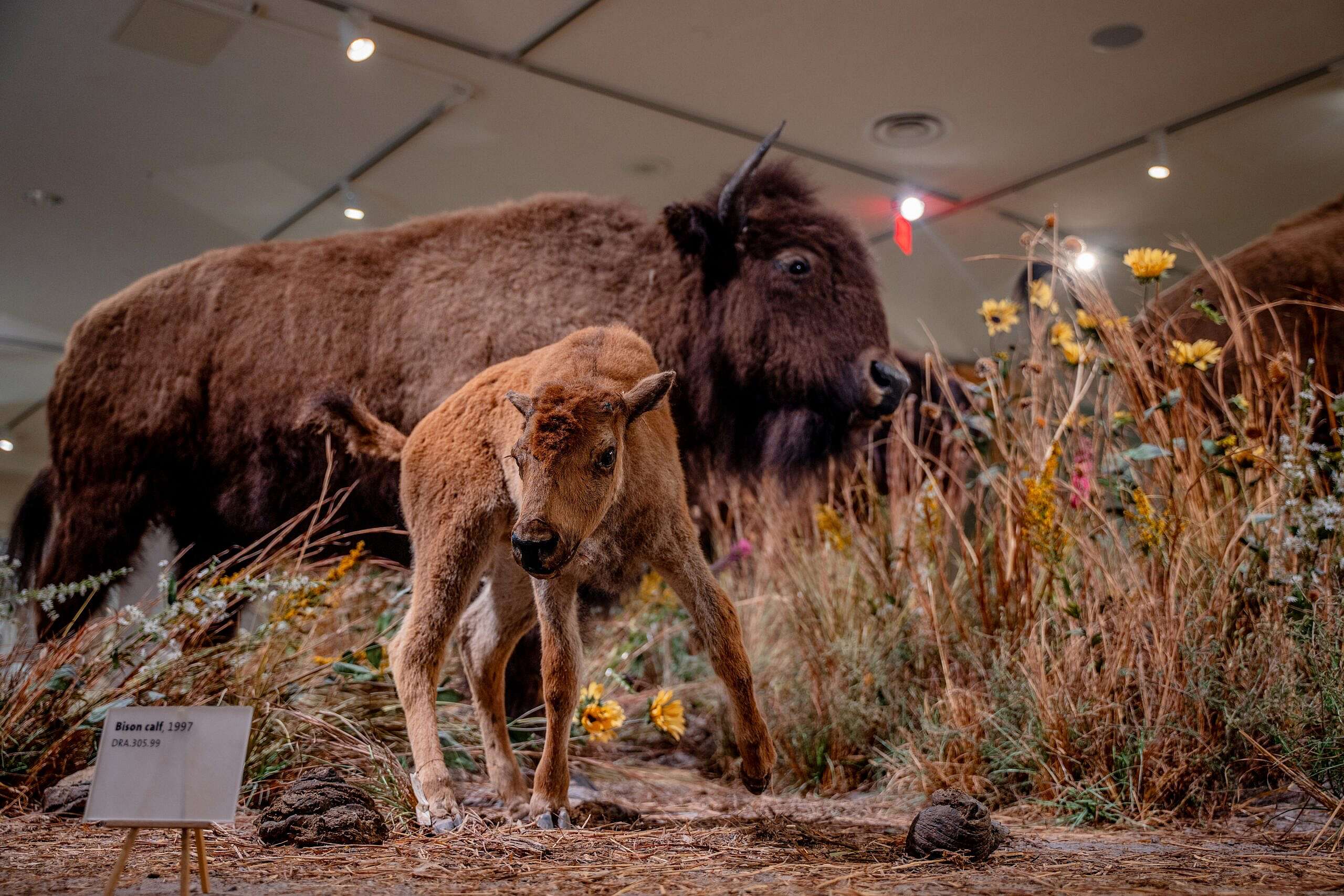
Articulating skeletons is a specialized skill and that is learned through practice. Unfortunately, many of the people who have mastered this skill have since passed away. As we discussed plans for Buffalo Nation, support from the Nancy-Carroll Draper Charitable Foundation graciously enabled Draper staff to host a bison articulation workshop. We modeled this workshop after the 2022 grizzly bear and mountain lion skeleton articulation project, which was popular with museum visitors.
Return of the Boneman
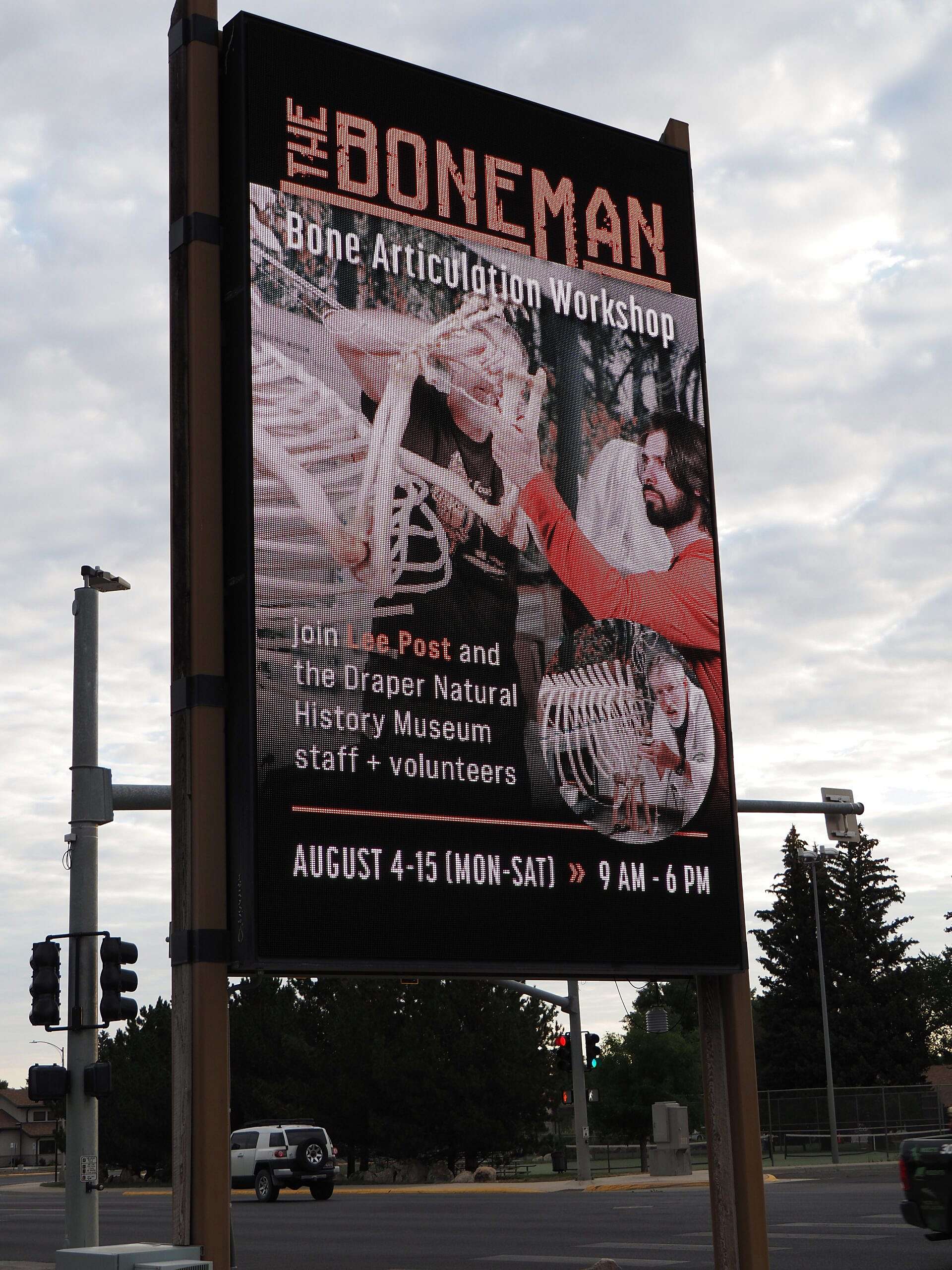
To pull this off, we enlisted the aid and instruction of Lee “The Boneman” Post. Lee is based in Homer, Alaska, and is a self-taught bone builder. In fact, Lee’s written several books on the subject and is widely regarded as the go to expert on the subject. We seized the opportunity to welcome Lee back to the Draper as part of our Summer 2025 Artist-in-Residence program where he led staff and volunteers through the articulation of our bison skeleton. But first we had to secure and clean a bison skeleton.
Bison Management in Yellowstone National Park
February 29, 2024: It was a crisp morning. The town of Gardiner was sleepy, resting after a busy summer tourism season. I, and then Curatorial Assistant, now Assistant Curator, Amy Phillips arrived in Gardiner the night before. We arranged to meet with Yellowstone National Park staff at the Stephen’s Creek Bison Facility promptly at 9:00 AM. The mission: transport the carcass of a bison from Gardiner, Montana, to Cody, Wyoming.
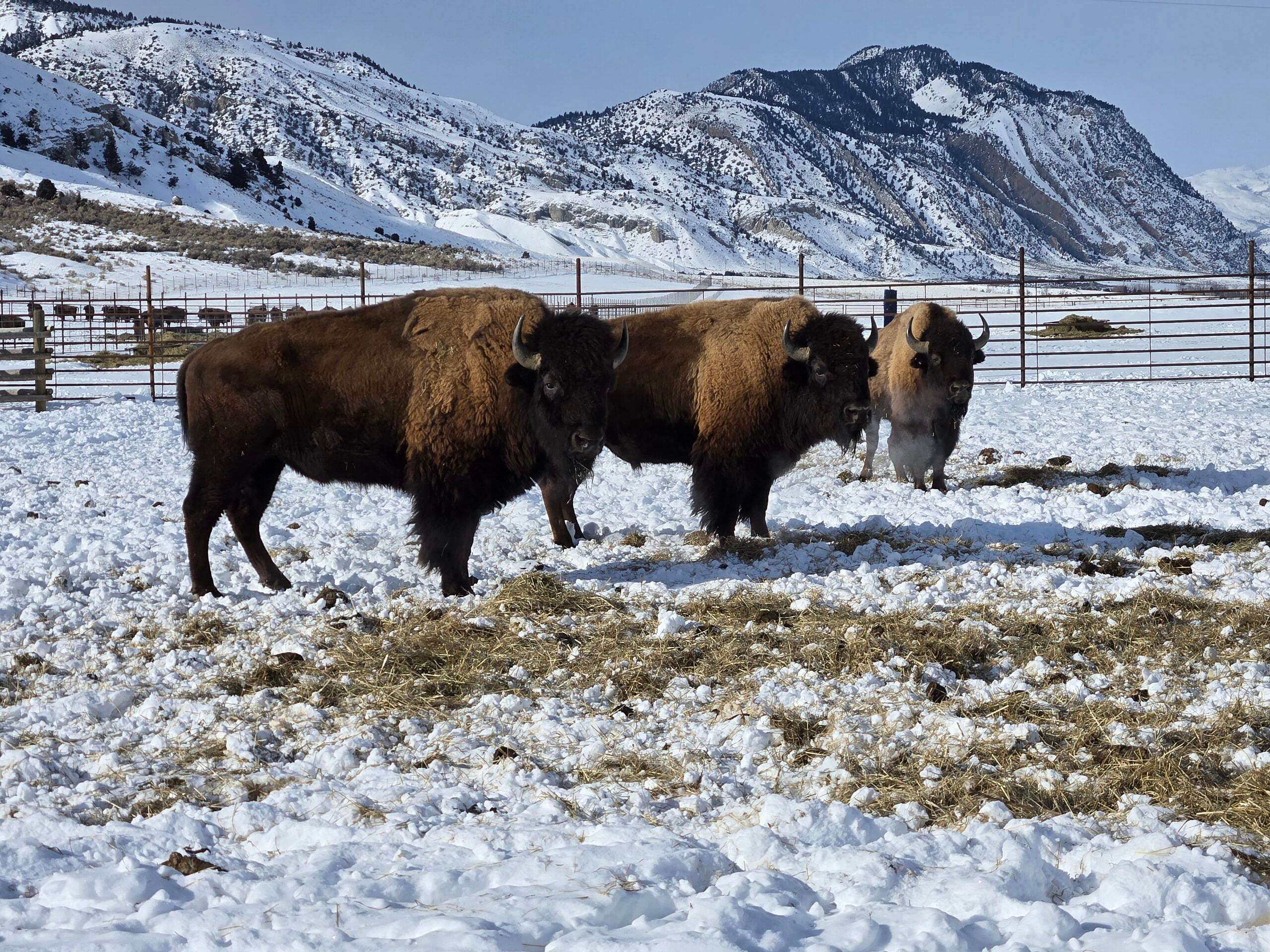
There are no fences around Yellowstone. Wildlife is free to move throughout the Park and beyond its boundary. Bison are one of eight migratory ungulates in the Greater Yellowstone Ecosystem. The Park has a management goal of 3,500-6,000 migratory bison based on carrying capacity. In the early 1900s, the Park housed a small herd of domestic cattle. Unbeknownst at the time, this herd carried Brucellosis, a bacterial disease that can cause abortions and still births. By the time Park managers removed cattle from within the Park’s boundary, the bacterium causing Brucellosis had already transmitted from cattle to bison.
While Brucellosis was eradicated across the majority of the United States, 40-60% of bison test positive for exposure to Brucellosis. Bison traveling north of the Park’s boundary are naturally funneled by the topography toward a valley with significant cattle ranching operations. To mitigate and minimize any potential brucellosis exposure or transmission from bison to cattle, and to regulate carrying capacity, Park biologists capture and test every bison that leave the Park the boundary near Gardiner, Montana.
If the population is above target management goals, bison that test negative are eligible to become part of the bison conservation transfer program. These bison can be used to start or supplement conservation herds elsewhere. Brucellosis-positive bison are lethally removed from the population and can either become part of the Tribal Food Transfer Program or alternatively used for education and research.
The bison that we drove home with that day was a 3-year-old male that had tested positive for brucellosis. It had failed the quarantine program and was slated for population removal.
Specimen Acquisition and Regulations
The Draper Natural History Museum is a salvage-based museum, meaning with rare exception we do not actively harvest and collect wildlife to build our natural history collection. Thus, most birds and mammals in our collection are either salvaged by or transferred to the museum. We maintain state and federal salvage permits that allow the museum to possess and transport native wildlife. This means we can recover an animal that has been struck by a vehicle or hit a window. It also allows us to receive wildlife transferred to the museum by state and federal wildlife managers. See our blog about specimen acquisition and preparation here.
Skeleton Preparation:
Preparing a large skeleton takes a significant amount of time. The first step is to break the carcass down to remove soft tissue (hide, muscle tissue, ligaments, and tendons). Minimizing the number of freeze-thaw cycles makes this process as pleasant as possible. Next, we place these “bite size” pieces in a tank with a colony of flesh-eating beetles. The beetles work 24/7 consuming any remaining soft tissue. The amount of time it takes the beetles to clean a skeleton can vary, but the beetles finished the bison skeleton in about 3 months.
The skull was too large to fit in the beetle colony, so we chose to macerate it by placing the skull in a large tank, submerging it in water, and letting the naturally occurring bacteria consume the remaining soft tissue. Macerating the skull took two summers but was equally as effective as the beetle colony.
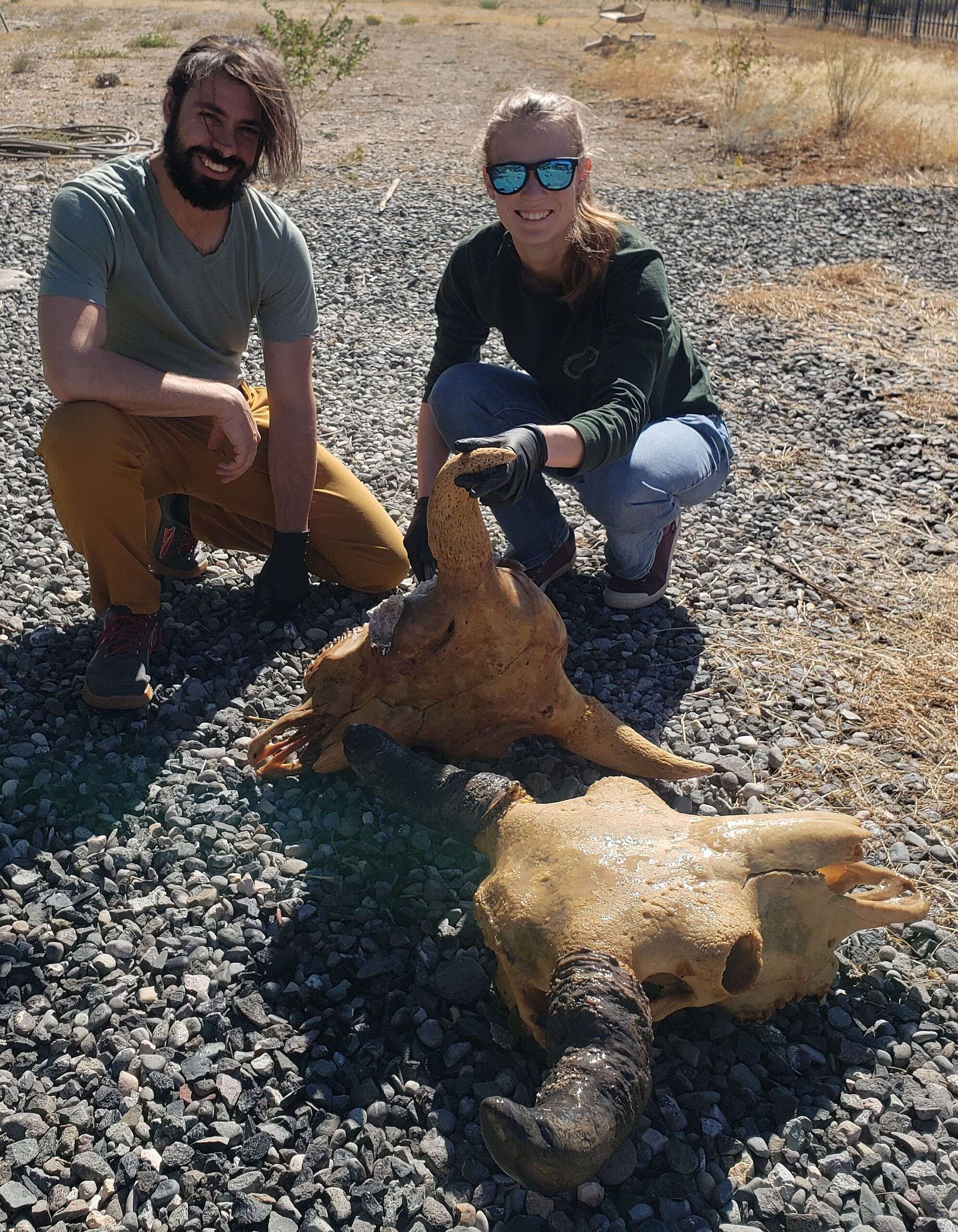
After we properly defleshed the bones, we soaked them in a degreasing solution. This process can take months but is critical to remove fatty tissues (lipids and marrow). If too much fatty tissue is left inside the bones, it will leach out over time and become 1) a pest attractant, 2) contaminate the surroundings, 3) and incredibly difficult, if not impossible, to clean once on display.
An adult bison can weigh between 1,000 to 2,000 lbs. Once cleaned and prepared, the complete skeleton of our 3-year-old male bison weighed just under 100 lbs! That’s a reduction in weight of approximately 900 lbs.
Building a Bison
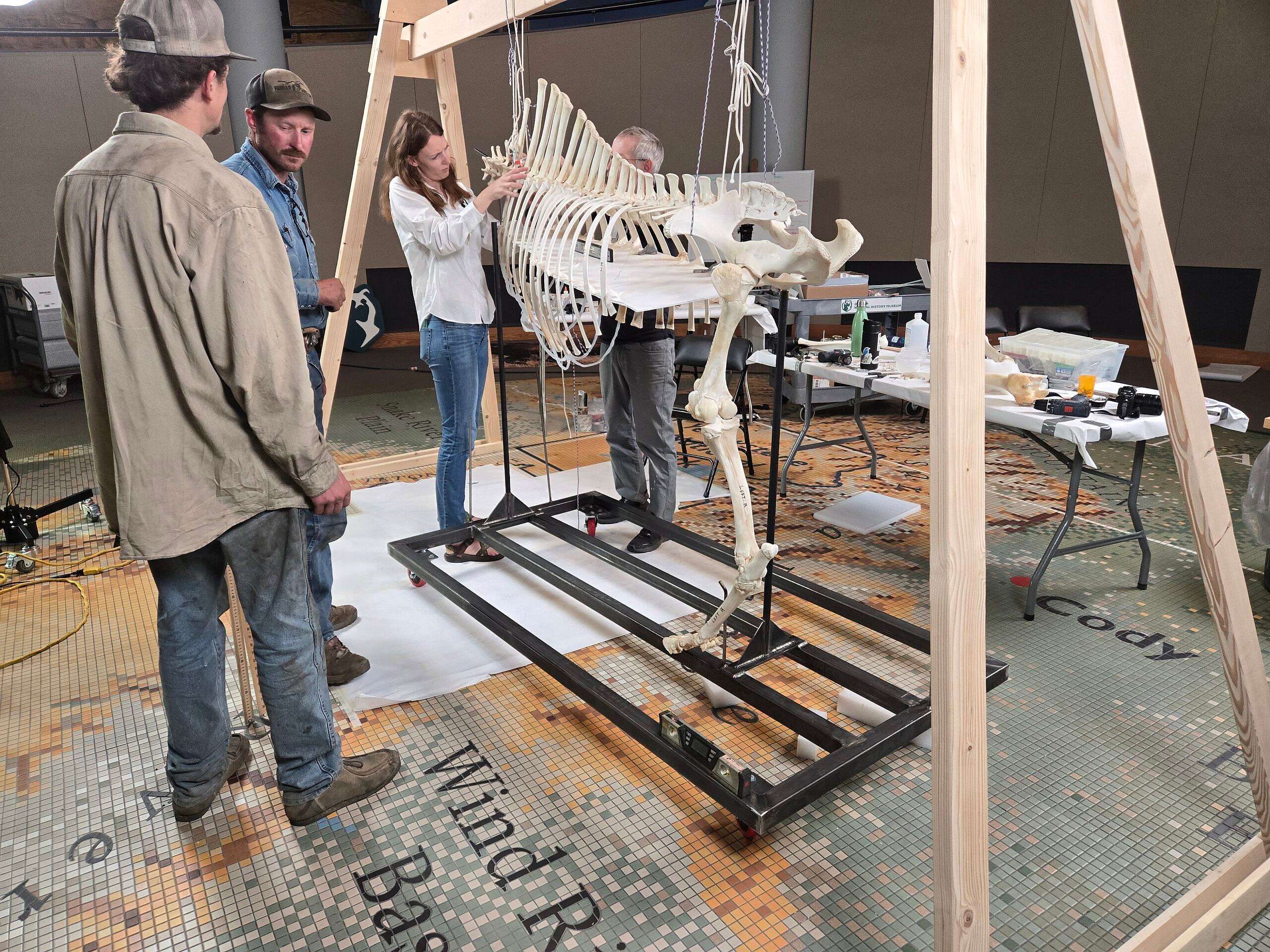
With the bones degreased and gently whitened, we were ready to assemble the skeleton. We took over the Draper’s tile map and worked Monday through Saturday for two weeks in August 2025 to articulate the skeleton. More than 30 people assisted with various aspects of the reconstruction.
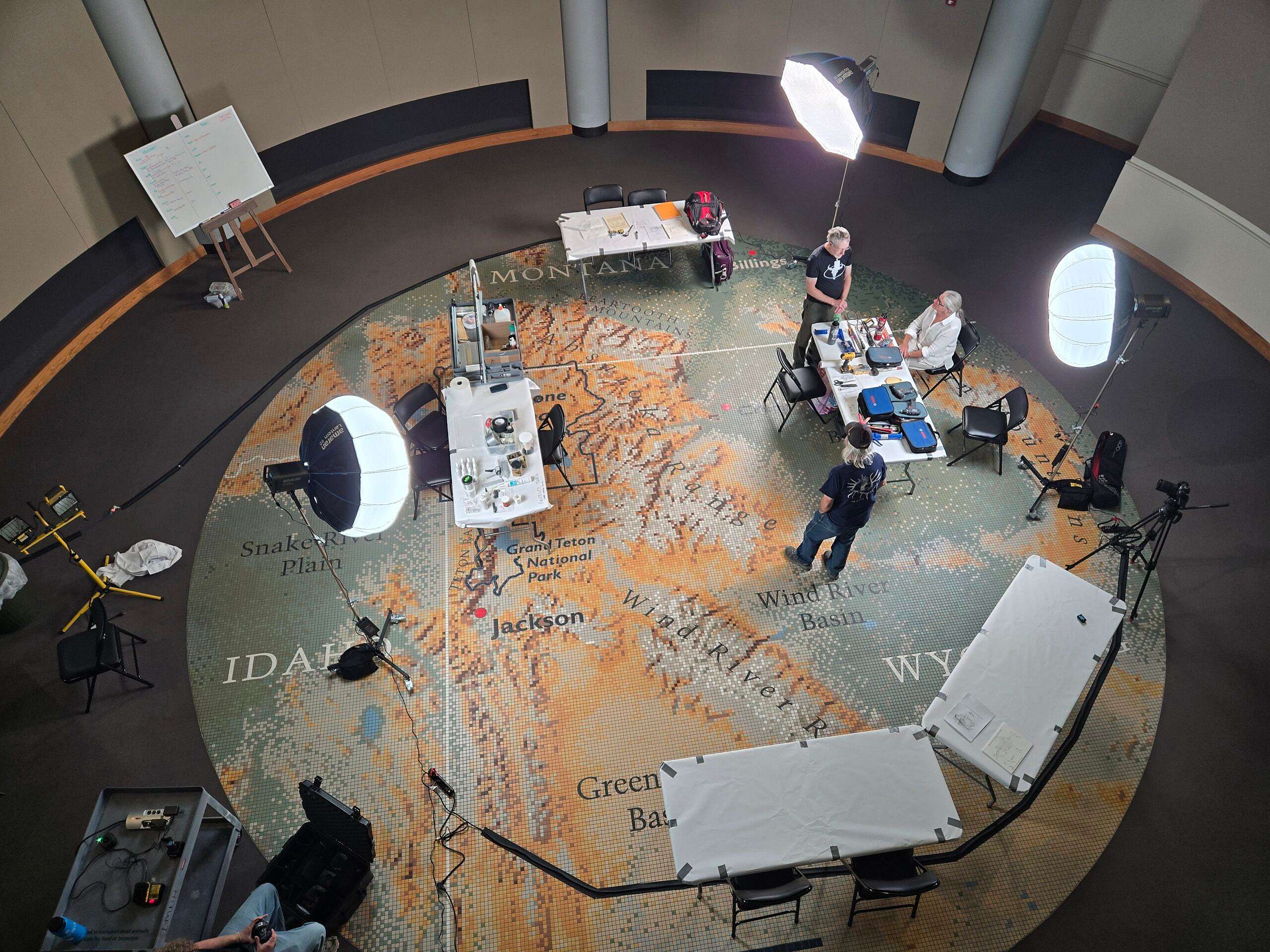
The first step in any articulation is to choose a position and organize the bones into sections: vertebral column, limbs, ribs, etc. The vertebrae are the physical backbone of the skeleton, so we first assembled the spine and attached the pelvis.
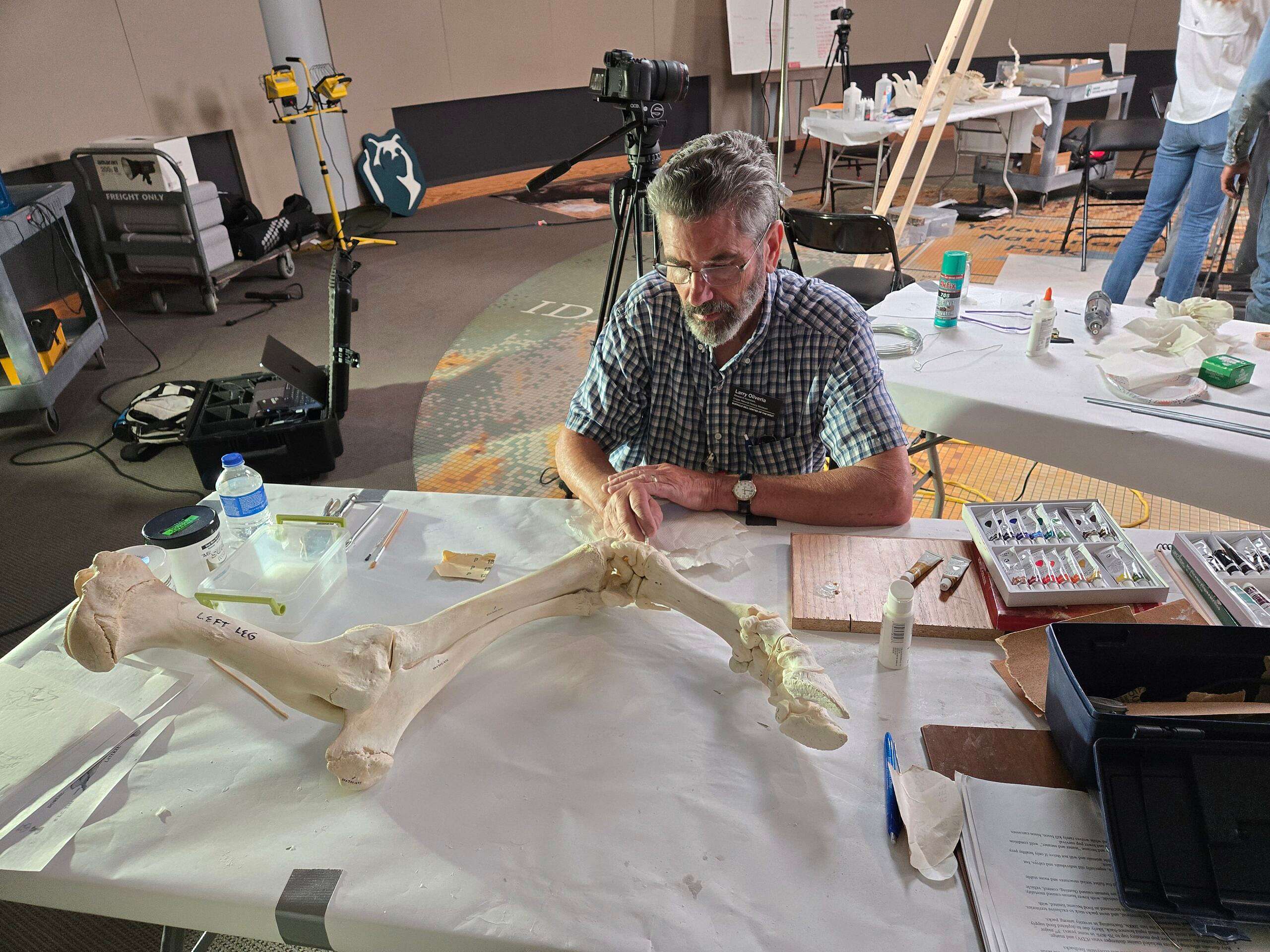
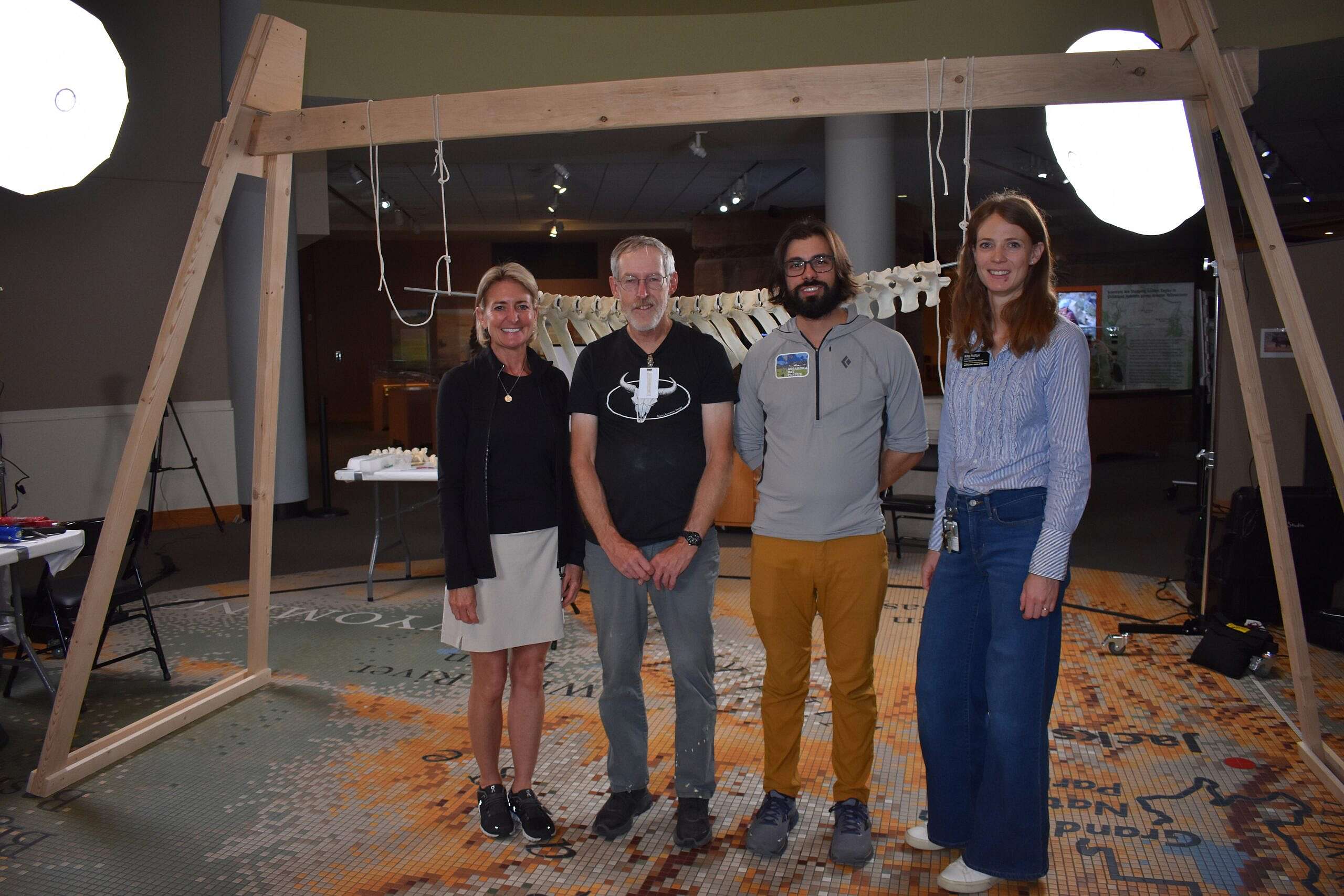
We suspended the vertebral column and pelvis on a wooden frame built locally by Lovell Construction. The frame was crucial in allowing us to work 360° around the skeleton as we reconstructed it. Once we finished the vertebral column, various teams worked on the limbs, reassembled the hyoid, and patched seams created during the preparation process.
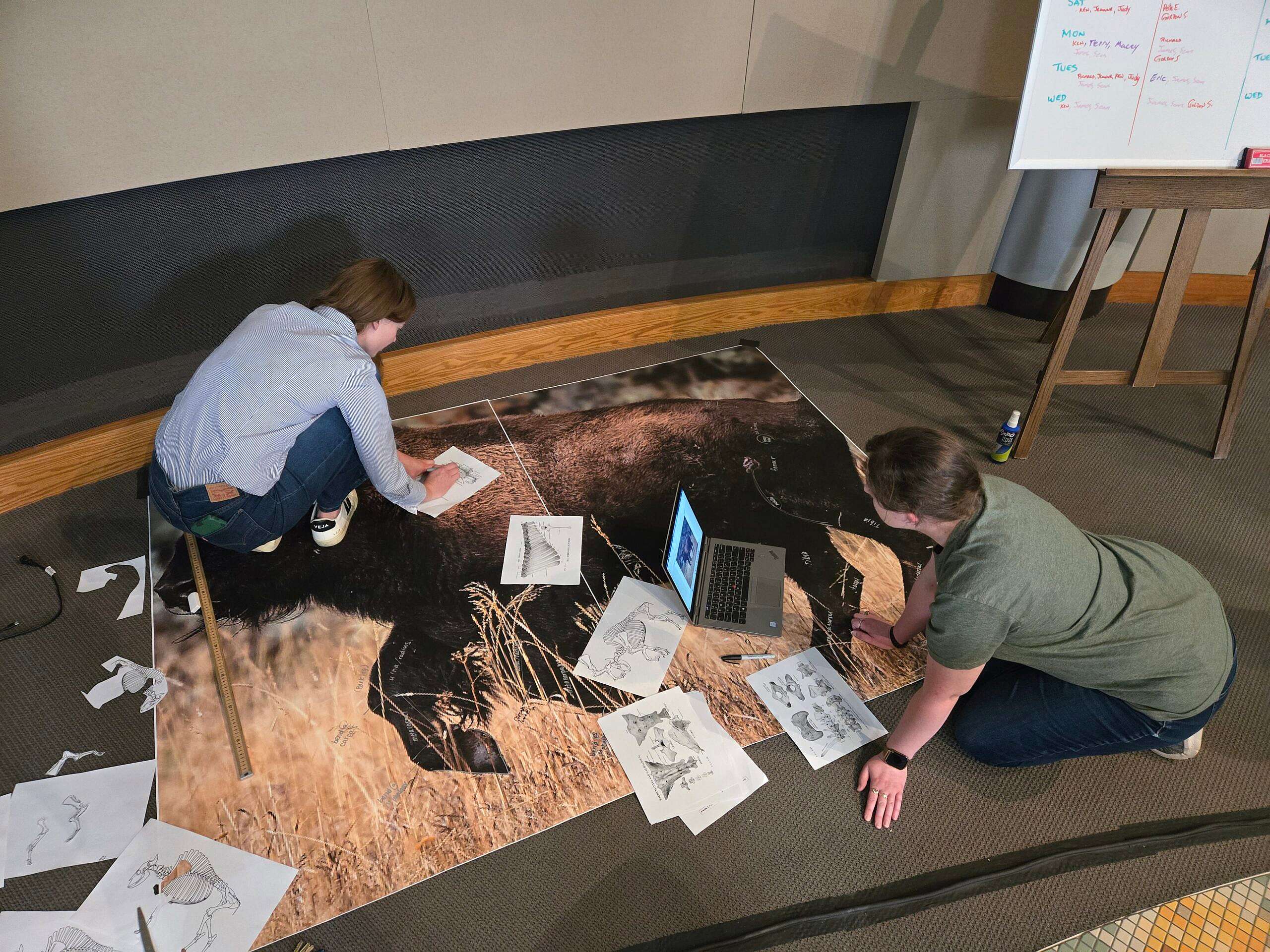
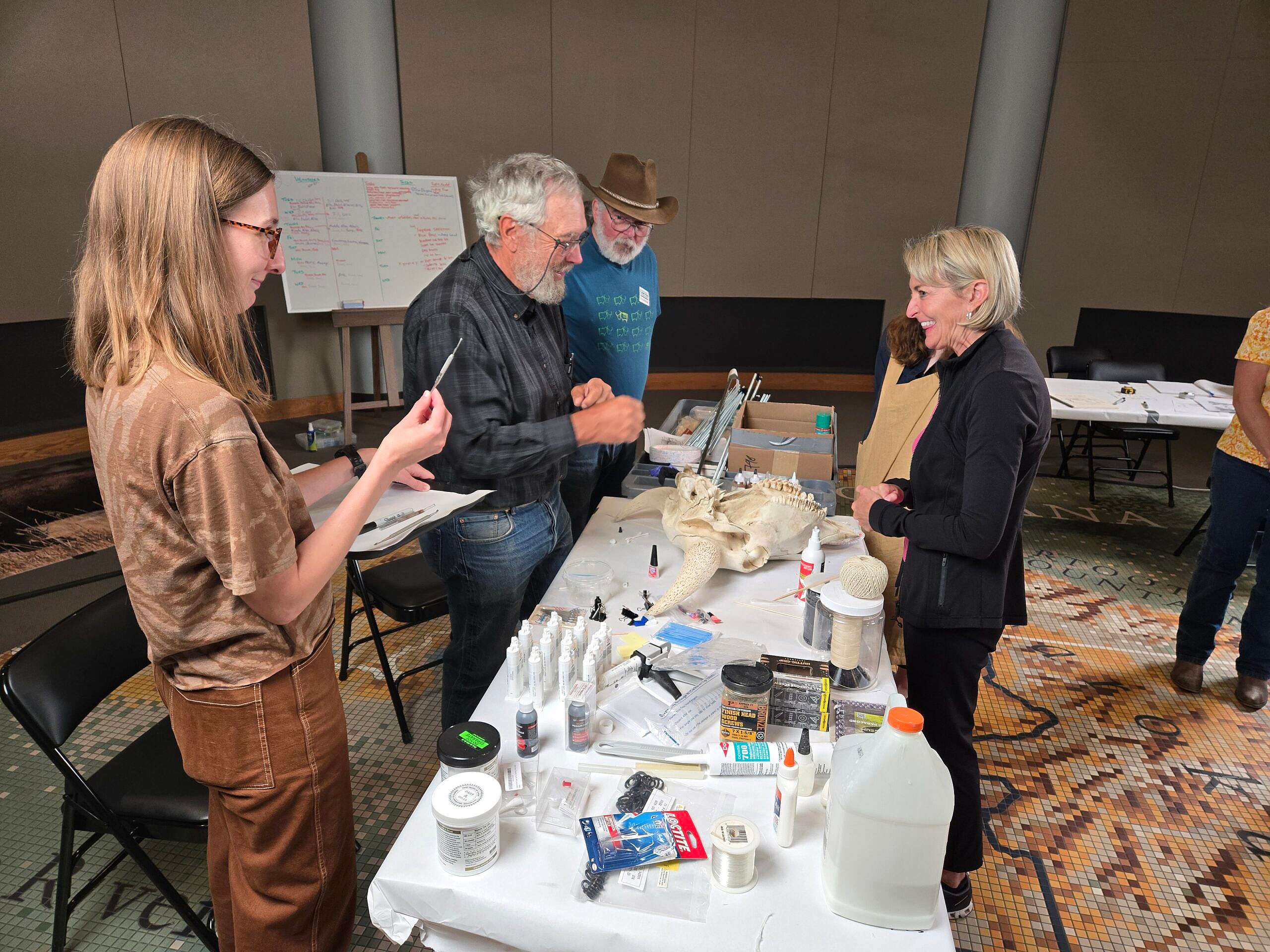
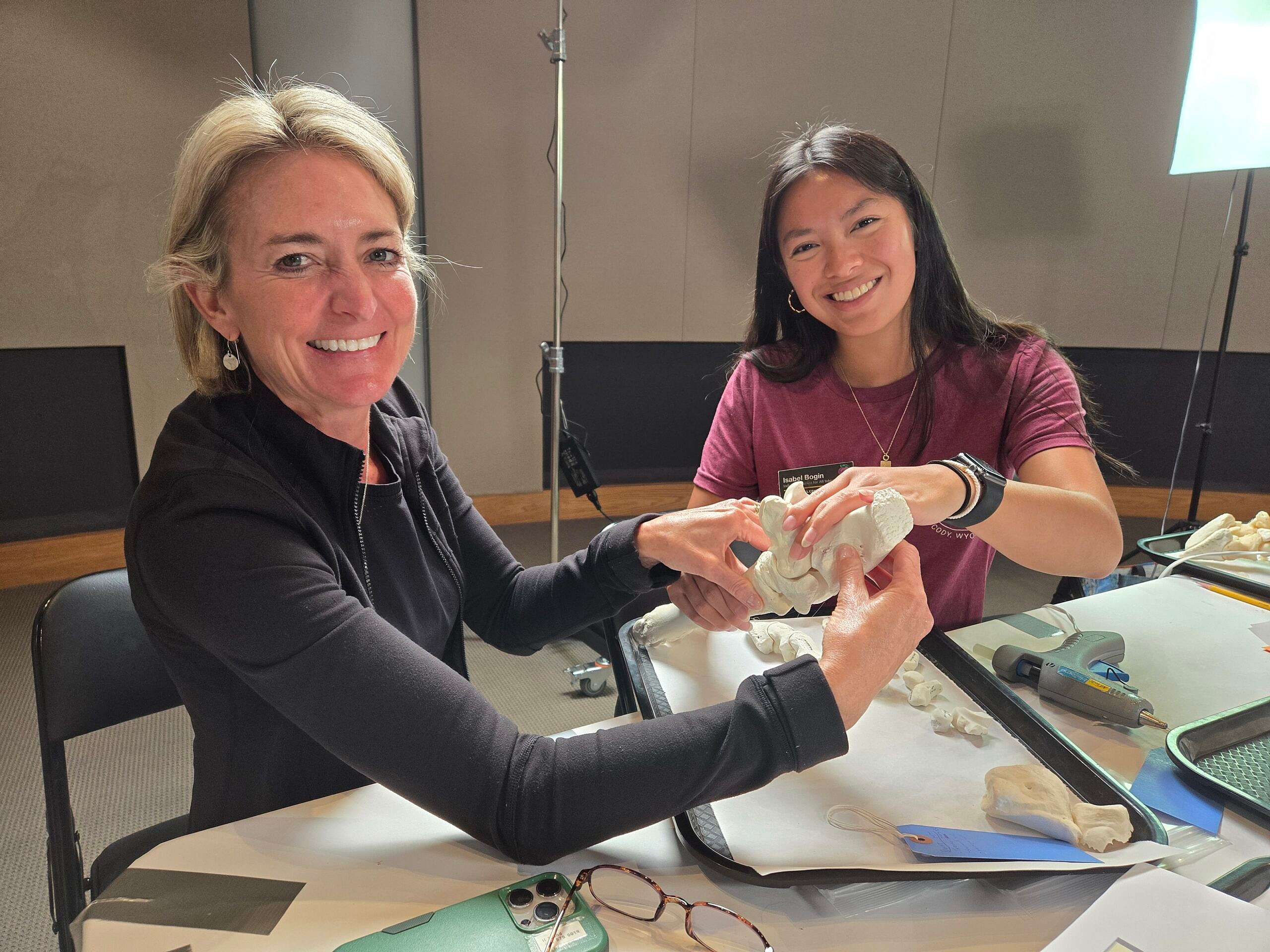
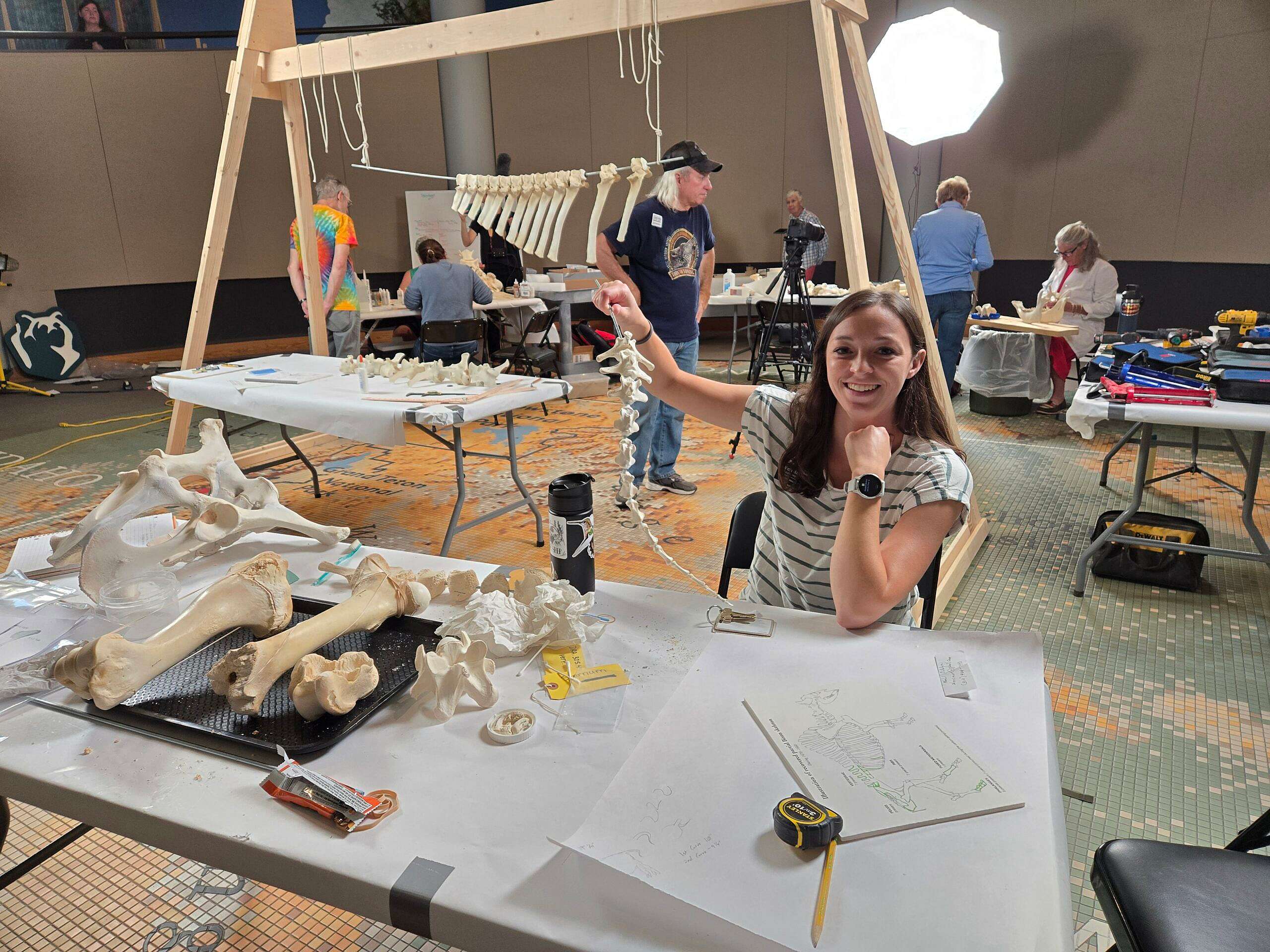
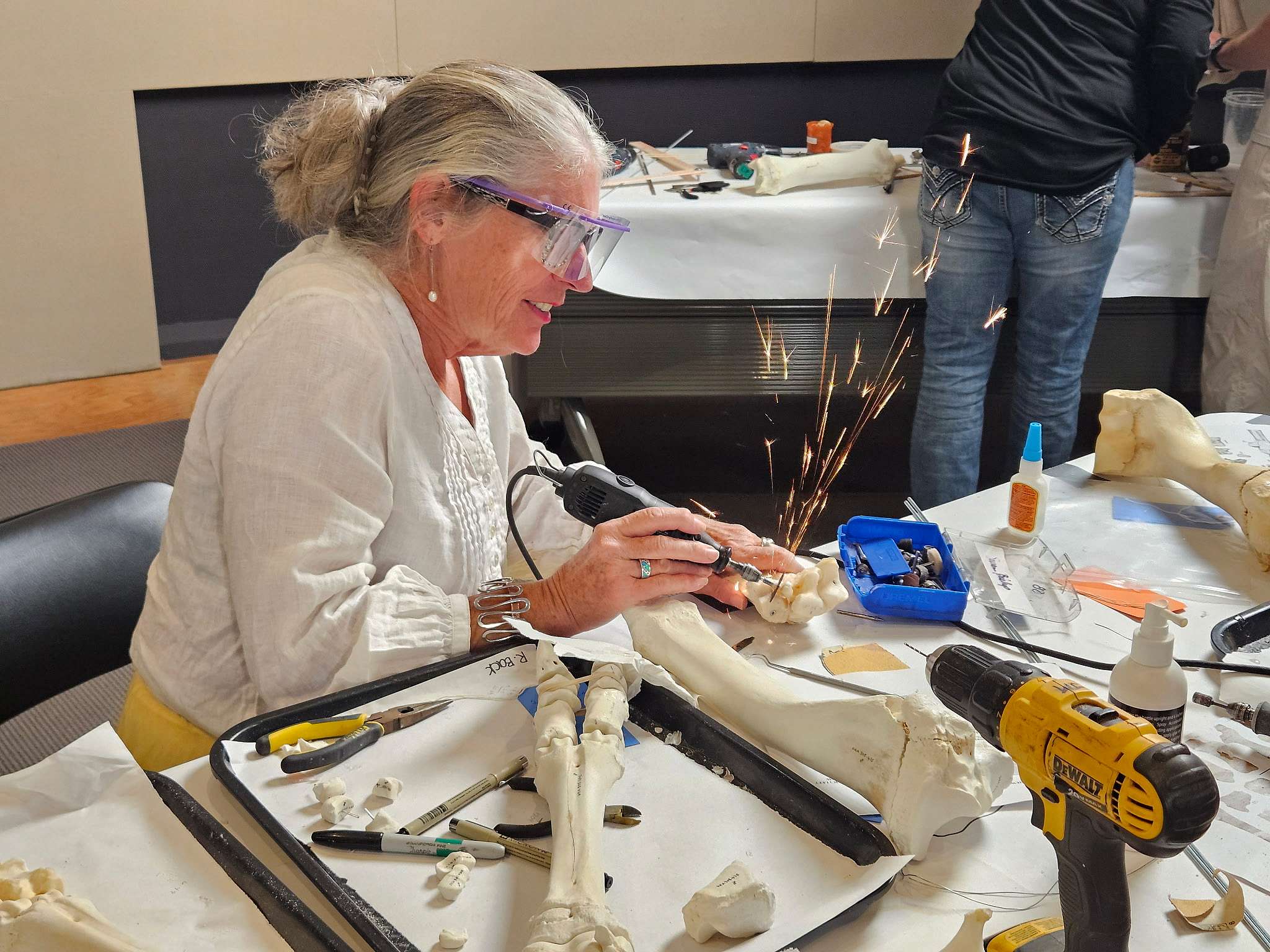
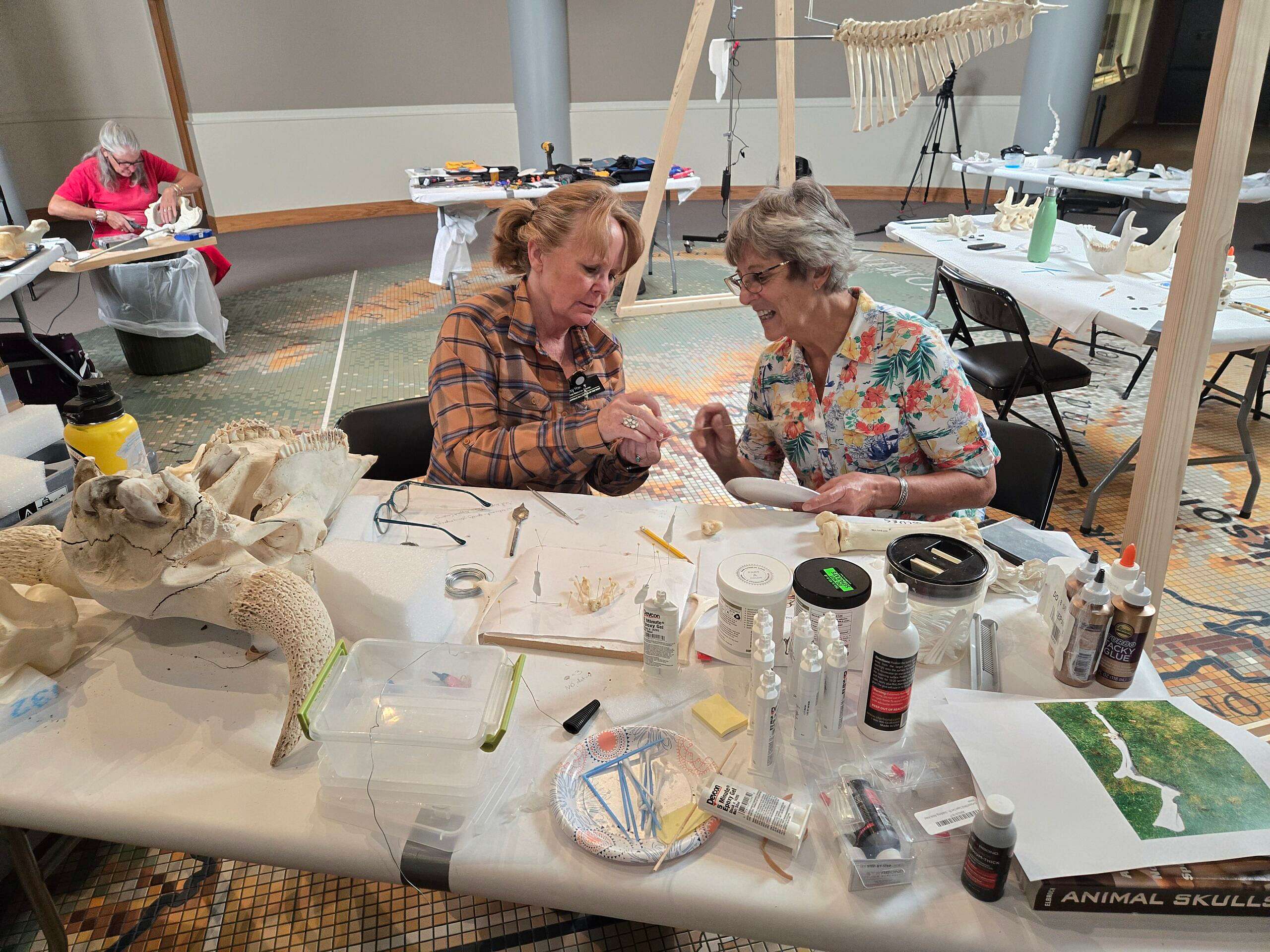
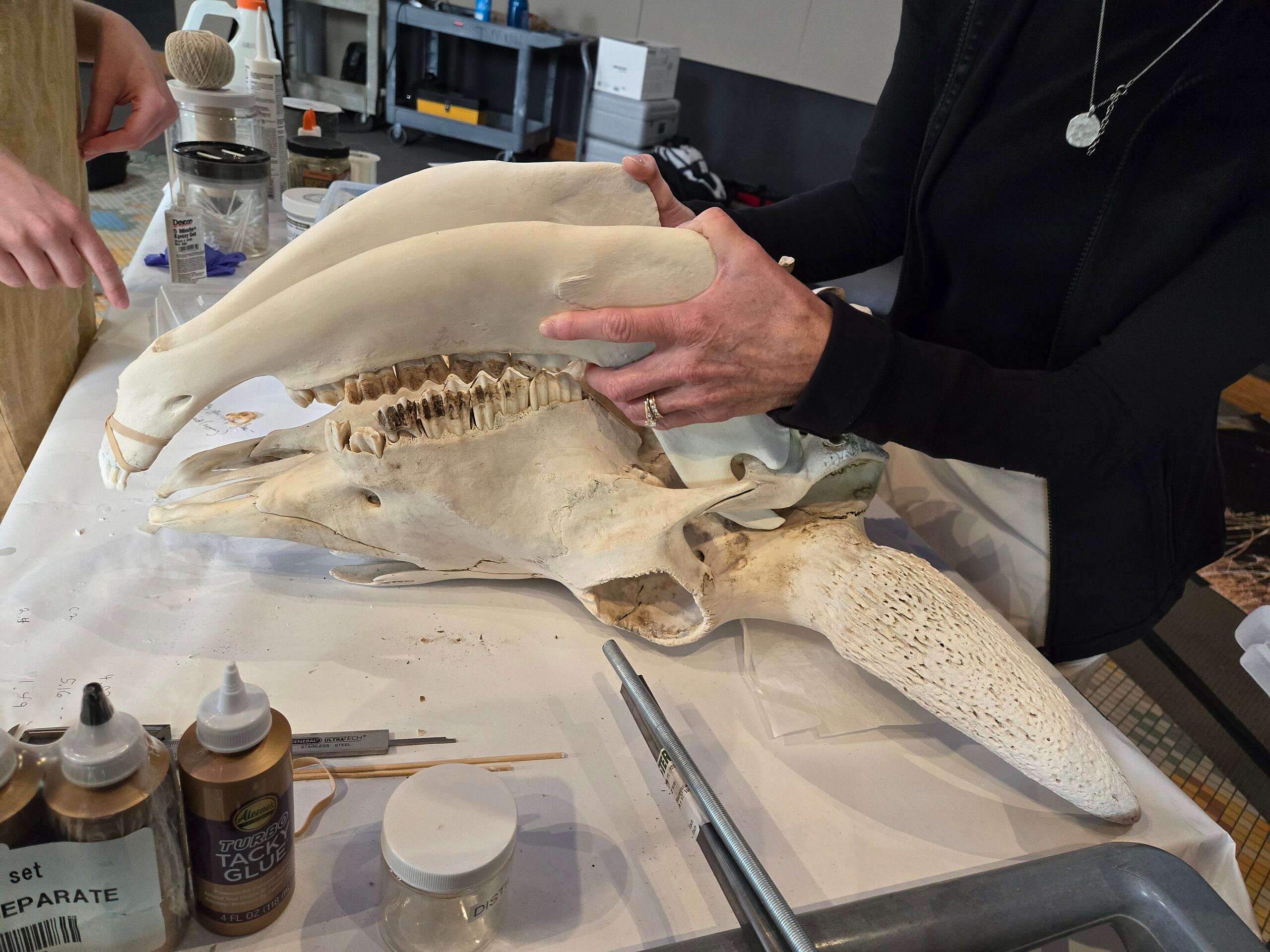
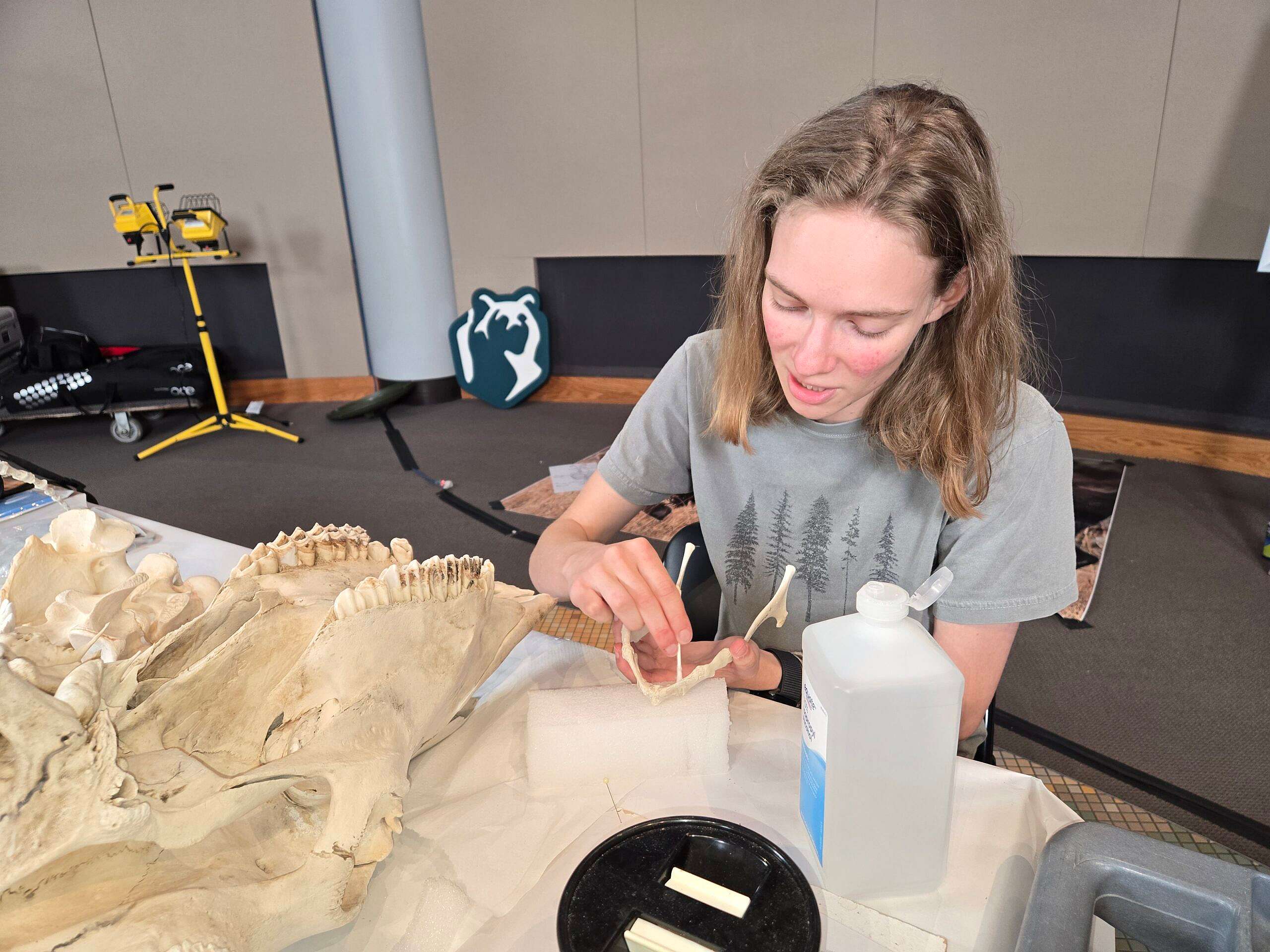
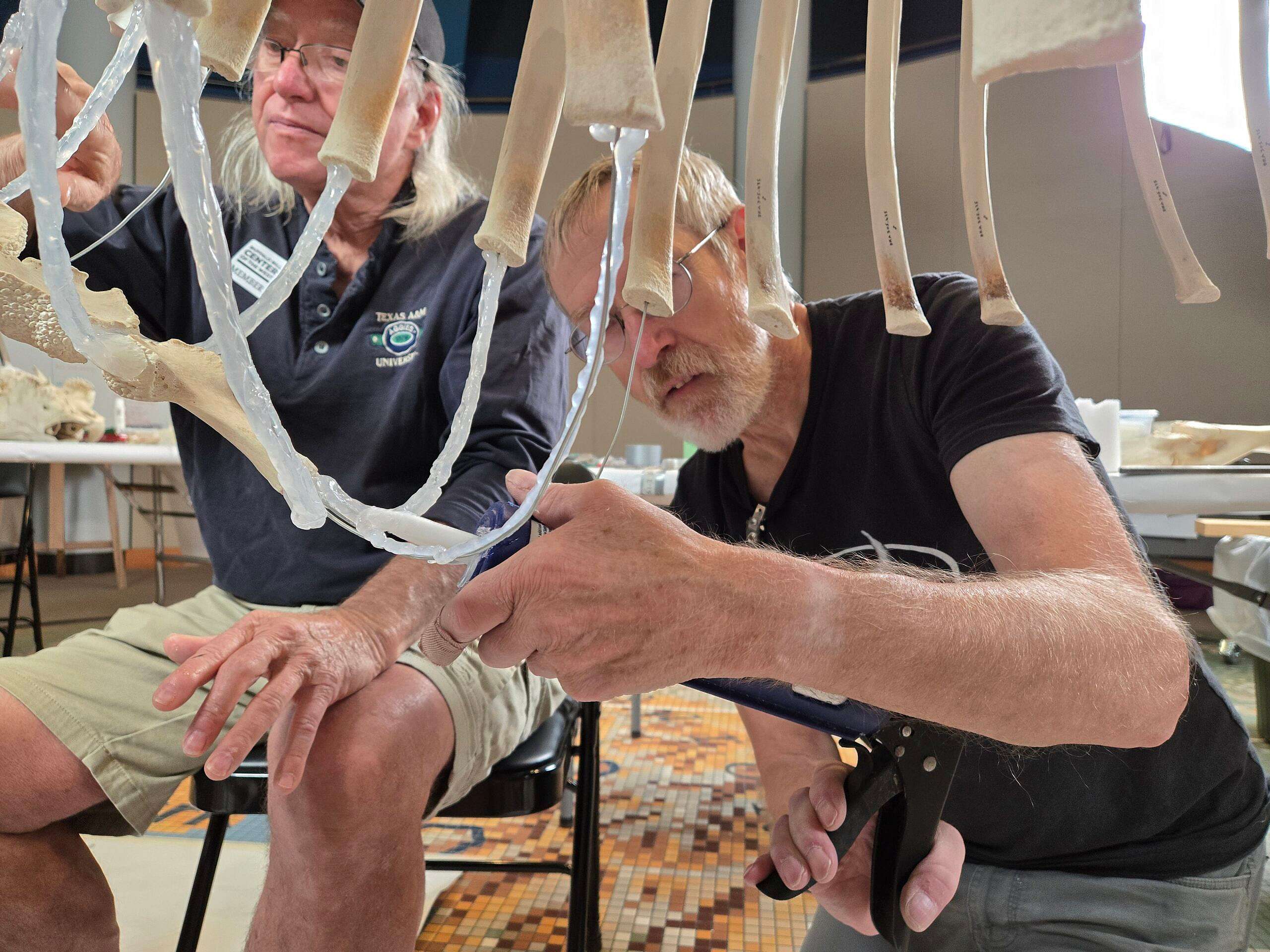
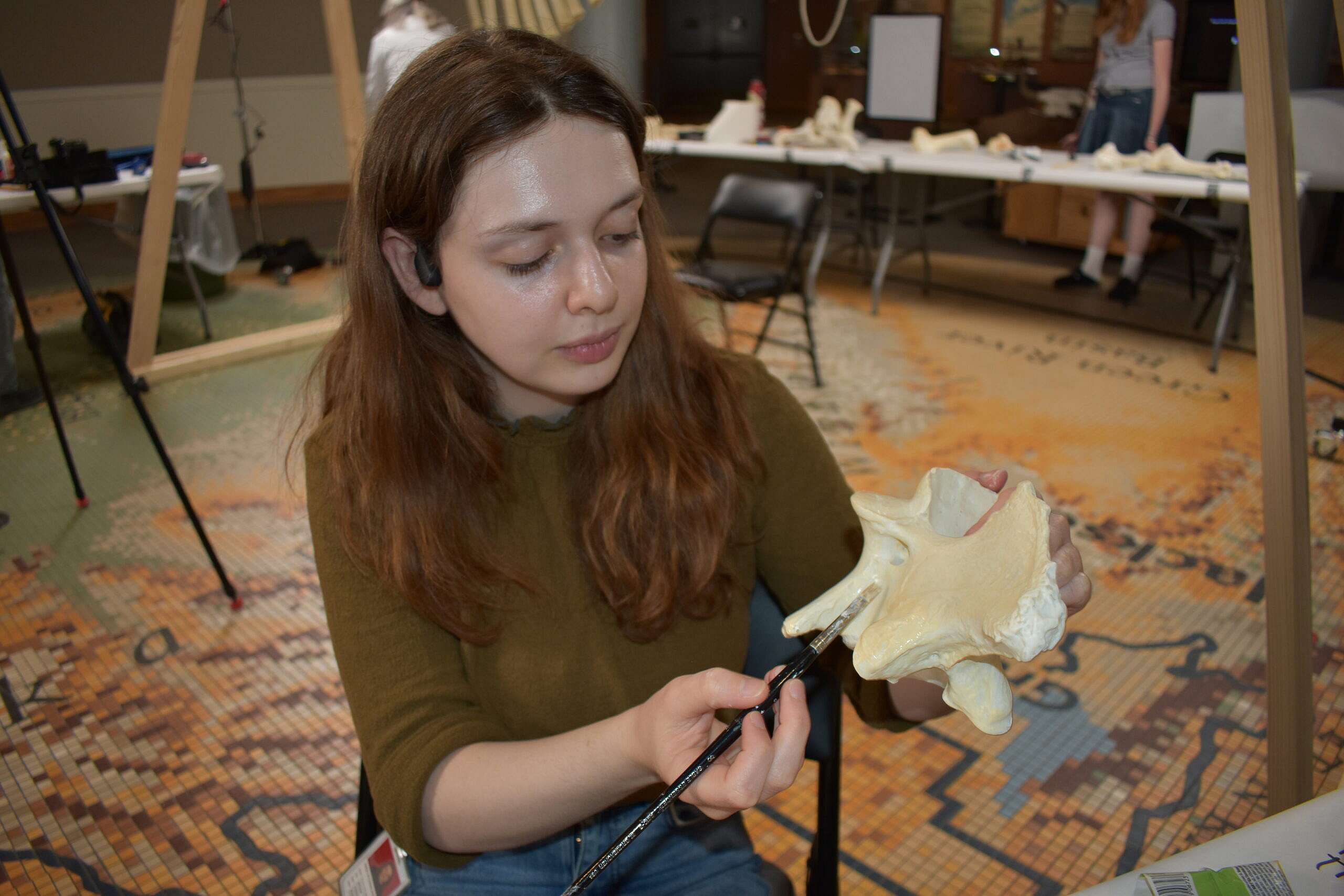
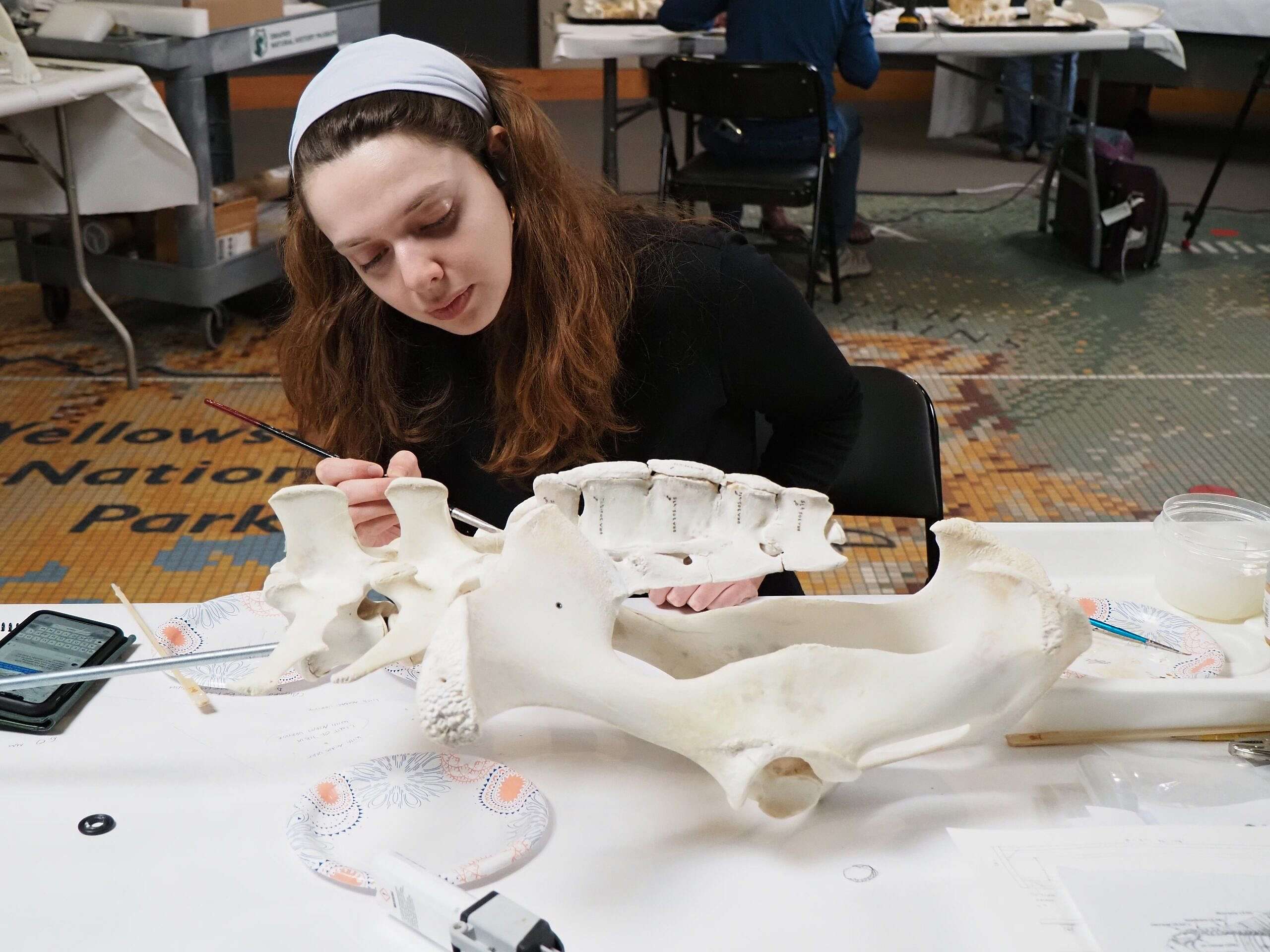
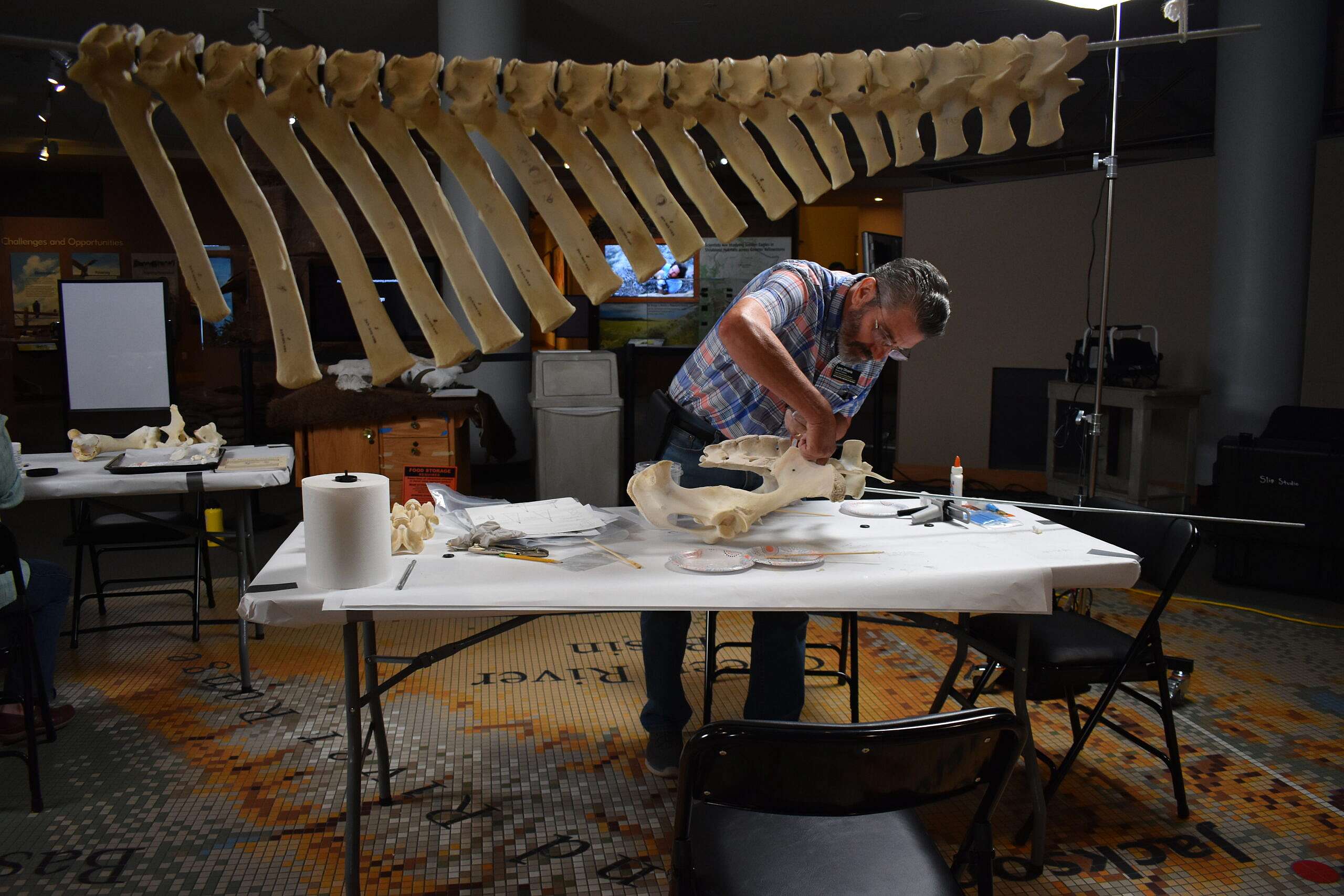
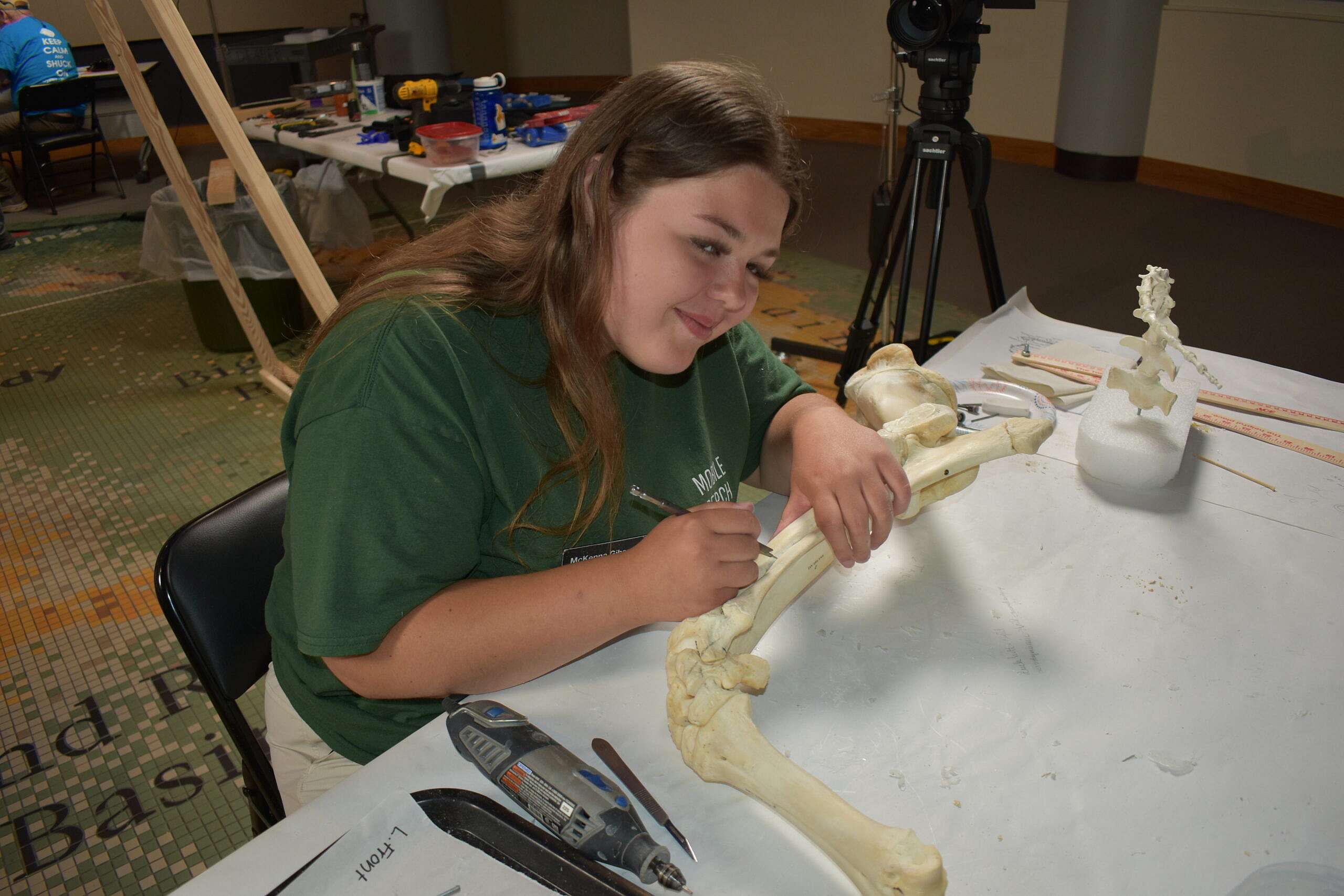
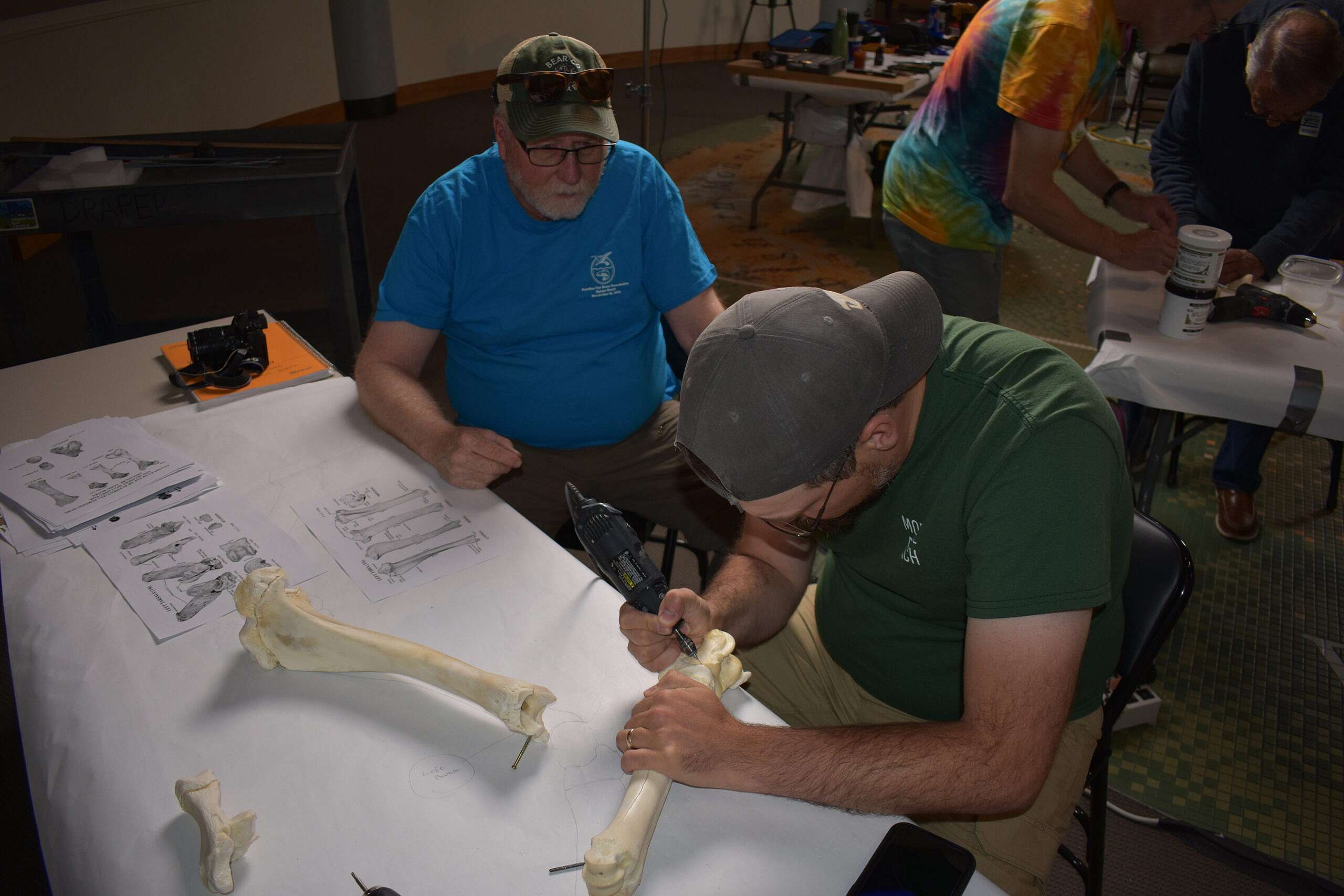
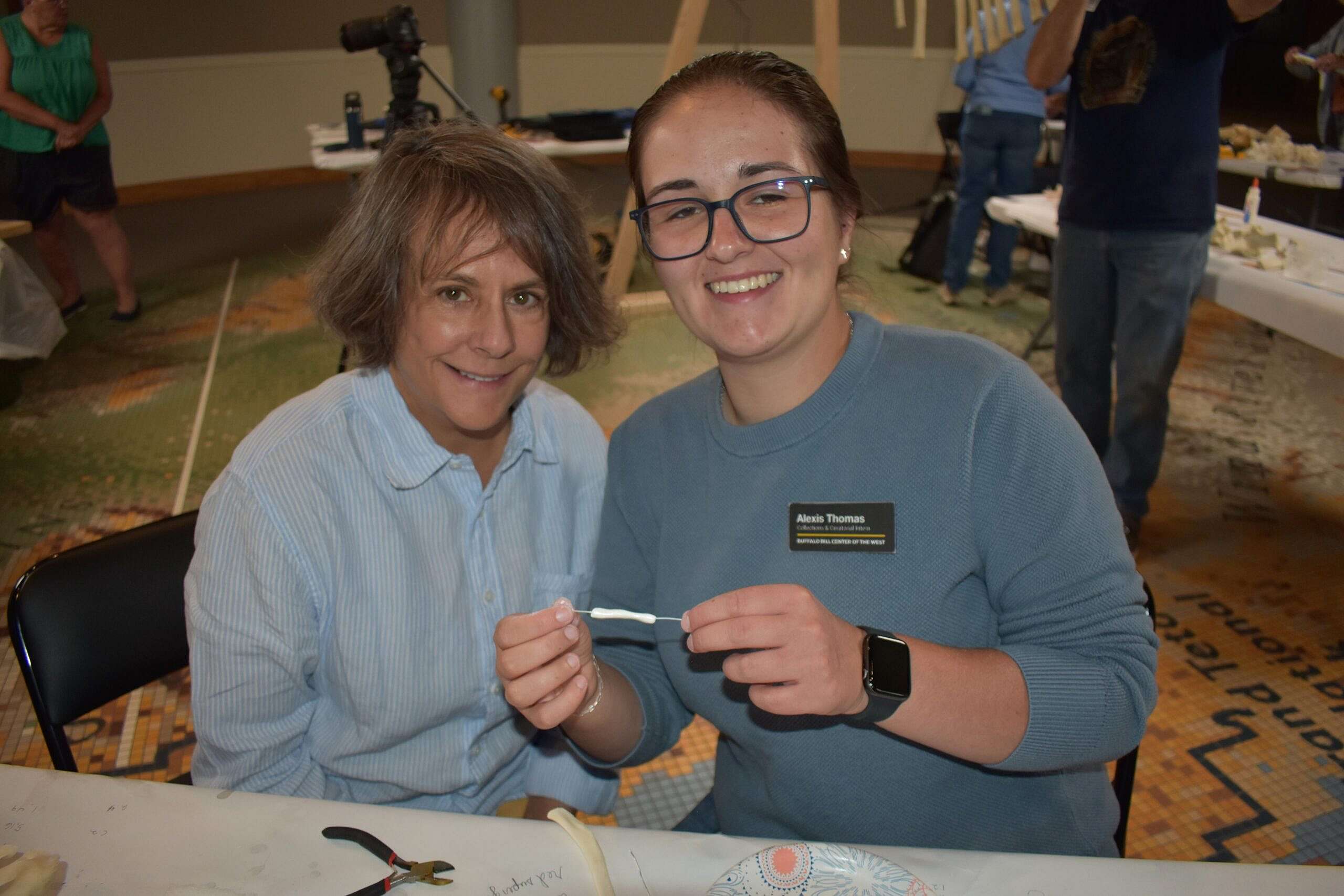
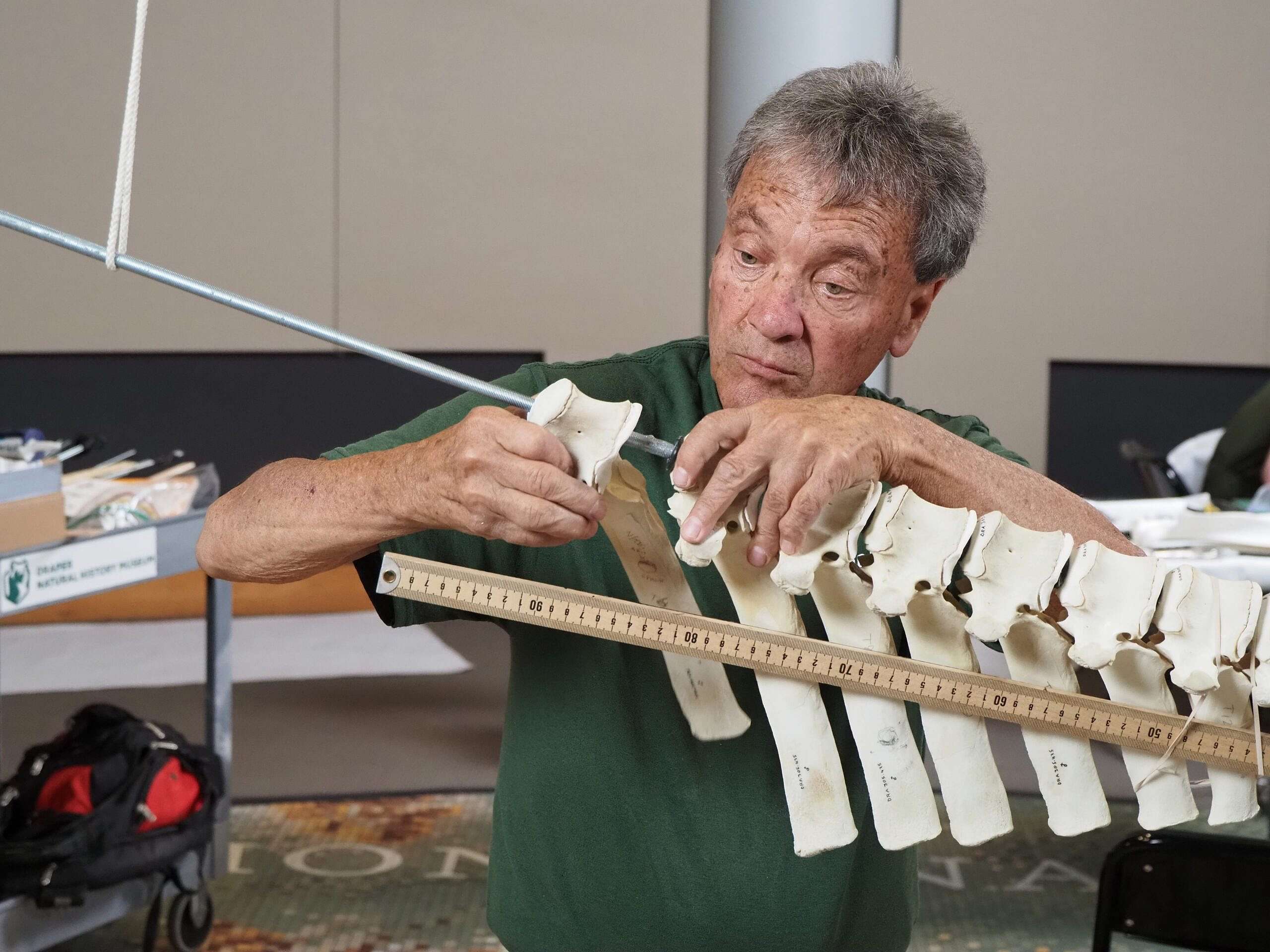
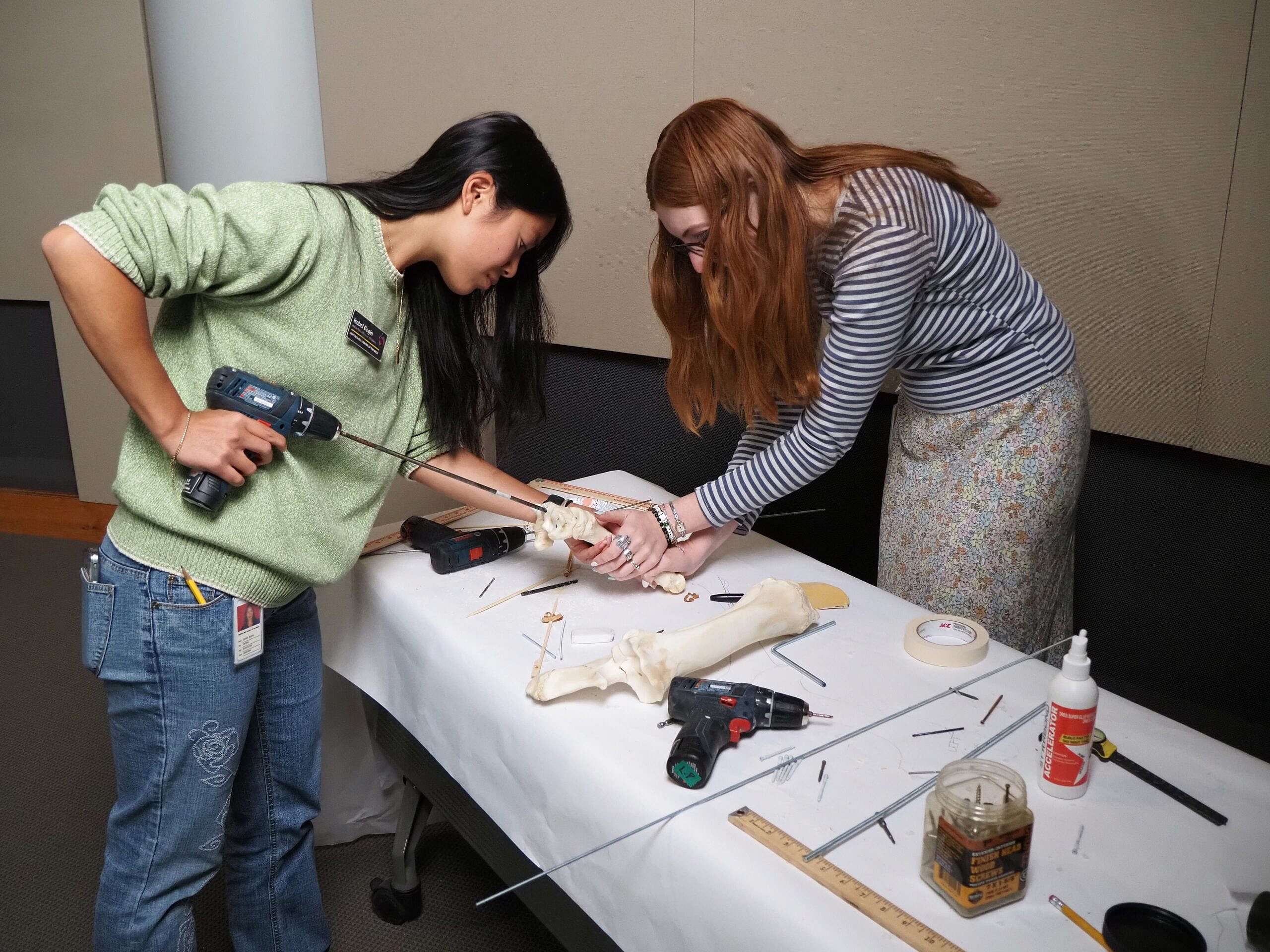
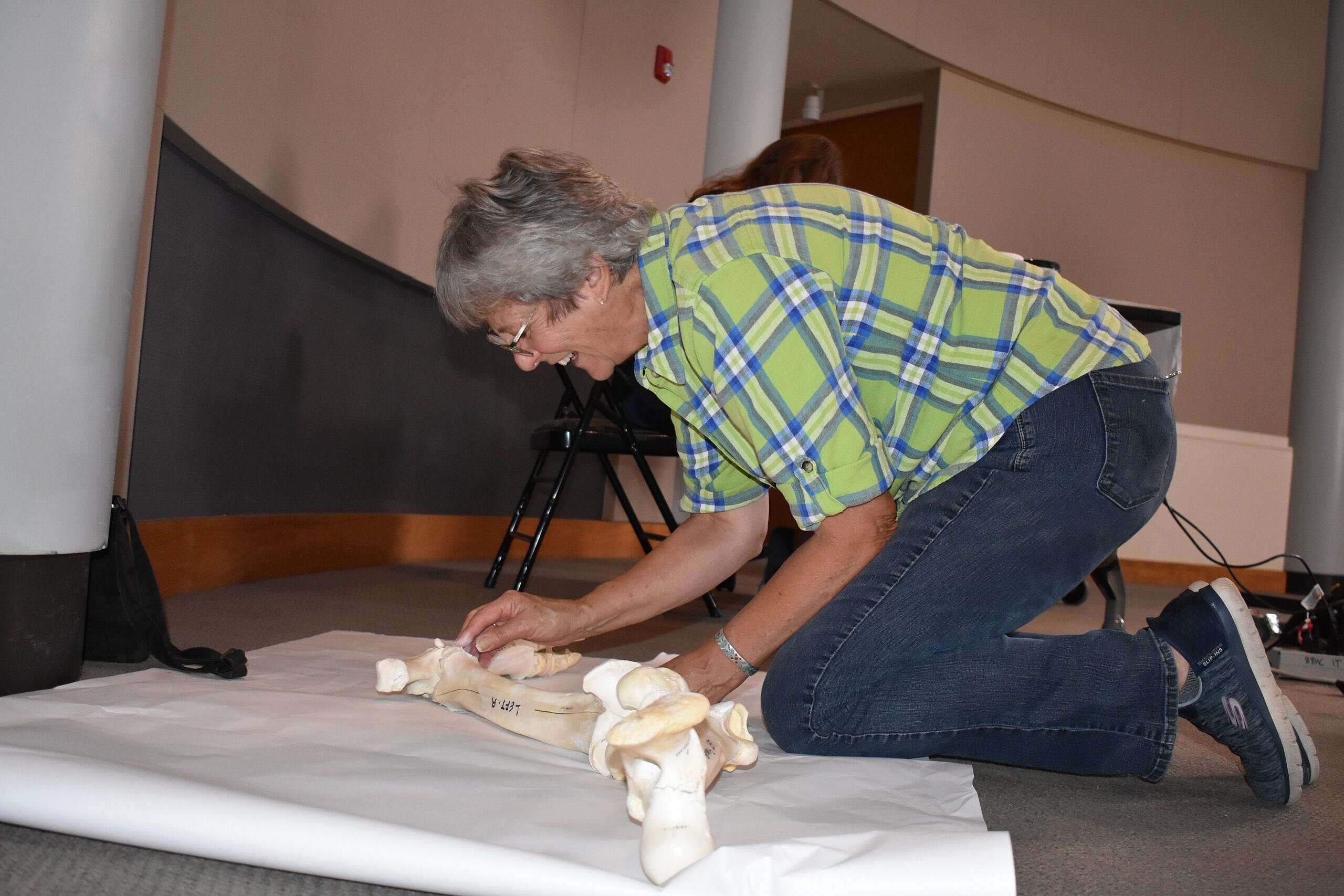
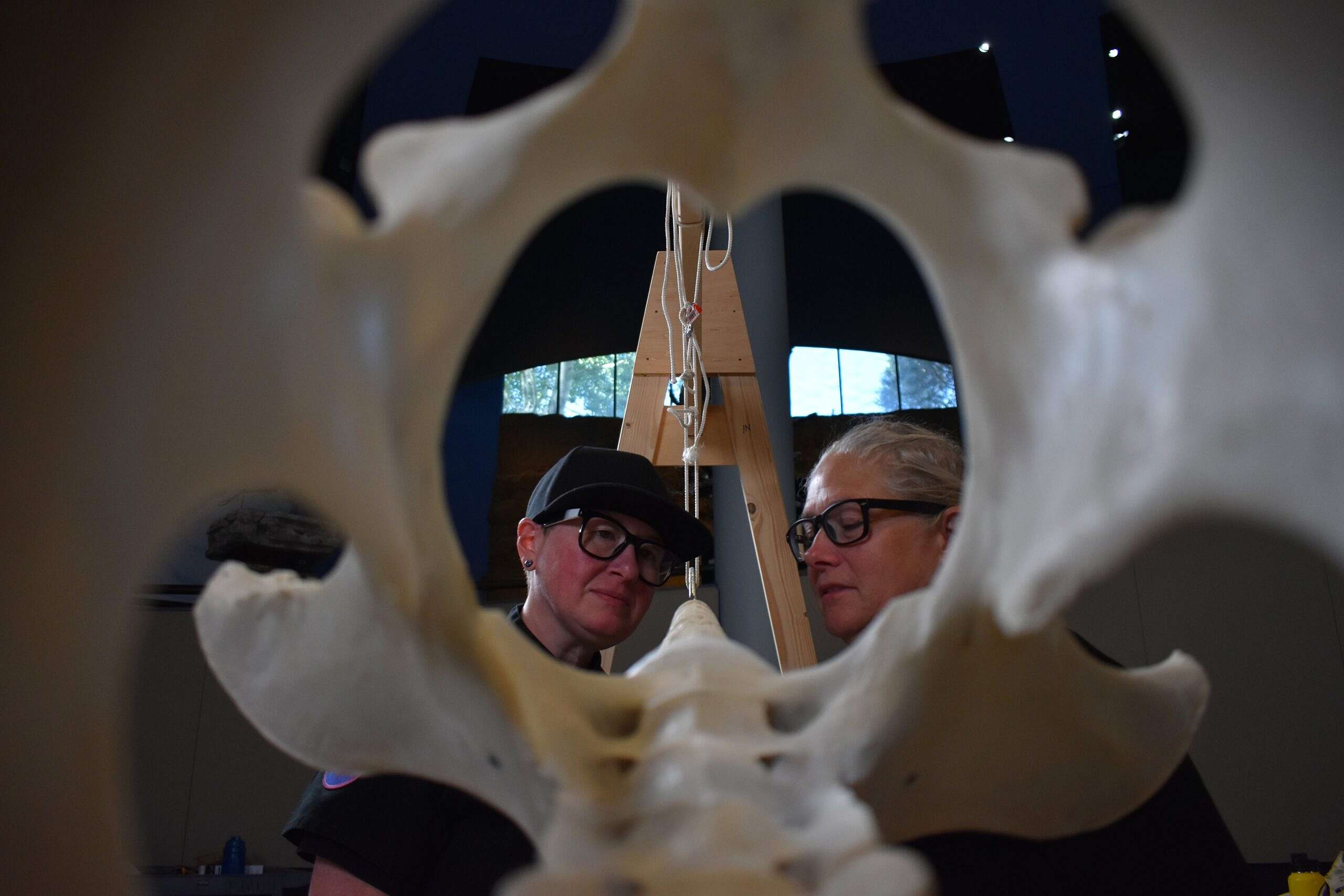
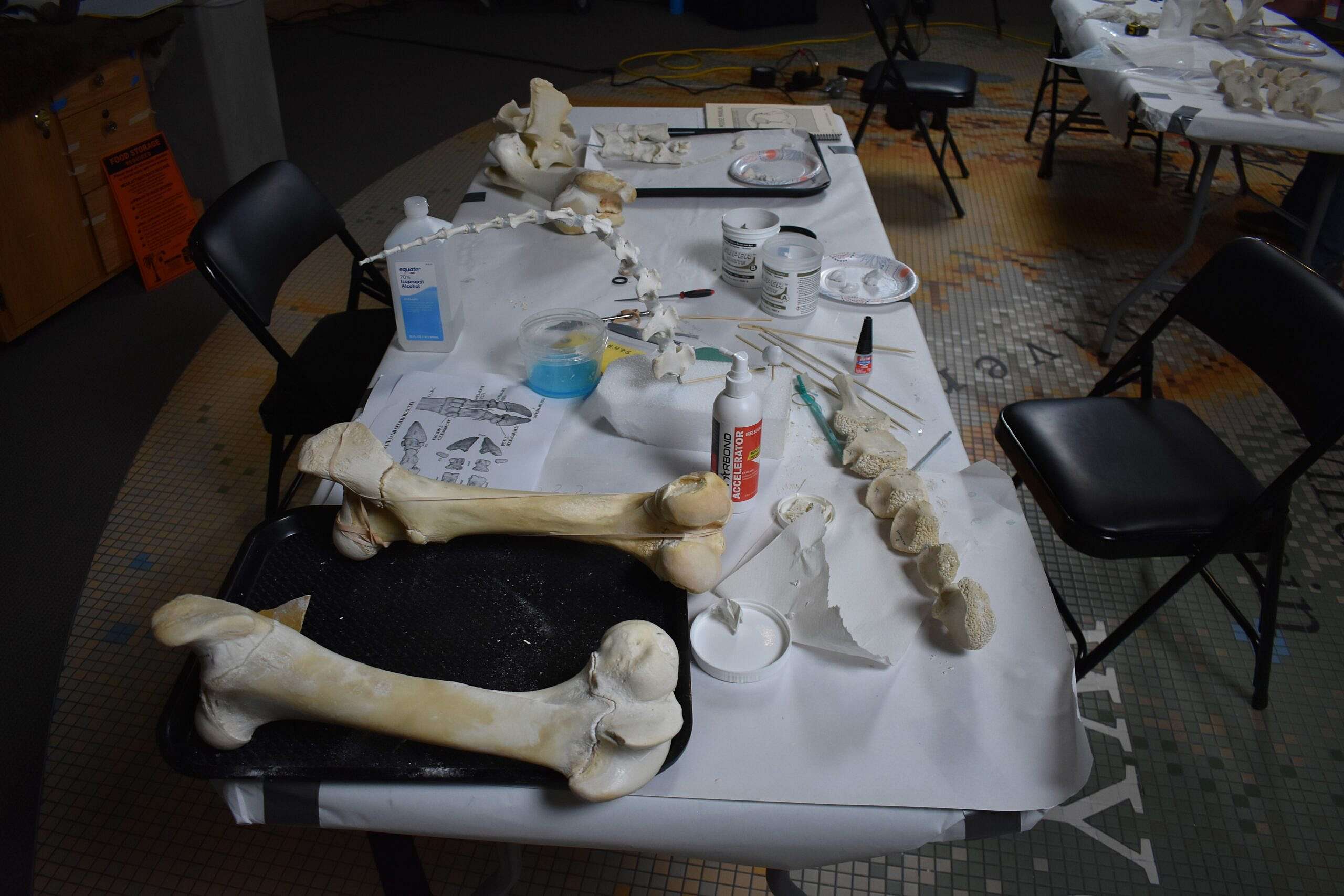
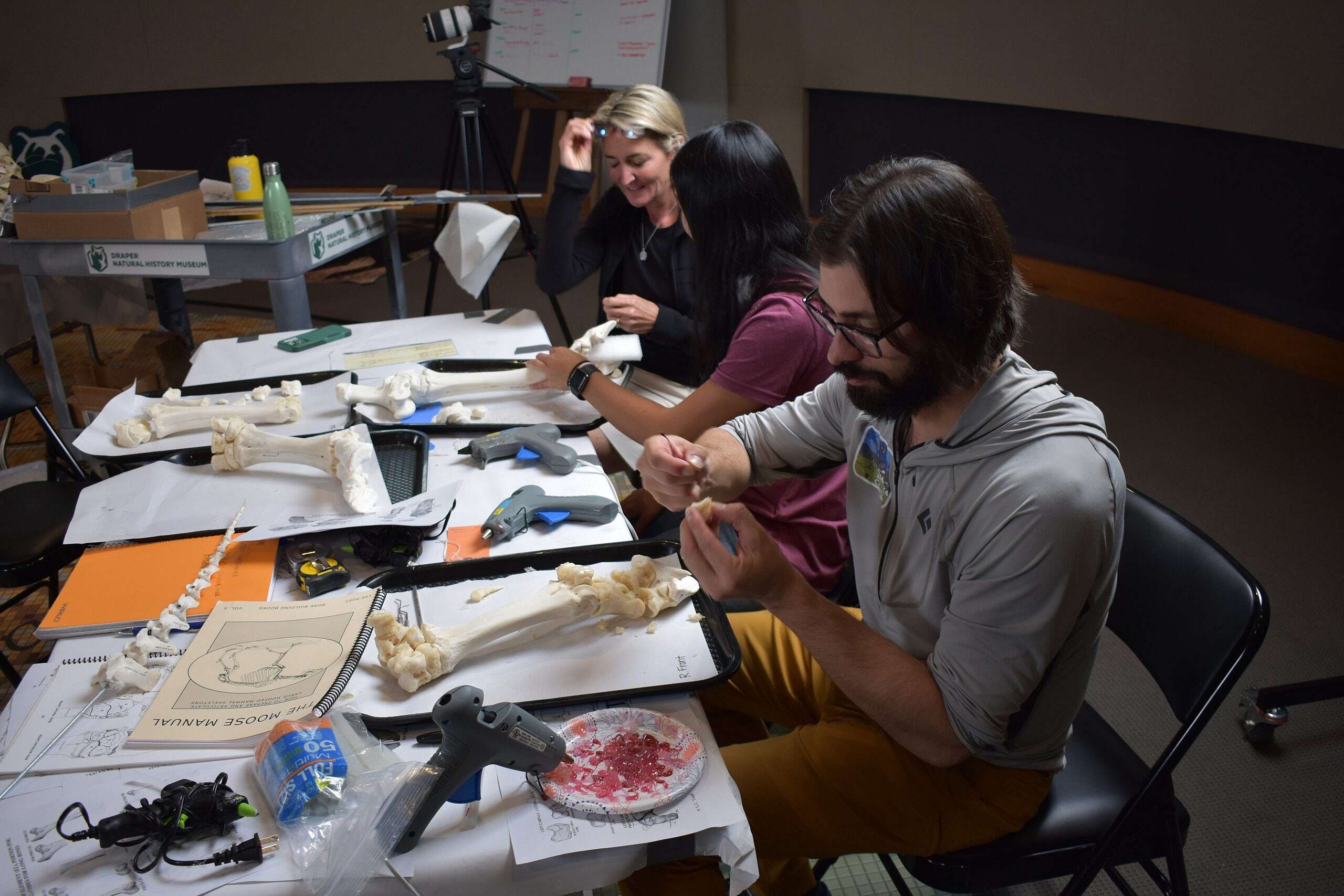
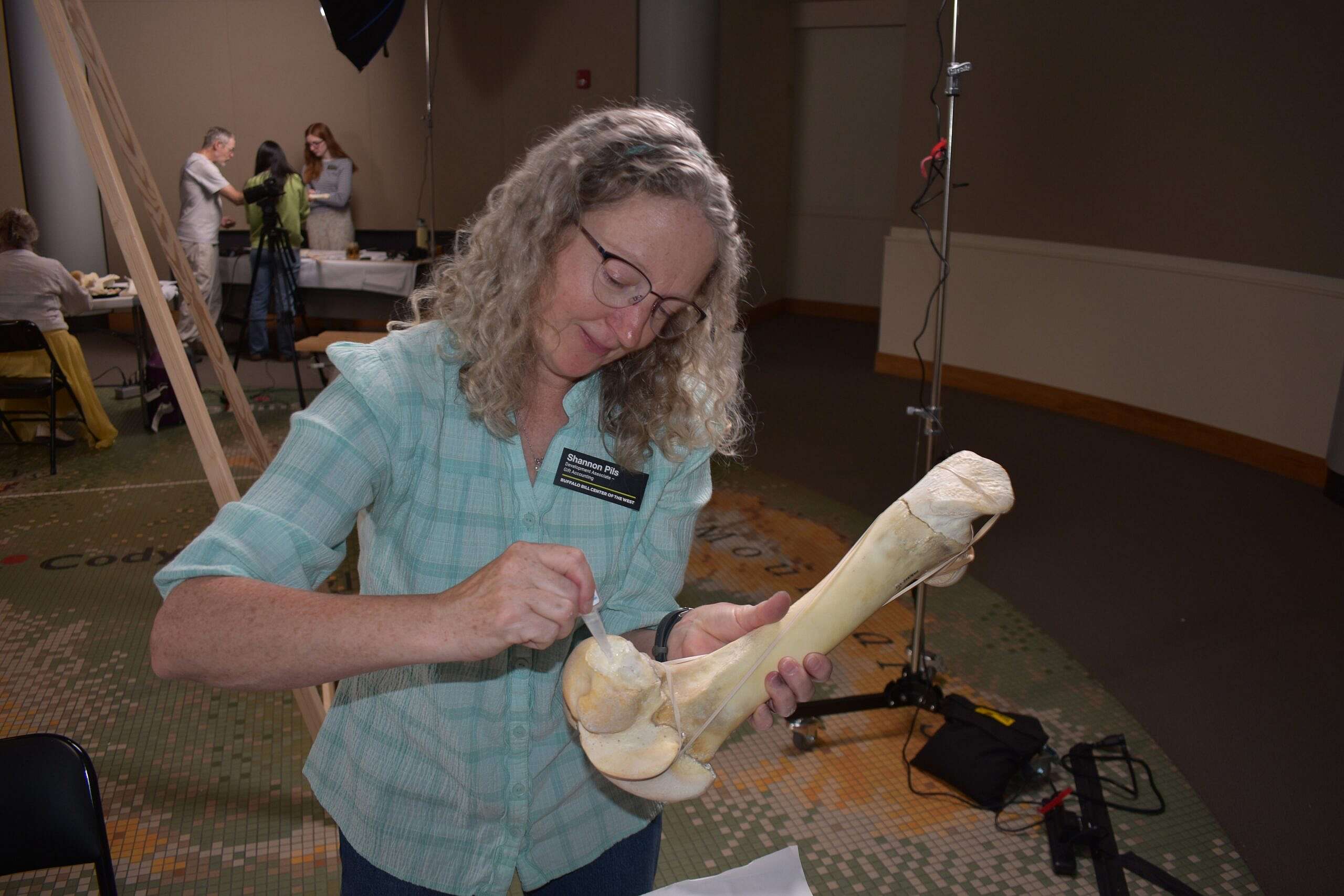
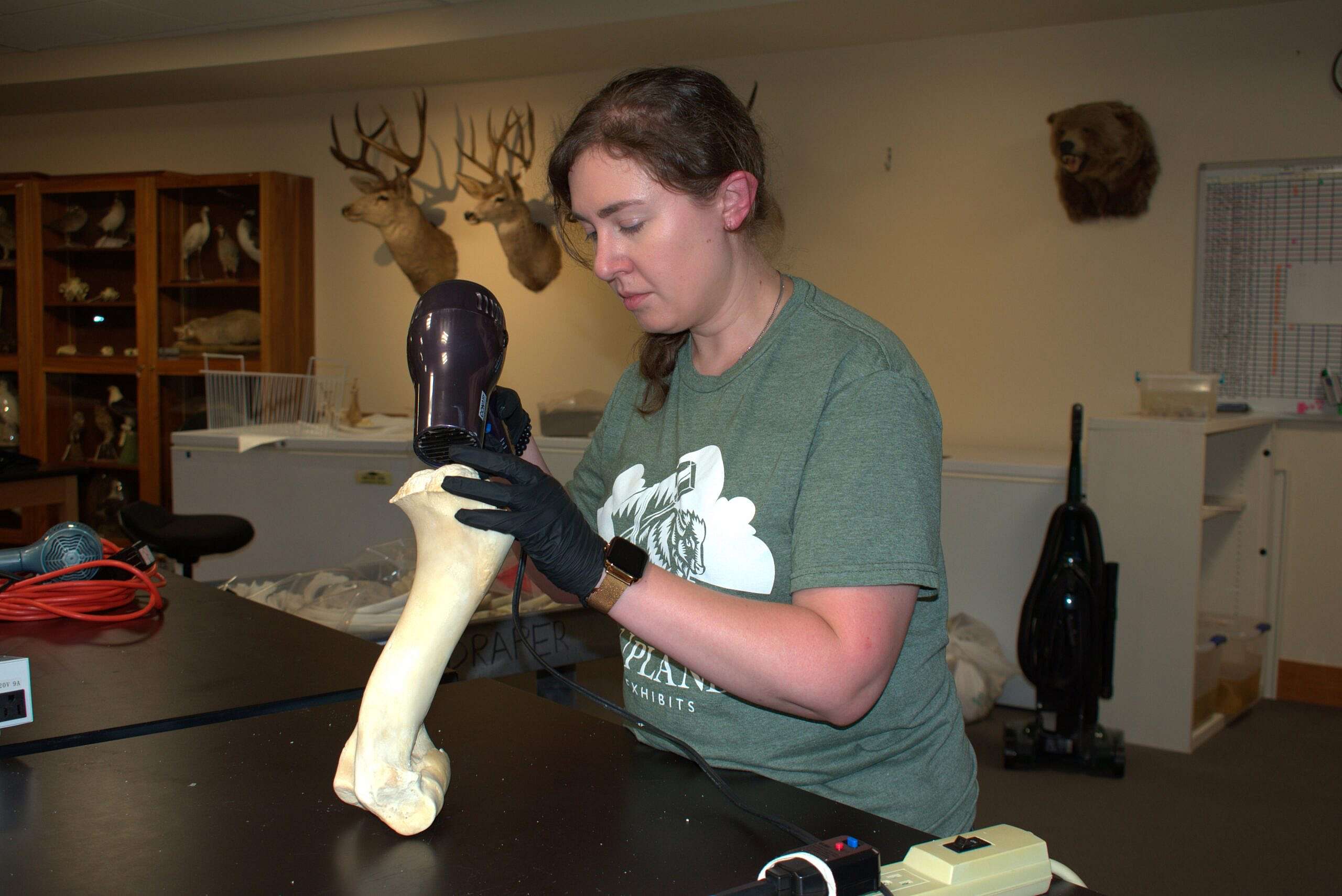
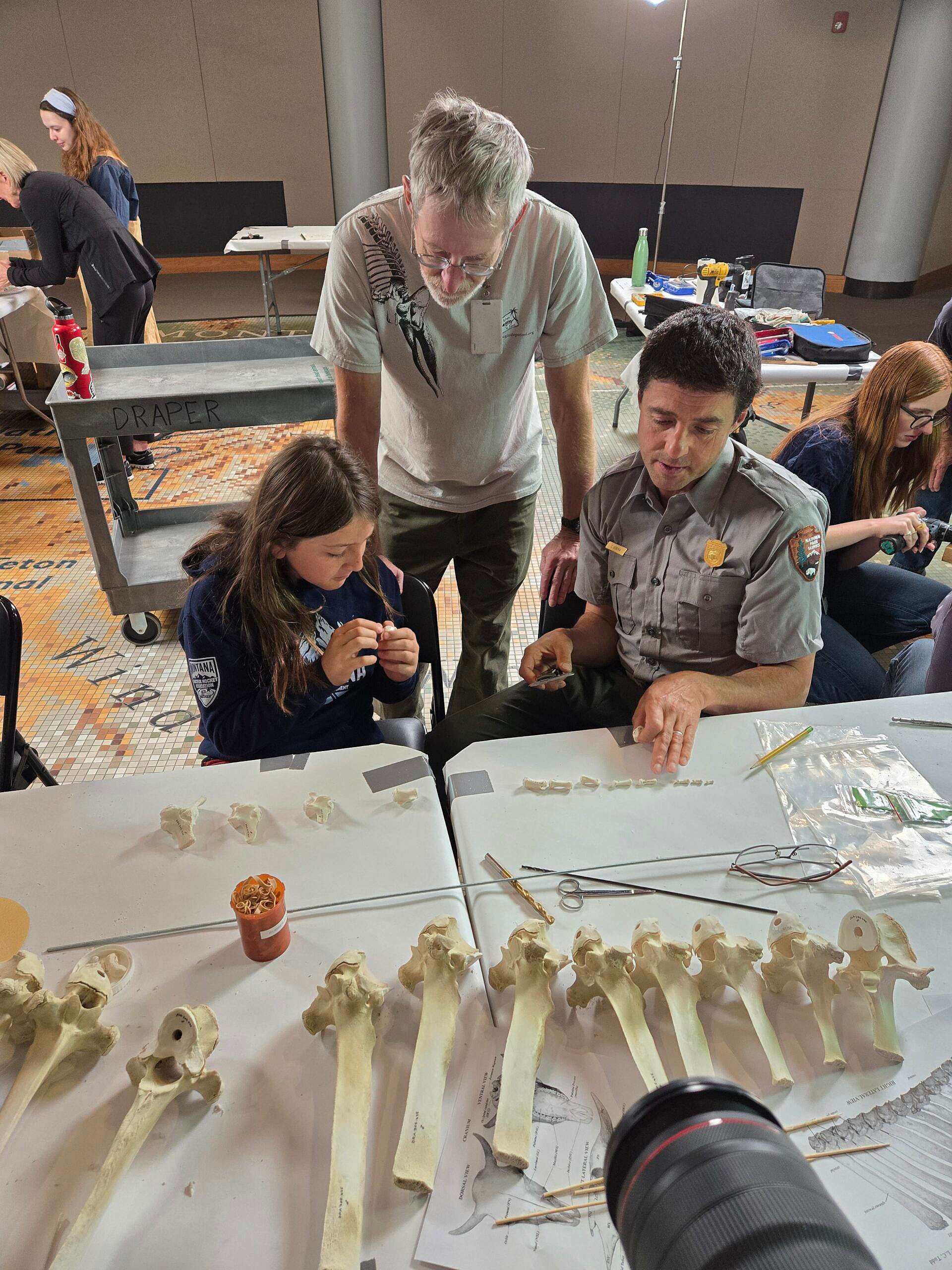
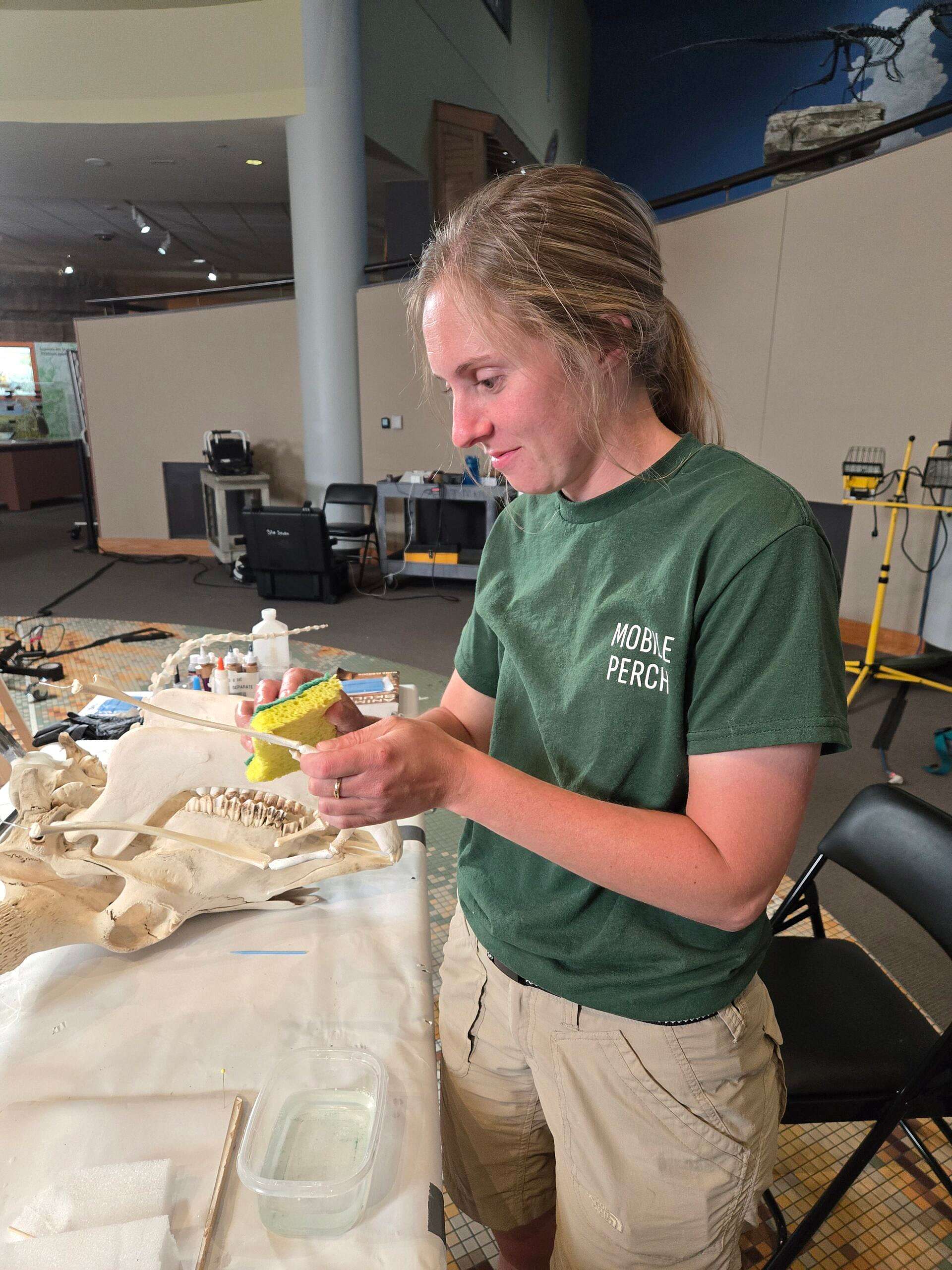
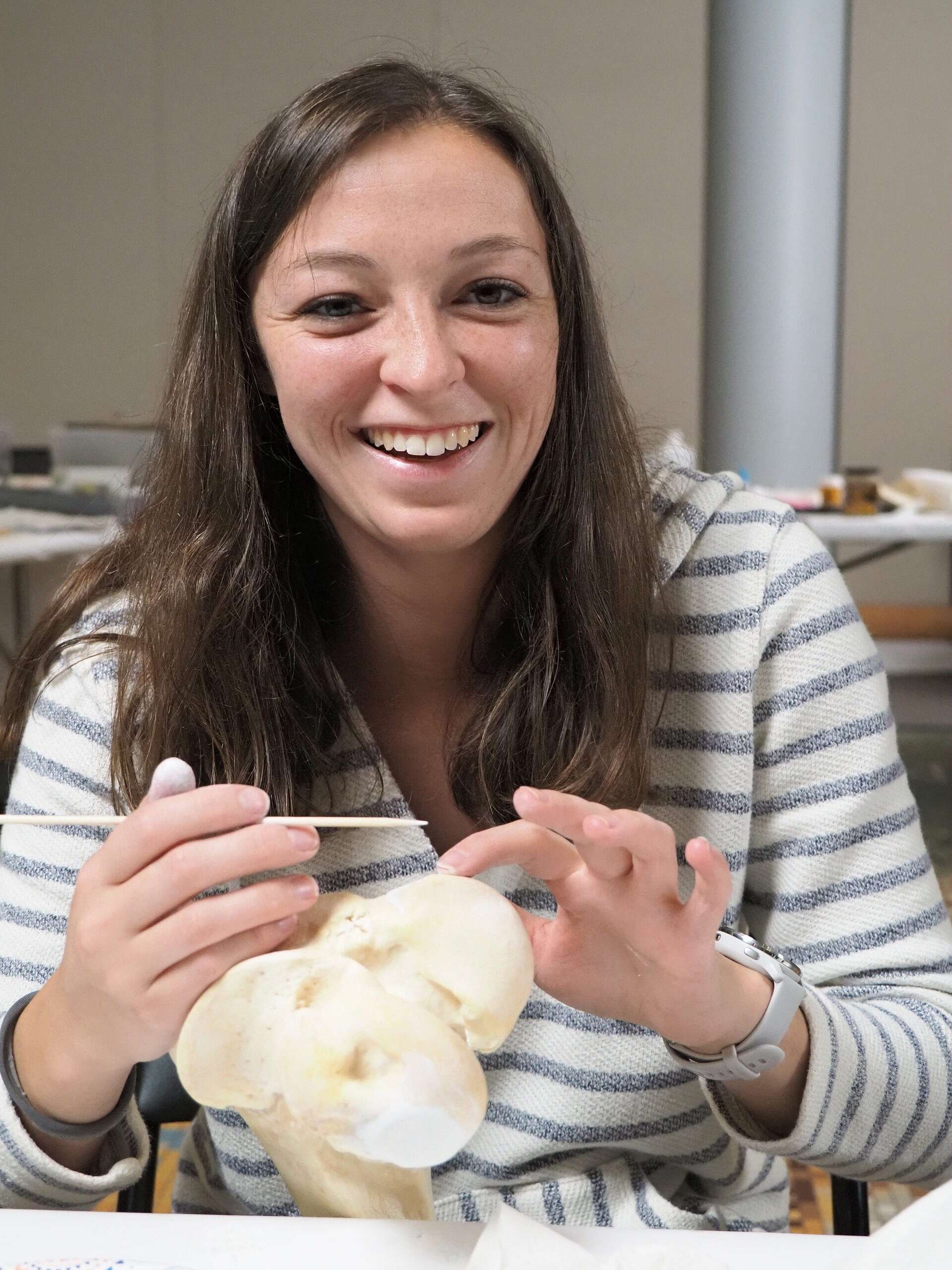
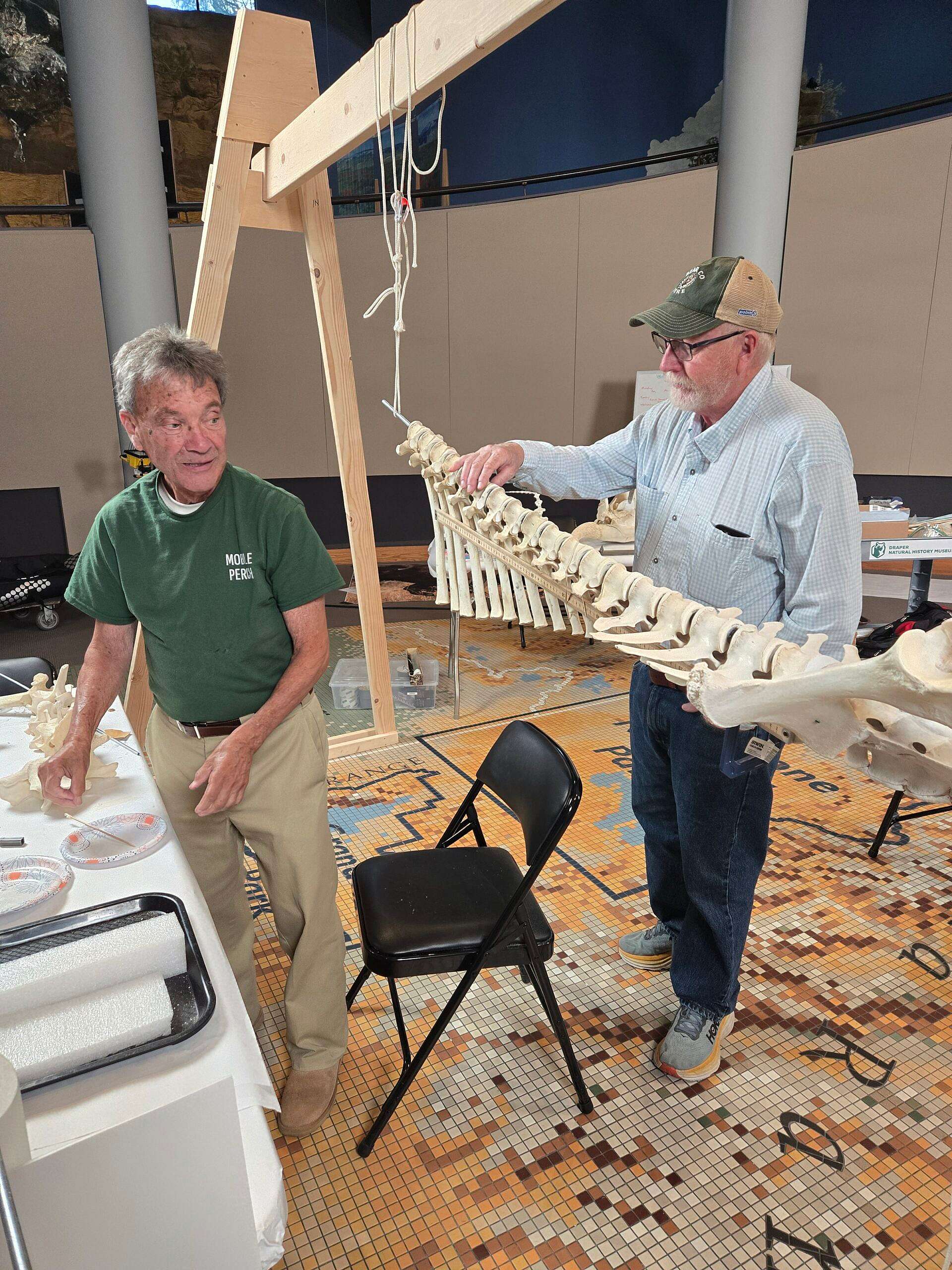
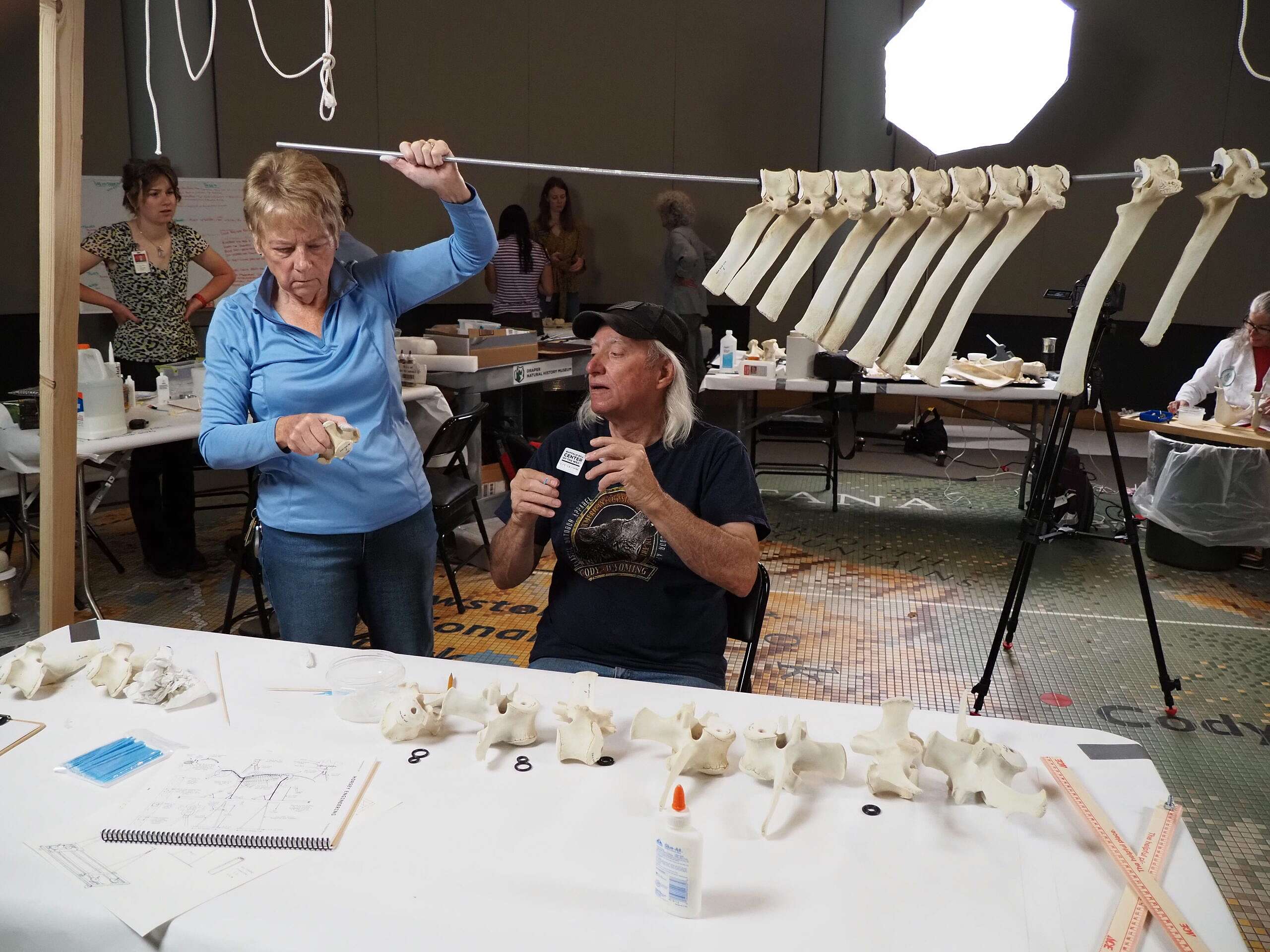
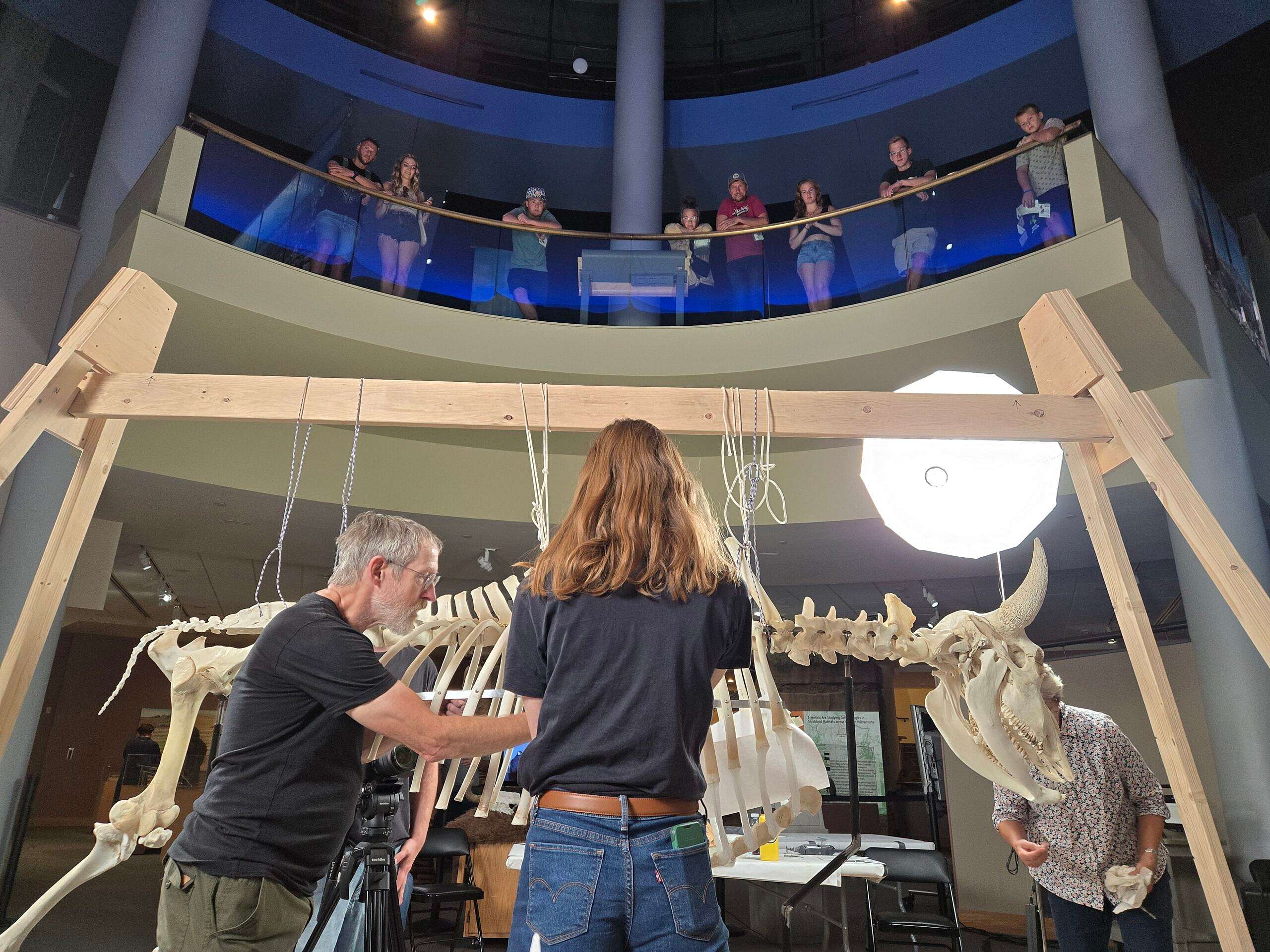
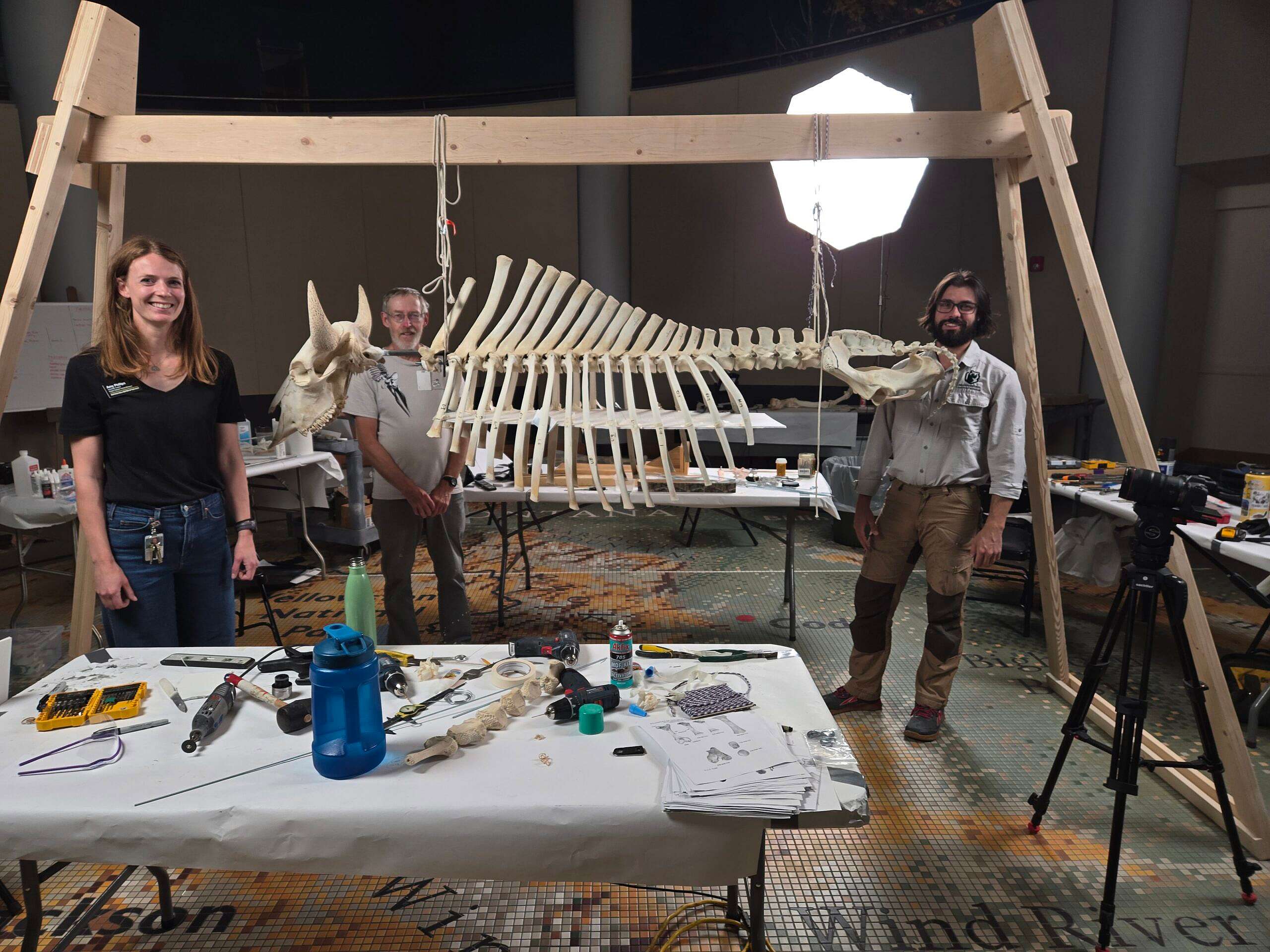
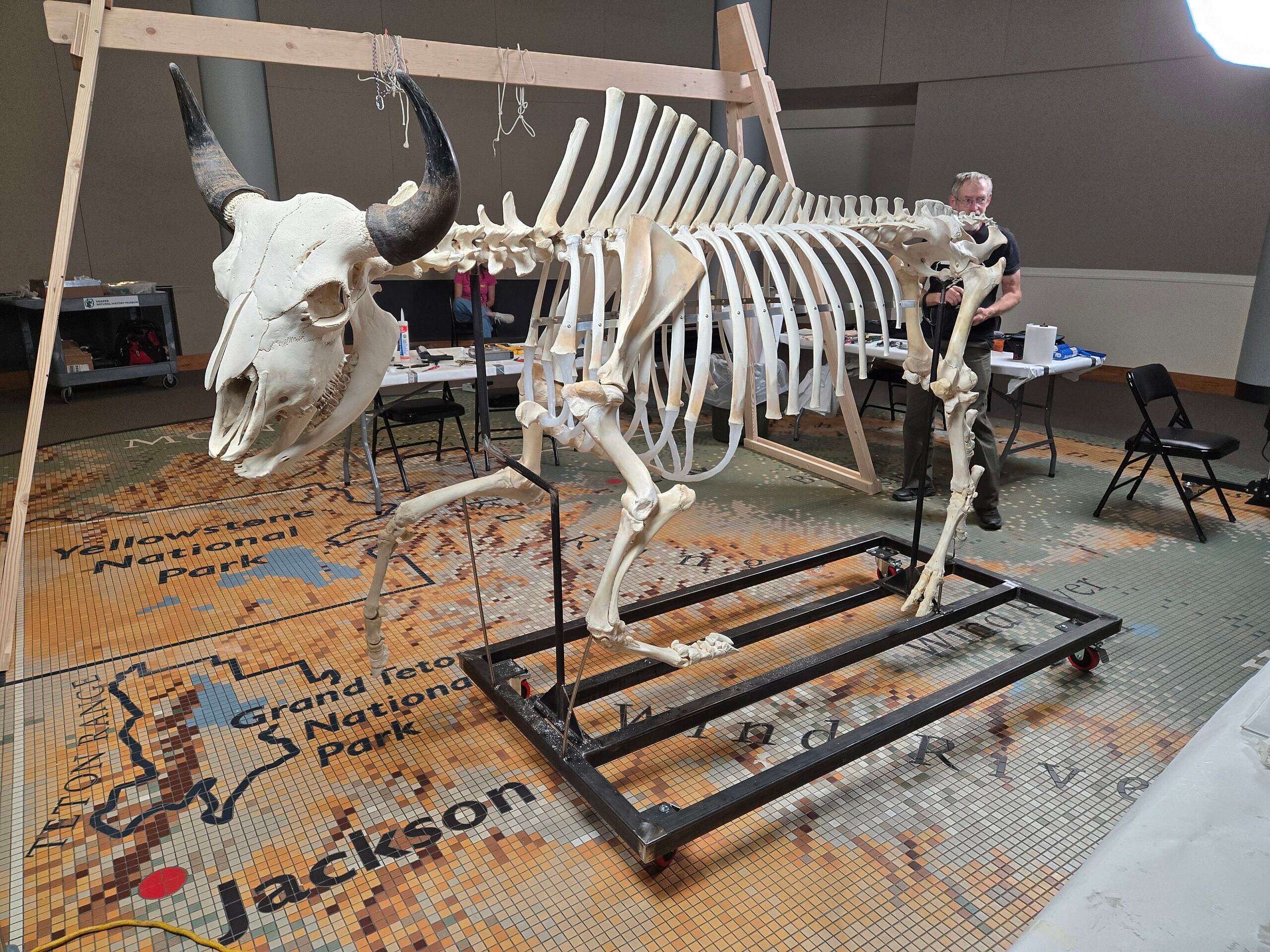
Next, we used a two-part clay compound to fabricate a couple of small replica bones and a 3-D printer to reconstruct a vertebrae. We color-matched replica pieces rendering replacement parts nearly indistinguishable from the original bone.
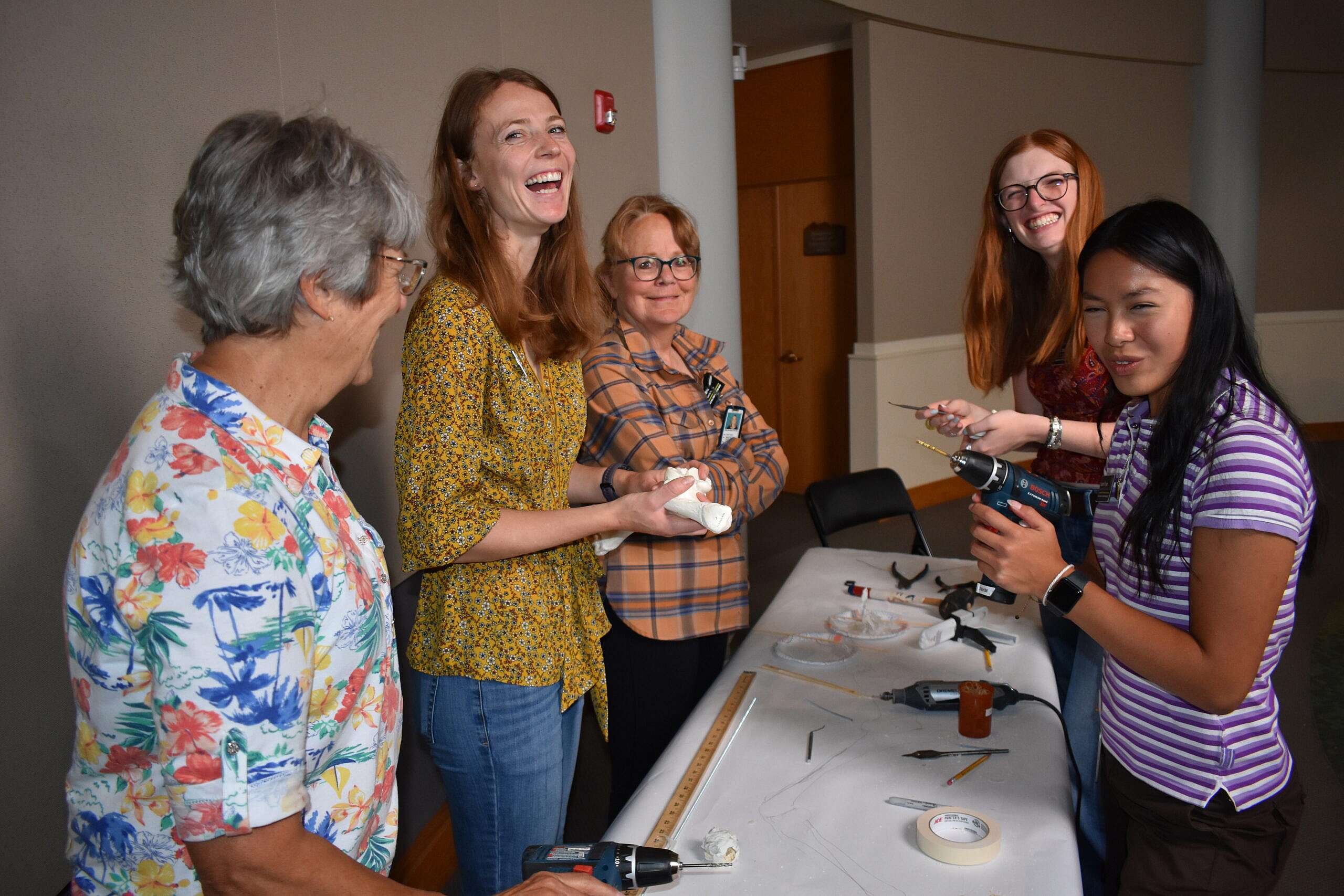
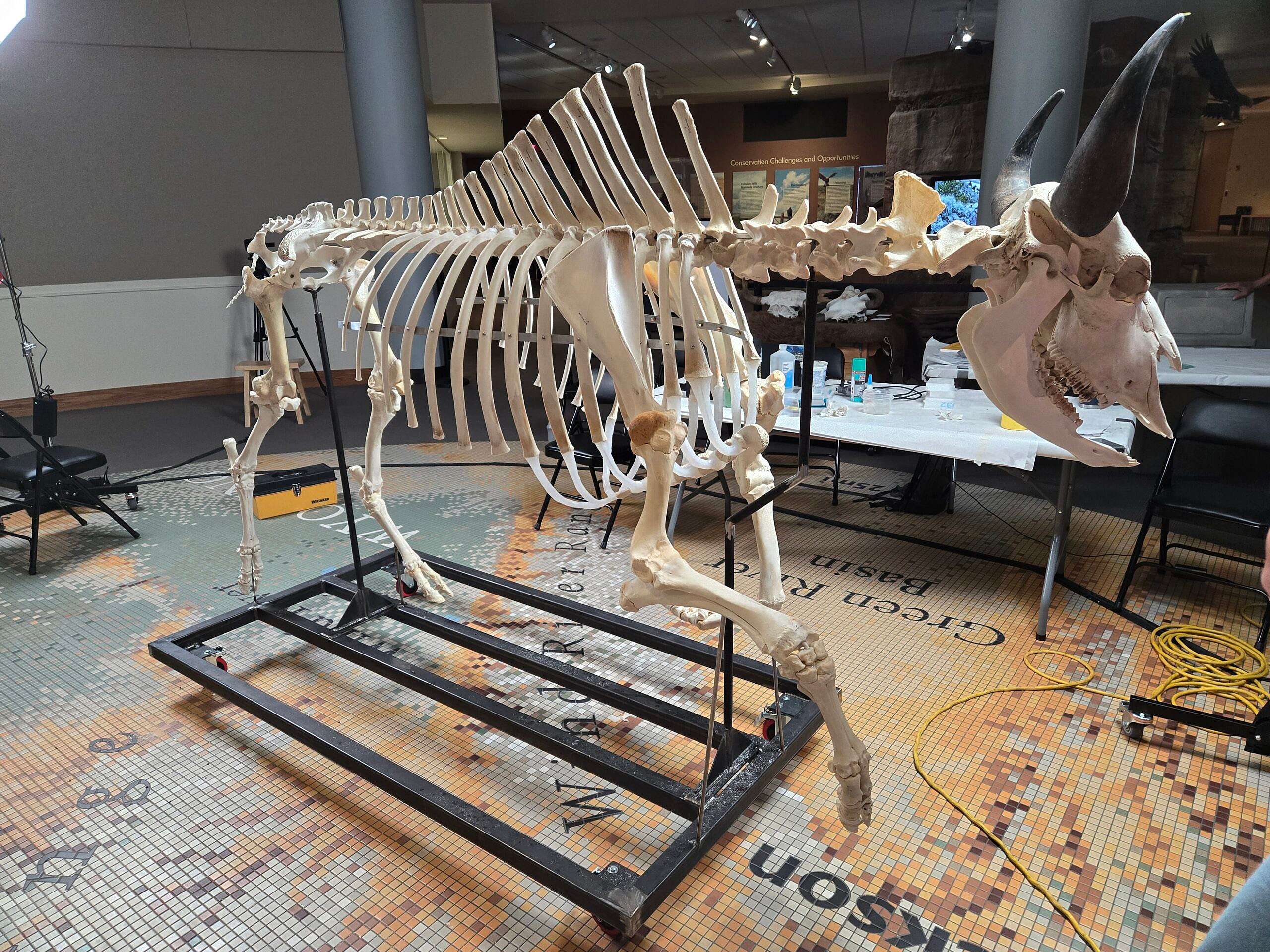
A close inspection reveals how we reconstructed the skeleton. We drilled holes and attached support rods and wire, which we secured with different adhesives. We used sculpting clay to fill cracks and provide structural support, where needed. We used bolts, screws, nuts, steel tubing, and aluminum ribbon to secure the skeleton together.
It took our team over 1,000 hours of combined people power to complete the skeleton. Once finished, we mounted the bison skeleton on a mobile metal frame, welded locally by Farrar Welding and Fabrication. We couldn’t be more proud of the end result or more grateful to the many people who assisted during the various stages of this project.
Special Thanks to the Articulation Team!
Many people assisted with the cleaning, preparation, and reconstruction of this skeleton. We are incredibly thankful for the time they donated to this project!
Jeanne and Ken Meronek, Richard Gruber, Susan Bishop, Judy Mackie, Larry Todd, Kent Houston, Larry Oliveria, Chris and Rome Geremia, Jill Sholly, Becky Moore, Eleanor Liebrman, Alex DeSelms, Alex Martin, Isabel Bogin, Kimi Zamuda, Ella Stratman, Alexa Thomas, Michela Morrissey, Laura and Courtney Scheibler, Beverly Perkins, Brandon Lewis, McKenna Gibbon, Chloe Winkler, Julia Cook, Pete Emmons, Shannon Pils, Terry Harley, Olivia Weitz, Brian Lovell, and Chase Farrar, Amy Phillips (DNHM Assistant Curator), and Corey Anco (DNHM Curator).
We would also like to thank the following people for their assistance in helping organize elements that made this workshop possible: Nancy-Carroll Draper Charitable Foundation, Desiree Petite, Jess Fetter, Ken Straniere, Jane Gilvary, Emma Lancaster, Jordan Davis, and Christine Roemmich.
Photograph and Illustration Credits
Except where indicated, all photographs used in this post are provided by the Draper Natural History Museum and Lee “The Boneman” Post.
Mad Tea Party illustrated by Sir John Tenniel, Public Domain Mark 1.0 Universal
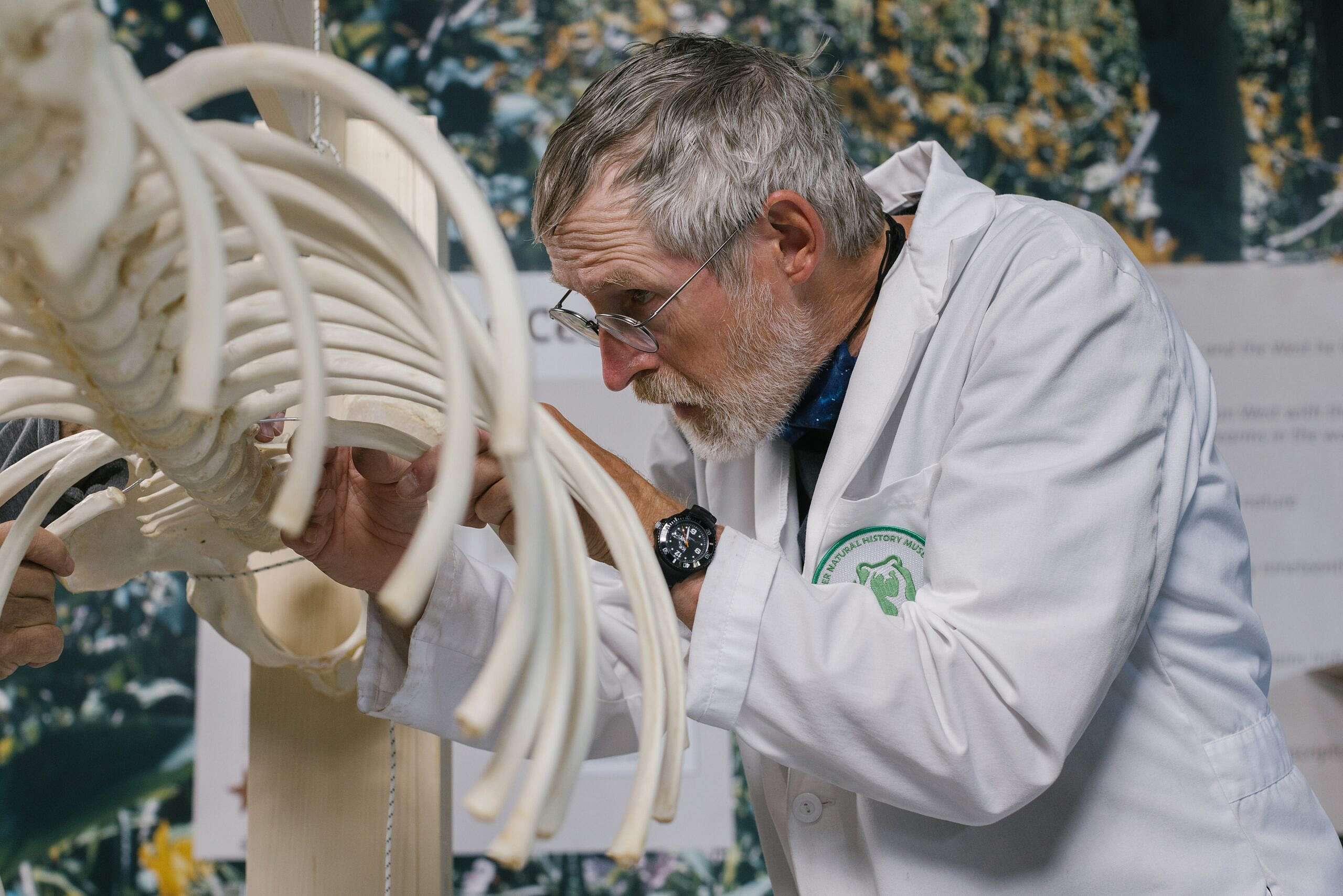
Bison taxidermy in the Buffalo Bill Museum © Buffalo Bill Center of the West. Photo by Christian Miklos.
Written By
Corey Anco
Corey Anco is the Willis McDonald, IV Curator of the Draper Natural History Museum. Corey leverages his background and training to advance the role of natural history museums in elevating the public’s understanding and appreciation of science through collections and field-based research and hands-on, inquiry-based programming. In his spare time, Corey can be found cooking, beside a fire with guitar in hand, or backpacking in the mountains.
You May Also Like

Buffalo Bill Center of the West Authenticates Trove of Historic Early 1800s Medals
Sep 08, 2026

Buffalo Bill Center of the West authenticates rare early 1800s...
The Ultimate Wyoming Wildlife Guide: Expert Viewing Tips
Sep 28, 2026
Grizzly Flowers. Photo by Julia Cook @julia.littlelightningnature Draper Elk Wyoming...
The Life Style of Yellow-bellied Sapsuckers
Sep 16, 2026

Tree girdled with Yellow-bellied Sapsucker Holes © Dennis Donohue /...
Rare Book Highlights: The Original Journals of the Lewis and Clark Expedition
Oct 01, 2026

"If not for the … epic the captains scratched out...
Specimen Preparation: Everything You Need To Know
Jul 16, 2020

Note: Some of the photos included in this post show...
Don’t Let History Live in a Shoebox: How to Archive Your Family Treasures
Sep 18, 2026

Are you the designated "historian" in your family? Do you...
Before the White Man Came: Examining Native Representation in Early American Film
Aug 20, 2026

Popular films and television shows like Dances with Wolves and...
From the Badlands to the Tetons: A 1930s Family Road Trip West
Sep 14, 2026
Long before smartphones and GPS guided travelers across the country,...
Everything I Need to Know About Life I Learned From Birds
Aug 26, 2026

by Sophie Peterson, 2026 Raptor Intern As I near the...
A Year in Review with the Draper Natural History Museum: 2020
Dec 30, 2020
This year has thrown everyone a curve ball. Learn how...
Rare Book Highlights: The Indians’ Book
Sep 02, 2026
"Wellnigh impossible is it for civilized man to conceive of...
Don’t Fence Me In: A Draper and Science Kids Adventure
Aug 18, 2021
The Future of Wildlife Resides in the Hands of the...