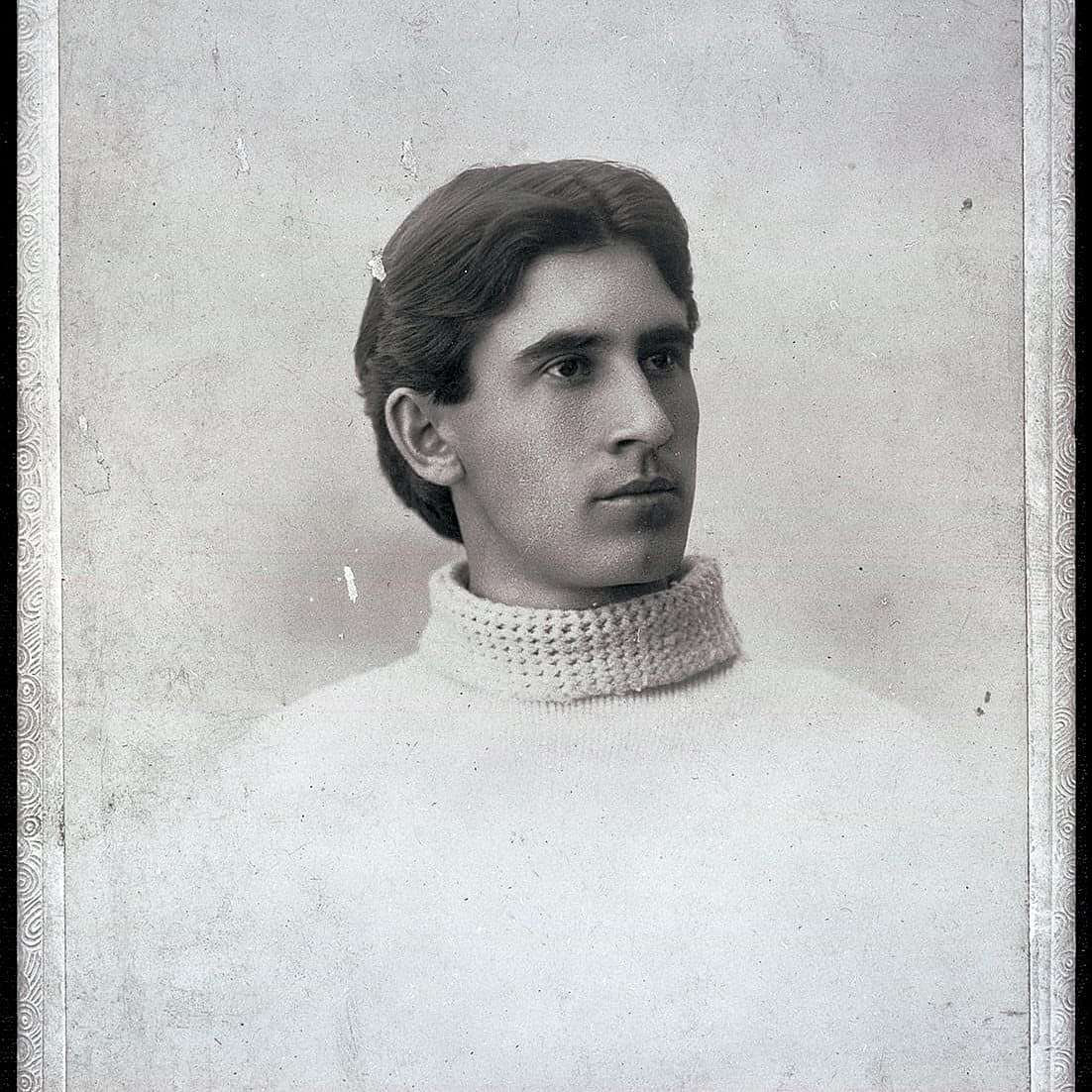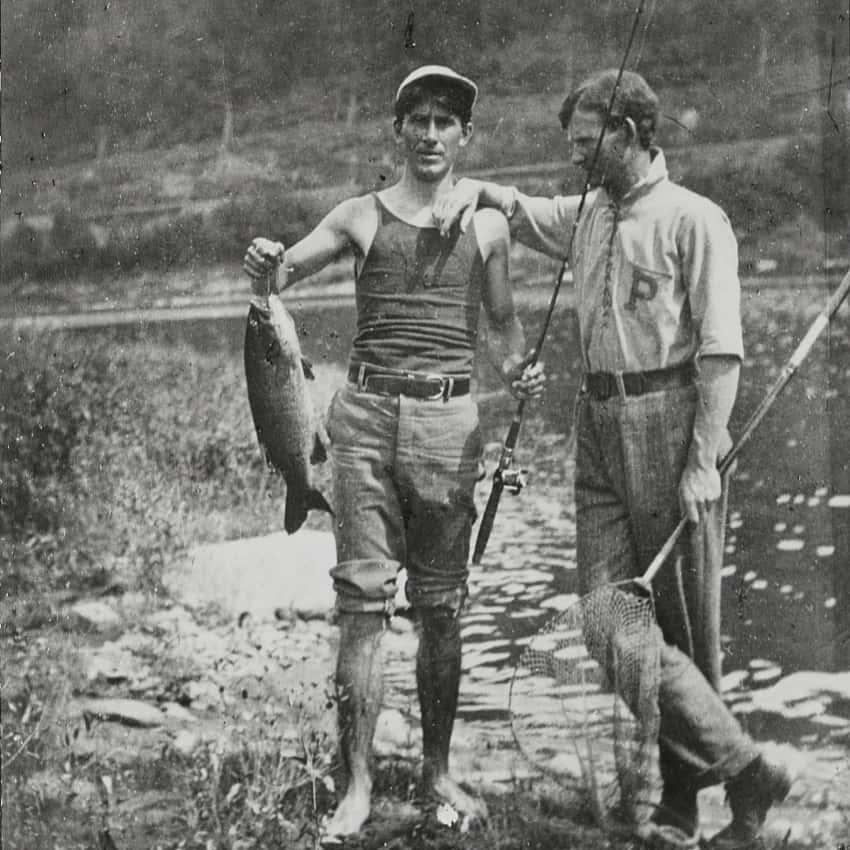
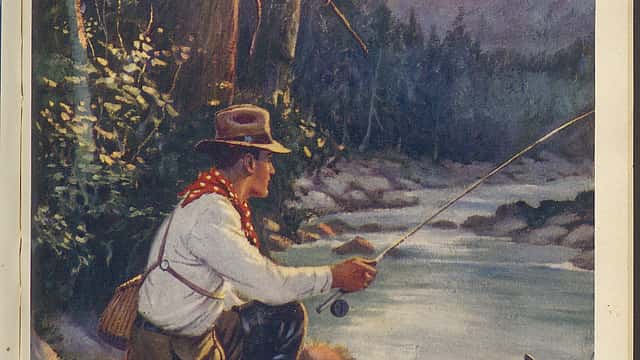
Marbles, Mischief, and a Restless Boy
One day during recess, Pearl Gray dared another boy to a game of marbles. Bud Crub was the best marbles player in the school, and Pearl wanted a piece of him. They kneeled down into the dirt, and Bud gradually took them all, the agates and the commies, and Pearl’s prize, a carnelia. Pearl was left with nothing, and he had to stand there and watch while Bud faced off with another kid using Pearl’s best. Unable to bear this outrage, Pearl impulsively grabbed the marble out of the middle of the game, and ran.
Pearl Gray always seemed to have trouble getting along with other kids. It did not help that his parents named him Pearl. Whether his parents named him after an ancestor or Queen Victoria’s favorite color is not clear. Who would give their boy a girl’s name? Pearl’s dad was a dentist. They lived in a middle-class neighborhood in Zanesville, Ohio, called the Terrace. This adjoined a blue-collar neighborhood called the Eighth Ward, and Pearl went to school with those kids. The result was an endless stream of fights. Not that anyone had to prod him too hard to set him off.
Lately Pearl had become even more distractable. “Picnics and parties,” he wrote, “suddenly acquired an unaccountable fascination. I came to assure myself that it was not the rides and the games and the merry picnic dinners spread on the green grass, under the shady elms and maples. There was something stronger than these. At last I deduced it to… blue and white frocks, the trim ankles and dancing feet, the charm of glossy sunlit brown or golden braids of hair… all that was wonderful and mystical and alluring about girls.”[i]
What really blew his mind was when he got to kiss a girl named Alice Fell while attending a parlor game called “pillow.” He wrote, “Alice was an exquisite little thing, amber-eyed and chestnut-haired, and she was known among our crowd to be very modest.” Alice, standing there in her white dress, put the pillow in front of him.[ii]
“My mama thinks you are a very bad boy,” Alice told him after. Pearl assured her, he would be a good boy, for her. “I like you too well,” he said, “to think of anything else but you.”[iii]
Other than his marbles. Outraged at the theft of his honestly gambled for marble, Bud Crub hauled after Pearl Gray. Pearl had the bright idea of escaping into the schoolhouse. Around and around they ran. Recess was over; the schoolroom was starting to fill up with students. Pearl never did too good following the rote routines. Pearl hurled several blackboard erasers right at Bud, but he ducked.
It was at this time that Alice Fell elected to come in from recess. Pearl hurled a heavy ink sponge he had snatched off the teacher’s desk at Bud. He ducked, and it hit Alice square in the chest, splattering her white dress with ink and ruining it forever. Thus ended Pearl Gray’s first romance.
Pearl’s parents didn’t seem to understand what they were dealing with. Impulsive and athletic, he particularly hated Sunday school, which he found boring and irrelevant. “[The preacher] always harangued about our sins and the hell we were going to come to, which things if I really believed them, did not greatly concerned me then,”[iv] he wrote. His teachers hated him. One told him that he was a lazy bad boy and would surely live to be hanged.
Pearl’s dad was distant and strict, a lay minister. He liked to eat fresh snow and made Pearl fetch it for him in the winter. He made Pearl fan him while he napped in the hot weather. Harboring a secret desire to be a writer, along with some companions Pearl built a fort in the woods. Dad went looking for purloined kitchen utensils and found a smoldering campfire, along with a manuscript, titled Jim of the Cave. Outraged at this display of literary pretension, Dr. Lewis Gray threw the manuscript in the fire and inflicted, Pearl later wrote, “The worst [whipping] I ever had.”[v]
The Call of the Water
One day, when Pearl was a little boy, his mom took him on a trip to see his aunt. In the 1880s, this involved taking a stagecoach, and he got to sit up on the driver’s seat. “I loved it out in the country,” he wrote. “There were woods along the road and waving meadows and corn fields and willow lined brooks.” It was hot and muggy. At the foot of a hill the driver stopped to give his horses a rest.
Pearl looked down into the stream nearby and saw a flash.
“Oh, what’s that?” he asked.
“I reckon that was a chub,” said the stage driver.
“Chub! Could I catch him?”
“You could if we had time. All you’d need would be a stick, a piece of cord, a bent pin, and a grasshopper. But we must be climbing the hill.”
His mother overheard this interchange. “Pearl, a fisherman is a lazy bad boy grown up. He never helps his mother. He is dirty and disobedient. He plays hooky and won’t work. Then when he grows up all he does is trudge off to Joe’s Run or Licking Creek with a long fishing pole dangling over his shoulder. He stays away all day and is never home for supper. Folks say a fisherman always carries a bottle. You’ve seen a drunken man. Well, that’s what fishing and the bottle does.”[vi]
This didn’t work. Whatever you can say about Pearl Gray, he went his own way. “I liked to play baseball and I was fond of games of risk, such as bannerman where the most daring boy took the lead, but such games were nothing compared to the possibilities of fishing.”[vii] Young Pearl became obsessed. He tried for chubs and minnows, with limited success. He tried to set the hook too quick. Then one day, on another family picnic, he got his first view of Old Muddy Miser.
Pearl later wrote about the magic of this day, the sound of the water, the sight of Dillon’s Falls through the broken boards that comprised the wooden covered bridge they crossed. A stooped, gaunt old man stood in the stream, holding a long pole.
“Pa, who in the world is that?”
“Well, I declare. That’s Muddy Miser, the old fisherman!” Pearl’s dad went on to tell him how Old Muddy Miser lived winters in the county poorhouse. “And if you don’t learn to work and study,” he said, “that’s how you will end up.”[viii]
“I saw the solitary figure of the old fisherman standing like a statue, silhouetted against the white rapids. I gazed long, wholly unconscious of the sensitiveness of my mind. Dillon’s Falls became the most beautiful place in the world, a paradise of adventure, and Muddy Miser was a part of it. I yearned to ask my father more about the old fisherman but something prompted me not to.”[ix]
Muddy Miser and the Turning Point
One of Pearl’s worst fights came one day when he went fishing at Dillon’s Falls. Some older boys had beaten him to the spot. They were swimming. And out in the middle of the stream, wading down, came Old Muddy Miser.
“Hey boys, here come Old Muddy Miser,” the biggest one, a boy named Harry Toman, said. “Gee, what a chance to have some fun!” A rock sailed through the air and landed in the water near the old man.
“Dirty trick! Harry Toman, I’ll fix you for that.”
Pearl started by hitting Harry Toman in the back with a clump of dried mud. Harry screamed. Harry picked up his rifle and pointed it at Pearl. “I gazed down into the evil face and into the tiny round hole in the end of the rifle,” he wrote. “Over me waved a terrible calm.”
Pearl kneeled as if to tie his shoe. Harry lowered the rifle. “You look out for me, Pearl Gray!”
Harry stepped over to his clothes. Pearl leaped, grabbed the rifle off the ground and hurled it far into the river. He then threw himself at Harry, pushing him into the water. When he came up, sputtering and burbling, Pearl hit him with a sharp rock. Blood was running down Harry’s face in a stream. His friends helped him into his clothes.
At this point, everyone had had enough. Pearl sat by himself by the side of the stream. Old Muddy Miser came over. “Lad, why did you fight that boy?”
“Because he hit you with a rock. It was a dirty trick.”
“What is your name?”
“Is your father Lewis Gray, the dentist?”
Muddy offered Pearl a fish out of his bucket. “That’s only a small one, lad, about two pounds…. Do you like to fish?”
“Indeed, Sir – I – I love it.”
“Fishing is good for a boy if he loves it.”[x]
There began one of the more remarkable friendships in the annals of sport fishing history. “Come up and fish with me some day,” Muddy said.
What the Old Man Gave Him
At this point, Pearl’s mom was only too happy to accede. At least he would be away from other boys with whom he would get into fights. He wrote:
The next morning, I was on the road to Dillon’s Falls. It was not merely a fishing adventure with this wonderful old man that called to me…. It was a march out into life, though my senses caught only the physical aspect of nature. My step was buoyant. The miles of dusty road were nothing. There were fields of yellow corn on one side of the road, and meadows with red clover on the other. My favorite birds were making melody. Almost before I realized how far I had come there loomed the old gray covered bridge. I broke into a run.[xi]
Southeastern Ohio has been a center for pottery dating back hundreds of years, and Old Muddy Miser lived in an old pot shop with broken shards of pottery on the earthen floor, and a fireplace smoldering in the middle. At last, Pearl felt loose. And Old Muddy Miser finally had someone to talk to. He talked young Pearl Gray’s ear off.
“Do not anyone blind you to the dignity and worthiness of fishing….” he said. “Now I am old and poor… but I find contentment in fishing. And it is going to make me happy to teach you all that it means to me.”[xii]
Muddy inspected Pearl’s bamboo pole, pronounced it would be “rank poison” for bass, and they were off. Muddy turned out to be not just a hermit and outcast, and not just a skilled fisherman, but something of a philosopher.
“Lad, never forget that the great men have been thinkers and are not gregarious. You must begin at once to form a habit of being alone, if only for a little while each day. Go off by yourself. Sit by the falls, or in the woods, or fields. Look around you and think of what you see. Nature is all around. Make it a part of you…. Watch the sun set and the twilight fall and the stars brighten. Thoughts will come to you.”[xiii]
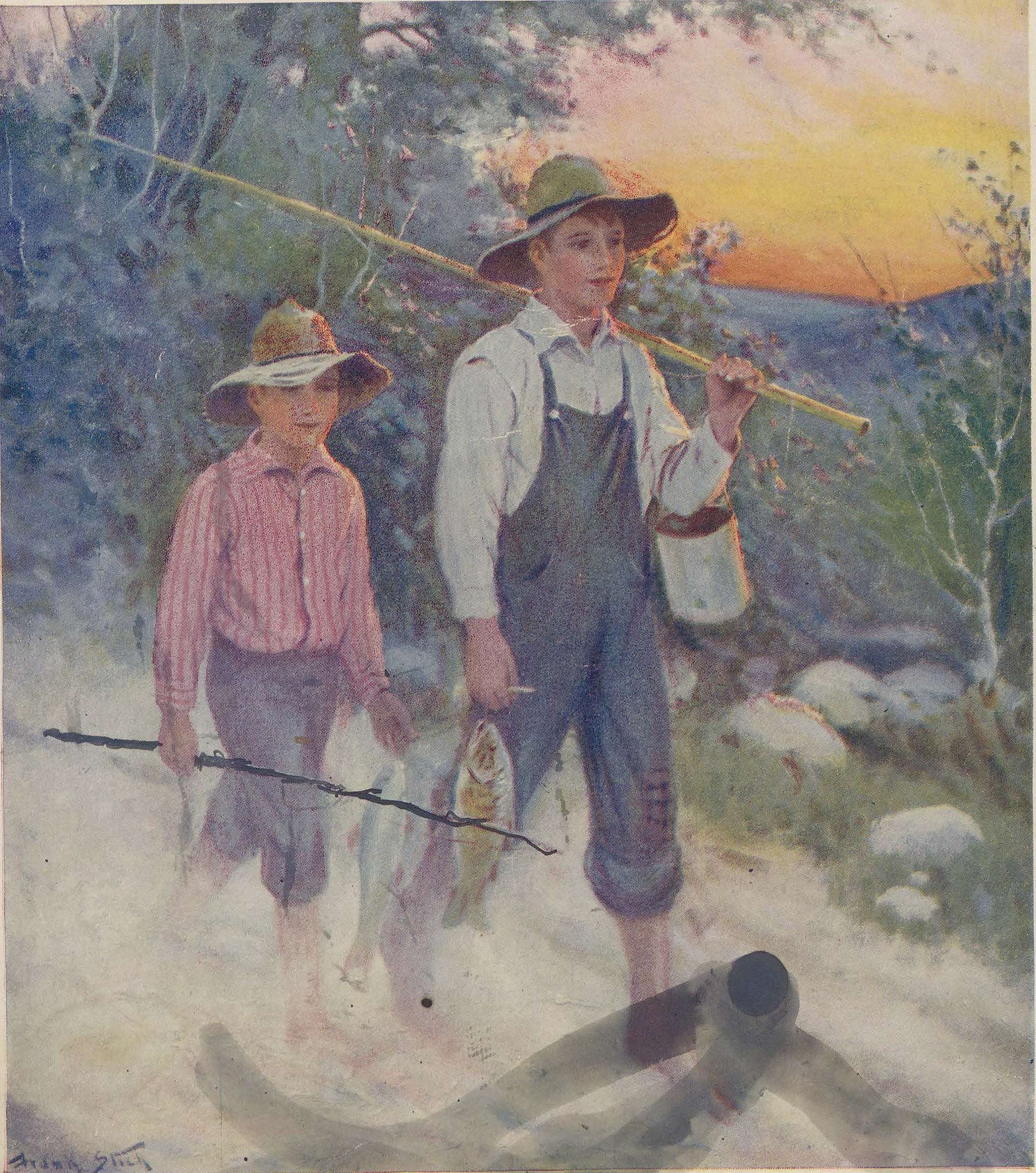
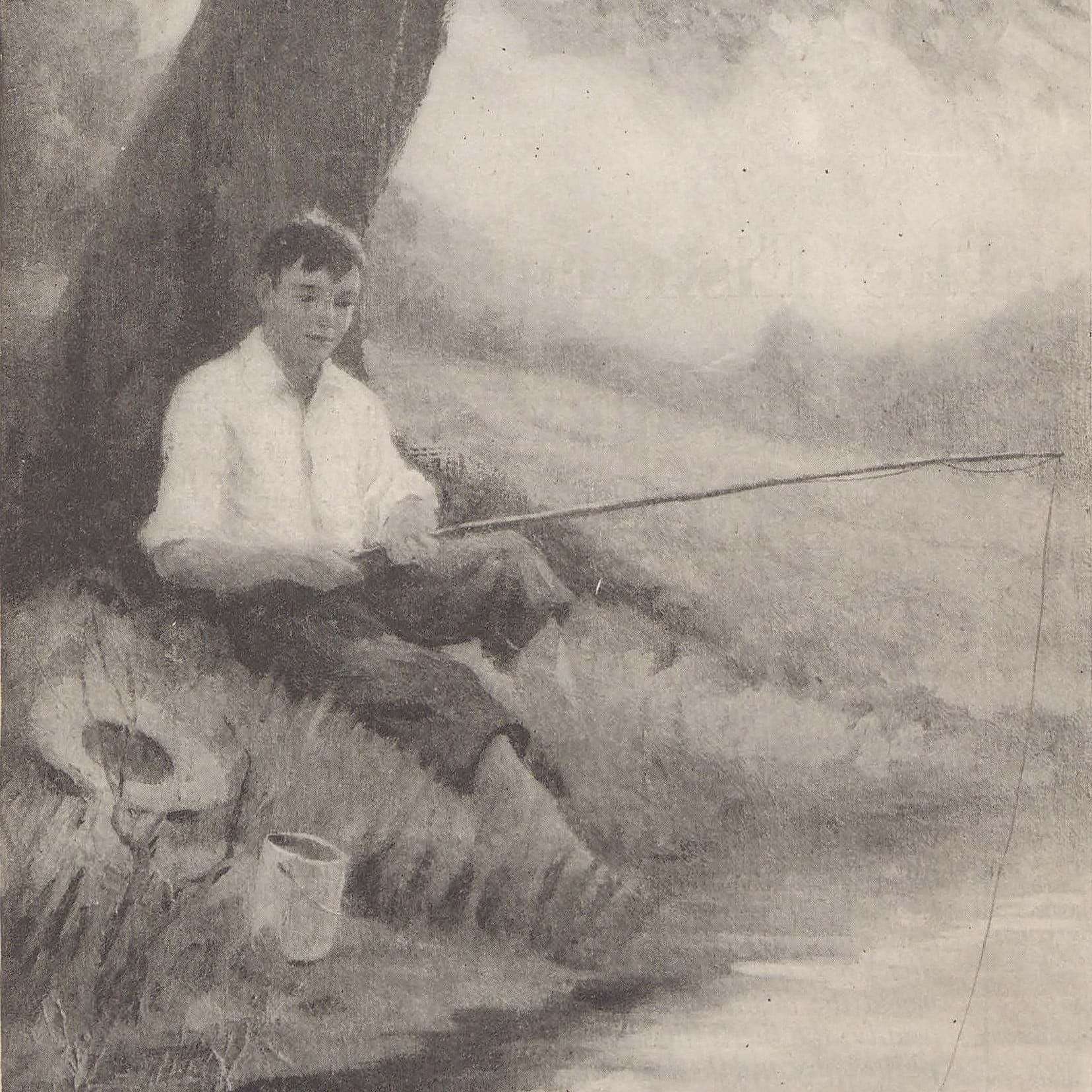
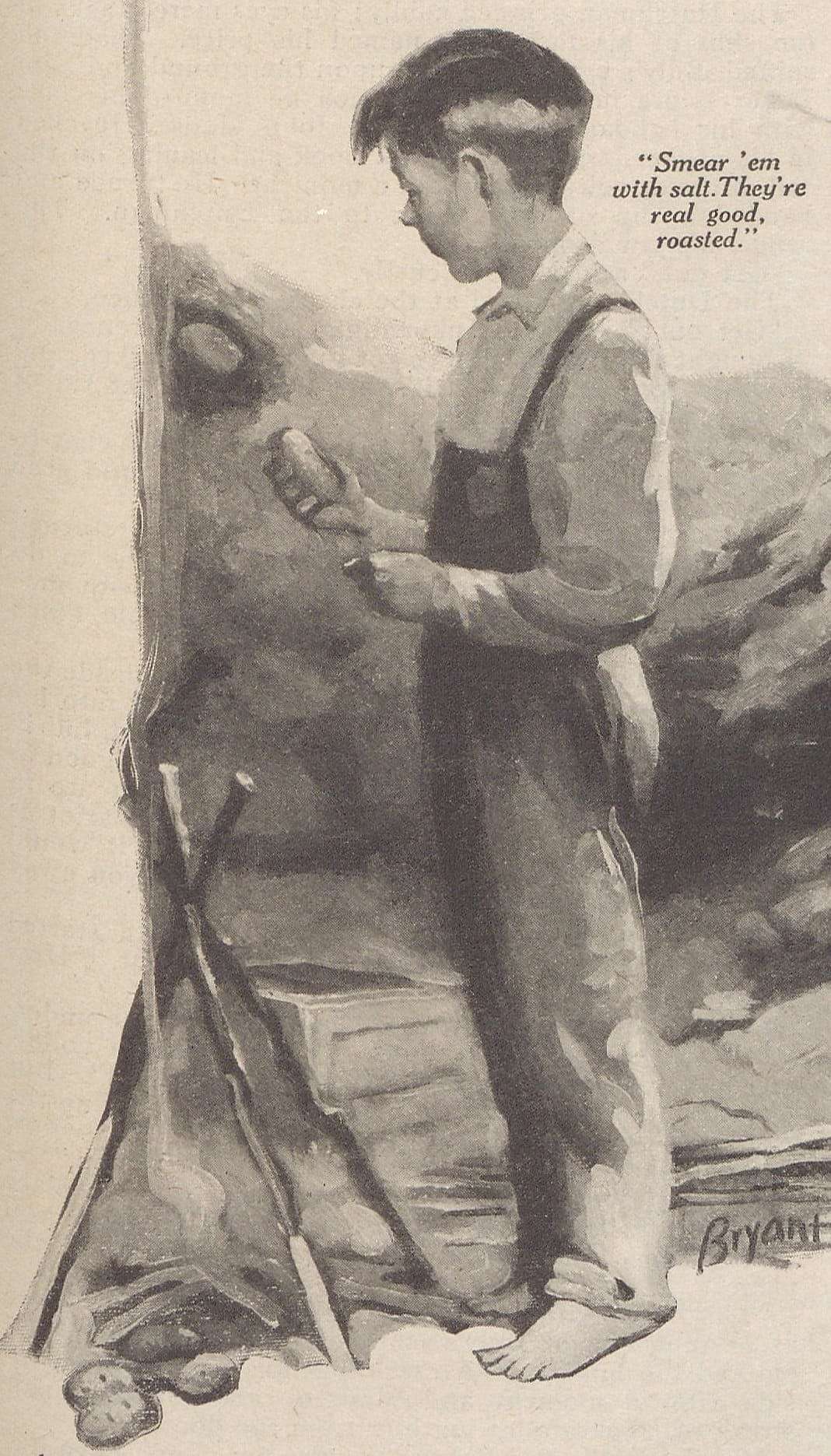
Muddy showed Pearl how to catch hellgrammites, how to catch minnows and chubs for bait, how to catch the black bass. Muddy would occasionally go to town to sell his catch, and leave Pearl to fish by himself, slipping and sliding over the limestone rocks. They cooked meals of fish and corn pilfered from a nearby field over a fire.
The boy and the old man, bound by a love of fishing, spent the summer together in the open. “Fishing for black bass is fine sport,” Muddy told Pearl. “I’ve read a good deal about salmon and trout and you, no doubt, will go far afield from Dillon’s Falls some day and catch these game fish. I have also read a great deal about the great salt-water fish of the Seven Seas. I confess I was much intrigued. Nobody seems to have caught these strange fierce fish of the salty seas and I wonder why this is so. Surely some day somebody will venture to go after these giant fish. Perhaps you will be one of them.”[xiv]
Muddy showed Pearl how to catch hellgrammites, how to catch minnows and chubs for bait, how to catch the black bass. Muddy would occasionally go to town to sell his catch, and leave Pearl to fish by himself, slipping and sliding over the limestone rocks. They cooked meals of fish and corn pilfered from a nearby field over a fire.
The boy and the old man, bound by a love of fishing, spent the summer together in the open. “Fishing for black bass is fine sport,” Muddy told Pearl. “I’ve read a good deal about salmon and trout and you, no doubt, will go far afield from Dillon’s Falls some day and catch these game fish. I have also read a great deal about the great salt-water fish of the Seven Seas. I confess I was much intrigued. Nobody seems to have caught these strange fierce fish of the salty seas and I wonder why this is so. Surely some day somebody will venture to go after these giant fish. Perhaps you will be one of them.”[xiv]
Leaving and Becoming Zane Grey
The landscape was drab and dreary; there were no green leaves and there were drifts of dirty snow in the hollows on the north side of the hill, and, all along that stretch I knew so well I did not see a living thing. I caught just a glimpse of the old Pot Shop and then my eyes were blinded by tears.[xviii]
Pearl Gray eventually took his middle name, Zane, and changed the spelling of his last name. Zane Grey went on to write Riders of the Purple Sage, the most popular Western of all time. At the time of his death sales of his novels exceeded 17,000,000 copies. He was so prolific new Zane Grey novels came out for years after his death. The most recent “new” Zane Grey book came out in 2016.
As a fisherman, Grey held nine world records. He was the first man to catch a fish weighing more than 1,000 pounds on rod and reel. His records for the yellowtail and the yellowfin tuna have not been beaten since the International Game Fish Association began keeping records in 1938. Grey was held in such high regard as a fisherman that the Pacific sailfish was named for him, Istiophorus greyi. There was a Zane Grey reel, a Zane Grey bass bug, a Zane Grey steel-head fly and a Zane Grey teaser. Ed Zern, columnist for Field & Stream magazine, wrote, “It is reasonable to assume that no one will ever challenge his right to be known as the greatest fisherman America has ever produced.”[xix]
Footnotes
[i] Zane Grey. “The Living Past,” Zane Grey Reporter 1, no. 3 (1986): 9.
[ii] Zane Grey. “The Living Past,” Zane Grey Reporter 1, no. 3 (1986): 10.
[iii] Zane Grey. “The Living Past,” Zane Grey Reporter 1, no. 3 (1986): 11.
[iv] Zane Grey. “The Living Past,” Zane Grey Reporter 1, no. 3 (1986): 10.
[v] Thomas H. Pauly, Zane Grey: His Life, His Adventures, His Women (Urbana: University of Illinois Press, 2005), 20.
[vi] Zane Grey. “The Living Past,” Zane Grey Reporter 1, no. 1 (1986): 6.
[vii] Zane Grey. “The Living Past,” Zane Grey Reporter 1, no. 1 (1986): 9.
[viii] Zane Grey. “The Living Past,” Zane Grey Reporter 1, no. 1 (1986): 7-9.
[ix] Zane Grey. “The Living Past,” Zane Grey Reporter 1, no. 1 (1986): 9.
[x] Zane Grey. “The Living Past,” Zane Grey Reporter 1, no. 3 (1986): 7-8.
[xi] Zane Grey. “The Living Past,” Zane Grey Reporter 1, no. 3 (1986): 11.
[xii] Zane Grey, The Undiscovered Zane Grey Fishing Stories (Piscataway, N.J.: Winchester Press, 1983), 45.
[xiii] Zane Grey, The Undiscovered Zane Grey Fishing Stories (Piscataway, N.J. : Winchester Press, 1983), 69.
[xiv] Zane Grey. “The Living Past,” Zane Grey Reporter 1, no. 3 (1986): 8.
[xv] Zane Grey. “The Living Past,” Zane Grey Reporter 1, no. 3 (1986): 5.
[xvi] Zane Grey, The Undiscovered Zane Grey Fishing Stories (Piscataway, N.J. : Winchester Press, 1983), 83.
[xvii] Zane Grey, The Undiscovered Zane Grey Fishing Stories (Piscataway, N.J. : Winchester Press, 1983), 70.
[xviii] Zane Grey. “The Living Past,” Zane Grey Reporter 2, no. 3 (1987): 5.
[xix] Zane Grey, Zane Grey’s Adventures in Fishing (New York: Harper & Brothers, 1952), n16.
Written By
Eric Rossborough
Eric has been rooting around the West since he took a job at the McCracken Research Library. Eric comes here from Wisconsin, where he worked at a public library, and enjoyed working on prescribed fires and fishing for bass and bluegills. He has a lifelong interest in natural history and the Old West.
You May Also Like
Inside the Reading Room: What to Know Before You Visit
Feb 12, 2026
Cassandra Day
The McCracken Research Library has a reading room that is...
Philip R. Goodwin, or, A Child Prodigy Runs Afoul of the 20th Century
Apr 21, 2025
Eric Rossborough
It was December, and I had just walked into the...
Armed in the Colonies: Firearms, Militia, and Early American Law
Mar 16, 2026
Jacob Newman
American society has always been connected to firearms culture in...
Research Made Easy: Exploring the McCracken Research Library’s Collections
Mar 23, 2026
Cassandra Day
Archival and library research can feel overwhelming for even the...
Sheep Wagons and the Shaping of the American West
Feb 17, 2026
Jane Gilvary
A lone shepherd on Wyoming’s high plains awakens to the...
Brida Gafford: The Wild Life of a Rodeo Superstar
Mar 04, 2026
Eric Rossborough
“So they let you dress up like a cowgirl and...
A Broadway Guy: the Second Life of Bat Masterson
Aug 13, 2025
Eric Rossborough
When Bat Masterson and his brother Ed heard of a...
The Reinvention of Mickey Cochrane
Feb 20, 2025
Eric Rossborough
At night, when he was a kid, Mike Cochrane would...
The Harry Yount Enigma: Yellowstone’s First Park Ranger
Apr 05, 2024
Eric Rossborough
Buried among the sublime passes of the Sierra Nevada are...
Advertising the Frontier Myth: Poster Art of Buffalo Bill’s Wild West
May 17, 2024
Eric Rossborough
In 1835, P.T. Barnum bought a human being. Barnum saw...
Why These Objects? A Closer Look at the Buffalo Nation Spotlights
Jan 29, 2026
Center of the West
As the opening of the Buffalo Nation spotlights approaches, a...
The Birth of the American Long Rifle
Feb 18, 2026
Jacob Newman
If any firearm were to define the colonial and foundational...