Home » Greasy Grass at 150: Art, Heroism, and the Tragedy at Little Bighorn
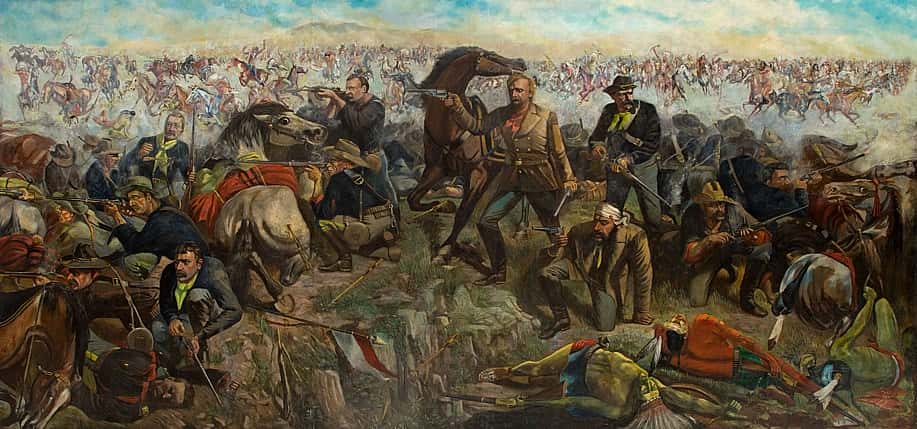
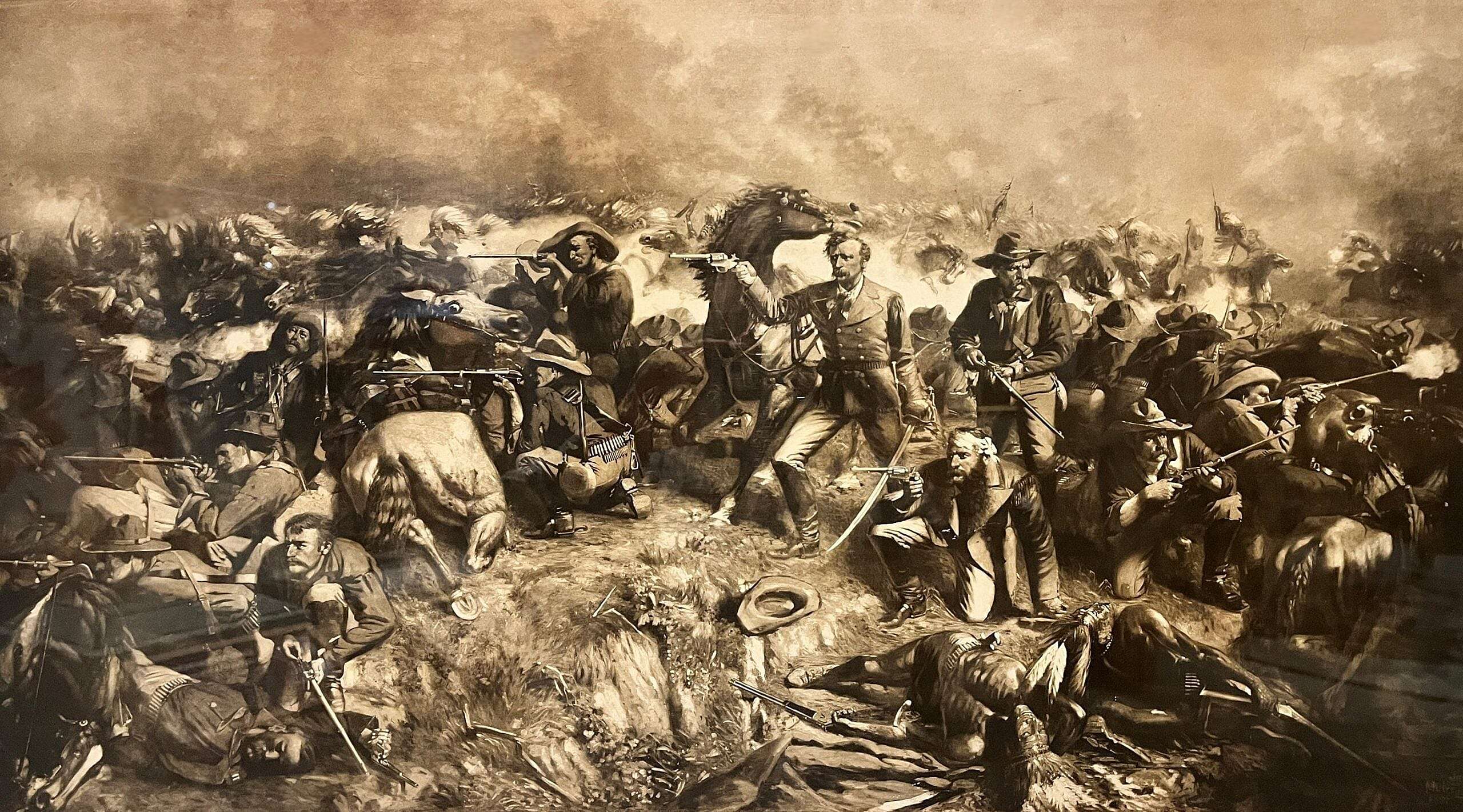
John Mulvany (1844–1906). “Custer’s Last Rally,” 1881. Sepia toned photogravure, 20.5 x 32.375. Original Buffalo Bill Museum Collection. 149.69

Greasy Grass at 150: Art, Heroism, and the Tragedy at Little Bighorn

Lt. Colonel George Armstrong Custer stands just right of center, a cocked revolver in one hand and a curved saber in the other. His tousled blonde hair exposes a receding hairline, and his hat lies forgotten at his boots. Custer’s expression belies a foreboding sense of imminent defeat at the hands of the Lakota Sioux and their allies, yet his bearing remains undaunted in the midst of battlefield mayhem. To Custer’s left and right his men form a defensive position around their leader as they fire in desperation towards Crazy Horse’s powerful band of fighters.

John Mulvany (1844-1906); Custer's Last Rally; 1883; Chromolithograph; Amon Carter Museum of American Art, Fort Worth, Texas; 2008.11
John Mulvany (1844-1906); Custer's Last Rally; 1883; Chromolithograph; Amon Carter Museum of American Art 2008.11

The scene suggests overwhelming odds, with Custer and his mighty 7th Cavalry facing catastrophic defeat against a Native force they severely underestimated. Historical hindsight of the tragic outcome of this battle intensifies the palpable terror in John Mulvany’s dramatic depiction of Custer’s Last Rally at the Battle of Little Bighorn, a significant episode in the Great Sioux Wars that turns one-hundred and fifty years old on June 25 of this year. Mulvaney’s 1881 painting largely helped shaped public memory of this historic battle in the absence of combat photographs or video relied upon today, preserving the battlefield drama and prompting solemn introspection of a tumultuous period in American frontier history.

The Great Sioux Wars

Broadly speaking, the Great Sioux Wars began in December of 1866 with the Fetterman Massacre near Fort Phil Kearney in what is now Johnson County, Wyoming and ending with the Wounded Knee Massacre on the Pine Ridge Reservation in December of 1890. The most intense battles, however, occurred over a nine-month period beginning in June of 1876 at the Battle of Rosebud and ending at the Battle of Wolf Mountain in January of 1877. The heart of the protracted conflict centered the U.S. Army’s campaign—triggered by the Black Hills Gold Rush—to move Lakota and Northern Cheyenne Indian tribes onto reservations. The key players for the U.S. Army included the charismatic but often reckless Lt. Col. George Custer, commander of the 7th Cavalry, and the more methodical and measured General Alfred Terry, the commander of the Dakota Column. Sitting Bull, Crazy Horse, and Red Cloud led the Lakota resistance with force, diplomacy, and spiritual wisdom along with Cheyenne leaders Two Moon and Lame White Man.

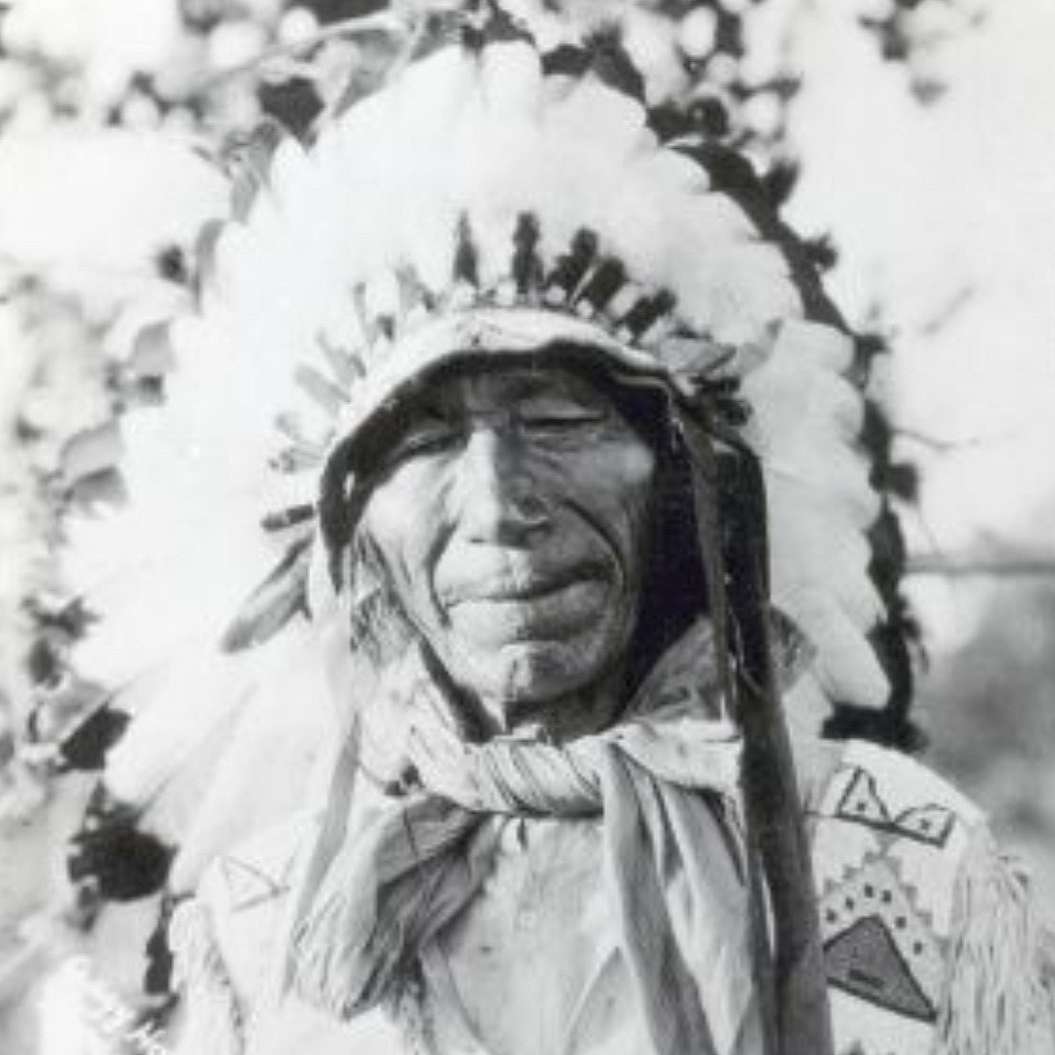
Chief Crazy Horse. McCracken Research Library, Buffalo Bill Center of the West. P.71.0204

After a series of broken treaties and the deterioration of reservation life, several bands of Sioux defied government orders that confined them to reservations. Choosing autonomy over submission, they migrated in large bands along the Little Bighorn River in present day Montana—meeting up with their Northern Cheyenne partners—to establish camps and hunt freely, much to the displeasure of the U.S. government.

Custer's Advance and the Crow Scouts
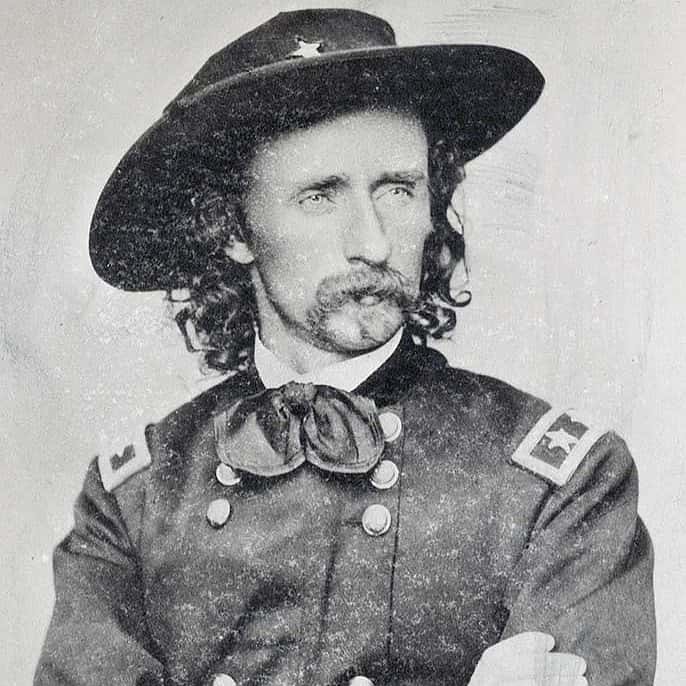
George Armstrong Custer. MS 071 Vincent Mercaldo Collection, McCracken Research Library. P.71.0250

Custer’s scouts belonged to the Crow Nation, which had formed a pragmatic alliance with the U.S. Cavalry due to Sioux encroachment on their sacred lands. It is widely held that Crow scouts Curly, White Man Runs Him, and Hairy Moccasin discovered the Sioux and Cheyenne bands along the river and reported their findings to Custer. Instead of waiting for reinforcements from General Terry and mapping out a sound strategy, Custer hastily decided to divide his regiment into three columns led by Major Reno, Captain Benteen, and Custer himself. Reno attacked first, but ended up in retreat, forming a defensive position with Benteen, while Custer and his men would move north toward the main village. Crazy Horse immediately organized a robust counter-attack with his legion strongly outnumbering Custer’s detachment. In short, Custer grossly underestimated the enemy and within an hour of intense fighting Custer and all under his command lay dead on the battlefield (about 210 soldiers).

Conflicting Accounts

Due to lack of survivors, historians have only speculated what caused such a catastrophic collapse given Custer’s extensive military experience and battlefield prowess. Lakota, Cheyenne, and Crow oral histories corroborate some confusion among Custer’s mounted troops who ended up vulnerable due to broken formations instead of operating as a single regiment. Historians speculate that Custer divided his troops out of fear that Lakota scouts had discovered them, and that such a breach compelled him to attack before the Indian camp could disperse.

Nonetheless, most reports from both sides note that Custer fought heroically alongside his men until the bitter end, as portrayed in Mulvany’s painting. Mulvany’s 1881 painting depicting this historic battlefield scene essentially shaped how generations perceived the Battle of Little Bighorn, but a glimpse into the painter’s life helps contextualize the cultural significance and impact of such a grand work of art.

Mulvany in the Making

An Irish immigrant, Mulvany arrived in the U.S. in 1851 and came of age during the Civil War era, even serving with the Union Army before heading off to study art in Europe for a few years after the war. In Europe, Mulvany learned dramatization of historical and military scenes from renowned teachers like Alexander von Wagner and Karl von Piloty, who emphasized heroism amidst catastrophe. Mulvany returned to the States in the early 1870s with intentions to paint the West in all its frontier glory. In 1876, the same year as the Battle of Little Bighorn, Mulvany’s Trial of a Horse Thief earned recognition at the National Academy of Design, signifying his arrival as a serious artist. Known for his exhausting historical research before beginning any project, Mulvany visited the battlefield at Little Bighorn, studied the weapons and uniforms of the day, visited Indian reservations, and spoke with officers and soldiers in the know. Drawing on this information, he created something that felt historically accurate, though inevitably romanticized by the brush. The result: a massive 11 x 20 ft dynamic composition that, for the first time, helped Americans visualize the catastrophe at Little Bighorn.

Artist John Mulvany
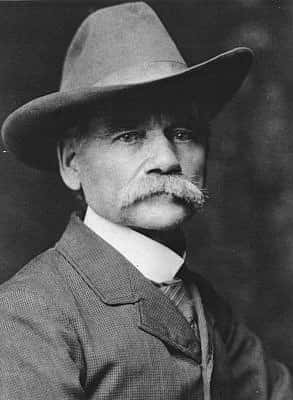
Artist John Mulvany. Courtesy of the New York Times.
From Canvas to the National Stage

Custer’s Last Rally debuted in Kansas City in 1881 to great fanfare with newspapers framing it as a public attraction more than an artist’s exhibition, largely due to the sheer enormity of the painting. From Kansas City, the painting embarked on a national tour, stopping in major American cities including Boston, New York, and Chicago. Walt Whitman, the father of American Poetry and perhaps one of the more famous Americans of his day, described the painting as “painfully real, overwhelming” and called it “a western, autochthonic phase of America… culminating, typical, deadly, heroic to the uttermost.” The painting had an immediate cultural impact with the Louisville Courier-Journal reporting that “visitors on entering the room stand in awe and admiration.”

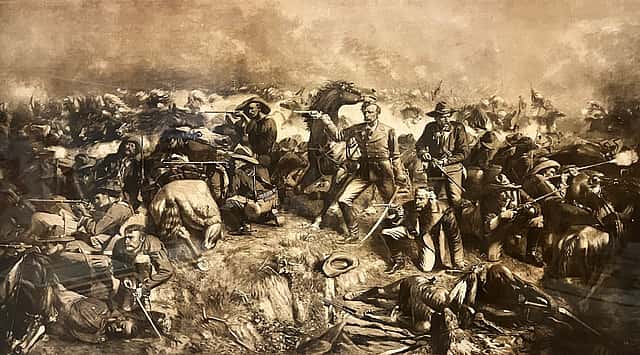
John Mulvany (1844–1906). “Custer’s Last Rally,” 1881. Sepia toned photogravure, 20.5 x 32.375. Original Buffalo Bill Museum Collection. 149.69
Art, War, and Memory

Mulvany’s depiction of this historic battle on such a grand scale ignited a national conversation about the Indian wars, while also solidifying the dual legacy of George Armstrong Custer as both hero and tragic figure. Despite his obvious tactical misjudgments and overconfidence, Custer fought courageously alongside the men of the 7th Cavalry. At the intersection of art and war, artists like John Mulvany, and the museums that preserve and exhibit their work, allow the American public to experience a defining moment in a tragic battle.

Written By

Jane Gilvary avatar

Jane Gilvary

Jane Gilvary is a Content Specialist in the Public Relations Department at the Center of the West. She writes and manages web content and serves as editor of the Center’s monthly e-newsletter, Western Wire. Outside of work, Jane enjoys exploring Wyoming’s backcountry and discovering its hidden treasures.

You May Also Like