Meet the Birds of the Draper Museum Raptor Experience
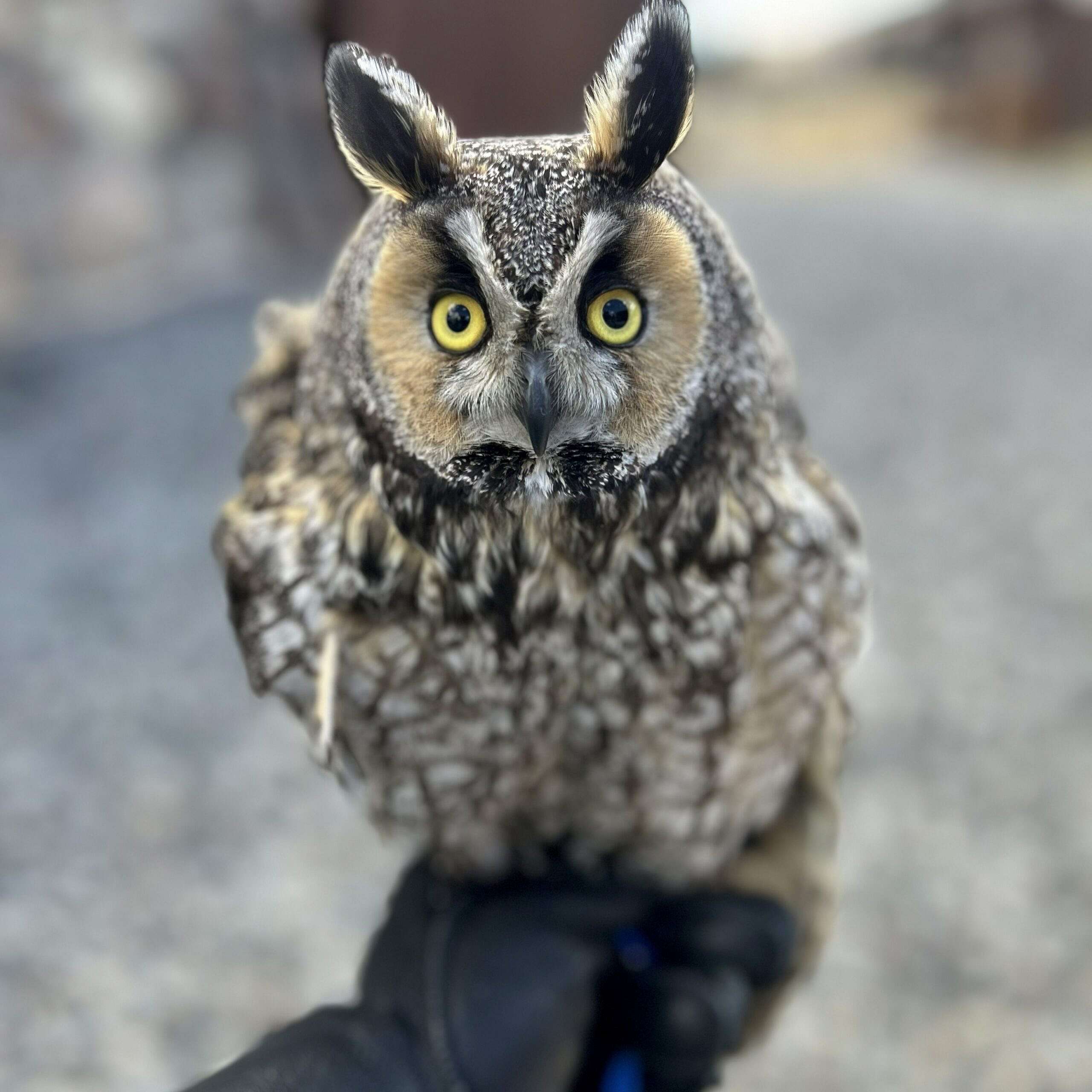
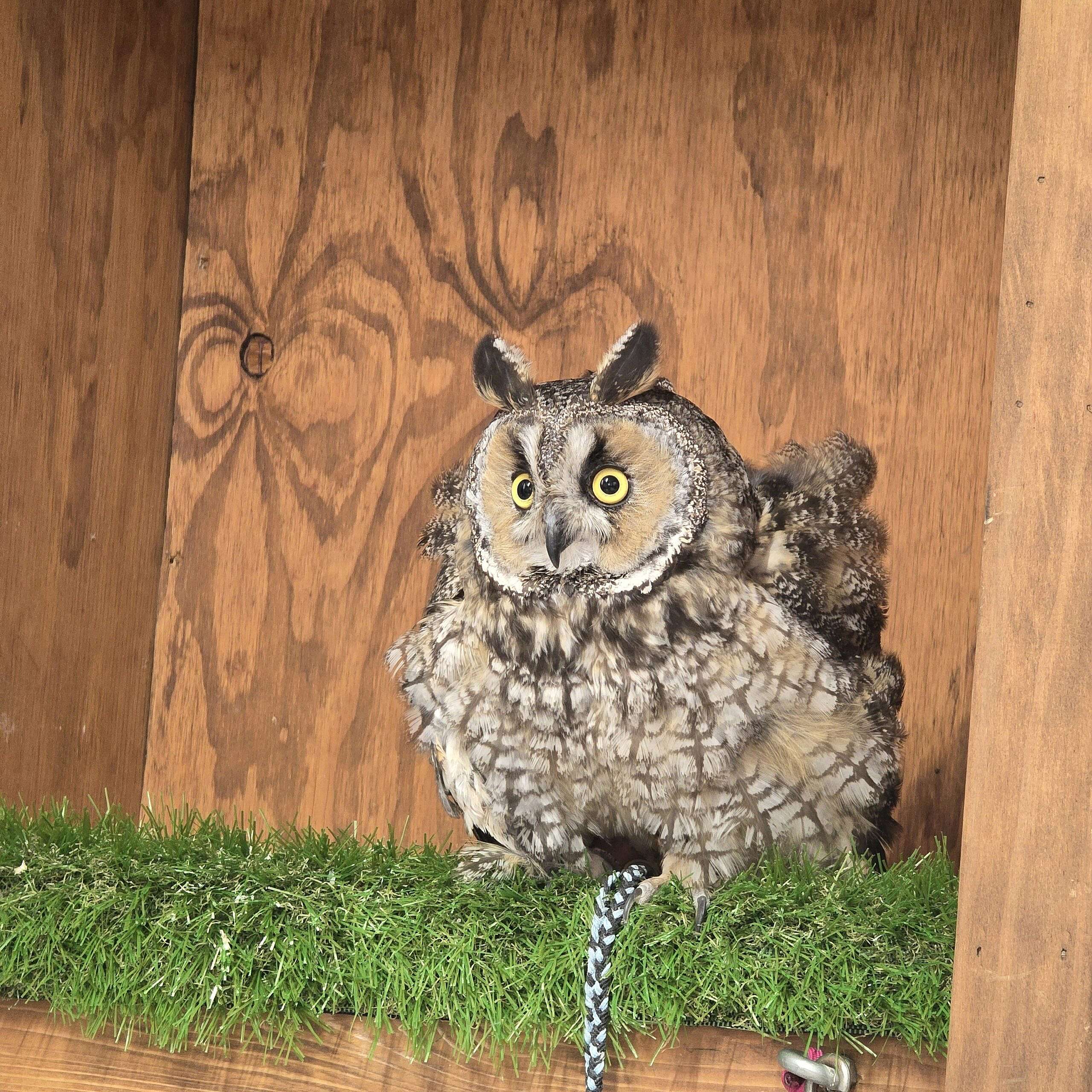
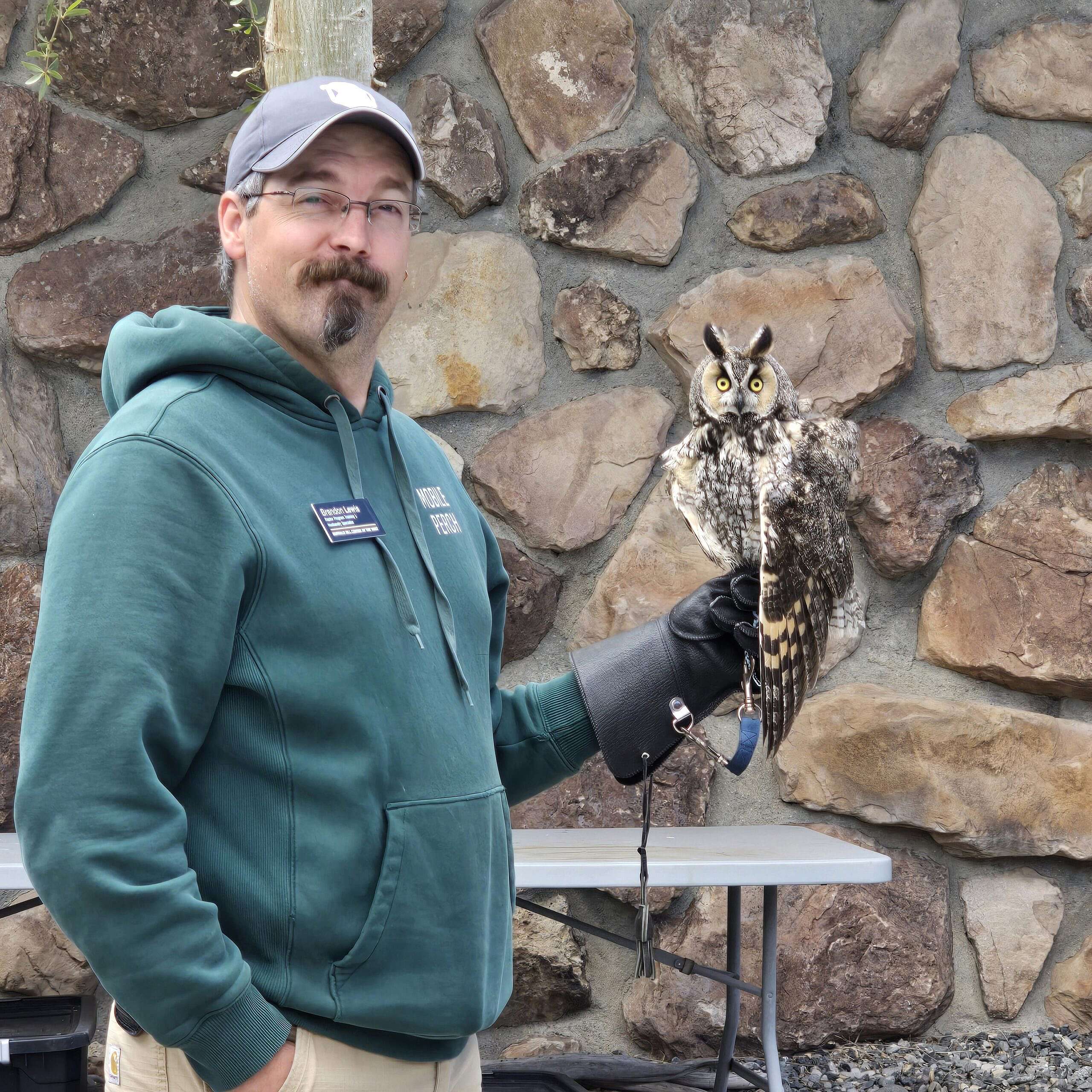
Otus the Long-eared Owl
Otus is a male Long-eared Owl who hatched an undetermined number of years ago. He was found next to a haybale in Hermosa, South Dakota with wing damage. Most likely he hit a barbed wire fence and dislocated his right wing at the shoulder. This permanent damage to his wing limits his flight ability.
Species Info:
Long-eared Owls are found throughout the Northern Hemisphere, including North America, Europe, and Asia. In North America, they breed across much of Canada and the United States, with some populations migrating south into Mexico during the winter. Other populations remain in the same general area year-round.
Long-eared Owls favor habitats that combine dense vegetation for nesting and daytime roosting with open areas for hunting. They are commonly found in woodlands, coniferous forests, shrublands, and tree groves near grasslands, meadows, wetlands, and agricultural fields. They often roost in dense evergreen trees, where their brown and gray plumage provides excellent camouflage.
Long-eared Owls eat primarily small mammals, especially voles, mice, and other rodents. Depending on their location, their diet may also include shrews, pocket gophers, kangaroo rats, and young rabbits. Occasionally, they prey upon small birds, bats, lizards, snakes, and insects. They hunt primarily at night, flying low over open ground and using their exceptional hearing and low-light vision to locate prey.
Notes on Otus:
As a smaller owl species, Otus thinks everything in the world is out to eat him. As such, he is our “Owls of Yellowstone” virtual field trip star. This eliminates the stress of big public programs.