“If not for the … epic the captains scratched out while crouching on hillsides and squatting on riverbanks, we might not remember Lewis and Clark at all.” – Walter Kim, Time
Rare Book Highlights is a series of blog posts following McCracken Research Library intern Hannah Lomele as she takes a deep dive into four books in the Buffalo Bill Center of the West’s collection. Rare Book Highlights explores what makes these works special, while also illuminating the stories told not just on the pages of books, but by the books themselves.
The Making of American Icons
Few explorers have captured the imaginations of past and present Americans like Lewis and Clark.
From 1804 to 1806, Meriwether Lewis, William Clark, and their Corps of Discovery traveled nearly 8,000 miles from the Missouri River to the Pacific Ocean and back, navigating unfamiliar rivers and mountain ranges, discovering new species of flora and fauna, and encountering Native peoples on their home turfs, uncertain of the dangers they would have to face or if success was even possible. Today, when digital tools like Google Earth can “take” us virtually anywhere in the world, it’s difficult to fathom a place so unknown–or a road trip without GPS.
The expedition was an extraordinary undertaking. But much of its lasting significance rests not on the journey itself, but on the meticulous and thorough records its members kept along the way. Rivers and mountains, plants and animals, weather and geography–the Corps documented what they saw and experienced with remarkable consistency and detail.
The original Lewis and Clark journals contain an enormous body of firsthand observations and discoveries of early nineteenth century Western America, making them invaluable historical and scientific sources. And yet, these journals’ path to publication is almost as winding and treacherous as that of the journey recorded on their pages.
For this installment of Rare Book Highlights, rather than tracing Lewis and Clark’s route across North America, we are tracing the journey of their journals–from the expedition itself, through years of editing, scattering, and rediscovery, and finally to an extraordinary set of books now housed in the McCracken Research Library.
From Expedition to Publication
President Thomas Jefferson commissioned the Corps of Discovery in 1803, following the United States’ acquisition of the Louisiana Territory. Lewis and Clark departed the following year and returned to St. Louis in September 1806, without having completed Jefferson’s main objective, of finding “the most direct and practicable water communication across this continent.” However, Jefferson’s instructions went beyond finding a route across the continent. He wanted detailed information about the West’s biodiversity, topography, and geography, and to learn more about the unknown Native American tribes living on the land.
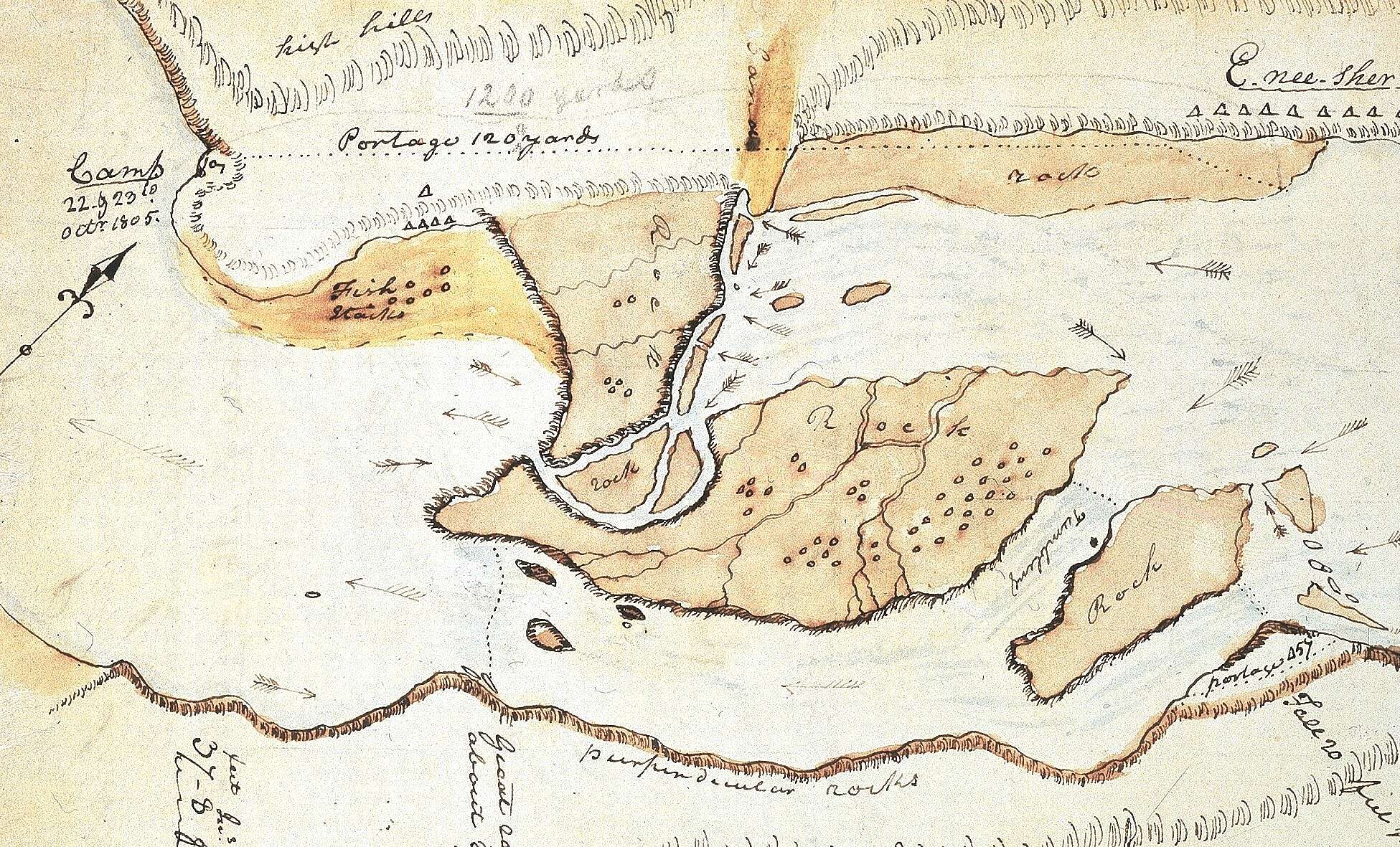
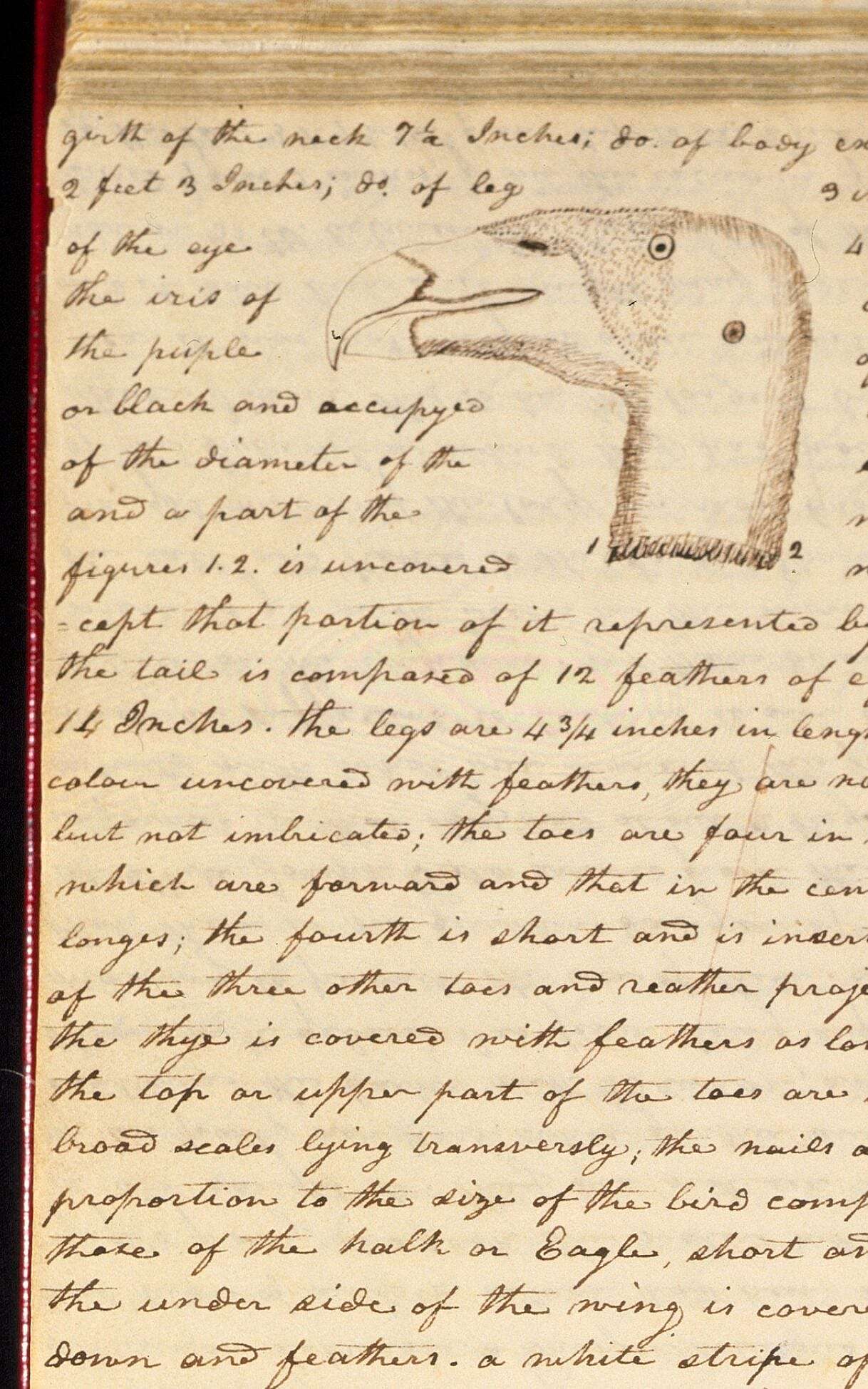
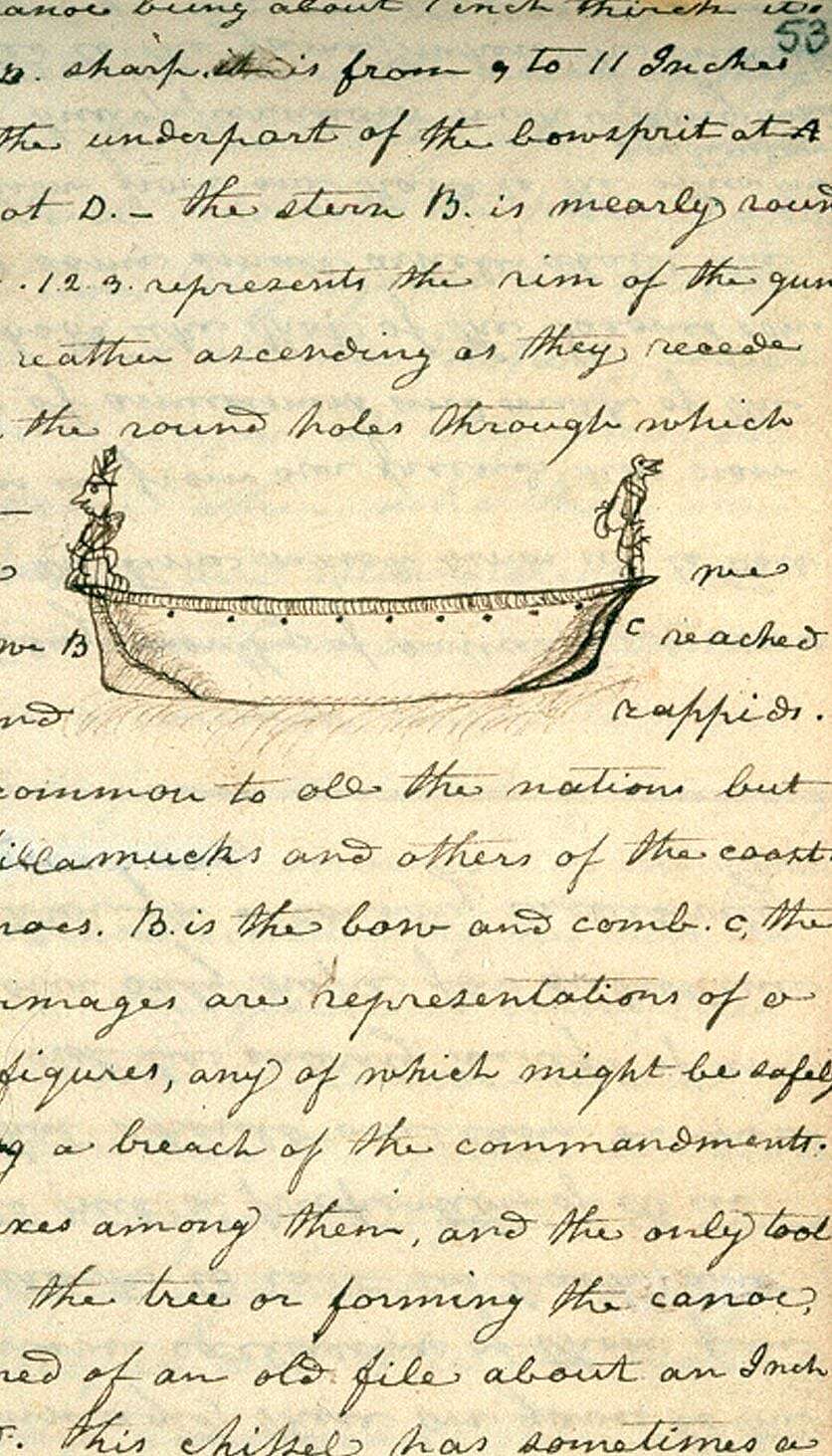
The explorers took that responsibility seriously. Their journals, sketches, and maps documented landscapes, weather, wildlife, plants, rivers, and mountains, as well as the people and communities they met. The expedition’s observations contributed significantly to geographic and scientific knowledge, including the documentation of numerous plants and animals previously unknown to Euro-American science.
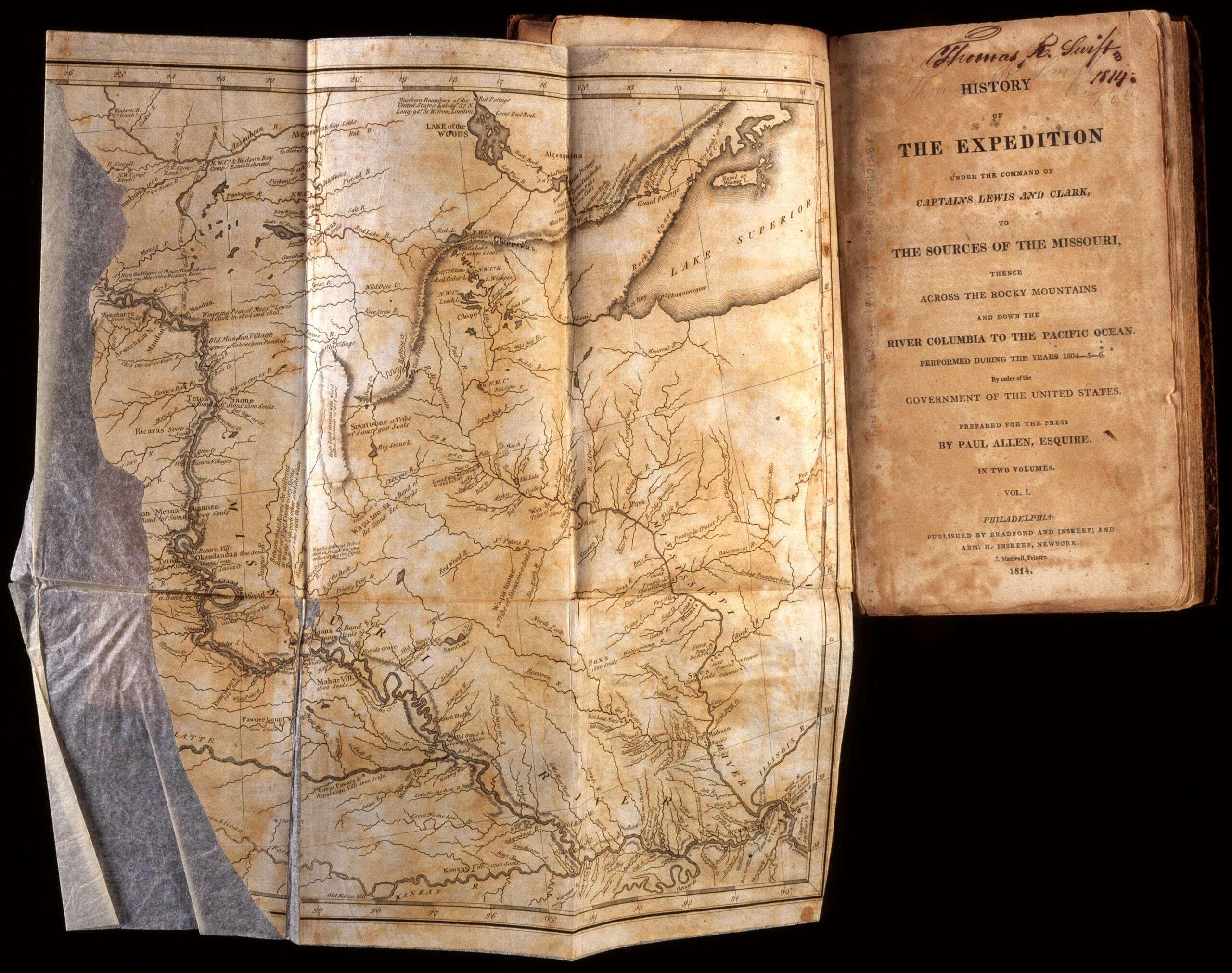
Title pageof first edition of Biddle-Allen History of the Expedition under the Command of Captains Lewis and Clark, 1814. McCracken Research Library RB.F592.4.1814
The expedition itself attracted considerable attention, as evidenced by newspapers of the time, but the journals they kept did not immediately reach the public. Jefferson expected Lewis to prepare the expedition’s journals for publication, but his frequent letters asking for updates went unanswered. After Lewis’s mysterious death in 1809 (under circumstances which to this date remain a subject of historical debate), the task fell to Clark, who eventually engaged Philadelphians Nicholas Biddle and Paul Allen to edit the disorganized materials for publication. Lawyer Biddle worked from the captains’ original journals as well as other expedition accounts, while journalist Allen helped prepare the manuscript.
They published the two-volume History of the Expedition under the Command of Captains Lewis and Clark in 1814. The book made the expedition accessible to the public, but it also left much behind. Biddle transformed the expedition’s sprawling daily records into a readable narrative rather than reproducing the original journals in their entirety, in part because Clark did not give him the original journals in their entirety. Thus, much of the expedition’s scientific and natural history notes remained outside Biddle and Allen’s published account.
Only 1,417 copies of the first edition were printed, and the books sold poorly as public interest in the expedition had faded in the decade since the expedition. Still, their version remained the standard published account of Lewis and Clark’s journey for nearly a century to come. But what of the original material that Biddle was missing?
A Century of Scattered Journals
Benjamin Smith Barton, a Philadelphia naturalist who taught Lewis about natural history before the expedition, was entrusted with the scientific material. Evidence of that intended use survives within the journals themselves. In several places, passages are struck out or marked with the words “copy for Dr. Barton.”
But Barton never completed the planned natural history publication and instead hoarded the original journals until after his death. Recognizing the enduring value of Lewis and Clark’s journals, Jefferson began collecting and storing them at the American Philosophical Society in Philadelphia. Over time, portions of the original materials reemerged and were collected by Jefferson for the American Philosophical Society, where they were safe but effectively hidden from view and gathering dust.
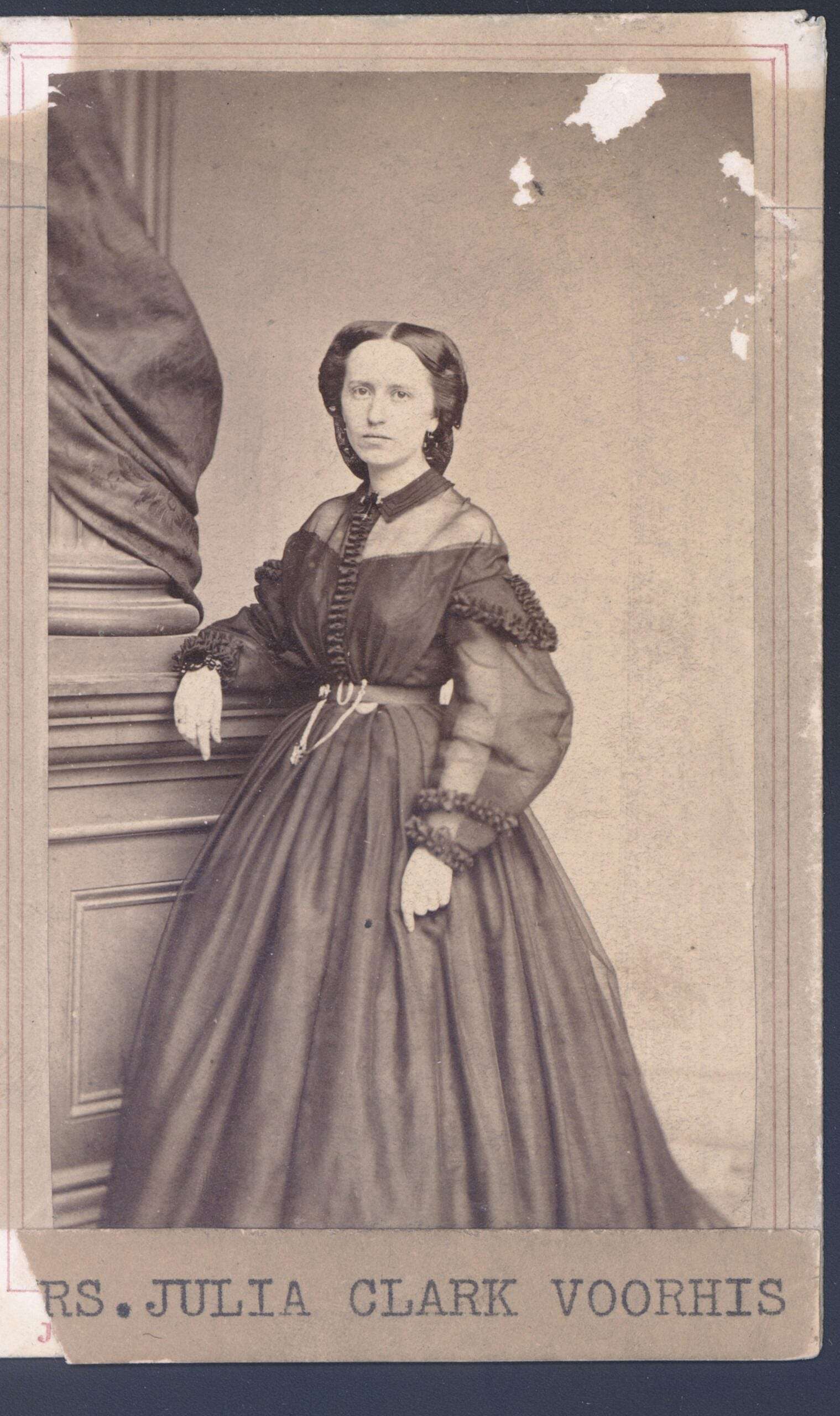
Then, near the beginning of the twentieth century, the story changed. In 1903, Wisconsin librarian and historian Reuben Gold Thwaites discovered a substantial group of Lewis and Clark materials in the New York home of Julia Clark Voorhis and her daughter Eleanor Glasgow Voorhis. Julia had inherited the material from her father, George Rogers Hancock Clark, William Clark’s fourth child.
The discovery added journals, maps, letters, and other documents to the body of material available to scholars and helped reveal just how much of the expedition’s original documentary record had survived. Rather than relying on the edited narrative of the 1814 publication, Thwaites returned to the surviving documents and incorporated a much fuller body of the original journal material. The result, Thwaites’ Original Journals of the Lewis and Clark Expedition, 1804–1806, published in 1904, offered readers a more expansive record of the expedition’s scientific observations, daily experiences, and encounters. Thwaites’s edition was not the final word on the journals–later discoveries would reveal additional material–but it was a definite turning point in making the original records accessible to a new generation of readers.
For historians, Thwaites’ publication was groundbreaking. For one particular reader, it was also a source of artistic inspiration.
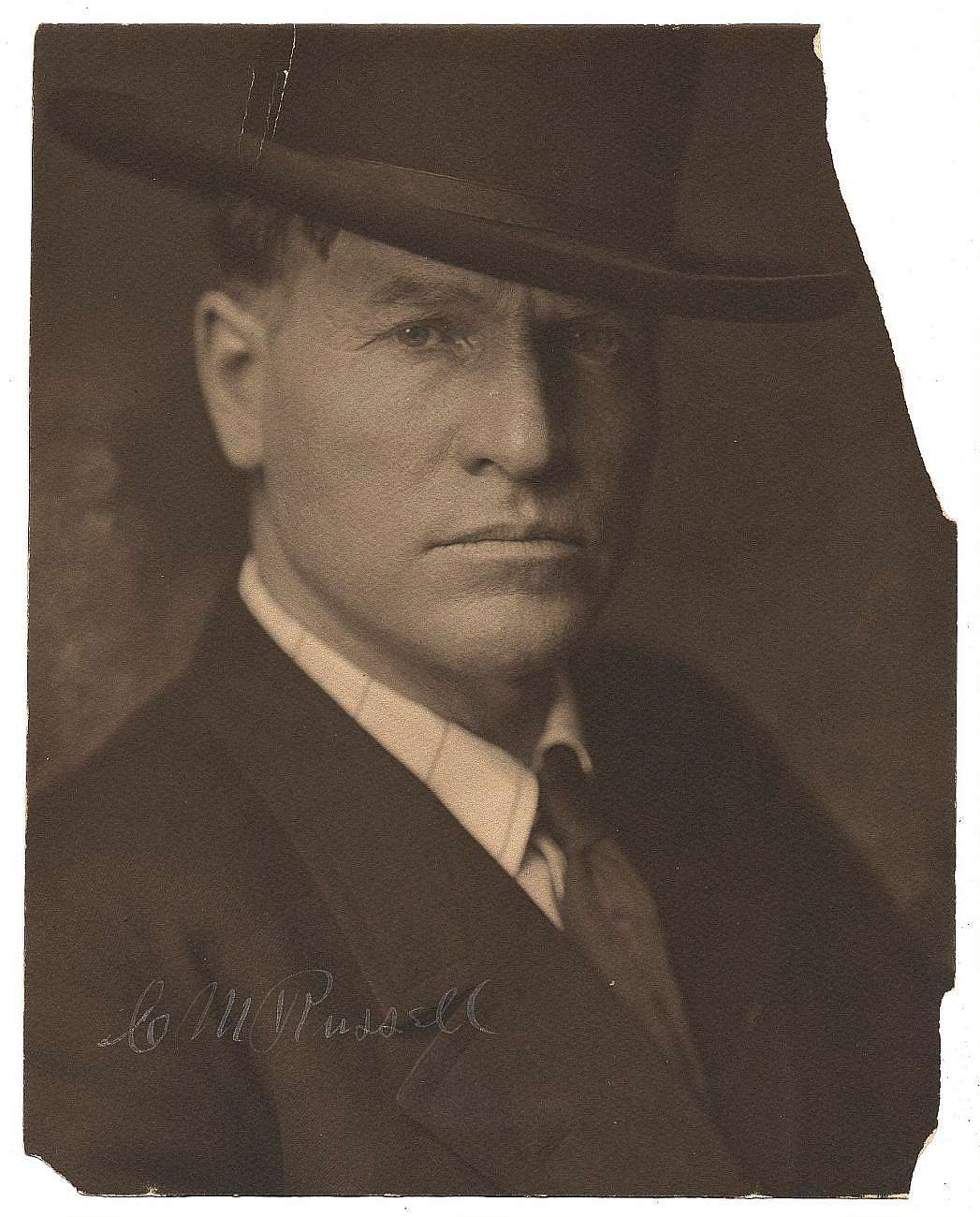
In 1880, the teenaged Charles M. Russell (1864–1926) ran away from home. He’d always dreamed of the West, and the moment he could he absconded to Montana and fell in love with life on the open range. He worked as a cowboy while teaching himself to draw, paint, and sculpt, eventually becoming one of the most celebrated artists of the American West.
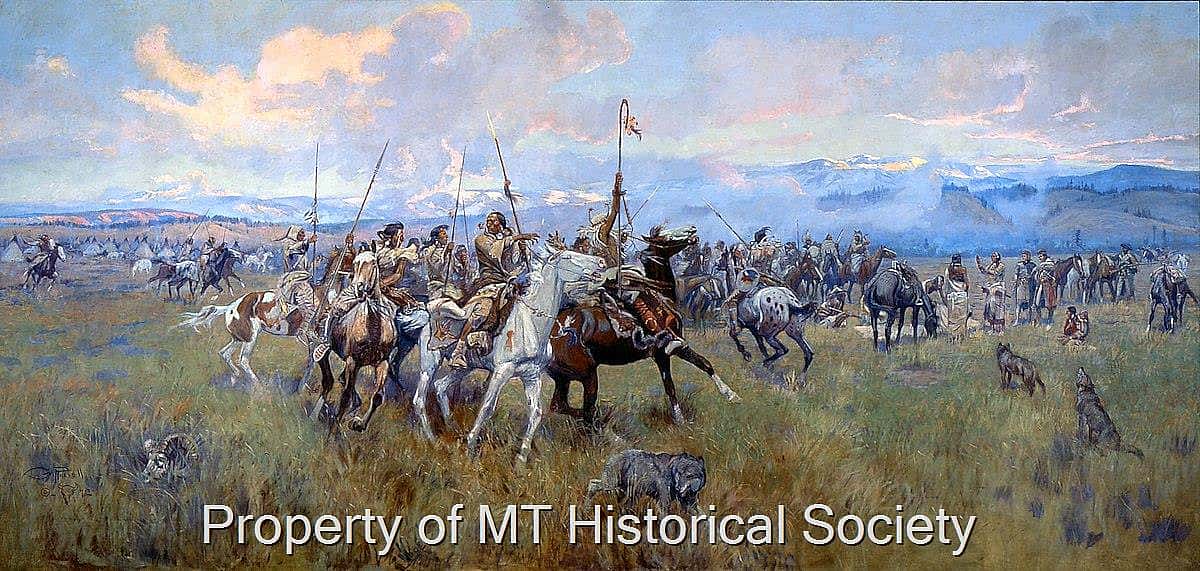
Russell’s connection to Lewis and Clark came, at least in part, through a commission. In 1911, the Montana legislature hired Russell to create murals for the new Montana State Capitol. One of the scenes they asked for was the 1805 meeting between Lewis and Clark and the Flathead Indians (Salish) at Ross’ Hole. The expedition was struggling with snow, weak horses, and dwindling supplies after crossing the North Fork of the Salmon River. The Salish, with about 500 horses, offered food, shelter, and crucial directions, enabling the Corps to secure horses and navigate the Bitterroot Mountains before winter.
Russell completed Lewis and Clark Meeting the Flathead Indians at Ross’ Hole in 1912. It is the largest painting Russell ever produced, measuring about 12 feet high by 25 feet wide, and required him to raise the roof of his log studio to accommodate it. His composition is notable for centering Native presence rather than the explorers. In the foreground and middle ground, Salish warriors in painted buckskins, women, children, and a herd of horses dominate the visual space, while Lewis, Clark, and their interpreters are placed toward the right edge of the canvas. The mural remains installed behind the Speaker’s rostrum in the Montana House chamber.
An even greater connection between Russell and the Lewis and Clark journals exists in the McCracken Research Library, which houses Russell’s personal copy of Thwaites’ Original Journals of the Lewis and Clark Expedition. Exactly when he acquired the set is unknown, but the first documented mention of it dates to 1917, when Russell’s protégé Joe De Yong, who was staying with the Russells, told his parents that he was reading the journals.
Historian Brian W. Dippie, writing about Russell’s library for Points West, notes that Western history figured prominently on the artist’s bookshelves. Russell sought out firsthand accounts that predated his own experiences in the West, as well as books about the frontiersmen, traders, and cowboys who shaped the region’s history. And, remarkably, we have evidence that Russell actually used the Lewis and Clark journals.
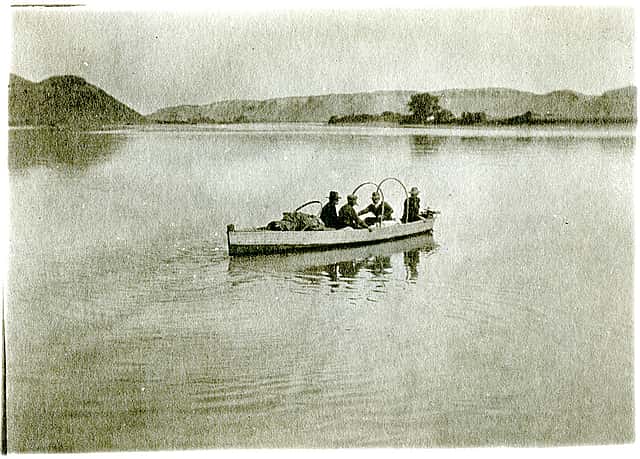
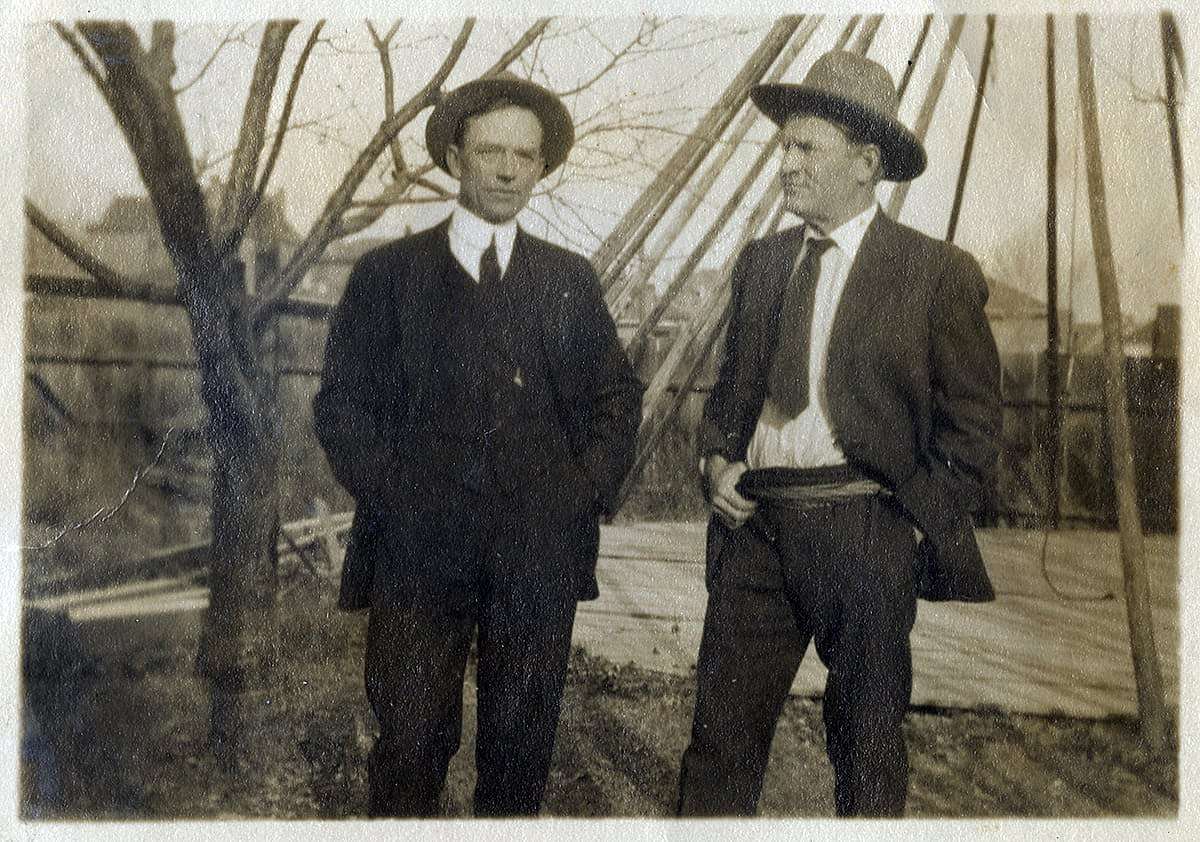
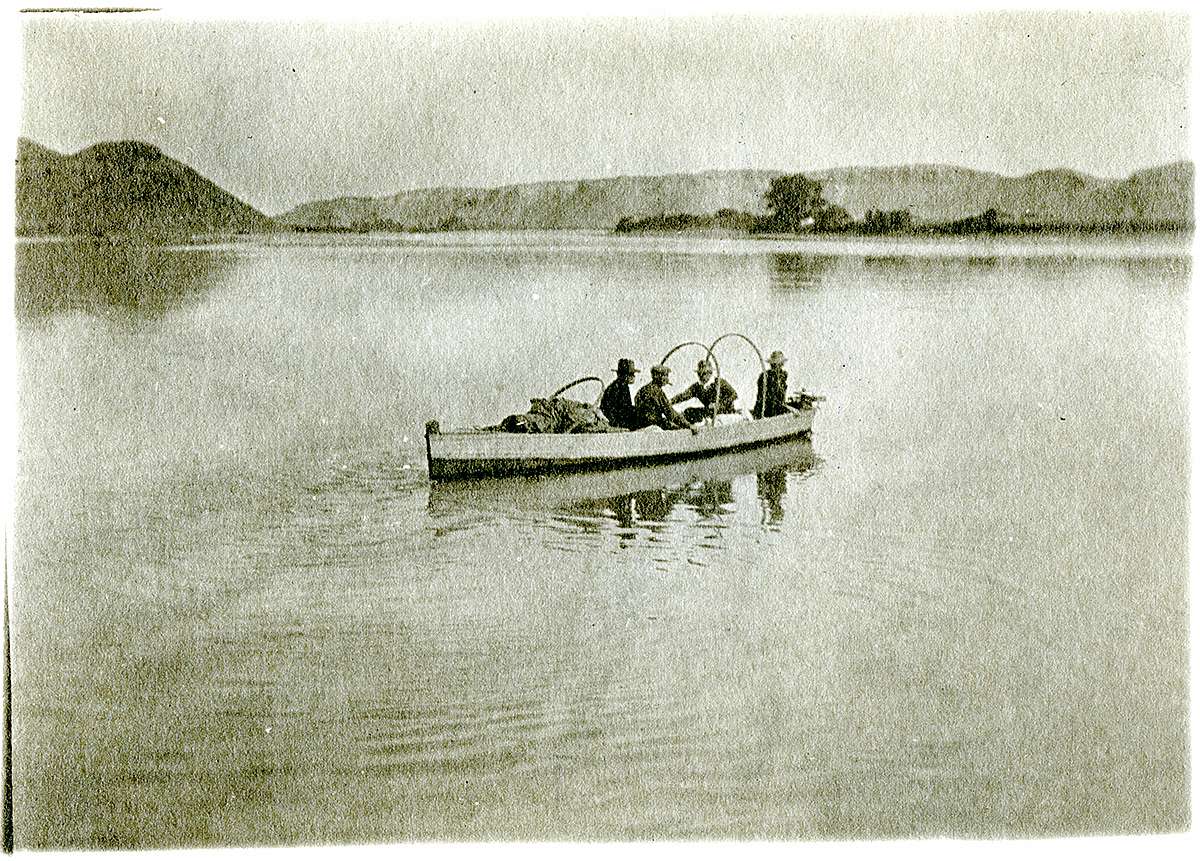
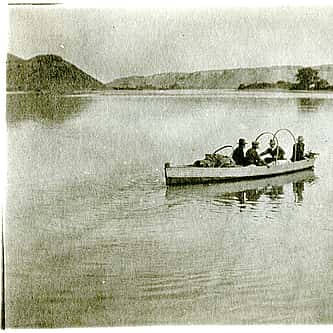
In 1913, Russell joined writer Frank Bird Linderman and two others on a float trip down the Missouri River in Montana, traveling from Fort Benton to the mouth of the Judith River and retracing part of Lewis and Clark’s route. According to Linderman’s recollection, Russell brought a copy of the expedition’s journals with him and read aloud from them during the trip:
“In 1913, Frank Linderman, with Russell and two others, took a float trip down the Missouri River in Montana from Fort Benton to the mouth of the Judith River, retracing in reverse Lewis and Clark’s journey up the Missouri in 1805. Linderman recalled that Russell brought with him a copy of the expedition’s journals, and we can picture him reading aloud from one of these very volumes in his halting, schoolboy manner, stopping frequently to spell out words “for our pronunciation” as the current carried the four men along and the riverbank streamed by, erasing 108 years as they joined Lewis and Clark on their epic adventure.“ – Brian W. Dippie, Points West
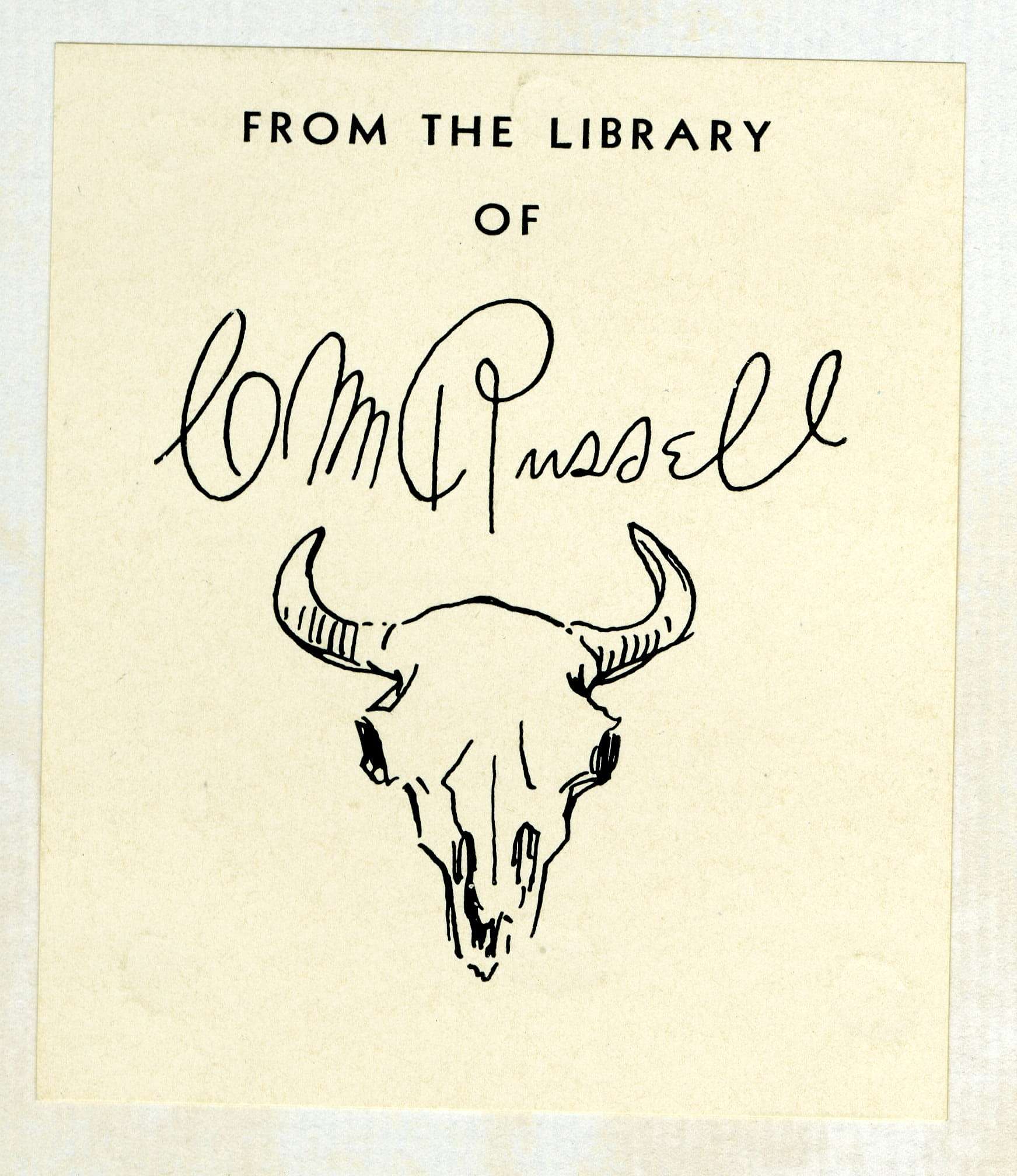
Bookplate pasted inside Charles M Russell’s copy of Thwaites’ Lewis and Clark Journals. McCracken Research LibraryRB.F592.4.1904
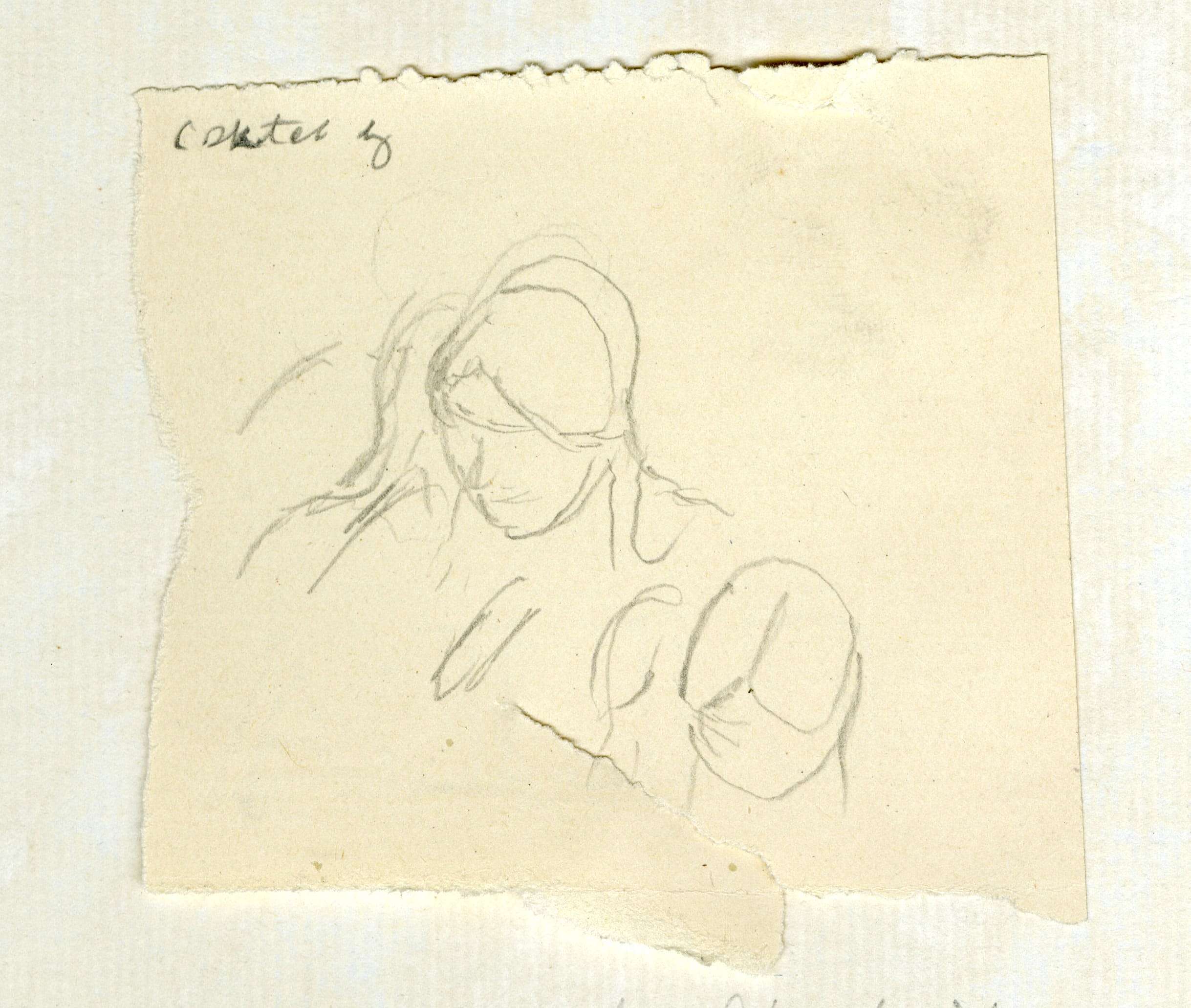
Russell’s connections to this particular set of journals are still visible in the volume itself. A bookplate bearing Russell’s buffalo-skull insignia and the words “From the library of C.M. Russell” identifies the set as having come from his library, although the bookplates originate from Dawson’s Book Shop in Los Angeles, the bookstore that sold books from Russell’s personal collection after his widow, Nancy, passed in 1940. But perhaps even more revealing is a scrap of paper bearing an original pencil sketch by Russell himself, preserved within the volume.
When Charles G. Clarke (unrelated to the explorer) acquired Russell’s set from Dawson’s Book Shop in early 1941, only the first three volumes of the Thwaites set had been opened. In books of the period, pages were often left uncut and had to be slit open before they could be read, giving us valuable clues as to the actual use of the volumes. According to Clarke’s notes, several Russell sketches were found in those opened volumes, most likely serving as page markers. Clarke eventually opened the remaining volumes while researching his own book, The Men of the Lewis and Clark Expedition, and extensively annotated and extra-illustrated the set. Much of Russell’s original presence in the books was consequently lost.
Sketch pasted inside Charles M Russell’s copy of Thwaites’ Lewis and Clark Journals. McCracken Research LibraryRB.F592.4.1904
But Clarke preserved one of Russell’s little paper sketches by pasting it into the front of the first volume, where it still provides a physical connection to the artist who owned the set. Dippie identifies the drawing as an Indian’s head seen from above and notes that it serves as a lasting reminder of Russell’s ownership of the books, as well as the artist’s well-known proclivity for sketching or sculpting at any time and in any place.
For the McCracken, that small, unfinished drawing transforms the volumes from an important historical publication into a deeply personal artifact. It offers a glimpse of Russell not simply as a famous Western artist, but as a human being who, like so many of us, took inspiration from history.
The West, Remembered
Today, it is easy to think of Lewis and Clark as distant historical figures, or to view their journals simply as records of an expedition. But objects like Russell’s copy of the Thwaites edition remind us that books can have lives far beyond their original purpose.
The original Lewis and Clark journals documented an extraordinary expedition, but I would argue that they went on a pretty extraordinary journey of their own. Biddle and Allen edited and transformed them into a streamlined, if incomplete, narrative; fate and time scattered them among private collections and collectors; Jefferson preserved them in institutions that kept them safe and together but unread; and Thwaites rediscovered and republished them in a fuller form. From there, Russell read them, carried them with him, and left traces of himself in them. And now the physical books, and the evidence of their long and meandering expedition, survive in the McCracken Research Library.
That is what makes these books so deeply compelling: they don’t just tell the story of Lewis and Clark, but the story of how history is recorded, rediscovered, interpreted, and ultimately transformed into something new, something greater than the sum of its parts. And sometimes, if you’re lucky, that history leaves a sketch behind as a bookmark.
Want to see this remarkable volume for yourself? The McCracken Research Library is open for walk-in visitors and research appointments, Monday through Friday, 9:00 AM–12:00 PM and 12:00 PM–4:30 PM. Email [email protected] with questions or appointment requests.
Hannah is a New Yorker with the adventurous spirit of the Old West. She has a BA in Creative Writing from Bard College and is currently studying at CUNY Queens toward an MA in History as well as an MS in Library Science. After 6 years of working in documentary film development and production, she pivoted to archival studies and began working at Planting Fields, the historic Long Island estate built by William Robertson Coe. Her latest adventures have taken her to the Buffalo Bill Center of the West, where she is the Library & Archives intern at the McCracken Research Library.