
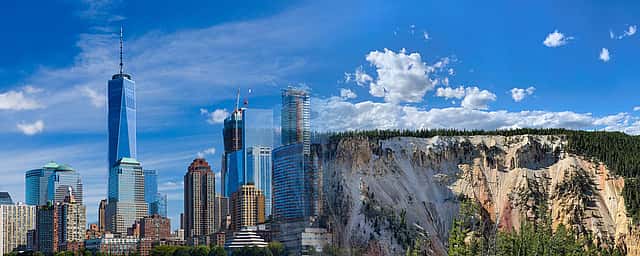
Eastern Chic and Western Mystique: New Yorkers and the Buffalo Bill Center of the West

June 23, 2026
“The Buffalo Bill Center is the best Western museum that Eastern money can buy.” – Al Simpson
Not long ago, I left my home–and more importantly, my dog–to spend the summer in Cody, Wyoming. I traveled across the country for an internship at the Buffalo Bill Center of the West’s McCracken Research Library. As a born and raised New Yorker, I wasn’t sure how I’d adjust. The dry heat and the scent of bruised sagebrush, the high altitudes or the pervasive risk of bears–all unfamiliar. I wondered if I would make friends, or spend June, July, and August with my head buried in books, studying the myths and realities of the West through words instead of experiences.
It’s still early; I have two months of summer in Cody left, and I’ve barely scratched the surface. Thus far, Wyoming has far surpassed my naive expectations. But I have also discovered a pleasant surprise, one which both curbs my homesickness and heartens my resolve. Without New Yorkers, the magnificent, world-class Buffalo Bill Center of the West we enjoy today would not exist.
“He had dreamed a dream, but he had also worked out positive plans for the accomplishment of the dream.” Mary Jester Allen on her uncle, Buffalo Bill
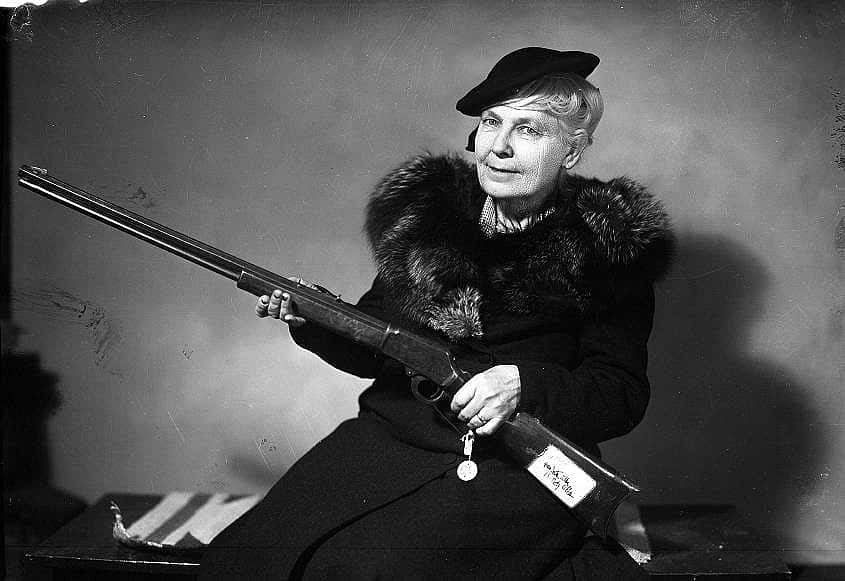
McCracken Research Library, PN.228.202
Soon after William F. Cody’s death, an informal group of Cody locals gathered to discuss how they would honor the founder of their hometown. When the Wyoming Legislature appropriated $5,000 toward a memorial statue, this group incorporated to become the Buffalo Bill Memorial Association (BBMA).
It was two short months later that President Woodrow Wilson asked Congress for a declaration of war. The BBMA (and the state appropriated money) stagnated through those war-torn years. But the dream of honoring Buffalo Bill endured, and his niece, Mary Jester Allen, was determined to make it happen.
During WWI, Allen lived in New York, taking advantage of the fast-paced environs to build connections with powerful New Yorkers. She also beefed up her experience in public relations, a skill that would come in handy later. Allen knew that a proper statue to her beloved uncle would cost more than the $5,000 appropriated to the BBMA. She also knew that wealthy Easterners were enamored with Western mystique: “Indians, cowboys, cattle, mountains, mines, wide-open spaces, and above all, Buffalo Bill.”
“A chance to get away from the social cocktail party group and come out here and enjoy the ‘simplicity of living.’” Irving “Larry” Larom on the appeal of the West
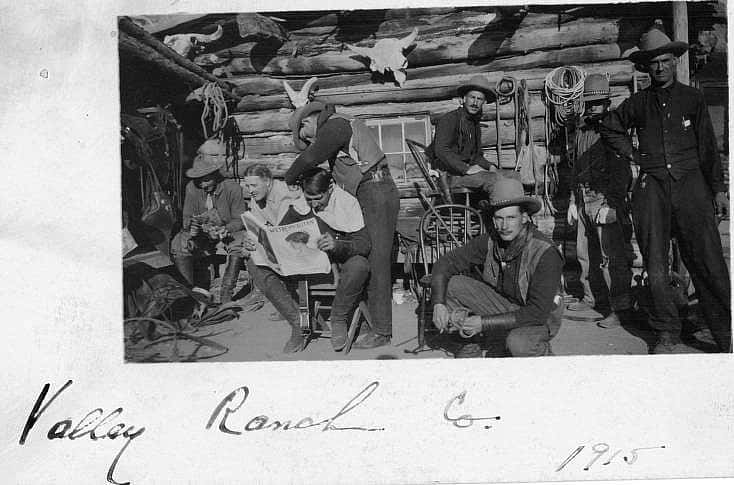
McCracken Research Library, P.5.1810
One Easterner with a yearning for the Old West was A.A. Anderson. A talented artist, Anderson built a lodge in Meeteetse which he aptly named the Palette Ranch. By inviting his prestigious NY contacts to Palette Ranch, Anderson became “perhaps the most influential individual in bringing eastern aristocracy to this corner of Wyoming.” Anderson was also a key figure in the establishment and protection of the Yellowstone Forest Reserve. The McCracken Research Library houses his archival records, including stories of his close friendship and hunting trips with Buffalo Bill.
One of his most influential guests was the English-born New Yorker William Robertson Coe. A lover of all things nature, W.R. Coe was entranced by his 1908 stay at Palette Ranch. He soon purchased his own ranch, previously owned by Buffalo Bill, on Carter Mountain. Coe was deeply passionate about the American West and spent his life collecting and curating Western Americana. He later donated most of his collection to Yale University’s Beinecke Library. One of his acquisitions, a portrait of Buffalo Bill by French painter Rosa Bonheur, hangs in the Whitney Western Art Museum.
Much like Coe, New York City-raised Irving “Larry” Larom had an adventurous spirit which brought him to Cody in 1910. He fell in love with the region and returned frequently. Eventually, he purchased Sunny Jim and “Buckskin” Jenny McLaughlin’s rustic homestead in the South Fork. He and fellow New Yorker Winthrop Brooks (of Brooks Brothers) then started their wildly successful dude ranch, Valley Ranch. When he sold the property in 1969, he estimated the guest list at over 16,000 names. And “the list,” wrote the Cody Enterprise, “reads like the Social Registers of New York City, Philadelphia and Boston.” Larom gifted his large Plains Indian collection to the BBMA, which is now housed at the Plains Indian Museum.
Another New Yorker integral to the development of the Buffalo Bill Center of the West was Colonel Arthur W. Little. His father founded the Manhattan printing house Little and Company. Colonel Little was a war hero, author, champion of equal rights–and lover of Western Americana. The story goes it was Colonel Little who first proposed a commemorative Buffalo Bill sculpture by Gertrude Vanderbilt Whitney. Archival letters show that both Colonel Little and W.R. Coe were in contact with the sculptor regarding a potential statue, as well as Allen and other BBMA members.
Archival records reveal the deep, inextricably tangled web of influence these, and many other New Yorkers, had on Cody and the eventual Buffalo Bill Center of the West. They beseeched for funding, fought over decisions, and made introductions and donations that would one day determine who was an ally to the museum and which, if any, valuable artifacts would be displayed in its galleries. But one of the greatest, most prominent, and physically largest contributions made to the museum by a New Yorker was yet to come.
“The subject of a suitable memorial for Col. Cody is now agitating our peaceful village.” Caroline Lockhart in a letter to W.R. Coe
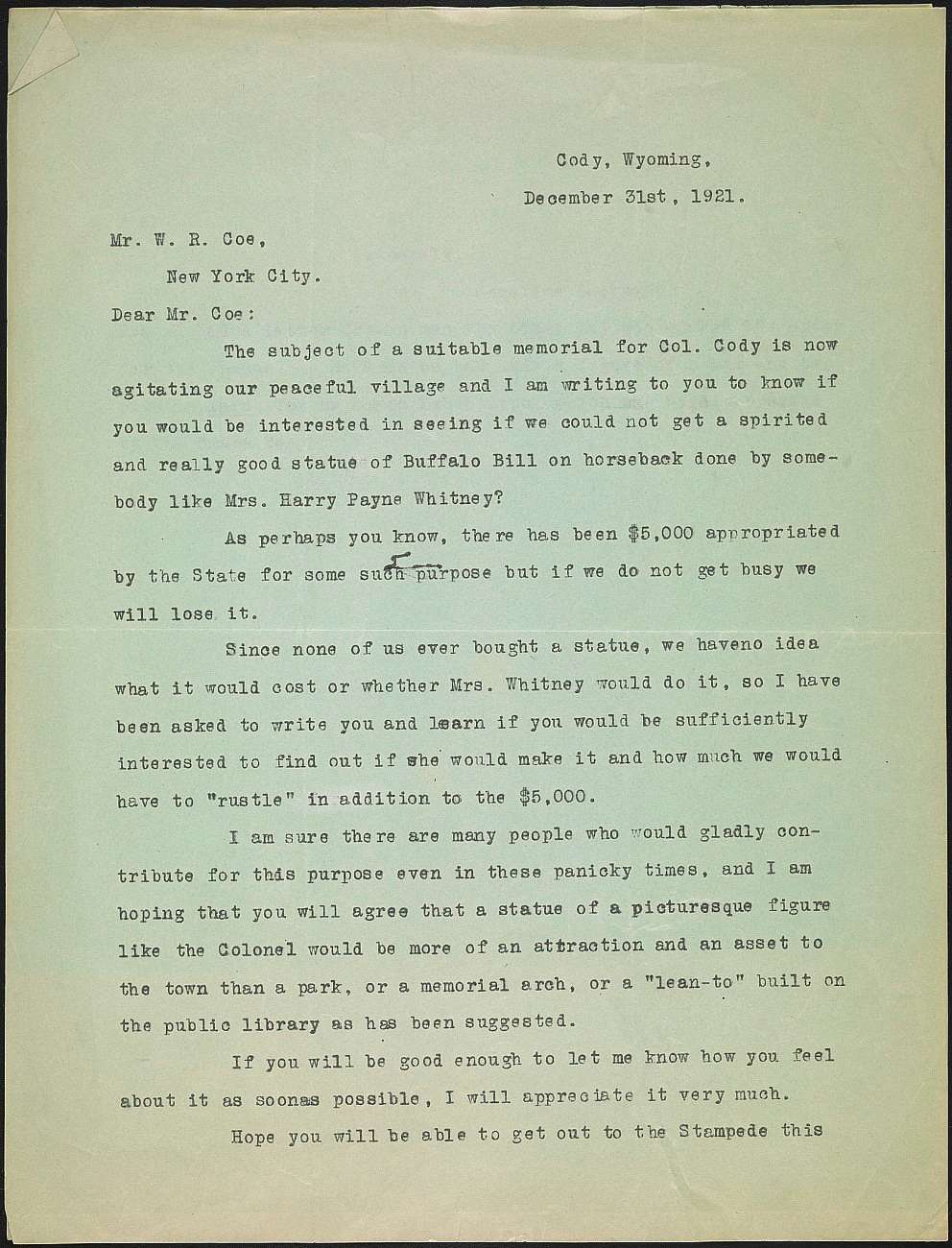
Smithsonian Archives of American Art, Gertrude Vanderbilt Whitney papers, 1851-1975, bulk 1888-1942, Series 5 Box 12 Folder 14: Correspondence, 1900, 1949, 1922-1942, Image 8.
Gertrude Vanderbilt Whitney was an heiress twice over, from both her great-grandfather, Cornelius Vanderbilt, and her husband, Harry Payne Whitney. It was after their marriage that she began to pursue sculpture seriously, studying in New York City and Paris. When the Eastern BBMA supporters began prevailing upon her to sculpt the memorial statue, she was already a well-regarded artist. In January of 1922, W.R. Coe asked if she’d be interested in the commission. While Whitney’s letter in reply has been lost to time, she must have been agreeable to the idea. On February 8, 1922, the Cody Enterprise reported that the larger-than-life woman had agreed to do the job.
But how was the $5,000 appropriated by the state enough to pay for an original sculpture by an acclaimed artist? Spoiler alert: it wasn’t. For one thing, the BBMA had already used $4,000 of the appropriation to acquire land for the statue. Land that Whitney objected to, by the way, and later substituted with 40 acres nearby that she bankrolled. For another thing, the ultimate cost of Whitney’s completed work for the BBMA was five million dollars in today’s money. Despite an obvious lack of funding, Whitney went ahead with her plans, paying entirely out of her own pocket.
Cody locals attempted to raise some money, throwing local fundraising events like dances and social clubs. They also entreatd Boy Scouts to collect donations with the motto, “A Buffalo Nickel for Buffalo Bill.” In total, they raised around $150 out of the estimated $250,000 required for the project. Whitney, too, attempted to fundraise, faced with paying for the bronze statue, the plinth, the land, the shipment, the installation, and the value of her time and expertise herself. Her friends organized another group, this time called the Buffalo Bill American Association, to help recoup costs. They threw fancy dinner parties in New York hotels, wining and dining the high society set.
But no funds were incoming. In the end, Gertrude Vanderbilt Whitney bankrolled the entire thing herself. Not only is she the artist and creator behind one of the most iconic portrayals of Buffalo Bill and, in many ways, the West in general; she is also its sole patron.
“All good Americans when they die go to Paris; but all good Americans when they live come to Cody.” Juliana Force, Gertrude Vanderbilt Whitney’s secretary
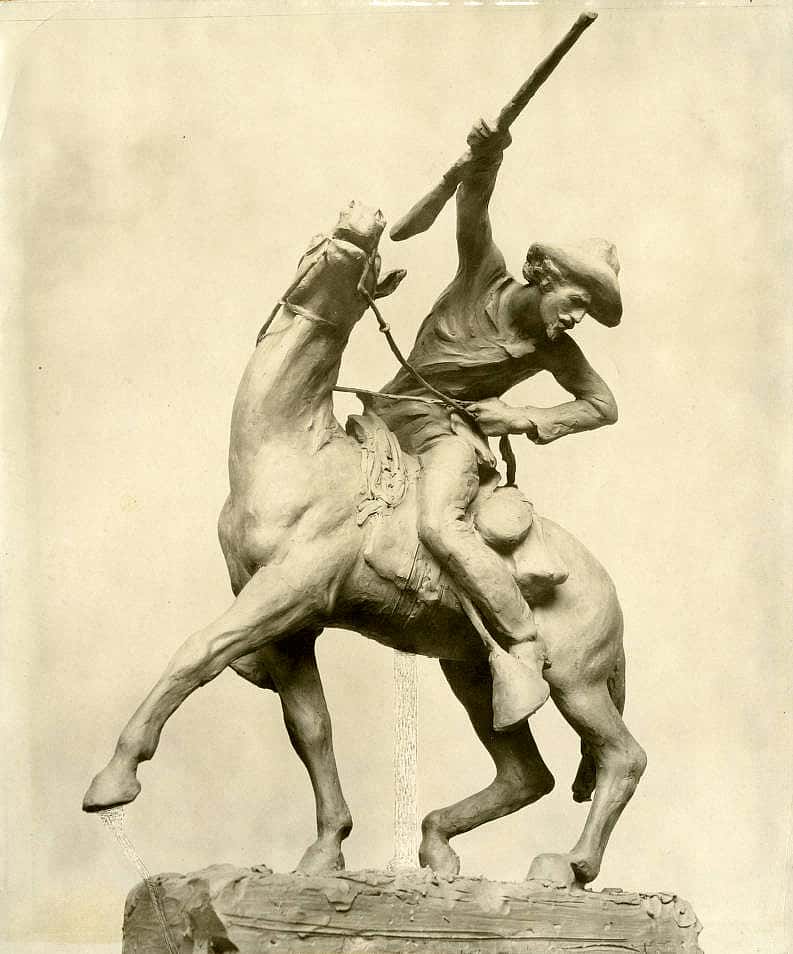
Whitney’s generosity, time, and passion for Buffalo Bill’s legacy gave us the masterwork that now looks over the canyon. Buffalo Bill–The Scout is a fitting symbol to commemorate and preserve the memory of Buffalo Bill.
Before the statue’s July 4, 1924 debut, Juliana Force, Whitney’s staunch and competent secretary, said, “There are only two classes of people in New York, the quick and the dead… You call it energy, intelligence, responsiveness–anything you want, but it is really being alive. And that is the thing which I think Mrs. Whitney has put into her statue of Buffalo Bill… Buffalo Bill was quick.”
Archival research reveals countless times when an Eastern transplant furthered the mission of the Buffalo Bill Center of the West. Working in the McCracken Research Library, surrounded by history, it’s clear that modern researchers like me are part of a long legacy of outsiders drawn to the West. The crisp air, the rugged beauty of the Bighorn Basin, and the enduring mystique of Cody serve as a reminder of why so many New Yorkers choose to slow down, invest their lives, and ultimately help preserve this corner of American history.
Written By
Hannah Lomele
Hannah is a New Yorker with the adventurous spirit of the Old West. She has a BA in Creative Writing from Bard College and is currently studying at CUNY Queens toward an MA in History as well as an MS in Library Science. After 6 years of working in documentary film development and production, she pivoted to archival studies and began working at Planting Fields, the historic Long Island estate built by William Robertson Coe. Her latest adventures have taken her to the Buffalo Bill Center of the West, where she is the Library & Archives intern at the McCracken Research Library.
You May Also Like
The Life Style of Yellow-bellied Sapsuckers
Sep 16, 2026

Tree girdled with Yellow-bellied Sapsucker Holes © Dennis Donohue /...
Everything I Need to Know About Life I Learned From Birds
Aug 26, 2026

by Sophie Peterson, 2026 Raptor Intern As I near the...
Revolutionary Readers: The Library as a Symbol for Freedom
Jul 30, 2026

Dr. Harold McCracken in his home library in Cody, Wyoming...
Rare Book Highlights: The Indians’ Book
Sep 02, 2026
"Wellnigh impossible is it for civilized man to conceive of...
Before the White Man Came: Examining Native Representation in Early American Film
Aug 20, 2026

Popular films and television shows like Dances with Wolves and...
The Firearm of the Mountains: The Hawken Rifle and the American West
Jul 30, 2026

When most people imagine the “rifle that won the west”...
Ultimate Trip Guide Through Yellowstone’s East Entrance
Aug 19, 2026

Yellowstone’s East Entrance offers one of America’s most spectacular drives....
From the Badlands to the Tetons: A 1930s Family Road Trip West
Sep 14, 2026

Long before smartphones and GPS guided travelers across the country,...
Don’t Let History Live in a Shoebox: How to Archive Your Family Treasures
Sep 18, 2026
Are you the designated "historian" in your family? Do you...
Buffalo Bill Center of the West Authenticates Trove of Historic Early 1800s Medals
Sep 08, 2026
Buffalo Bill Center of the West authenticates rare early 1800s...
The Ultimate Wyoming Wildlife Guide: Expert Viewing Tips
Sep 28, 2026
Grizzly Flowers. Photo by Julia Cook @julia.littlelightningnature Draper Elk Wyoming...
The Winchester Records Synopsis, or How I Learned to Stop Worrying and Love Cursive
Aug 18, 2026

The Cody Firearms Records office produces letters from the corporate...