
The Myth of the Fully Processed Archive

July 20, 2026
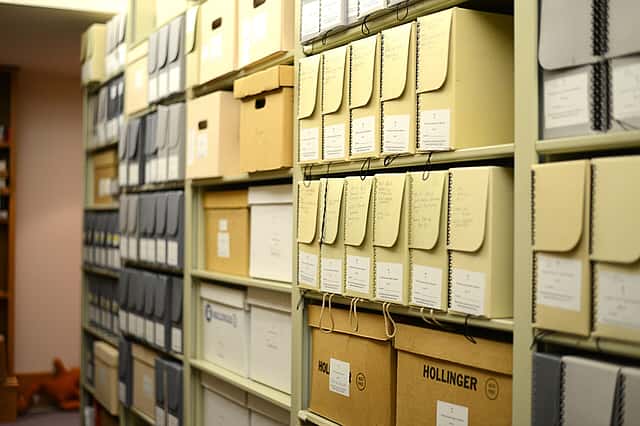
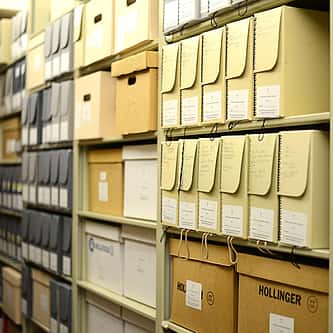
When you think of an archive, you probably imagine countless collections all perfectly organized and described down to the last scrap of paper. You may be surprised to learn that while this is sometimes the case, most often collections are processed to a variety of descriptive levels.
This variation in description is an intentional and strategic choice grounded in archival theory and best practices.
Archival processing is the work an archivist does to organize, preserve, and make a collection accessible. In short, we tame the chaos of historical collections to make them useable for research. Sometimes that means describing every item individually; other times, it means grouping materials at the folder or series level to balance access, time, and resources. The level of description truly depends on the collection, and as archivists, we listen to the collection to determine what kind of description fits best.
What Does “Processed” Actually Mean?
Without getting too into the weeds of archival theory, processing involves the arrangement and description of materials. Archivists arrange and describe materials so future researchers can find the information they’re looking for. During this phase, we also make preservation decisions like housing materials in acid-free folders, placing photographs in protective sleeves, and removing collection hazards like rusty staples and paperclips.
Arrangement
Once items are stable and rehoused, it’s time to give them an order.
In practice, this means evaluating the way a collection arrives to us. Sometimes materials come in a clear, intentional order from the creator. Other times, they arrive as a chaotic mix of folders, photographs, and papers with no obvious structure at all. Our job is to decide whether to preserve that original order or to create one that makes the materials usable for research.
If we’re lucky, a collection arrives in its original order, or the way the creator intended the materials to be used or viewed. That order might be topical, chronological, alphabetical, or something else entirely. However it’s organized, that structure is part of the collection’s story, and we preserve it whenever possible.
More often, though, collections arrive in complete disarray, and it’s our job to find structure within the chaos. Each collection is different, so the arrangement will differ depending on the materials. A topical organization might work best for unidentified animal photographs, while correspondence spanning decades may be best arranged chronologically. Ultimately, it’s up to the archivist to determine what arrangement makes the most sense for access and understanding.
This decision-making process, grouping records by their creator and preserving their context through a logical hierarchy, is what archivists refer to as archival arrangement.
Description
Once a collection is arranged, the next step is describing what we have. This is where decisions about how much description to provide come into play. In archives, description typically happens at one of three levels: series-level, folder-level, or item-level.
Series-level description provides information about groups of related materials within a larger collection, often organized by function, format, or subject. Folder-level description goes a step further, describing the contents and context of individual folders. Item-level description is the most detailed approach, with every individual item described separately, and it is also the most time-consuming.
The level of description that makes the most sense depends on the size and nature of the collection. A small, one-box collection may benefit from item-level description because it provides detailed access without requiring extensive staff time. A collection spanning 50 or more boxes, however, could take months or longer to describe at the item level, making folder- or series-level description a more practical choice.
This approach is informed by an archival theory known as More Product, Less Process (MPLP). At its core, MPLP emphasizes reducing backlogs and prioritizing access by limiting time-intensive processing steps. Folder- and series-level description allow archivists to make more collections available to researchers more quickly, even if every item is not individually described.
Why Not Everything Is Fully Processed
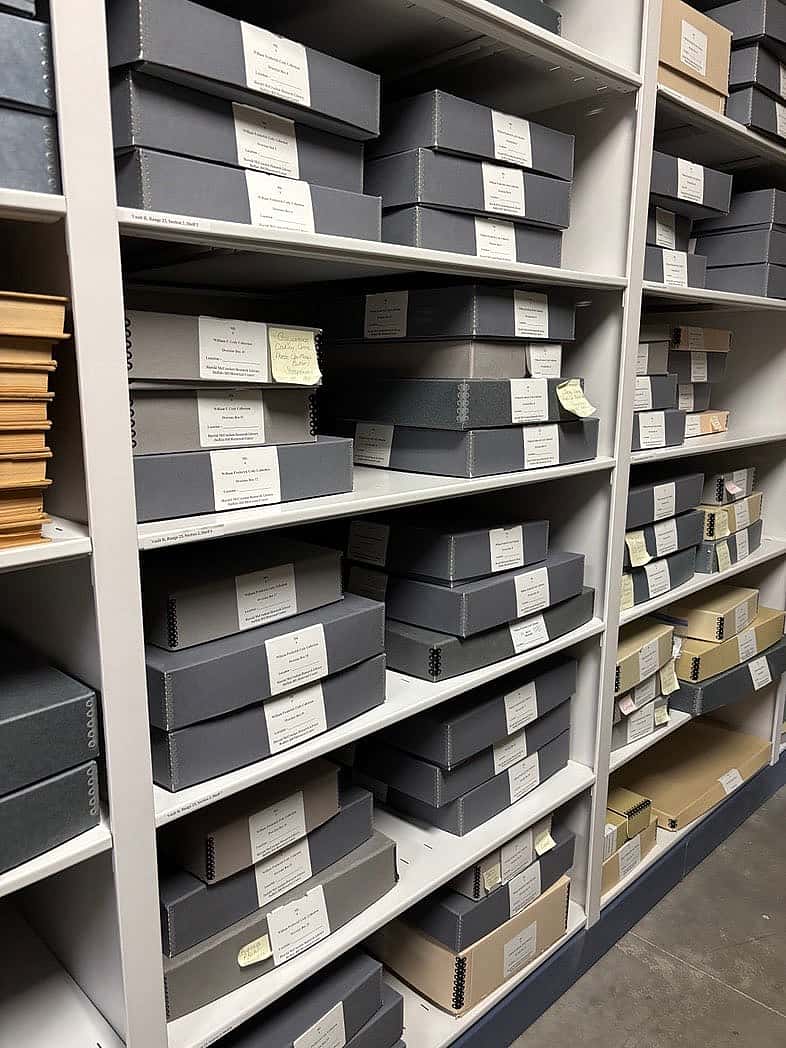
For all the reasons outlined above, not every collection is described at the item level, and therefore not every collection is considered “fully processed.” Even though collections described at the series or folder level are still highly useful to researchers, it’s understandable to wonder why these decisions are made. Ultimately, it comes down to a few key factors: time, staffing and resources, collection volume, and preservation.
Time
The time required to individually describe each item in a collection is often the biggest factor in deciding whether item-level processing is feasible. Processing is slow, careful work. While item-level description may be reasonable for a small, one-box collection, it can take days to process a single box, making it impractical for collections spanning many boxes.
Staffing and Resources
Processing is carried out by available archival staff and volunteers. When staff time and hours are limited, minimal processing allows archivists to make more collections accessible overall. In addition to processing, archival staff are often balancing reference requests, outreach, preservation, digitization, and exhibition work, sometimes all at once.
Collection Volume
Archives hold collections of all sizes, from a single box to hundreds of boxes. Some collections continue to grow as new material arrives over time, making arrangement and description an ongoing process.
Backlogs are a reality of archival work, even at well-funded institutions. Describing every item in every collection only increases those backlogs, so archivists must make thoughtful decisions about where detailed description will have the greatest impact.
Preservation
At its core, an archive’s mission is to preserve materials and make them accessible. In many cases, stabilizing materials is more urgent than providing detailed description. Archivists often prioritize removing hazards like paperclips and staples and rehousing materials in acid-free folders and sleeves to ensure long-term preservation, even if item-level description must wait.
Folder-Level vs. Item-level Processing
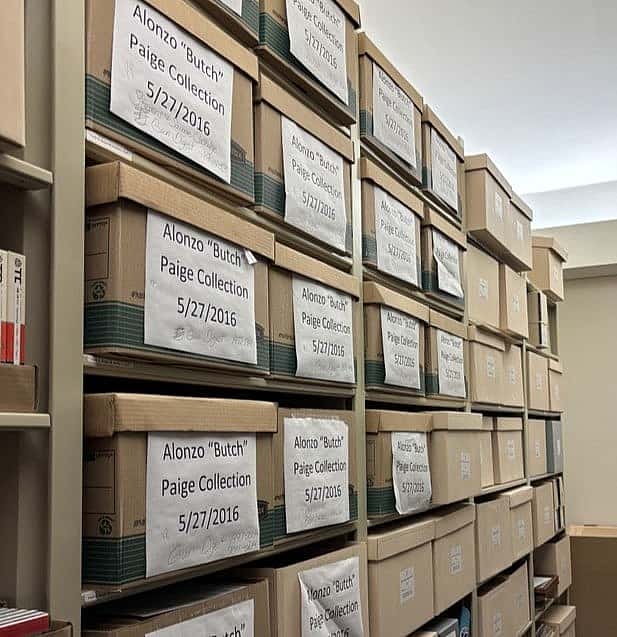
Folder-level processing strikes a balance between access and efficiency, while still giving researchers enough context to identify relevant materials within a collection. This approach also helps prevent situations where nothing is available to researchers because everything is waiting to be described in perfect detail.
Many research questions don’t require item-level description to be successful. Archivists keep this in mind when deciding how to process collections, prioritizing access over exhaustive detail whenever possible.
That said, there are certainly situations where item-level processing makes the most sense. High-use or high-value materials are often described individually because they are requested frequently. Photographs, fragile items, or visually distinctive materials may also benefit from item-level description, as it allows for more precise discovery and access.
Item-level description is also common in digitization projects, either because of the nature of the materials or because project guidelines require more detailed metadata. Similarly, materials selected for exhibitions or publications are more likely to be individually described due to how they are presented to the public.
If there’s one thing to take away, it’s this: archivists are not inherently anti–item-level description. We are simply strategic in how we approach processing, choosing the level of description that best serves both the collection and its users.
The Big Picture
Here’s the big picture: a fully processed collection is not automatically more valuable than a “partially” processed one. In the same way, a partially processed collection is not unusable for research.
Archivists prioritize making materials accessible, even if that means description isn’t exhaustive, and that’s okay. Processing decisions are about equity and speed of access. More collections available to more people is far better than a handful of highly detailed collections being the only ones accessible.
You shouldn’t be intimidated by partially processed collections. Instead, think of them as an opportunity to uncover something new. Who knows, you might even discover something the archivist didn’t know was buried in the collection.
We’re always here to help guide you through our collections, so please don’t hesitate to reach out to our Archivist, Cassandra Day, or our reference email ([email protected]), if you have questions or want to learn more about a collection.
Written By
Cassandra Day
Cassandra Day is the Archivist of the McCracken Research Library at the Buffalo Bill Center of the West, where she specializes in the preservation, interpretation, and accessibility of historical records. She holds a Bachelor of Arts in History from Georgia Southern University and a Master of Science in Archival Studies from Clayton State University. Additionally, she is a Certified Archivist through the Academy of Certified Archivists. Her research interests include World War II and Cold War codebreaking, oral history methodologies and best practices, and the exploration of regional identities through rodeo. She is passionate about making archival materials accessible and engaging while preserving the voices and stories that shape our understanding of the past.
You May Also Like
The Life Style of Yellow-bellied Sapsuckers
Sep 16, 2026

Tree girdled with Yellow-bellied Sapsucker Holes © Dennis Donohue /...
Rare Book Highlights: The Indians’ Book
Sep 02, 2026

"Wellnigh impossible is it for civilized man to conceive of...
From the Badlands to the Tetons: A 1930s Family Road Trip West
Sep 14, 2026

Long before smartphones and GPS guided travelers across the country,...
Rare Book Highlights: The Original Journals of the Lewis and Clark Expedition
Oct 01, 2026
"If not for the … epic the captains scratched out...
Speaking in Code: Rare Winchester Telegraph Code Books
Jun 30, 2026
Among the rarest items in the McCracken Research Library’s archival collections...
Inside the Reading Room: What to Know Before You Visit
Feb 12, 2026
The McCracken Research Library has a reading room that is...
Research Made Easy: Exploring the McCracken Research Library’s Collections
Mar 23, 2026
Archival and library research can feel overwhelming for even the...
Heart Mountain Through the Lens
Jul 02, 2026
Each July, former detainees, their families and descendants, gather at...
Don’t Let History Live in a Shoebox: How to Archive Your Family Treasures
Sep 18, 2026
Are you the designated "historian" in your family? Do you...
The Ultimate Wyoming Wildlife Guide: Expert Viewing Tips
Sep 28, 2026

Grizzly Flowers. Photo by Julia Cook @julia.littlelightningnature Draper Elk Wyoming...
The Secret Custer Letter: Rediscovering Little Bighorn at 150
Jun 02, 2026
Earlier this year, while reprocessing the MS 89 Jack Richard...
Buffalo Bill Center of the West Authenticates Trove of Historic Early 1800s Medals
Sep 08, 2026
Buffalo Bill Center of the West authenticates rare early 1800s...