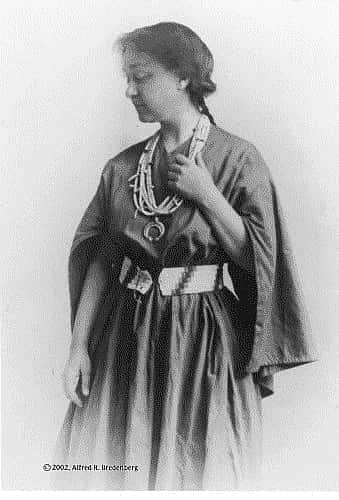
“Wellnigh impossible is it for civilized man to conceive of the importance of song in the life of the Indian. To the Indian, song is the breath of the spirit that consecrates the acts of life. Not all songs are religious, but there is scarcely a task, light or grave, scarcely an event, great or small, but has its fitting song.” – Natalie Curtis, The Indians’ Book (1907)
Rare Book Highlights is a series of blog posts following McCracken Research Library intern Hannah Lomele as she takes a deep dive into four books in the Buffalo Bill Center of the West’s collection. Rare Book Highlights explores what makes these works special, while also illuminating the stories told not just on the pages of books, but by the books themselves.
In the early twentieth century, North America was facing the consequences of the previous century’s rapid expansion and industrial progress. In the West, these changes felt insurmountable: Yellowstone National Park’s wild bison herd had been reduced to barely two dozen animals. Railroad tracks now cut through miles of previously untouched land. Urban expansion had transformed the Western frontier into something that seemed a lot less wild.
At the same time, decades of displacing and dispossessing Indigenous peoples perpetuated the destructive myth of the “vanishing Indian”–the false belief that Native peoples and cultures were destined to disappear. The idea was not that Indigenous peoples would simply vanish like the buffalo, but that assimilation and pressure to conform to Eurocentric society would cause their cultures and identities to go extinct.
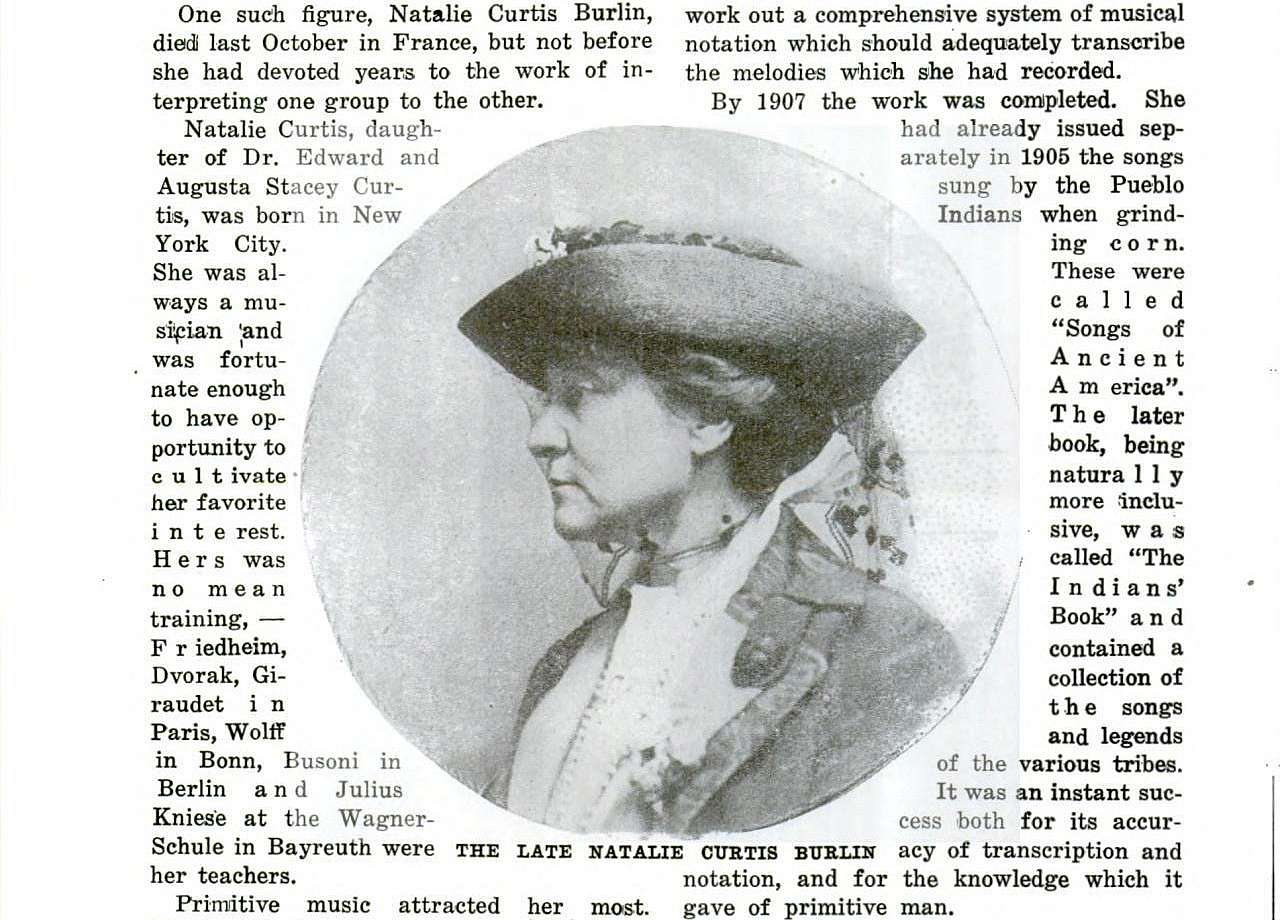
Against this backdrop, photographers, writers, anthropologists, and other researchers flocked to the West to document Native cultures they believed were disappearing. Some viewed their work as preserving remnants of a vanishing past. Among them was ethnomusicologist Natalie Curtis (1875–1921), whose landmark 1907 publication, The Indians’ Book, became a significant effort to document and share Native American music, art, and stories with a broader audience.
But Curtis’s goal was not simply to create a record of cultures she believed were destined to disappear. She argued that Native artistic traditions should be fostered and allowed to develop on their own terms. For Curtis, preserving Indigenous music and art meant more than creating an archive of a supposedly vanished past; it meant recognizing Native creativity as part of the living cultural landscape of the United States.
From Musician to Ethnomusicologist
Born in New York City in 1875, Curtis studied classical piano and composition at the National Conservatory of Music and in Europe. But when a life-changing trip to Arizona introduced her to Native cultures, she shifted the course of her life. Abandoning the path of a concert pianist, she dedicated herself to what she called the “self-appointed task of recording native songs.”
Curtis approached her work with a desire to present Indigenous peoples and their cultures to broader audiences. Her musical training allowed her to transcribe songs into Western musical notation that could be reproduced and shared. Her guiding philosophy was simple:
“I have in nowise changed the melodies, nor have I sought to harmonize them in the usual sense, nor to make of them musical compositions… My one desire has been to let the Indian songs be heard as the Indians themselves sing them…”
And so, Curtis embarked on a journey across the country with an Edison phonograph recorder, a pencil, and a notebook. Her goal was to document songs and cultural knowledge at a time when the United States government was actively restricting many forms of Native cultural expression.
Yet Curtis’s work was not free from the assumptions of her era. She was a white, wealthy intellectual working within a society that often treated Indigenous cultures as objects of study rather than as living traditions belonging to distinct Native nations and communities. The Indians’ Book therefore raises an important question: What does it mean to preserve someone else’s culture, and who gets to decide what is preserved and how it is presented?
Obstacles to Overcome
At first, Curtis’s mission clashed directly with government policy. The U.S. government’s “Code of Indian Offenses,” implemented in 1883, sought to suppress Native religious and cultural practices, including traditional dances, ceremonies, and songs.
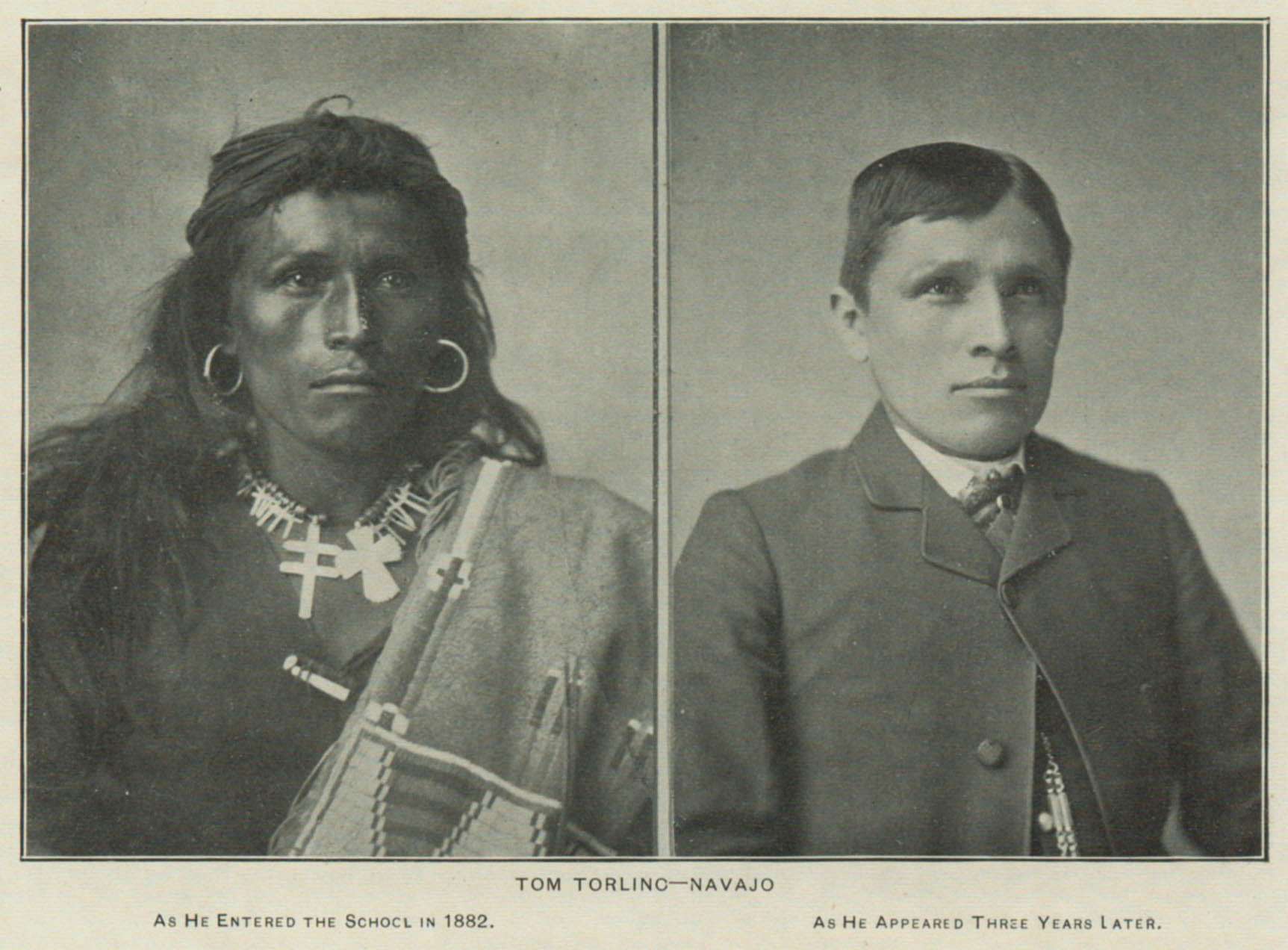
A souvenir photo of Tom Torlino (of the Navajo Nation) as he entered the Carlisle Indian School in 1882 and as he departed the school in 1885. Carlisle Indian School Digital Resource Center
The preface to a later edition of The Indians’ Book describes Curtis’s initial difficulties recording traditional Native music on early twentieth-century reservations:
“On one reservation she was warned… that if she wished to record the Indian songs she must do so secretly, for if the government official should hear of it, she would be expelled from the reservation… the Indians were afraid to sing to her lest it should bring them into disfavor with the authorities.”
Curtis therefore had to earn the trust of the people she hoped to document. On the Hopi reservation, women initially feared that singing for her could bring punishment from government officials. Curtis sometimes put her recording equipment aside and transcribed songs by hand, approaching singers as a fellow musician and sharing songs of her own. Her willingness to work this way helped her establish relationships with Native people who otherwise might not have participated.
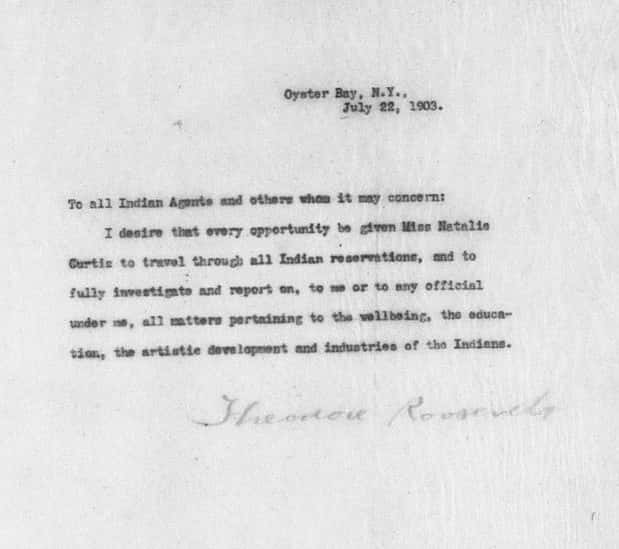
It also helped that Curtis had influential connections. Her family’s social network brought her into Theodore Roosevelt’s orbit. Curtis appealed to the president for assistance, and in 1903 he issued a letter to Indian Agents instructing them to give Curtis “every opportunity” to travel through reservations and investigate matters relating to the “wellbeing, the education, the artistic development and industries of the Indians.”
Curtis’s relationship with Roosevelt also extended beyond facilitating her own research. That same year, she brought Yavapai leader Pelia to meet Roosevelt at Sagamore Hill. Pelia appealed for the Yavapai to be allowed to return to their traditional homeland in Arizona’s Verde River Valley, from which they had been forcibly removed decades earlier. Roosevelt promised to see that the Yavapai received justice, and by 1905 the Yavapai had returned to the Verde River Valley.
The episode illustrates the unusual access Curtis’s social connections gave her–and the ways she sometimes used that access to advocate on behalf of Native communities.
Inside the Pages of The Indians’ Book
Published in 1907, The Indians’ Book contains more than 200 songs and stories from 18 Native nations. The volume features musical transcriptions, artwork, and photography contributed by Native individuals.
Maliseet Love-Song, a Wabanaki song, from The Indians’ Book, 1907. McCracken Research Library
The book was widely celebrated when it appeared, receiving enthusiastic reviews from contemporary newspapers and literary publications. It also drew praise from Roosevelt, who wrote that the songs offered a new perspective on the “depth and dignity” of Indians.
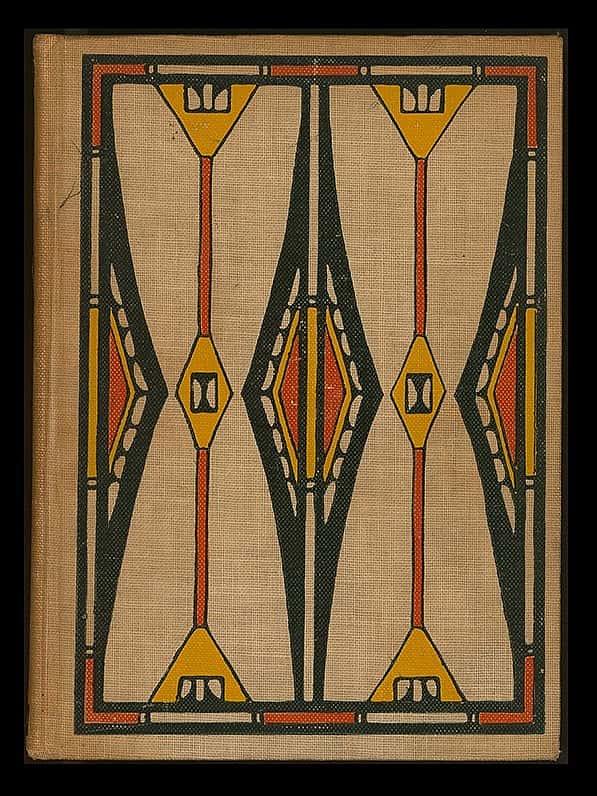
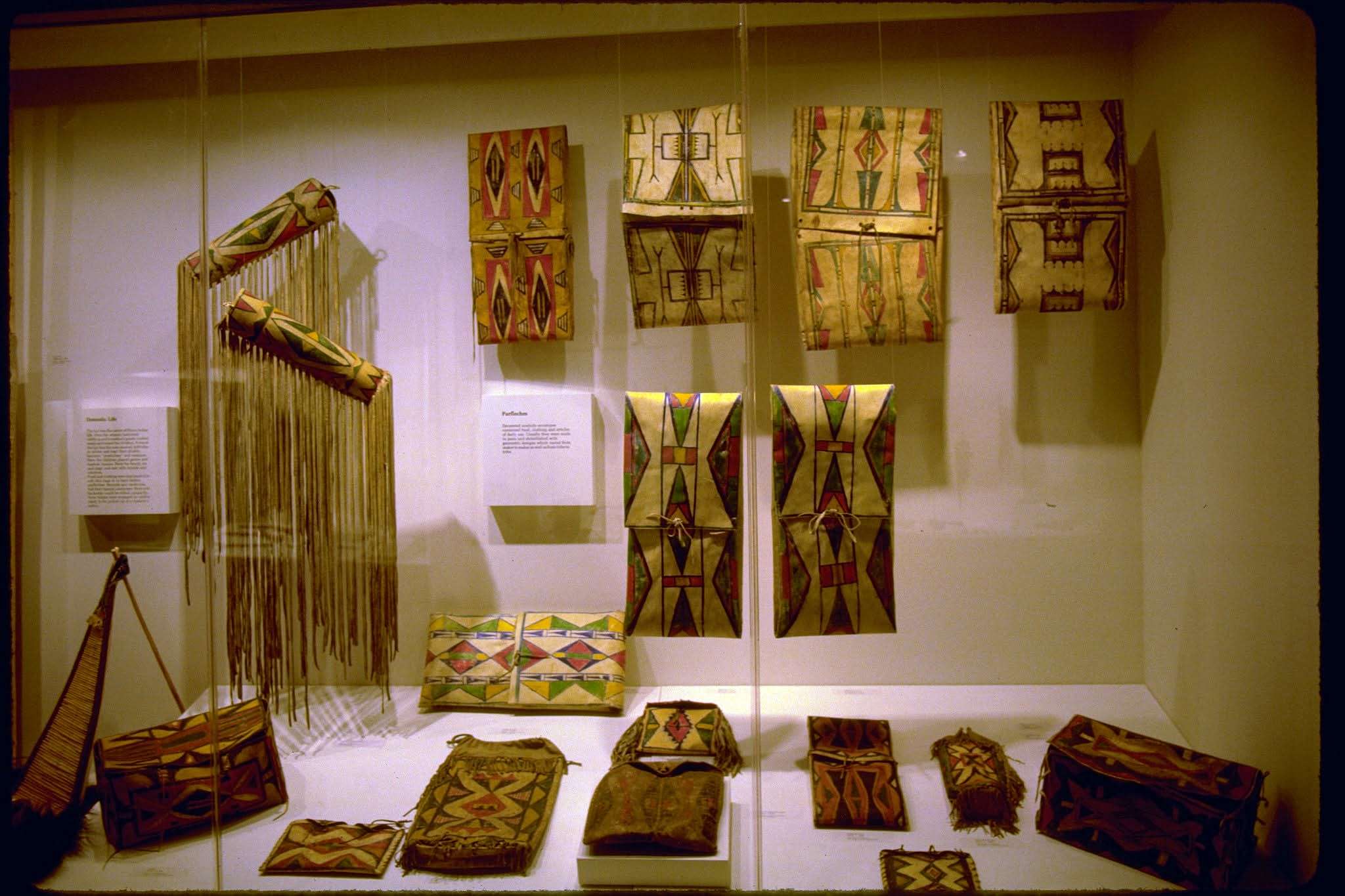
The book’s design reflects Curtis’s desire to present Indigenous artistic traditions alongside the music and stories she collected. Its cover was inspired by a parfleche, a painted rawhide container used by Plains Indian peoples to carry clothing, food, and other belongings while traveling. Thus, the book itself becomes a metaphorical vessel, carrying songs, stories, artwork, and cultural knowledge into the future.
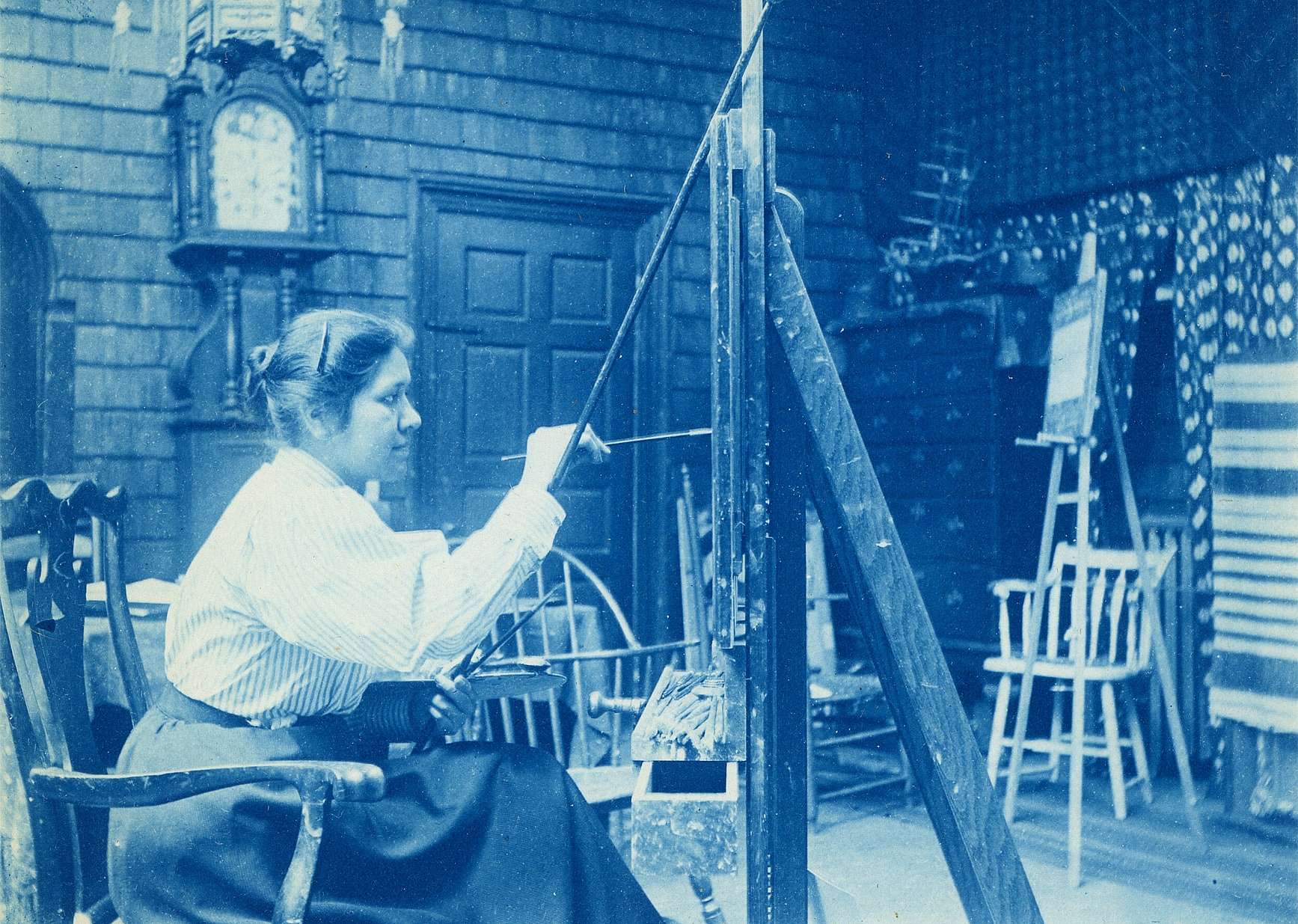
Inside, each Native nation represented in the book receives a dedicated chapter with a custom title page. Ho-Chunk artist Angel De Cora designed the lettering for the title pages. Members of the communities represented in the book also provided original drawings to accompany her work.
Curtis sought to give Native contributors meaningful control over what they shared. She instructed individuals to choose which songs they wished to contribute, respecting that many songs were associated with specific, sacred ceremonies or occasions and could not be shared. Translating the songs also required collaboration with Native elders and interpreters. Direct translation could be difficult because a single Native term might require several English words. Whenever possible, Curtis attempted to minimize unnecessary phrasing so that the English text would remain closer to the rhythm and structure of the original.
These choices show that The Indians’ Book was not simply a collection of songs Curtis gathered on her own. Native individuals participated in determining what knowledge entered the book and how it was represented. At the same time, Curtis remained the researcher, editor, and publisher, making the final decisions about how that material would reach a largely non-Native audience.
The Indians’ Book (1907) cover, designed to resemble a parfleche McCracken Research LibraryExhibit of parfleches at the Plains Indian Museum Buffalo Bill Center of the West
Intentions vs. Impact: Curtis’s Complex Legacy
Today, Curtis’s work invites both appreciation for its documentation of Native artistic traditions and critical examination of the assumptions and power structures that shaped its creation. Curtis argued passionately for the importance of Indigenous cultures, but she also sometimes used language that was insensitive and paternalistic, describing Native peoples through terms such as “underdeveloped” and “primitive.”
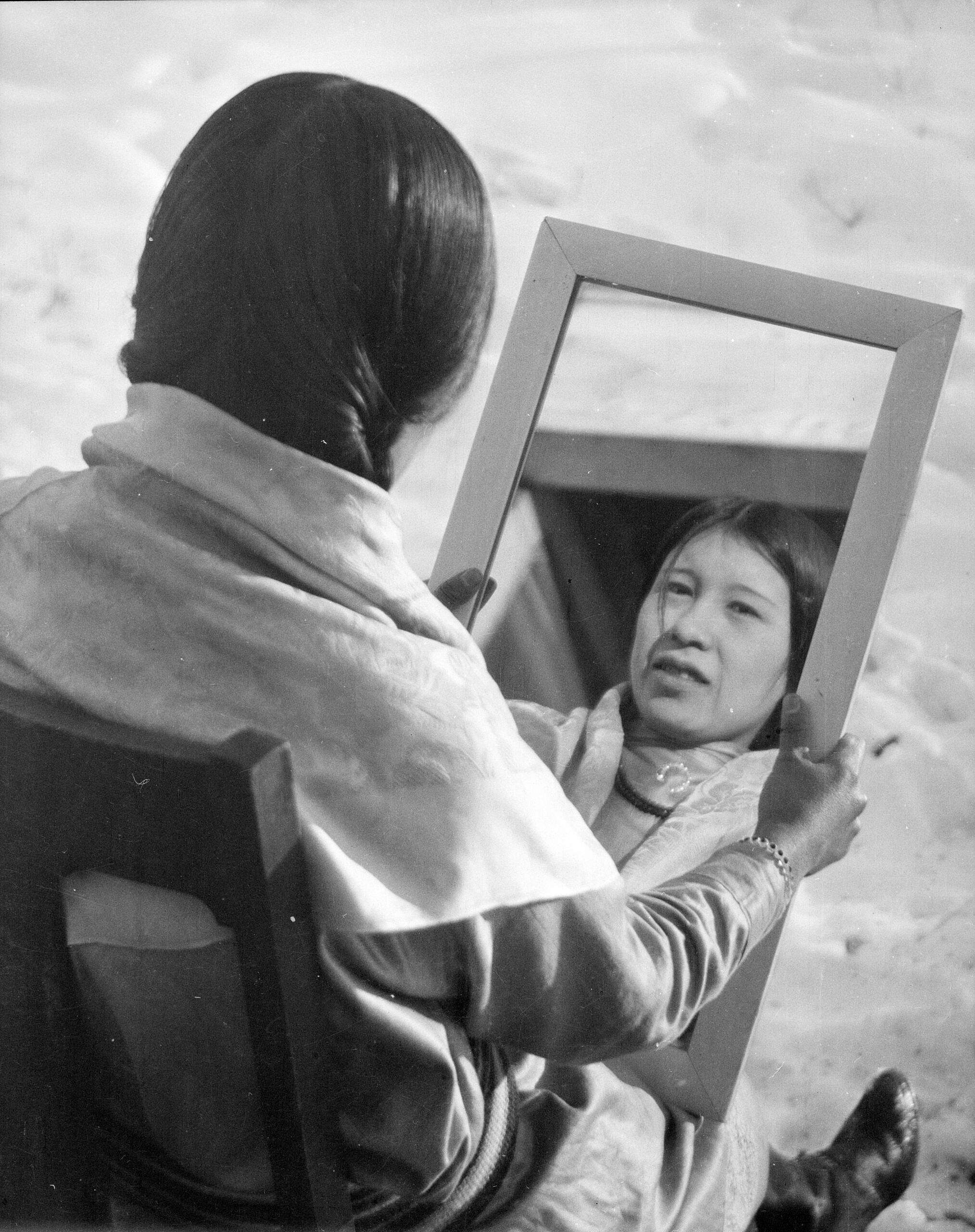
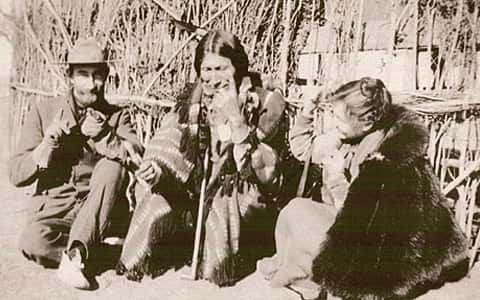
George Curtis, High Chief of Southern Cheyenne, and Natalie Curtis singing a hand-game song on the Southern Cheyenne and Arapaho reservation in Oklahoma, c. 1904. The Journal of Music in Ireland
Her work reflects a broader contradiction of early twentieth-century ethnography. Curtis was deeply interested in documenting and sharing Native cultural traditions, yet she worked within a society that often assumed white intellectuals had the authority to interpret Indigenous life for white audiences. Her stated intentions do not erase the unequal power relationships involved in deciding what to record, translate, publish, and emphasize.
Curtis’s relationships with Native artists further complicate this picture. Ho-Chunk artist Angel De Cora, who contributed the tribal title-page designs for The Indians’ Book, went on to become an influential artist and educator at the Carlisle Indian School. Her involvement reminds us that Native people were not simply subjects within Curtis’s project; they were also artists and creators whose own work shaped the book.
Scholar Roshanak Khesti has examined the broader power dynamics involved when wealthy white individuals position themselves as “saviors” of marginalized communities. Applying this framework to Curtis invites us to look beyond her stated intentions and consider who possessed power over the process of collecting, interpreting, and publishing Indigenous cultural knowledge.
Curtis’s legacy, then, is not simply one of preservation or exploitation. Her documentation helped bring Native music and art to a broader American audience during a period of intense government suppression. At the same time, the work was shaped by Curtis’s own perspective, resources, social position, and authority as a white researcher working for a predominantly white audience.
Despite these complications, The Indians’ Book remains a remarkable historical artifact. Its pages preserve evidence of Native tradition when the United States government was actively attempting to suppress Indigenous cultural expression. Curtis hoped that by bringing Native art and music into America’s broader cultural consciousness, she could “have woven into the fabric of our national culture a strand of color instead of adding to the monotone of gray.”
But its significance lies not only in what Curtis recorded, but in what it reveals about the process of preservation. The songs, stories, artwork, and photographs in The Indians’ Book reflect what Native people chose to share with Curtis. The book’s organization and presentation reflect Curtis’s decisions as an outsider working for a predominantly Eurocentric audience.
More than a century later, The Indians’ Book invites us to look closely at the relationship between the culture it sought to celebrate, as well as the people who contributed to it, the institutions that shaped its creation, and the complicated history of who gets to tell whose stories.
Want to see this rare volume for yourself–or uncover other stories hidden within the collection? The McCracken Research Library is open for walk-in visitors and research appointments, Monday through Friday, 9:00 AM–12:00 PM and 12:00 PM–4:30 PM. Email [email protected] with questions or appointment requests.
Hannah is a New Yorker with the adventurous spirit of the Old West. She has a BA in Creative Writing from Bard College and is currently studying at CUNY Queens toward an MA in History as well as an MS in Library Science. After 6 years of working in documentary film development and production, she pivoted to archival studies and began working at Planting Fields, the historic Long Island estate built by William Robertson Coe. Her latest adventures have taken her to the Buffalo Bill Center of the West, where she is the Library & Archives intern at the McCracken Research Library.