
The Firearm of the Mountains: The Hawken Rifle and the American West

July 30, 2026
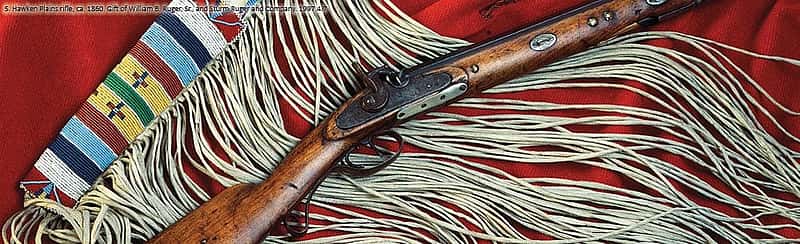
When most people imagine the “rifle that won the west” the Winchester ’73 and Colt Single Action Army are the first firearms to come to mind. While these firearms did characterize the West, most cowboys likely weren’t rich enough to own them. More often than not they would be carrying civil war surplus firearms like trapdoor or muzzleloaders. Many different styles of these firearms made it out West, but one muzzleloader that sticks out specifically is the Hawken Rifle.
The history of the Hawken begins in the East, with a family of gunsmiths from Hagerstown, Maryland. Jacob and Samuel Hawken, the brothers behind the rifle, came from a family of gunsmiths. Jacob went on to work at Harpers Ferry for 10 years before moving to St. Louis. His brother, Sam, worked in Xenia, OH for around the same time until his wife passed. Sam also moved to St. Louis, but a few years passed before the brothers came together to make their own store, the “Hawken’s Shop.”
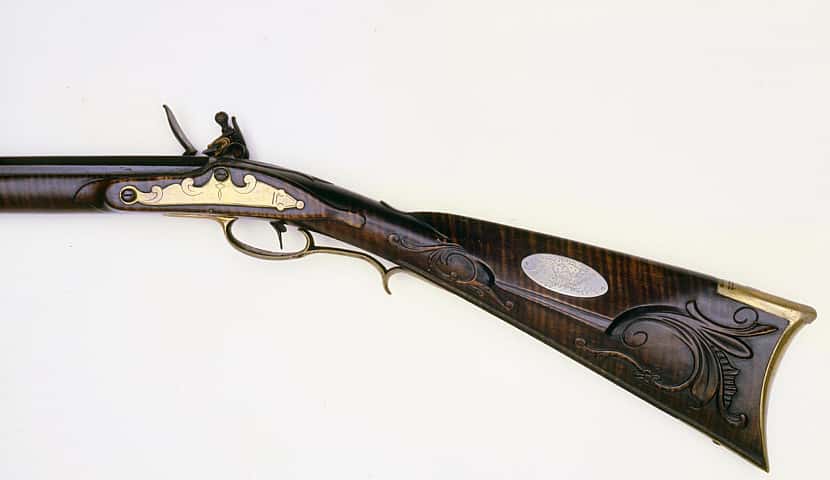
The brothers used their past experiences and expertise as gunsmiths to make the first iterations of the Hawken rifle. These early rifles looked more like an American Longrifles than what became the classic Hawken design. They used flintlock systems and were smaller caliber, round barrels. This changed after the first few years, however, once percussion caps became more common. The Hawken brothers quickly adopted them and incorporated the heavy octagon barrel that made their rifle’s place in history.
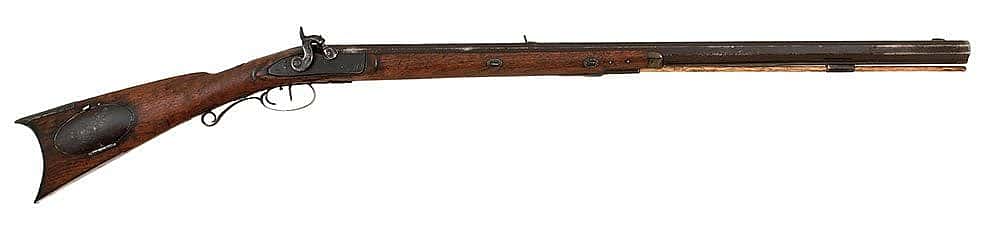
People all across the early West loved the Hawken’s design. The most popular example of this is the mountain men, who are credited with using Hawkens the most. This is especially true in pop-culture, but the true history is more complicated. By the time the Hawken as we know it was making its way across the country (late 1830s), most mountain men were retired. There were a few examples of mountain men that used Hawkens, such as Jeremiah Johnson, Jim Bridger, and Kit Carson. Though many of these men used the rifle after their days trapping, they are a big reason that the classic image of a mountain man brandishing a Hawken has become so popular. Jeremiah Johnson reportedly used a Spencer-Hawken, a Spencer rifle with the Hawken’s heavy octagon barrel.

While the Mountain men are the go-to image of Hawken rifle owners, they were far from the only ones. Native Americans across the plains have accounts of using these rifles. Natives, either getting the Hawken from trade or capture, used them in many of the famous battles across the Indian wars. Chiefs such as Sitting Bull are cited using these rifles, as our many Apache warriors. In fact, from the evidence, it seems more Natives used Hawkens than even mountain men. Red Cloud, an Oglala Sioux warrior not only famously used a Hawken but also led a war party armed with Hawkens as well.
Hawken rifles were sold and used throughout the 19th century. As breechloaders, self-contained cartridges, smokeless powder, and bolt action rifles became commonplace in the early 20th century, the Hawken fell out of popularity. While the rifle’s use decreased in the 20th century, the legend grew. Authors such as Horace Kephart and James E. Servan wrote about the rifle, keeping it alive in the minds of historians. In the 1960s, with the Civil War Centennial came a resurgence of black-powder rifles. With this resurgence, the public rediscovered the Hawkens alongside other muzzleloaders like the American long rifle. The rediscovery of the Hawken pushed many firearm companies to start creating reproductions. Companies led with their own variations of the Hawken designs. Just like the original Hawken, each company had their own unique version of the firearm, which can still be used to identify the manufacturer today.
Hawken defined the exploration of the American West just as much as the Colt Single Action Army. The reproductions are still used today, whether by reenactors, hunters, or firearm enthusiasts. The rifle has lived on through legends and tales told by those that carried them and those that still use them today.
Written By
Casey Vogel
You May Also Like
Everything I Need to Know About Life I Learned From Birds
Aug 26, 2026

by Sophie Peterson, 2026 Raptor Intern As I near the...
The Winchester Records Synopsis, or How I Learned to Stop Worrying and Love Cursive
Aug 18, 2026

The Cody Firearms Records office produces letters from the corporate...
Before the White Man Came: Examining Native Representation in Early American Film
Aug 20, 2026

Popular films and television shows like Dances with Wolves and...
From the Badlands to the Tetons: A 1930s Family Road Trip West
Sep 14, 2026

Long before smartphones and GPS guided travelers across the country,...
Revolutionary Readers: The Library as a Symbol for Freedom
Jul 30, 2026

Dr. Harold McCracken in his home library in Cody, Wyoming...
The Life Style of Yellow-bellied Sapsuckers
Sep 16, 2026

Tree girdled with Yellow-bellied Sapsucker Holes © Dennis Donohue /...
Don’t Let History Live in a Shoebox: How to Archive Your Family Treasures
Sep 18, 2026
Are you the designated "historian" in your family? Do you...
Rare Book Highlights: The Indians’ Book
Sep 02, 2026
"Wellnigh impossible is it for civilized man to conceive of...
Breaking Records, Breaking Barriers: Margaret Thompson-Murdock’s Competitive Shooting Legacy
Jul 30, 2026

Believe it or not, two of the world’s best sharpshooters...
Buffalo Bill Center of the West Authenticates Trove of Historic Early 1800s Medals
Sep 08, 2026

Buffalo Bill Center of the West authenticates rare early 1800s...
The Ultimate Wyoming Wildlife Guide: Expert Viewing Tips
Sep 28, 2026
Grizzly Flowers. Photo by Julia Cook @julia.littlelightningnature Draper Elk Wyoming...
Ultimate Trip Guide Through Yellowstone’s East Entrance
Aug 19, 2026
Yellowstone’s East Entrance offers one of America’s most spectacular drives....