
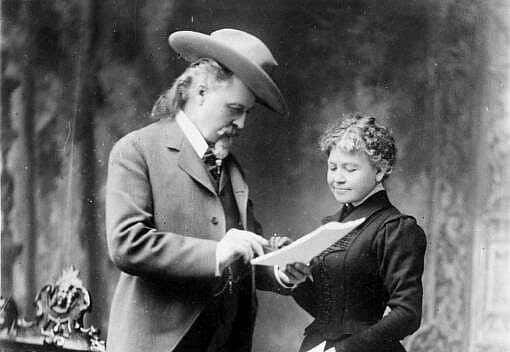
Helen Cody Wetmore in Duluth: The Untold Story of a Businesswoman, Journalist, and Activist

October 20, 2026
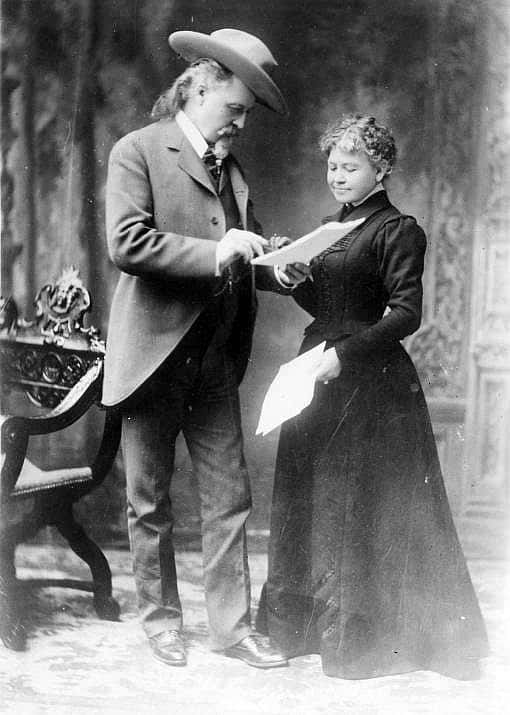
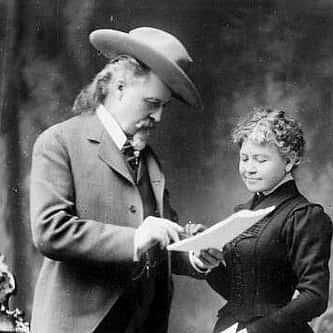
After spending the summer interning with the Education Department at the Buffalo Bill Center of the West, I was excited to discover a surprising connection between Buffalo Bill Cody and my new home of Duluth, Minnesota! In the 1890s, Buffalo Bill helped finance a newspaper business in Duluth, where his sister, Helen Cody Wetmore, played an important role.
Big shoutout to Jeff Savage, Director of the Fond du Lac Museum and Cultural Center, for introducing me to this fascinating yet “hidden” piece of Duluth history. If you’re ever in the area, the museum is well worth a visit!
…
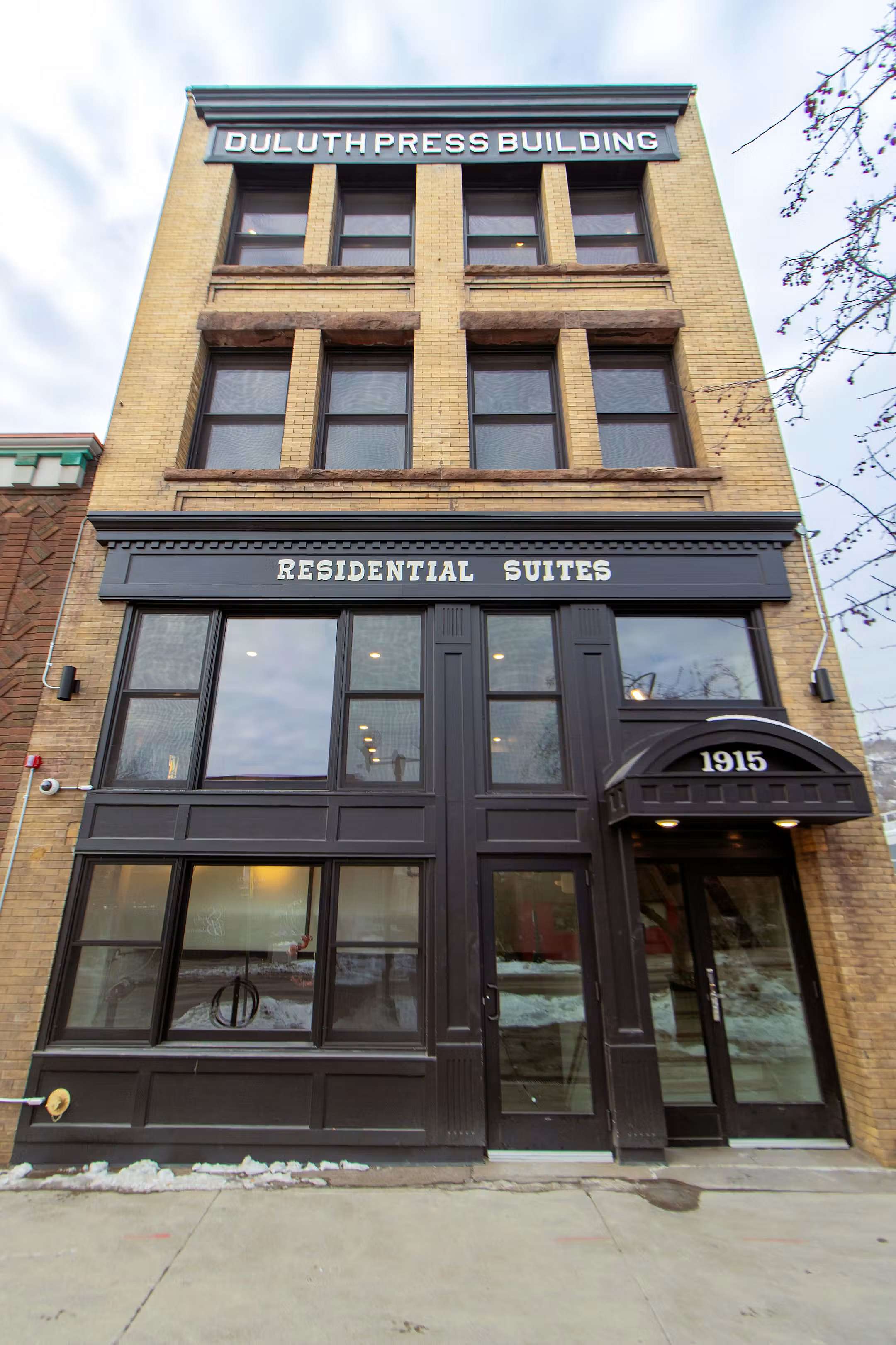
The Duluth Press Building sits at 1915 W. Superior Street in the city’s vibrant Craft District, just two miles from the heart of downtown. Today, the building houses a boutique hotel known for its central location and easy access to shopping, restaurants, and outdoor activities. However, many visitors may not realize its unique history. From 1894 to 1896, it housed the Duluth Press, which included a separate Women’s Department (column) staffed entirely by women, a notable presence in the male-dominated newspaper industry of the late nineteenth century. Buffalo Bill Cody, “the most famous man in the world,” helped fund the newspaper venture. His sister, Helen Cody Wetmore, served as the paper’s business manager and edited its Women’s Department before becoming a well-known writer in her own right. Her contributions to the Duluth Press and her biography of her brother, The Last of the Great Scouts, helped shape how Buffalo Bill’s life and legacy were remembered.*1
But what brought the Codys to Duluth in the first place?
The story begins in the summer of 1892. A letter dated August 18th, 1892, from Hugh A. Wetmore, a newspaperman and founder of the People’s Press in Duluth, addressed to Colonel Cody, suggests a business relationship in which Wetmore thanks Cody for $500 he invested in the paper and outlines future plans for the expansion of the building and business. The letter suggests a previous relationship between the two men and establishes Cody as a business partner in Duluth.
A formal partnership agreement also exists, dated 1892 but without a specific month. Because Wetmore’s August 18, 1892 letter to Cody says he asked his lawyer to draw up articles of co-partnership, it seems reasonable to assume the agreement came after the initial correspondence, tentatively placed later in 1892, although the exact date remains unknown.
What is especially interesting about the agreement is that Cody’s sister, Helen, is included in the business arrangement. The agreement identifies her as H. C. Jester, her married name at the time. The document does not explain her responsibilities or her role in the business.
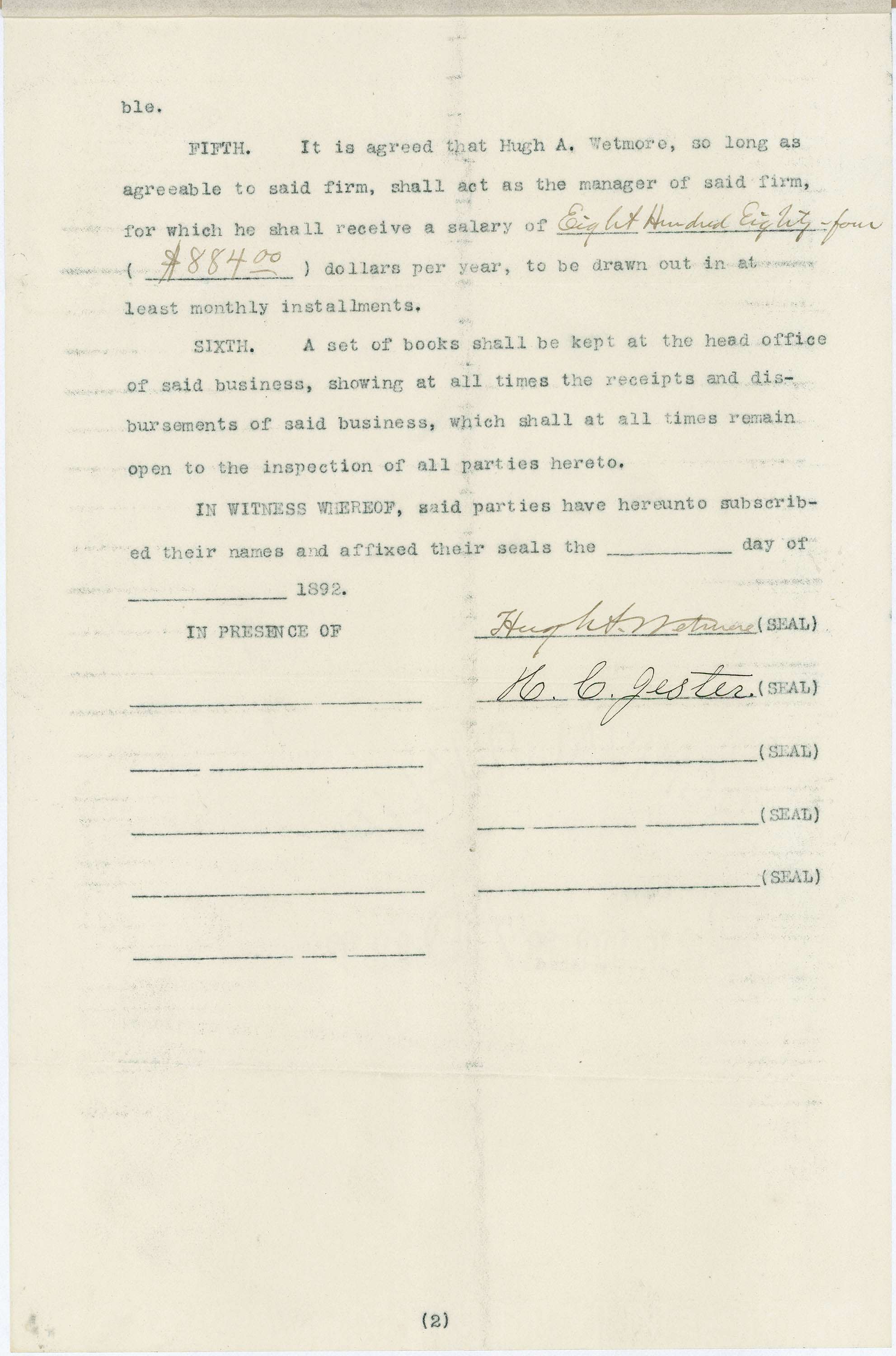
McCracken Research Library, Buffalo Bill Center of the West.
This becomes even more interesting when considered alongside later accounts of Hugh and Helen’s relationship. Duluth journalist Paul Lundgren has stated that Wetmore met Helen Cody in Chicago in late October 1892, while other accounts only say that he began courting her in 1892. Wetmore’s letter also mentions a Chicago company from which he was considering purchasing printing machinery, although it does not establish that this was the reason for his later trip to Chicago. With this information, the partnership agreement may have been formalized sometime after Wetmore’s August correspondence with Cody and around the time of his reported meeting with Helen that Fall.
Many accounts explain Helen’s involvement in the newspaper business as a result of her marriage to Wetmore. Helen moved to Duluth with Hugh after their July 1893 marriage and later managed the newspaper Hugh founded. However, the 1892 partnership agreement suggests her connection to the newspaper began before her marriage to Wetmore, and possibly even before their romantic relationship began.
Wetmore and Helen married in Chicago in July 1893, a location that makes sense given that Buffalo Bill Cody’s Wild West show was performing just outside the grounds of the 1893 World’s Columbian Exposition that summer. What is curious, however, is the apparent lack of publicity surrounding the marriage of the sister of such a prominent public figure. I could establish the date and location only by locating their marriage license, since I found no mention of the marriage in Chicago or Minnesota newspapers. Perhaps the lack of coverage stemmed from the fact that this was Helen’s second marriage and Wetmore’s third, though the reason for the silence remains unclear.
To add to the mystery, their marriage followed a complicated circumstance: Wetmore’s divorce from his first wife, Carrie, wasn’t finalized until the same month he married Helen, with “desertion” cited as the grounds. This detail, along with the lack of marriage announcements and Helen’s unexpected appearance on a business proposal under her married name, makes their relationship somewhat peculiar. While I wish I knew more about their courtship, details about their relationship are hard to find. What is clear, however, is that Helen’s relationship with Wetmore became closely intertwined with the development of the People’s Press, eventually bringing her to Duluth, Minnesota, where she would take on an increasingly important role in the newspaper.
…
In her book The Last of the Great Scouts, Helen describes her relationship with her brother, Buffalo Bill Cody:
“During the long years of my widowhood my brother always bore toward me the attitude of guardian and protector; I could rely upon his support in any venture I deemed a promising one, and his considerate thoughtfulness did not fail when I remarried. He wished to see me well established in my new home; he desired to insure my happiness and prosperity, and with this end in view he purchased the Duluth Press plant, erected a fine brick building to serve as headquarters for the newspaper venture, and we became business partners in the untried field of press work.”
While the 1892 agreement leaves Helen’s role in the newspaper venture unclear, her perspective suggests she saw herself as a true “business partner.” The evidence suggests Cody and Wetmore were partners before Helen met Wetmore. However, Helen frames Cody’s support as being motivated by his desire for her happiness. Was Cody’s initial interest in the press business pushed by Helen? Did Cody arrange Helen and Wetmore’s meeting, or even their marriage? Could Helen and Wetmore have met before the presumed fall 1892 meeting?
I would like to think that Helen wanted to run a press business before she met Wetmore, and that Cody, with his wealth and influence, helped her pursue that ambition. The surviving documents, however, do not establish whether the venture began as Helen’s idea or whether her involvement grew through her relationship with Hugh. We may never know for certain, but the 1892 agreement suggests Helen’s role in the newspaper business began earlier than many accounts suggest.
…
Enough speculation- from here on out, there is plenty of evidence to tell Helen’s story.
Helen’s influence on the newspaper emerged early in her marriage to Wetmore.
Newspaper archives first identify Helen as business manager of the Duluth Press on October 21, 1893, after the paper changed its name from The People’s Press. However, stories about Buffalo Bill and an advertisement promising subscribers tickets to his Wild West show in Chicago suggest Helen may have been involved in the newspaper’s operations before she was officially listed as business manager.*2
Advertisements for women’s clothing and the Ladies’ Home Journal appeared throughout the fall of 1893, suggesting that, under Helen’s management, the Duluth Press sought to attract a female readership. In December, the paper published “The Moon’s Tragedy,” a fictional story by female author Kate Jordan. As business manager, Helen would have had a say in the paper’s offerings, including the decision to publish this story. While Wetmore’s interests centered largely on Labor Union stories, Helen may have helped broaden the paper’s content to appeal to a wider audience.
…
We’ll return to Helen shortly, but the story now takes us to Buffalo Bill’s arrival in Duluth
Throughout 1893, Helen and Wetmore operated out of rented newspaper offices. In early 1894, however, the opening of the Duluth Press Building at 1915 West Superior Street marked a significant development for the newspaper. Funded by Buffalo Bill Cody, the new building represented both his investment in the paper and its growing presence in Duluth. To celebrate the opening, Cody visited the city, and the paper held a public reception at the new building. His visit received favorable coverage not only in the Duluth Press but also in other area newspapers, including the Duluth News Tribune and the Superior Morning Leader.
The Duluth News Tribune described Cody’s reception as “The pleasantest and most brilliant social event which has taken place in the West End for many a day,” while the Superior Morning Leader said: “The crowd which gathered at the reception given by the Duluth Press in honor of Col. WF Cody was a very motley one, there being present representatives of all Nations as well as people in every station of life.” These statements show that the event was more than a celebratory gathering; it was a significant community event. The diversity of attendance and coverage reflects Buffalo Bill’s widespread appeal and popularity.
The Duluth Press’s own recap of the event included similar statements as well as a description of the exceptionality of the new building thanks to Cody’s contributions,
“The Duluth Press’ new building has been the center of attraction during the week, partly because it is one of the best and handsomest buildings in the city, partly because it is the only building owned by a newspaper in the city, partly because it was put up during the hardest times ever known in this country, partly because it contains the most complete printing plant in the Northwest and partly because the Hon. W. F. Cody is interested in it.”
By associating with Buffalo Bill Cody and emphasizing advanced printing technology, the Duluth Press presented itself as an ambitious enterprise with an important place in Duluth’s future.
Cody’s visit also had implications beyond the newspaper itself. During his stay, he praised Duluth, stating, “I am both pleased and surprised with what I have seen during my short stay here, and I leave Duluth with a firmer faith in her greatness than I ever had before.” The Duluth Press interpreted this enthusiasm as a sign of the city’s future prospects. In an article titled “Buffalo Bill’s Reception,” the paper reported that Cody was considering transferring “an important portion of his large interests to the new eldorado, Northern Minnesota.” It further predicted that Duluth would be “advertised throughout the United States and abroad as this place has never been advertised before.” The city so well received his visit that it named Cody Street in West Duluth after Buffalo Bill on February 12, 1894. Cody’s visit and the reception at the press building became a source of civic pride, with newspaper coverage connecting his enthusiasm for Duluth to hopes for the region’s future prosperity. At the same time, the celebration promoted the Duluth Press and helped raise Helen Cody’s public profile in Duluth.
…
Back to Helen-
Shortly after Buffalo Bill’s visit to Duluth, the Duluth Press began a Women’s Column. The first column appeared on February 3, 1894. This short section detailed the organization of a women’s group called the West End Belief Society, dedicated to charity work in the city. The following paper, distributed on February 10, 1894, included the following statement:
“To the women: this paper is and has always been an advocate of women’s suffrage. This column has especially been set aside for the women, and we invite the women to assist in conducting it. You do not have to be an authoress to write in this column.”
By February 17, the paper identified Helen as editor of the Women’s Column under the name “Nellie Cody Wetmore.” In her introductory note, she discussed gender equality, particularly women’s suffrage. She also expressed views on the legal liquor trade and lynching. In discussing lynching, Helen argued that society condemned mob violence while failing to recognize gender discrimination with the same moral urgency. Although her comparison of women’s voting rights and racial terror is troubling to modern readers, it reveals how she challenged the contradictions she saw in late-nineteenth-century social and moral values.
Helen’s comfort with sharing her political opinions publicly may reflect the favorable reception her brother, Buffalo Bill, received in Duluth shortly before the creation of the Women’s Column. Although it is not possible to directly connect Helen’s editorial decisions to her brother’s visit, his favorable reception and promotion of the Duluth Press may have helped create an environment in which she had greater freedom to express her views. *3 As editor of the Women’s Column, Helen had a public platform from which to participate in debates over women’s rights and other social issues.
By the March 10, 1894 publication, the Women’s Column had expanded to half a page. While it still covered Union and labor topics, the Duluth Press had become a much more comprehensive paper, including women’s politics and entertainment columns.
Beginning with the May 19, 1894, edition, Hugh Wetmore was no longer listed as editor. Helen’s name was no longer listed as business manager, but she remained editor of the Women’s Column. Throughout spring 1894, the column began highlighting more national topics concerning women’s rights and their place in society. These included women working in industry, support for the Working Women’s Protective Union, and nominating women for local offices. In discussing women’s growing role in the workforce, the column even stated, “Men must make up their minds that women are here to stay.” These topics show how the Women’s Column expanded beyond its initial focus on local women’s groups and charity work to address broader issues surrounding women’s roles in society.
Although the newspaper lacked an editor’s title, it continued to run an editor’s column. However, rather than highlighting Union stories, the column focuses on Buffalo Bill’s newest Wild West show, “Congress of Nomads, Wildness, and Savageness.”-
“Col Cody is doing commendable work. We may say he is the greatest kindergarten teacher of past American history. He is teaching by example what could never be printed. He shows the past state of society in the Wild West, enabling the people by contrast to see the great advancement made in civilizations and that the movement of the world is onward. It would be well for the pessimist to visit the show.”
Such high praise for Buffalo Bill closely mirrors the glowing portrayals throughout Helen’s biography, The Last of the Great Scouts, suggesting that Helen may have written the editorial columns while her husband served as the paper’s editor. Cody’s portrayal as an educator suggests a belief that entertainment can serve as a means of education. This emphasis on education is consistent with Helen’s broader moral values, particularly her religious beliefs and opposition to the liquor trade.*4 Additionally, Helen’s Women’s Column frequently championed local educational developments and supported Susan Burrill Bangs for the Duluth school board, demonstrating the importance she placed on education. Editorial columns throughout June continued to cover Buffalo Bill while shifting away from labor issues. These columns highlighted regional journalism, political affairs, civic societies, church activities, and local library efforts. Considering her role in managing business operations alongside her editorial work for the Women’s Column, Helen may have assumed broader control of the publication in her husband’s absence.
On July 14, 1894, H. C. Van Leuvsen was introduced as editor of the Duluth Press, with Helen Cody Wetmore once again listed as business manager. In his first editorial column, Van Leuvsen wrote that “The press invites correspondence upon public matters from its patrons most cordially,” suggesting that the paper was broadening its focus beyond union and labor issues to address a wider range of public matters in Duluth. Van Leuvsen also declared that the paper “will be uncompromisingly republican” and remain “on guard for Duluth interests at all times.” These statements established the paper’s political position while emphasizing its commitment to promoting the city’s interests.
Van Leuvsen’s official introduction as editor of the Duluth Press confirms that Wetmore no longer served as editor. After this point, Wetmore largely disappears from the historical record, and little is known about his life after the summer of 1894.
…
With a new editor, the Women’s Column of the Duluth Press only expanded. On July 14, The Women’s Column announced the creation of a new Press Club:
“There is soon to be organized in Duluth a press club known as the women’s press club. The mission of this organization will be to give women’s organizations of our city a medium to let the city and country at large know what is being done by organized women’s work in Duluth. The majority of men and women too, we are sorry to say, regard women as a passive almost useless factor in the great powers that move the world. Deprived as she is of the privileges of citizenship her power and influence are considerably handicapped we will admit… Take the moral power that is represented in from 14-30 organizations in our city with the Duluth Press as a medium to proclaim the good work the public must soon realize that even disenfranchised womanhood has a name and place to fill in powers be.
Helen’s editorial statement alone demonstrates her vision for the Duluth Press as an instrument for spreading women’s activism throughout Duluth, the greater Northwest, and, in Helen’s words, the “country at large.” The paper’s outspoken support for suffrage and women’s rights made it a platform to promote women’s initiatives and reach a wider audience. This was especially significant because the paper’s business manager was herself a suffrage activist and editor of the Women’s Column she established. Helen’s position at the Duluth Press let her combine her professional work and political commitments, using the newspaper to promote women’s activism and expand the public influence of women’s organizations beyond Duluth.
By the July 28 edition, the Press Club had renamed itself the Zenith Press Club and held its first meeting at the YWCA. * 5 The committee met again on August 6 at the Duluth Press Building to draft its constitution and bylaws. Helen referred to the club’s formation as “the interesting infant was christened,” a play on the power of women to give birth to infants, just as they brought the Press Club into existence.
By September 1894, the Women’s Column of the Duluth Press occupied nearly half of the entire paper. Helen was no longer listed as business manager; instead, she appeared as publisher alongside her brother, Buffalo Bill Cody. The Women’s Department was now listed as being conducted by the Zenith Press Club, with the motto, “our part is to conspire with the new works of the day.” This change marked a significant development in the newspaper’s women’s coverage, as the department was no longer presented simply as a column but as a section associated with an organized women’s press club. The YWCA, which Helen’s daughter Mary Jester joined, edited the September 15 edition, and by the end of the month, Mary was listed as co-editor of the Women’s Department. While some sources claim Jester became editor of the Duluth Press in 1894, the records show that Van Leuvsen remained editor throughout the year, with Jester’s editorial involvement tied specifically to the Women’s Department.
…
In my next post (part 2), I will analyze the later editions of the Duluth Press, focusing on Helen and Mary’s lives and work in Duluth beginning in 1895. For now, however, I want to offer a quick recap and my own reflections on Helen Cody.
While critics could certainly point to Helen’s famous brother’s financial backing as nepotism, I believe Helen’s contributions to journalism and women’s activism were truly progressive and formidable. While Buffalo Bill visited Duluth, Helen lived and worked there. She could have remained content as business manager, supporting Wetmore without pushing for her own interests to be represented. Instead, Helen took initiative. She established the Women’s Department, advocated for suffrage and women’s activism, and marketed her brother, Buffalo Bill, to gain support for the paper. Within a year of arriving in Duluth, and just six months after the Duluth Press Building opened, Helen had established an independent Women’s Department with an all-female staff, sponsored by the Zenith Press Club. The club sought the “United co-operation of every organized women’s association in the city to make use of the columns of this department of the Duluth Press.” After Wetmore left the Duluth Press, Helen continued to lead the newspaper, even as her marriage appeared unstable.
I do not agree with all of Helen’s views expressed in her editorial columns, and some of her language regarding race and her stance on lynching are problematic when viewed through a modern lens. However, through this research, I have come to admire Helen’s determination to build and sustain her newspaper. I believe she was, first and foremost, a businesswoman and a marketing genius. Today, people tend to remember her for her relationship with her brother and her biography, The Last of the Great Scouts, which critics have accused of exaggeration and ghostwriting. Yet I wonder how much time Helen would have had to write a 300-page book amid her business responsibilities and activism. Helen’s story is dynamic, marked by mystery, instability, and considerable success. Her work deserves attention in the history of women’s suffrage activism in Minnesota and beyond.
Footnotes
1- It is important to note that Helen did have a ghostwriter who helped her, and her biography has been criticized for inaccurate/exaggerated details in some of her stories
2- “Every yearly subscriber to the Duluth Press will receive a ticket to Buffalo Bill’s Wild West Show when visiting the World’s Fair in Chicago.”- recurring advertisement.
3- At this time, Buffalo Bill was running a promotion in the Duluth Press– “Buffalo Bill has promised to give a pony, saddle, lasso, and bridle to the Duluth or Superior boy or girl who secures the largest number of paid yearly subscriptions to the Duluth Press between now and July 4 1894. There will be a second prize in the form of a boys Winchester repeating rifle with Buffalo Bill’s portrait and Buffalo Bill’s name engraved upon it.” This promotion emphasized the connection to Buffalo Bill and this “charitable giveaway” would have also won favor with the public.
4- June 9- “Lessons can be learned of the old and new world in this great educational exhibition that could not be learned anywhere else on God’s footstool”- This statement in particular reflects Helen’s deep religious beliefs
5- Not to be confused with the Zenith City Press Club founded by George Loomis of the Duluth News Tribune.
Bibliography
Primary Sources
Duluth Press. 1893–1896. Newspaper issues consulted on microfilm. Duluth Public Library, Duluth, Minnesota.
Duluth News Tribune. July 9, 1893. Newspapers.com. https://www.newspapers.com/image/1126432367/
Illinois. County Court (Cook County). “Cook, Illinois, United States Records.” FamilySearch. Image 637 of 1,462. Image Group Number 004227489. Accessed October 17, 2026. https://www.familysearch.org/ark:/61903/3:1:S3HT-DY79-LXN?view=index.
William F. Cody Collection. Buffalo Bill Center of the West.
MS6.0497. Legal agreement between Hugh A. Wetmore, Helen Cody Jester, and William F. Cody Printing Co.
MS6.0383. Letter from Hugh A. Wetmore to William F. Cody.
MS 006. William F. Cody and Laura Ella (Helen) Cody Wetmore. Photograph, P.6.0300.2.
Secondary Sources
“Buffalo Bill Cody, His Little Sister Helen, and Their Connection to Duluth.” Perfect Duluth Day, March 31, 2012. https://www.perfectduluthday.com/2012/03/31/buffalo-bill-cody-his-little-sister-helen-and-their-connection-to-duluth/.
“Helen Cody Wetmore: More Than Just Buffalo Bill’s Little Sister.” Perfect Duluth Day, March 31, 2012. https://www.perfectduluthday.com/2012/03/31/helen-cody-wetmore-more-than-just-buffalo-bills-little-sister/
Written By
Caleigh Noonan
Caleigh Noonan is a recent graduate of the College of the Holy Cross in Worcester, Massachusetts. She is serving as the Indian Education for All Intern at the Buffalo Bill Center of the West for the summer. Her interests include Indigenous history, nineteenth- and twentieth-century American history, and the history of dance.
You May Also Like
The Life Style of Yellow-bellied Sapsuckers
Sep 16, 2026

Tree girdled with Yellow-bellied Sapsucker Holes © Dennis Donohue /...
Rare Book Highlights: The Original Journals of the Lewis and Clark Expedition
Oct 01, 2026

"If not for the … epic the captains scratched out...
Rare Book Highlights: The Indians’ Book
Sep 02, 2026
"Wellnigh impossible is it for civilized man to conceive of...
Your #AskAnArchivist Questions, Answered
Oct 14, 2026

There are few things an archivist enjoys more than a...
Before the White Man Came: Examining Native Representation in Early American Film
Aug 20, 2026

Popular films and television shows like Dances with Wolves and...
Buffalo Bill Center of the West Authenticates Trove of Historic Early 1800s Medals
Sep 08, 2026

Buffalo Bill Center of the West authenticates rare early 1800s...
From the Badlands to the Tetons: A 1930s Family Road Trip West
Sep 14, 2026
Long before smartphones and GPS guided travelers across the country,...
A Quick Guide to Native Bee Diversity
Oct 16, 2026

Honey Bees Are Not Native When you hear “bee,” what...
The Ultimate Wyoming Wildlife Guide: Expert Viewing Tips
Sep 28, 2026
Grizzly Flowers. Photo by Julia Cook @julia.littlelightningnature Draper Elk Wyoming...
From the Cancan to the Wild West: The Remarkable Life of Giuseppina Morlacchi
Jul 14, 2026
The French didn't bring the Cancan to America; an Italian...
Don’t Let History Live in a Shoebox: How to Archive Your Family Treasures
Sep 18, 2026
Are you the designated "historian" in your family? Do you...
From Buffalo Bill to Balanchine: The Rise of Ballet Americana
Jul 02, 2026
After thirty years of sensationalized touring performances, Buffalo Bill's Wild...