
A Quick Guide to Native Bee Diversity

October 16, 2026
Honey Bees Are Not Native
When you hear “bee,” what comes to mind? Most people think of honey bees (Apis mellifera). While the honey bee is seemingly everywhere in popular culture, it is not actually native to North America. Historians believe honey bees first arrived in North America in 1622 from England. By 1800, they were found throughout the East Coast. As settlers moved west, so did honey bees.
North America is home to some 4,000 species of native bees. For comparison, there are only roughly 150 snake species in the same area.
How Bees Are Classified
To understand bee diversity, it’s helpful to learn how scientists classify living organisms. This is mostly because most bees do not have common names. They are known only by their scientific names. Carl Linnaeus developed a system for identifying and naming them. This system is known as taxonomy. Within the taxonomic system, there are different levels. Each succeeding level is more precise, with the most precise being species (Figure 1). We’ll focus on four levels of classification: Order, Family, Genus, and species.
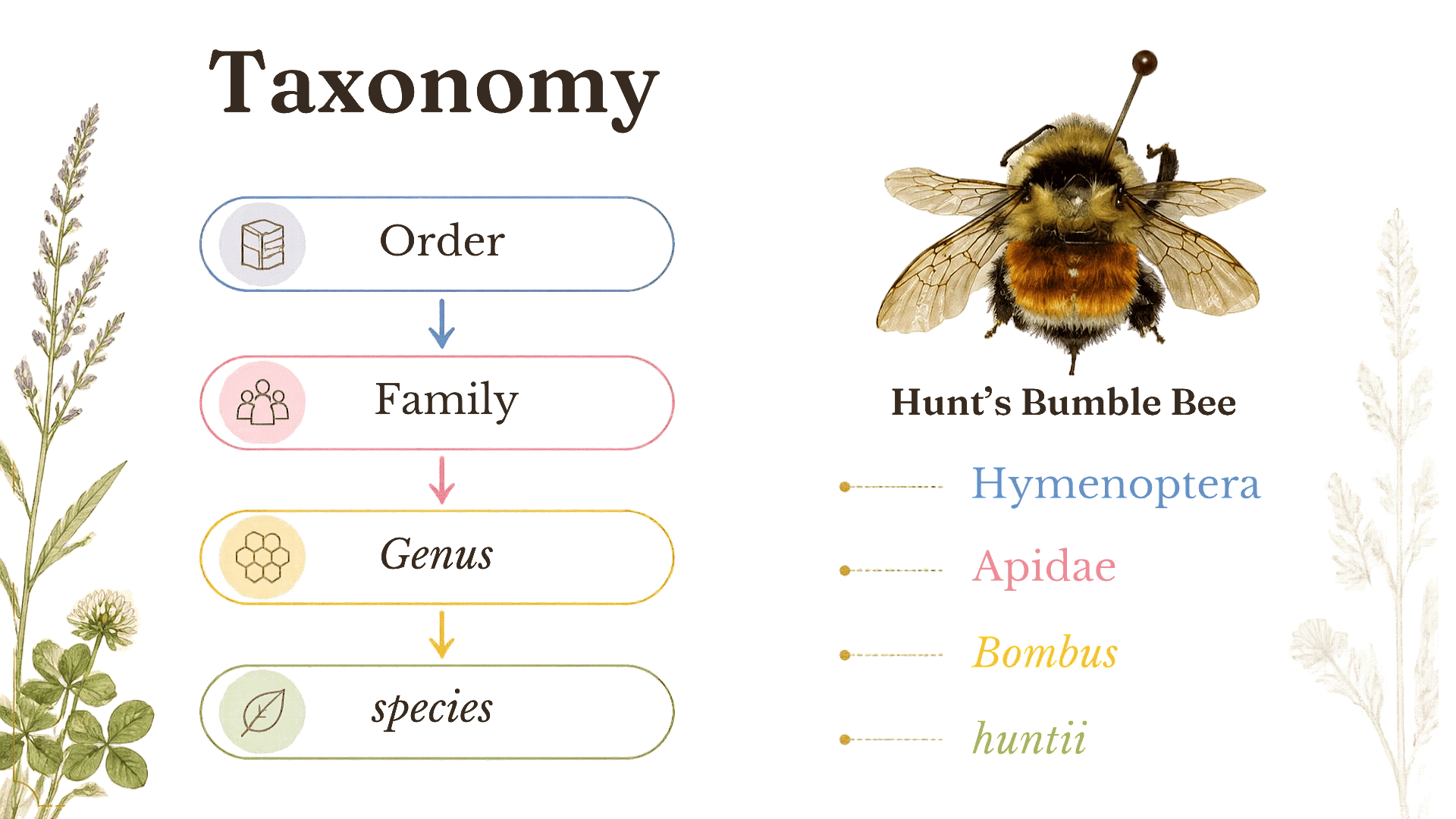
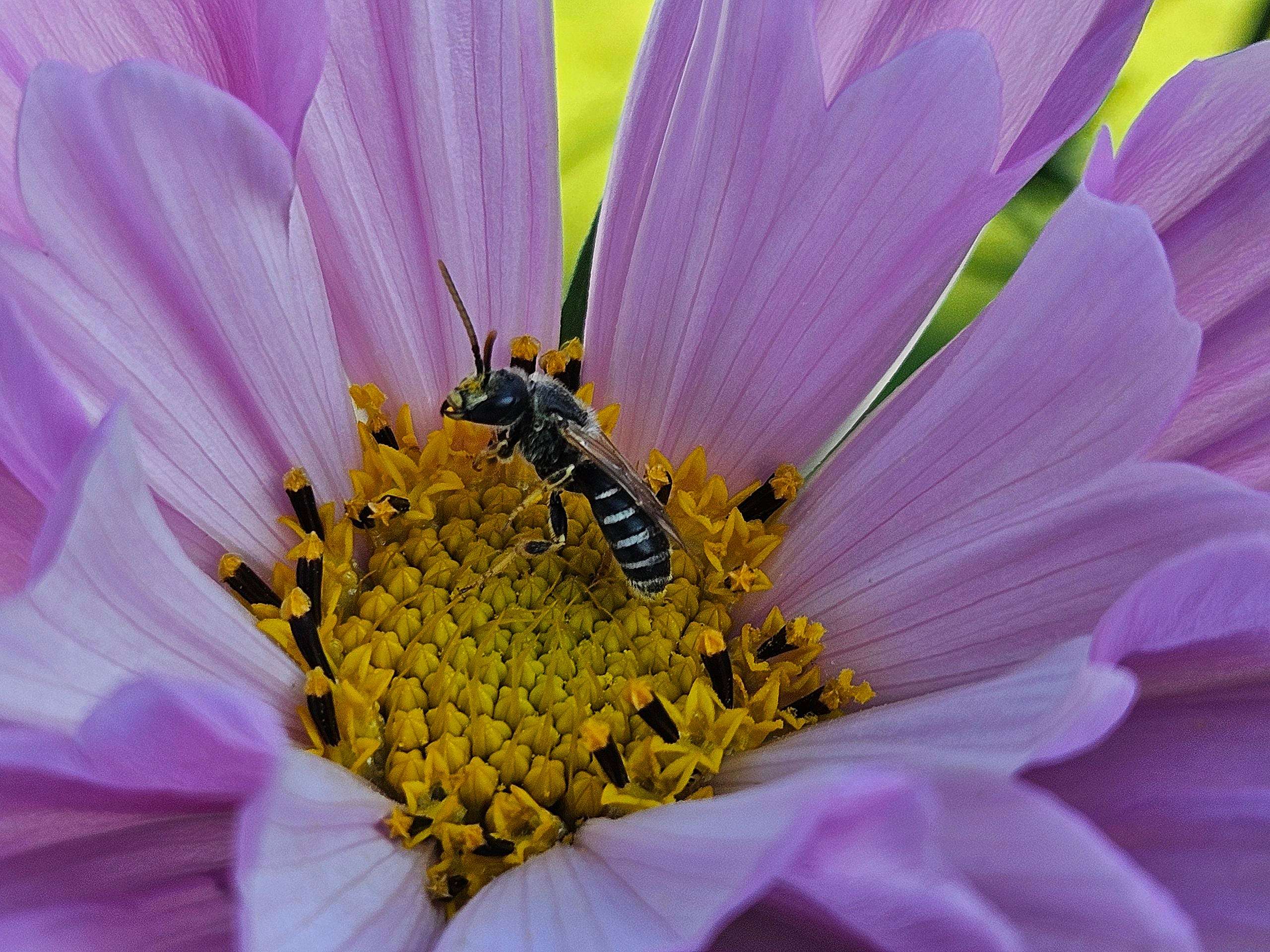
All bees and wasps belong to the order Hymenoptera. Fossil evidence tells us that bees evolved from wasps. There are six different bee Families in North America. Bees are small (some are just a few millimeters in length). As a result, it is sometimes difficult to reach a more specific identification. For example, sweat bees belong to the family Halictidae. Many sweat bees are smaller than a grain of rice. It is hard to identify them further without special training and equipment.
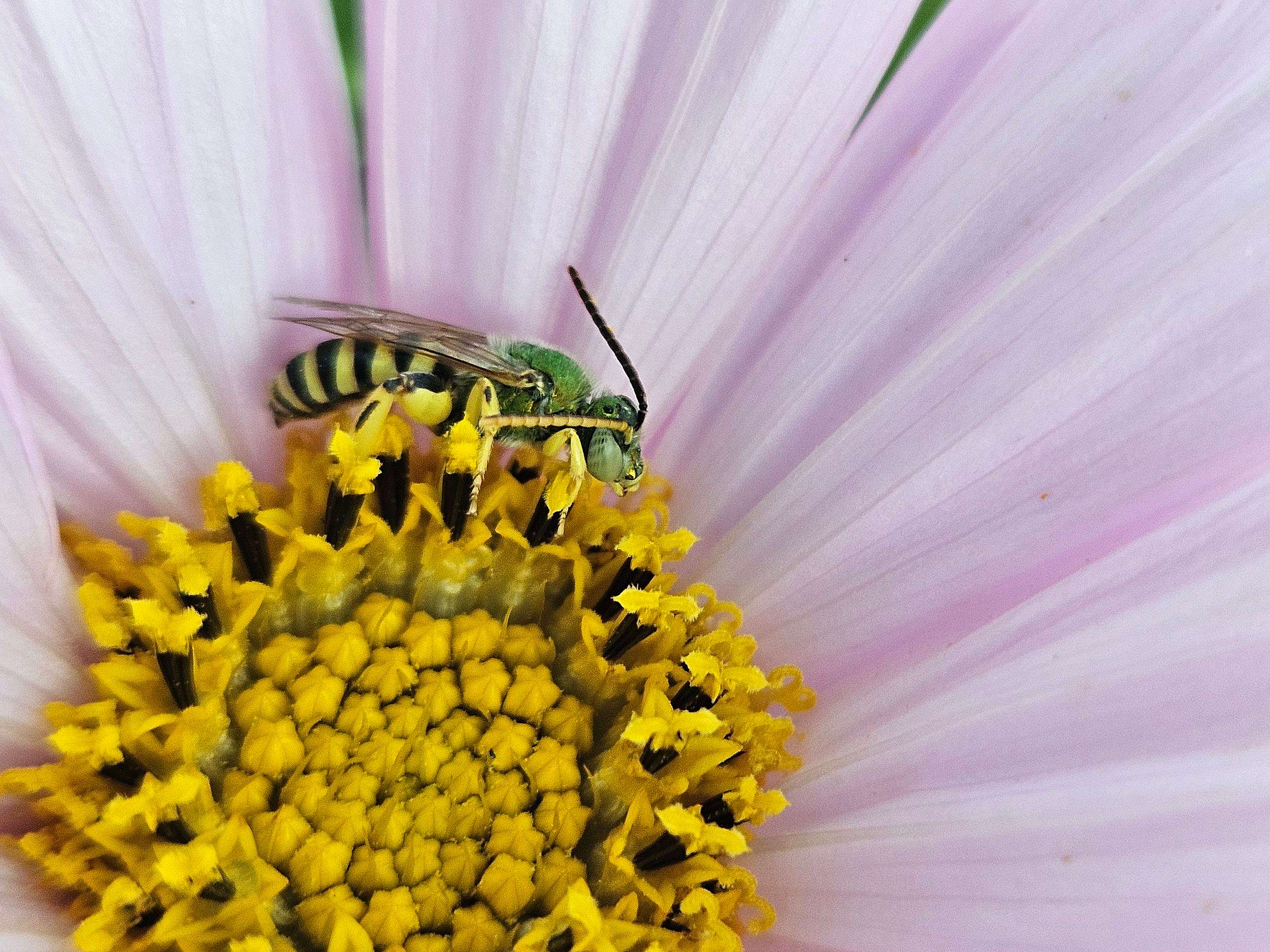
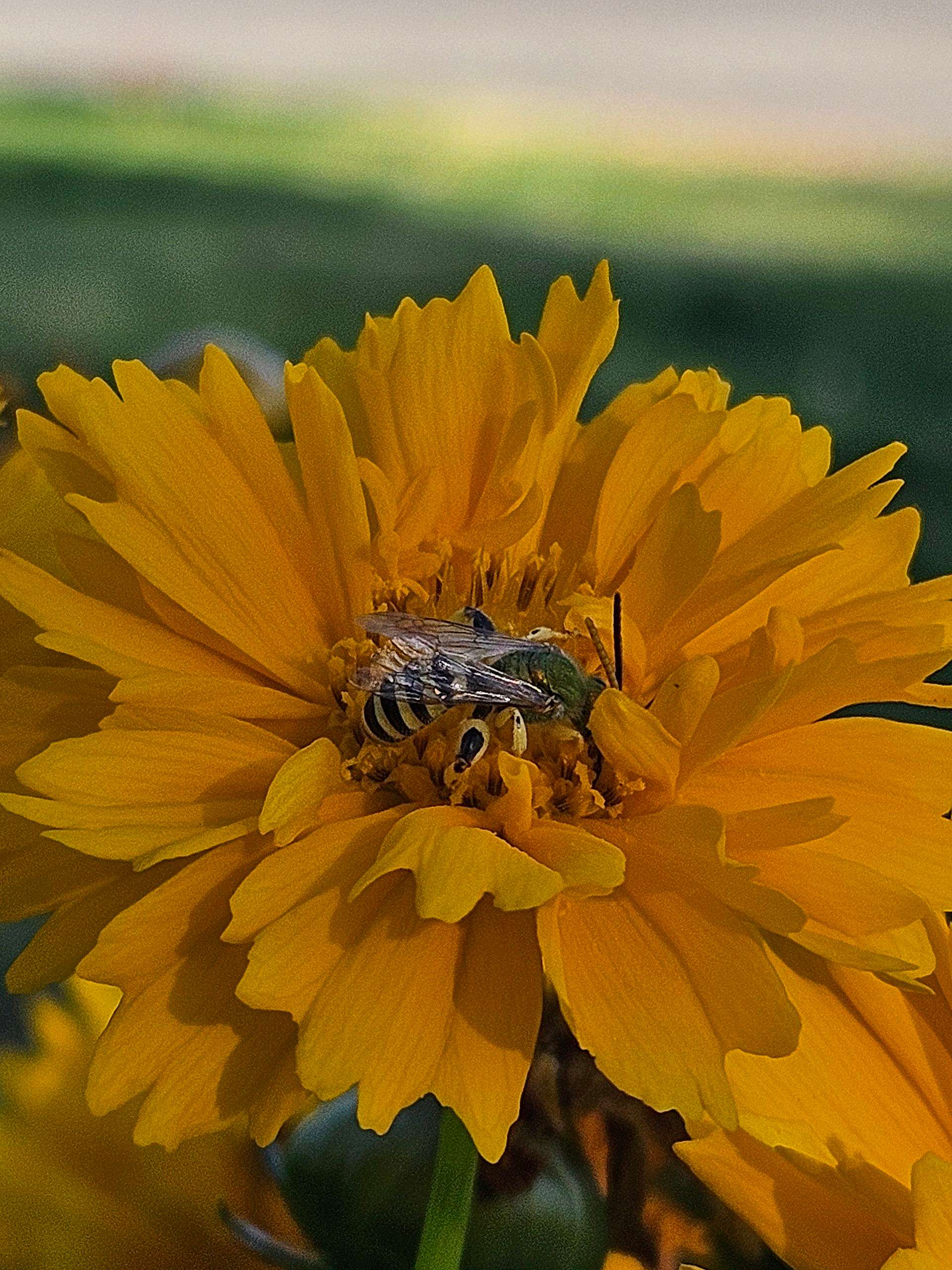
After family comes the genus level. For example, metallic green bees (Agapostemon sp.) belong to a Genus known for their metallic green coloring. They are likely in your backyard (Figure 2).
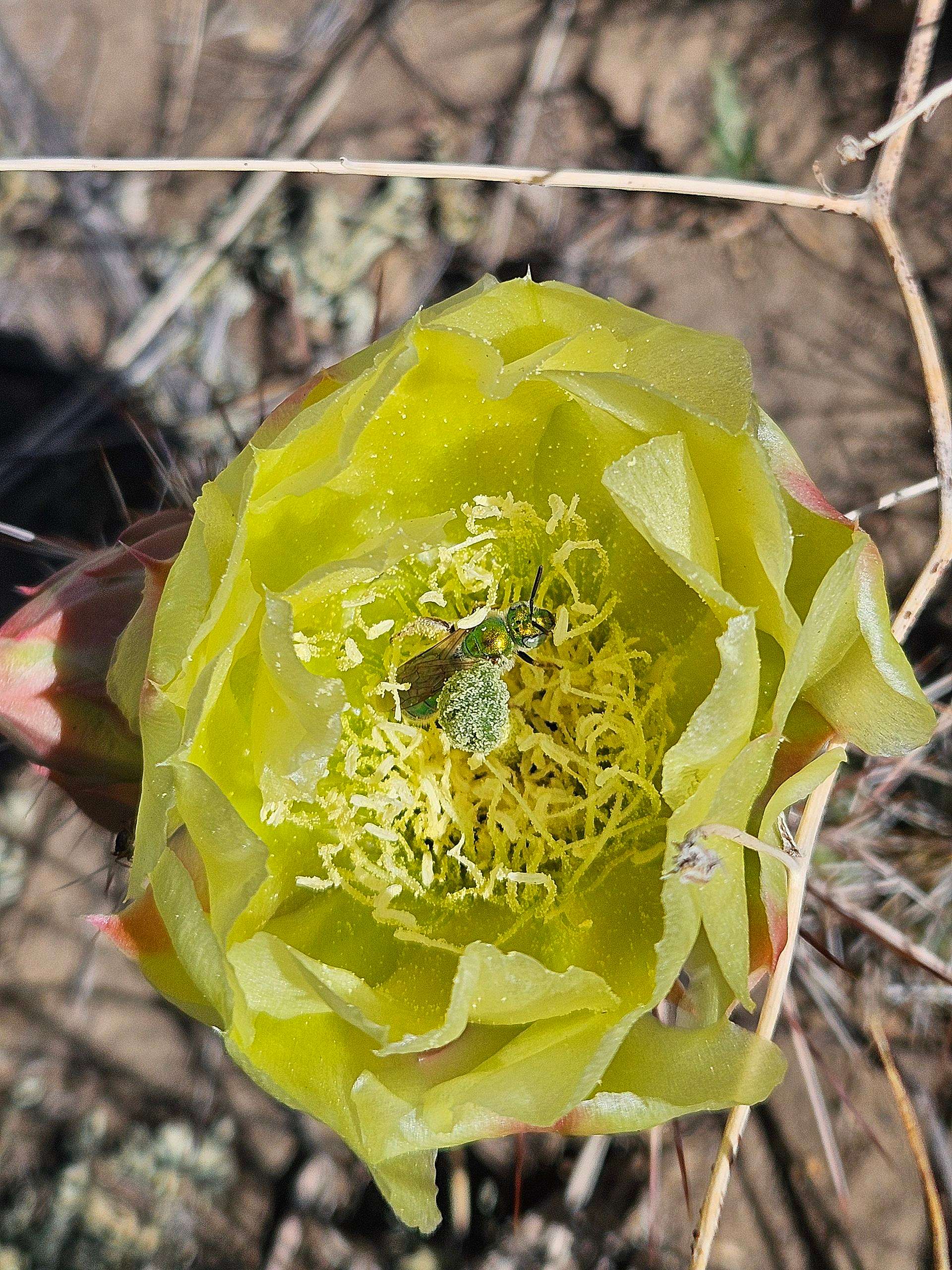
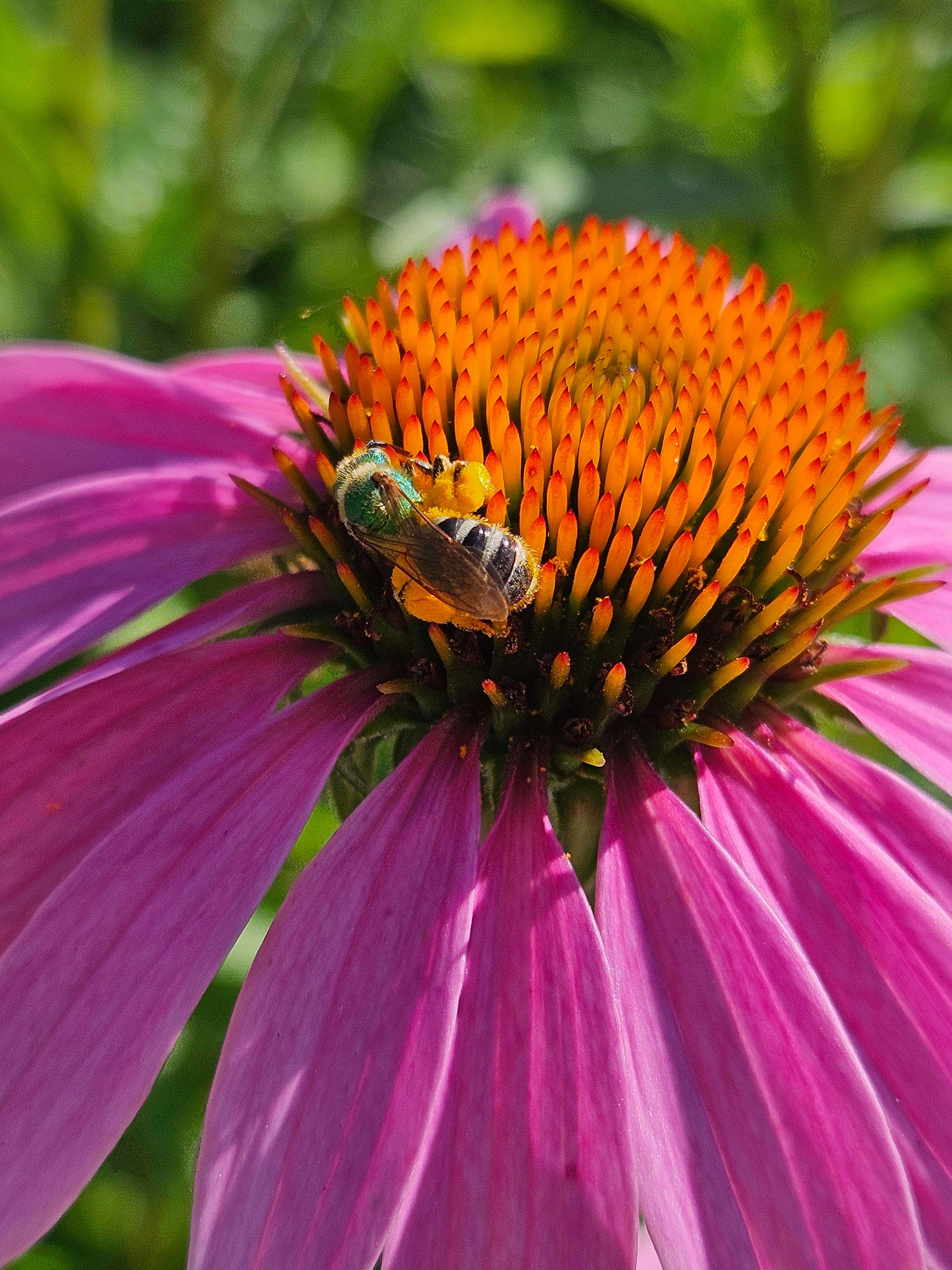
Species is the most specific level of identification. In writing, species names always appear behind the Genus. Unlike Genus, species is never capitalized. For example, the Hunt’s Bumble Bee’s scientific name is Bombus huntii. Bees are difficult to identify to species level. This is partly because scientists are still discovering new species! Scientists often find new bee species in natural history museum collections.
Most Native Bees Are Solitary
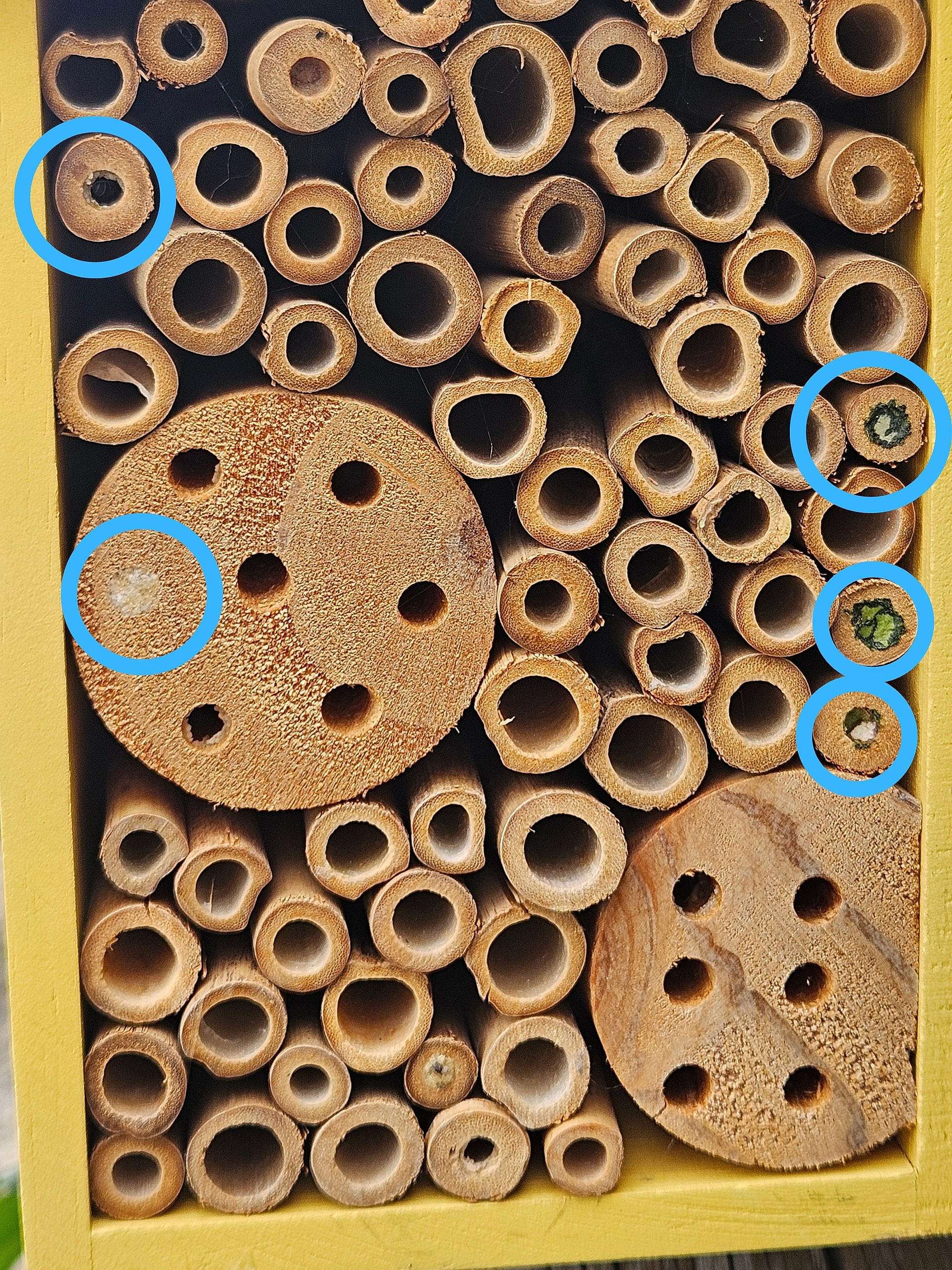
Bees have a variety of different social structures. About 90 percent of the bees native to North America are solitary. Unlike the honey bee, they spend much of their life alone. Males of solitary bee species have one purpose – to mate. Females are much busier. Female solitary bees need to mate, build a nest, and provision their eggs (Figure 3). Learn more about their life cycles here.
Park County’s Bees
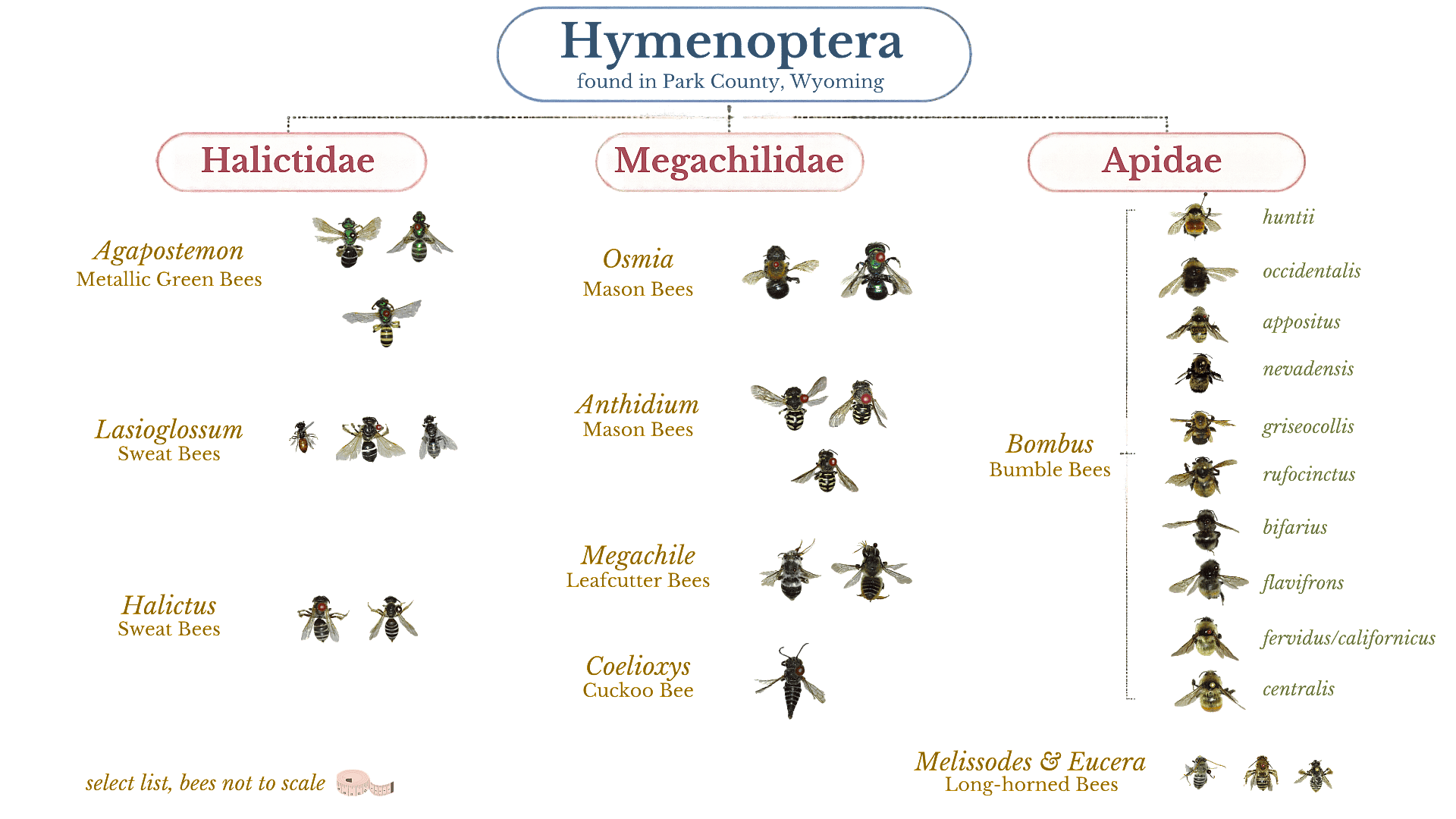
Here in Park County, Wyoming, we have many different native bees. This graphic gives you an idea of just some of the bees you might see while out and about (Figure 4).
Why Are There So Many Bees?
The diversity of bee species might seem a bit excessive. Why do we need so many? For good reason!
Within a single species, greater diversity means more resistance to external changes. These can include disease, changes in climate, predation, and more. In the bigger picture, greater diversity means a more resilient ecosystem and planet.
Over millions of years, bees and flowers developed alongside each other. Bees need flowers for their food: nectar. While procuring nectar, bees also spread pollen from plant to plant. This allows the plant to reproduce. Some flowers rely on one genus or species of bee for reproduction. If something happens to either the flower or the bee, we lose not one but two life forms.
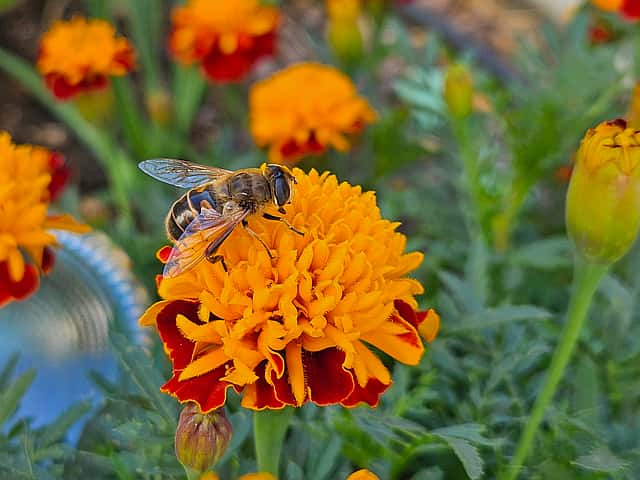
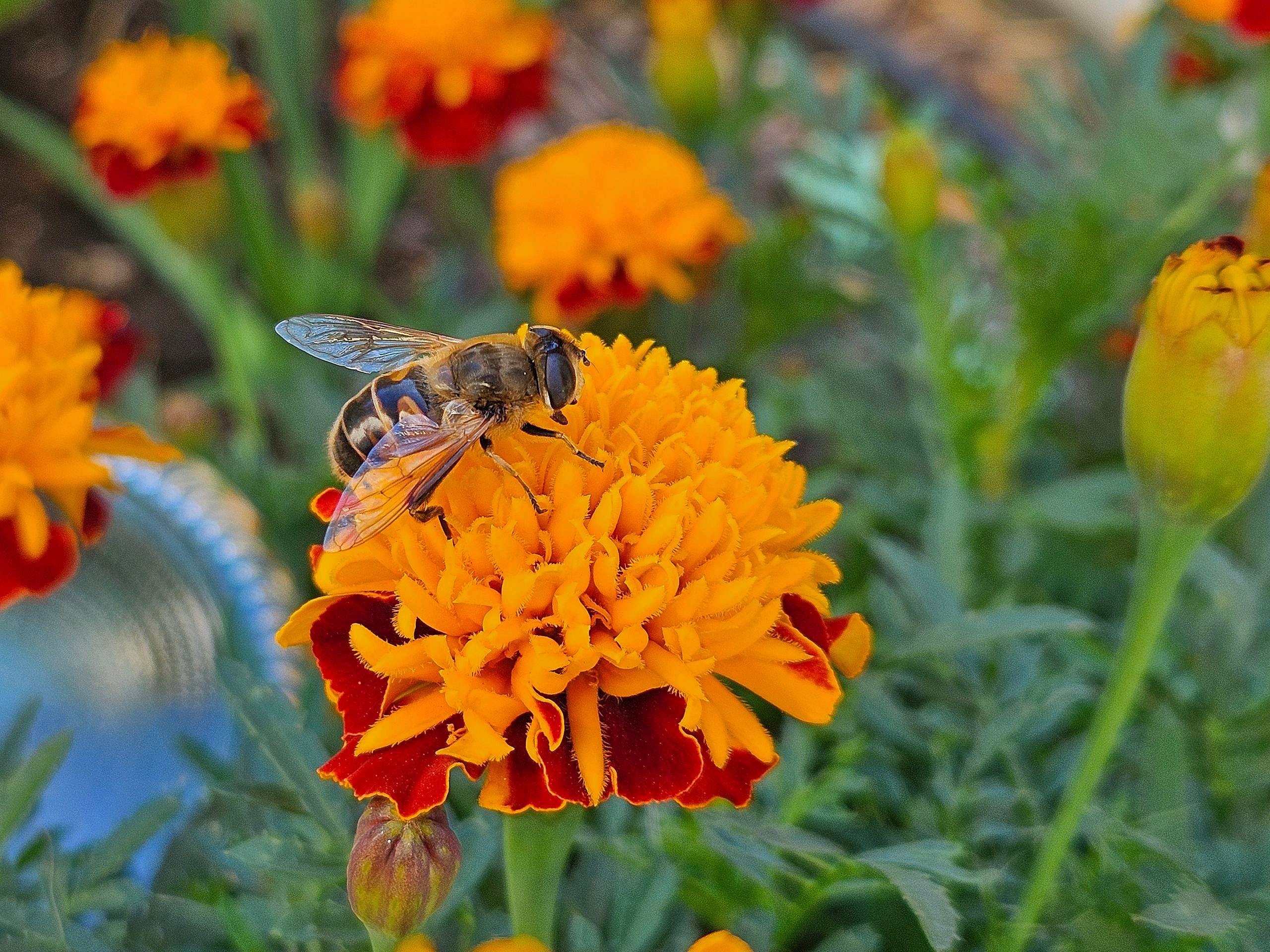
Bees are only one type of pollinator. Butterflies, flies (Figure 5), and beetles are also pollinators. But bees are often the more charismatic pollinators, especially fuzzy bees like bumble bees and long-horned bees. They can function as an umbrella species. This means that the bee’s needs serve to protect other, less visible or charismatic species.
The Big Picture
Unfortunately, insects are in decline. A study from Germany documented a 76 percent decline in insect biomass within protected areas over 27 years. If that’s happening in protected areas, just imagine how bad it is outside them!
We do not fully know how bad bee population declines are. This is partly because we do not know what bee species we have and partly because we need more monitoring. According to NatureServe, 50 percent of leafcutter bee species and 27 percent of mason bee species are “at risk.” This is a designation by the International Union for Conservation of Nature (IUCN). The same criteria list four bumble bee species documented by Draper’s three-year pollinator census as vulnerable. Vulnerable is less critical than endangered, but indicates concern for population declines.
The good news is that insect-sized problems call for insect-sized solutions (kind of). One person can make a big difference! The first step is learning about the amazing bees we have in our backyards. By reading this blog, you’ve already done that. You can take the next step by planting native plants. Watch this presentation by Dr. Laura Burkle for some plant suggestions. Leaving the leaves in the fall is another way to make a big difference. And finally, talk about bees. Don’t let honey bees get all the credit – our native bees deserve some of their own credit. Spread the word about the amazing diversity of bees and their importance in nature!
Written By
Amy Phillips
Amy Phillips brings seven years of experience in the cultural heritage field to her position as Curatorial Assistant at the Center of the West's Draper Natural History Museum. She is the co-Principal Investigator on the “Bison of the Bighorn Basin” Project, which employs faunal analysis to learn about past bison ecology in the geographic Bighorn Basin using more than 100 bison crania sourced by community engagement. Amy also serves on the Society of American Archaeology Public Outreach Committee and as an appointed member of the Park County Historic Preservation Commission. She has research interests in the relationship between humans and their environments in the past and present, taphonomy, and bison ecology. Amy is currently pursuing her Master of Science in Cultural Resource Management, Archaeology from St. Cloud State University.
You May Also Like
The Life Style of Yellow-bellied Sapsuckers
Sep 16, 2026

Tree girdled with Yellow-bellied Sapsucker Holes © Dennis Donohue /...
Your #AskAnArchivist Questions, Answered
Oct 14, 2026

There are few things an archivist enjoys more than a...
Everything I Need to Know About Life I Learned From Birds
Aug 26, 2026

by Sophie Peterson, 2026 Raptor Intern As I near the...
The Art—and Science—of the Roundskin
Jul 24, 2026

Explore how the Draper Natural History Museum is building its...
The Bison Effect: How Bison Help Their Neighbors
Nov 17, 2025
Artist, Steve Leonardi, puts the finishing touches on his piece....
Rare Book Highlights: The Original Journals of the Lewis and Clark Expedition
Oct 01, 2026

"If not for the … epic the captains scratched out...
An Intern in Paradise
Jul 29, 2026

Hello everybody! I’m Lexi and I am working at the Buffalo Bill...
Hibernation versus Torpor
Oct 14, 2024
Hibernation versus Torpor: What’s the Difference? by Brandon Lewis and...