“Children learn as they play. Most importantly, in play children learn how to learn.” – O. Fred Donaldson, originator of “original play” and author of Playing By Heart
Rare Book Highlights is a series of blog posts following McCracken Research Library intern Hannah Lomele as she takes a deep dive into four books in the Buffalo Bill Center of the West’s collection. Rare Book Highlights explores what makes these works special, while also illuminating the stories told not just on the pages of books, but by the books themselves.
During the second half of the nineteenth century, North America underwent a profound cultural realignment. As industrialization transformed an agrarian nation into an urbanized, machine-driven society, the boundary between the public workplace and the private home widened. For middle-class Americans, the home emerged as a domestic refuge where each member of the family could come together for guidance, comfort, and enlightenment.
At the same time, the very concept of childhood was evolving. Where colonial families encouraged children to mature rapidly to contribute to household survival, Victorian parents began viewing youth as a distinct, protected phase of life. In 1740, novelist Samuel Richardson had warned that while educational theorists advocated teaching children through play, “every Gentleman, who has a Fortune to lose” should “tremble at the thought of teaching his son… the early use of dice and gaming!” Despite Victorian progress, late-Puritan anxieties like Richardson’s endured.
How could parents prevent their children from wasting their precious and newfound youths in idle, immoral pursuits? The answer lay in innocent gameplay that also educated children in the moral and cultural values of the day. Therefore, play socialized children as future citizens–members of society that could learn to respect authority, ascribe to dominant values and beliefs, and help move the nation forward.
Gilded Age Geographical Games
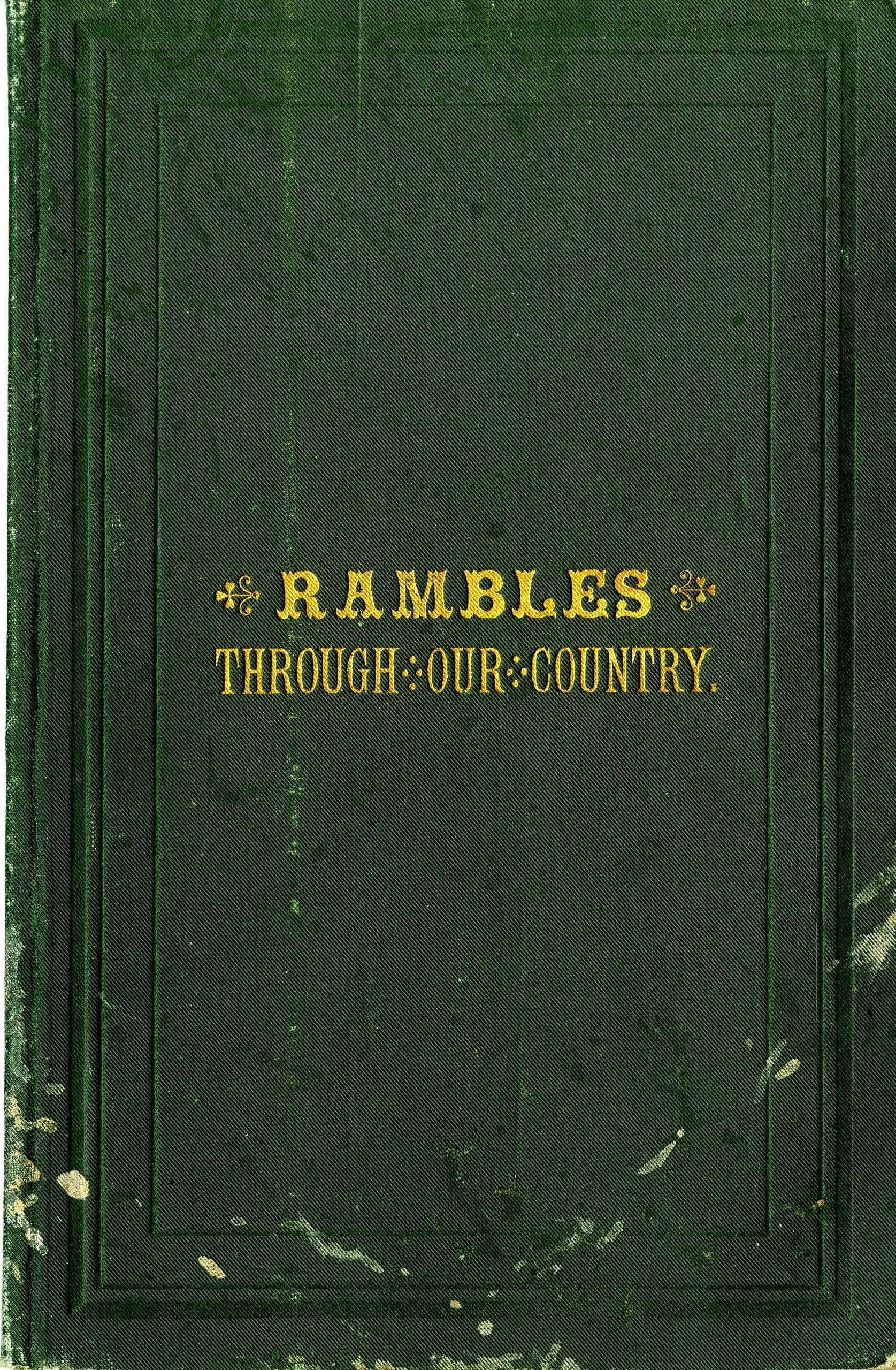
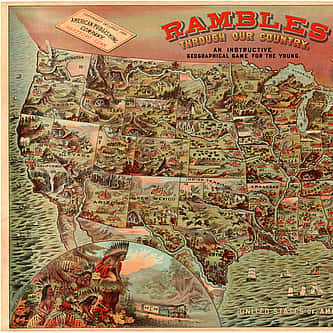
The front cover of Rambles Through Our Country, 1881. McCracken Research Library E175.8 .R35 1881
A twenty-first century family may crack open popular, modern games like Settlers of Catan or Ticket to Ride, just to find themselves inundated with a seemingly endless number of game pieces and cards, scratching their heads over thorough, detailed, and complicated rules. Fun once you get a handle on the rules, but often overwhelming at first glance.
Games of the nineteenth century were a great deal simpler, but the rule manuals, especially in this case, were more extensive. So, when I pulled Rambles Through Our Country off a shelf in the rare book section of the McCracken Research Library, I wasn’t expecting the 113-page, leather-bound book to actually be a board game manual.
The American Publishing Company, the very same house that built its fortune selling Mark Twain’s travel narratives like The Innocents Abroad and Following the Equator, issued Rambles Through Our Country in 1881. Billed as an “instructive geographical game for the young,” Rambles took children on a grand tour of the United States.
Inspired by earlier British geographical pastimes like William Wallis’s 1840s Wanderers in the Wilderness, Rambles Through Our Country offered a distinctly American narrative centered on national pride and territorial ambition. To bypass the taboo of dice, and the specter of gambling, game makers utilized the teetotum: a small, numbered spinning top, which players would spin for each turn.
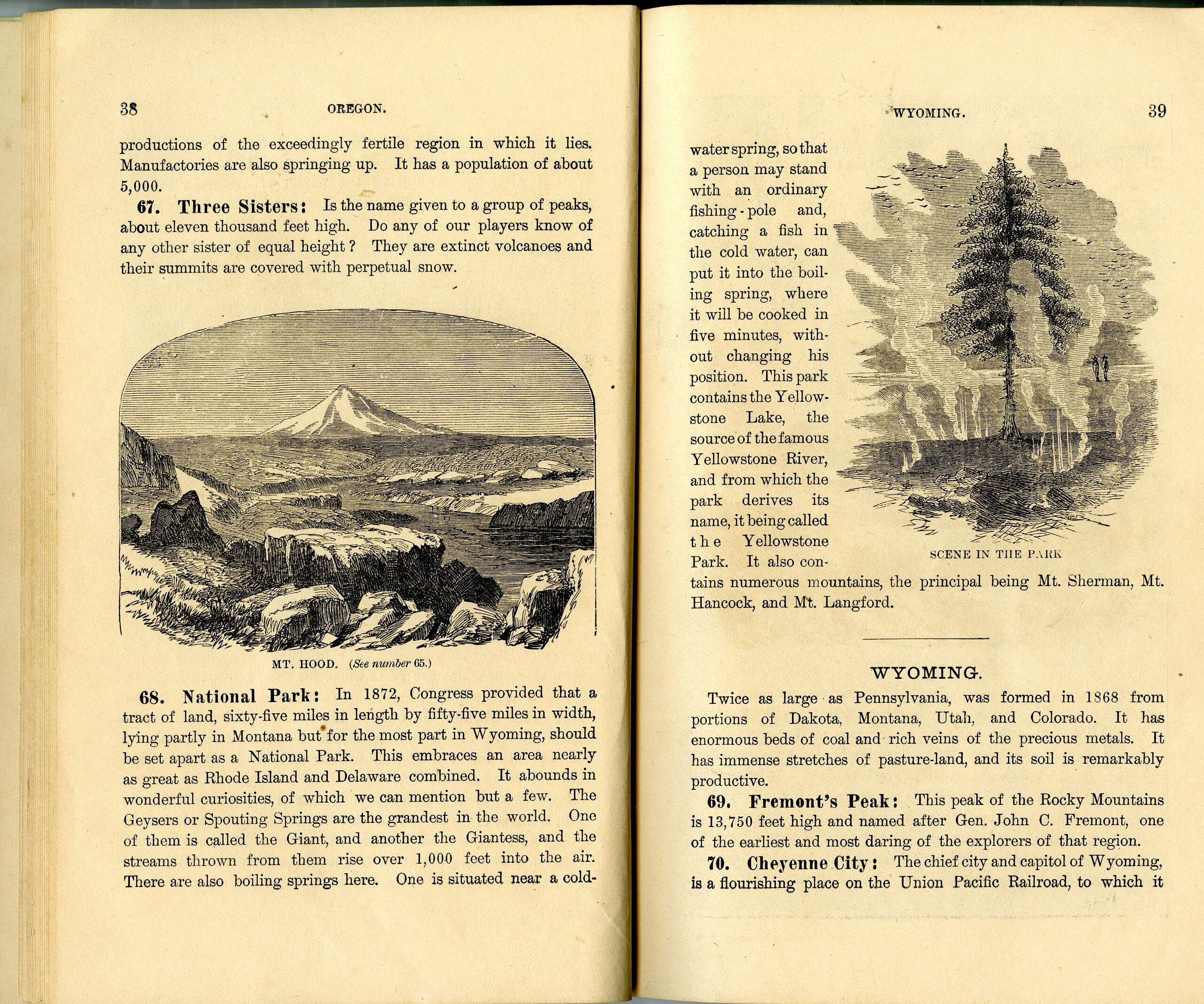
Gameplay commenced in Hartford, Connecticut, and crisscrossed each continental state and territory (in 1881, the Dakotas were yet to be separated) in the Union before terminating in New York City. Upon spinning the teetotum, a player advancing to a numbered location was required to open the accompanying manual, a gazetteer which provided historical, economic, and geographic facts about each site.
Page describing Yellowstone National Park in Rambles Through Our Country, 1881. McCracken Research Library E175.8 .R35 1881
I’d found the manual in the McCracken’s rare book section. But something was missing: the map which acted as Rambles’ gameboard.
Hide and Seek in the Archives
It seemed like a longshot that the Buffalo Bill Center of the West still had the gameboard for Rambles Through Our Country. For one thing, it would be almost a hundred and fifty years old, composed of heavy inks printed on delicate paper. For another, it was a children’s game and could have experienced a great deal of tough love through play. If the museum had one in its holdings, there was no guarantee it would be in good condition.
First, I consulted ArchivesSpace and ContentDM, the online archive management systems the McCracken uses to describe, organize, and make accessible its vast collections. For a guide to doing remote research with ArchivesSpace and ContentDM, check out this blog post by Archivist Cassandra Day. But nothing came up on either site. I consulted my colleagues, none of whom had heard of a map or gameboard for Rambles. Though it was starting to feel impossible, as a last-ditch effort I decided to go full Indiana Jones and venture into the vaults myself to look for it.
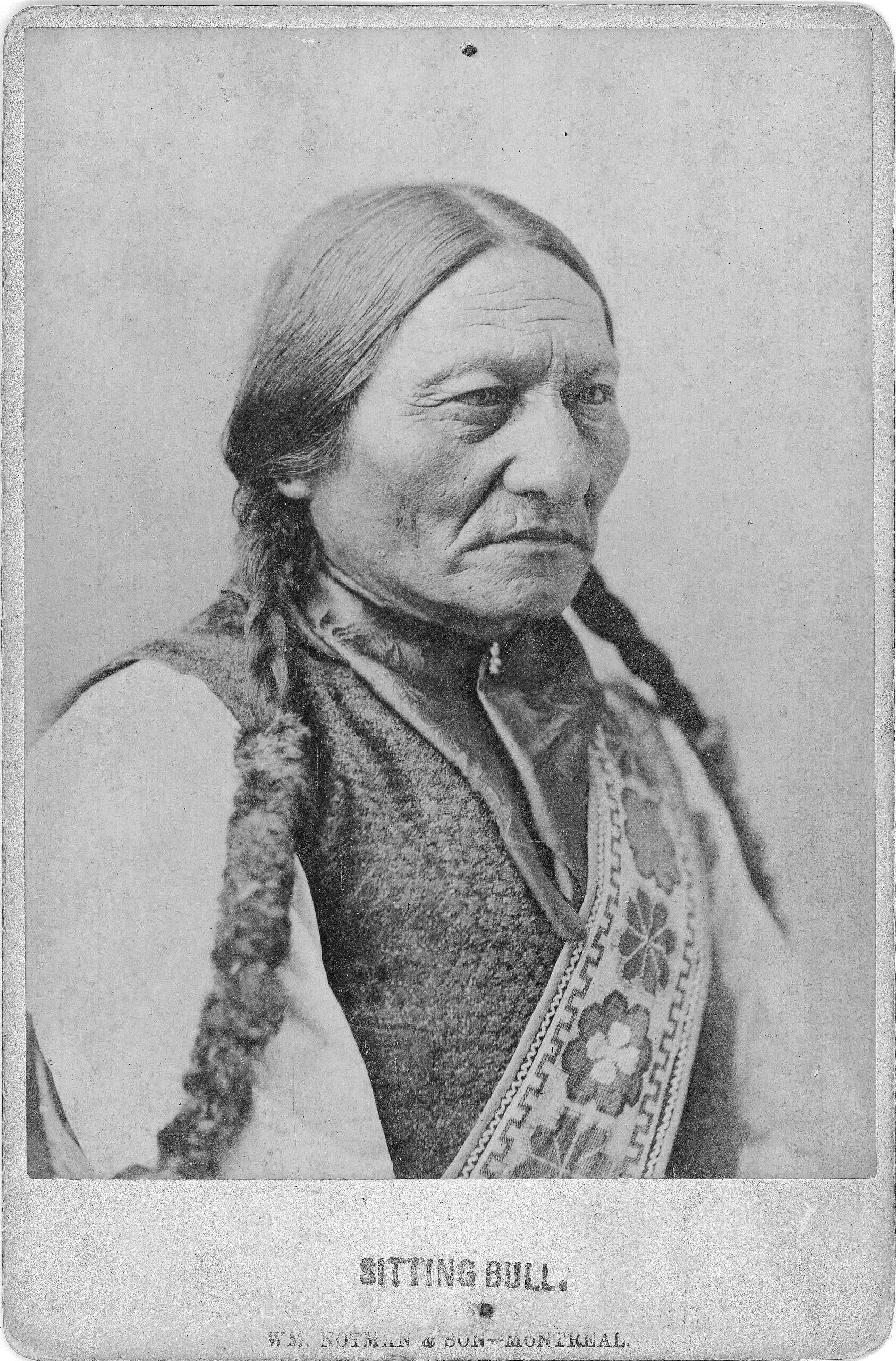
Because of the sheer volume of historical materials in the Buffalo Bill Center of the West’s collections, it is remarkably easy to lose track of one particular artifact. Accidents happen, and papers get shuffled into the wrong folder, or folders get mislabeled, or items are put on display for an exhibition or loaned to another museum. Luckily, I had a few clues to help in my search. One helpful hint was that the map would have to be quite large, both for gameplay and to teach kids more about each of the states and territories featured. With that in mind, I started in our oversized collections, which are kept on longer and deeper shelves than the rest of the collection. I searched through over a dozen shelves with no luck but a determination to give it my best shot, inspired by Sitting Bull’s old adage:
“If a man loses anything and goes back and looks carefully for it, he will find it.“
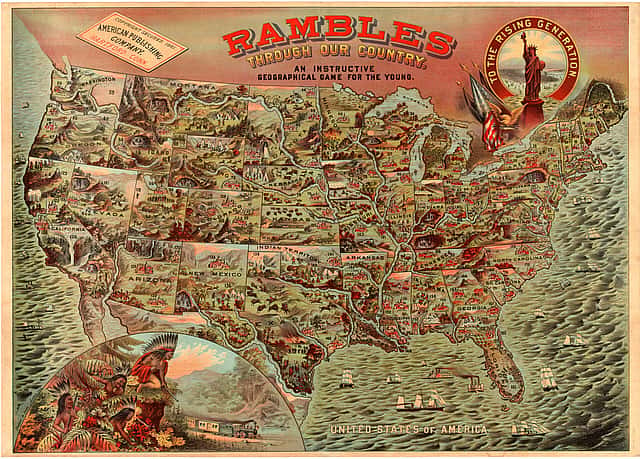
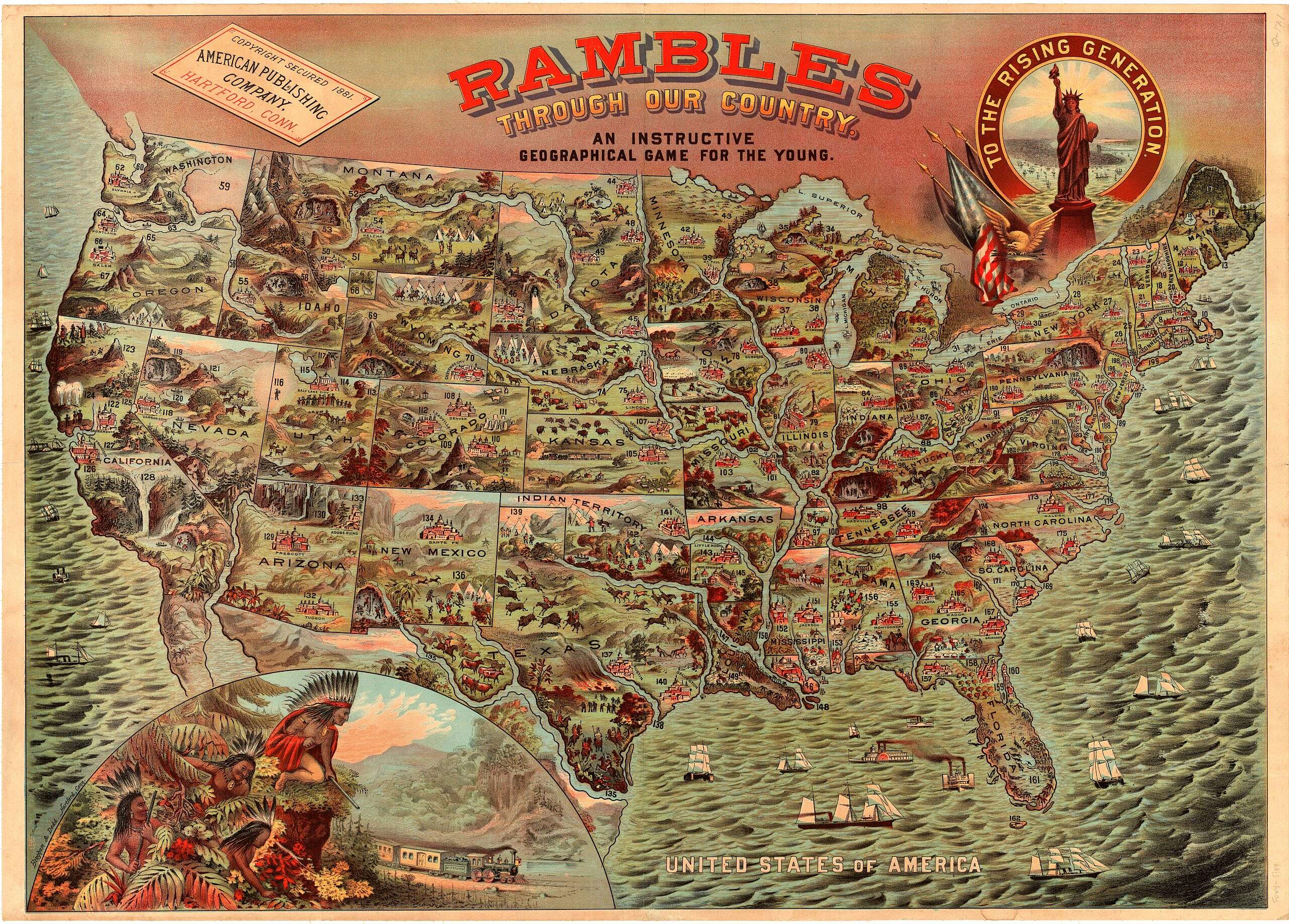
So, I looked for another half an hour, even rolling over a ladder so I could reach flat files stacked so high they nearly touch the ceiling. Eventually, there was only one drawer left, labeled by a handwritten post-it note reading, “Unprocessed.” Learnmore aboutwhat it means to process an archive in this blog post by Archivist Cassandra Day. And in between two yellow, acid-free sheets of thick archival folder, I finally found it! Unbelievably, not only was the Rambles Through Our Country map in the McCracken’s archives, but it was also in perfect condition, with gorgeously vivid colors and detailed, unfaded drawings, a perfect specimen for studying both Victorian children’s games and their parents’ visions of late-nineteenth century United States.
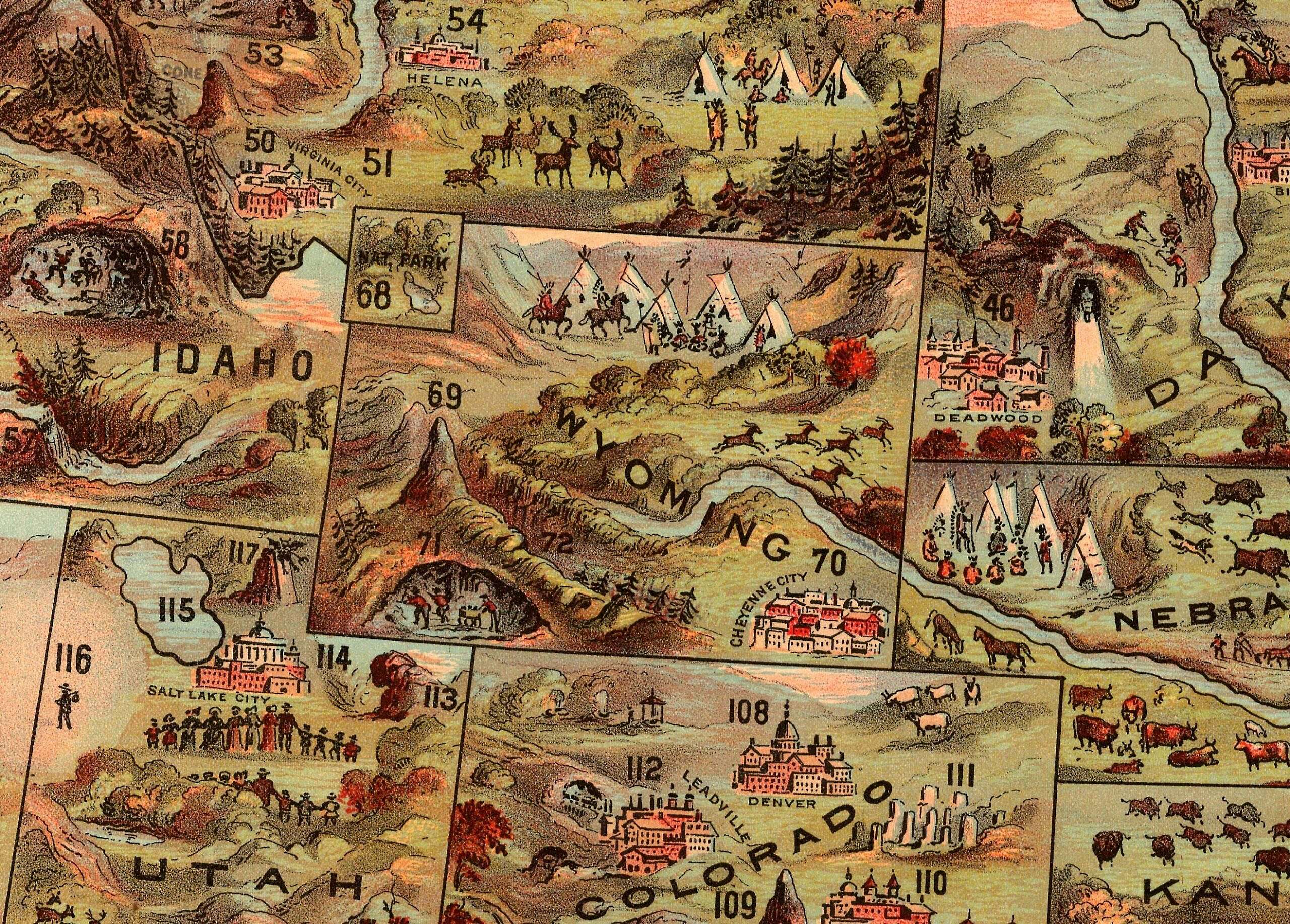
Themap for Rambles Through Our Country, 1881. McCracken Research Library E175.8 .R35 1881
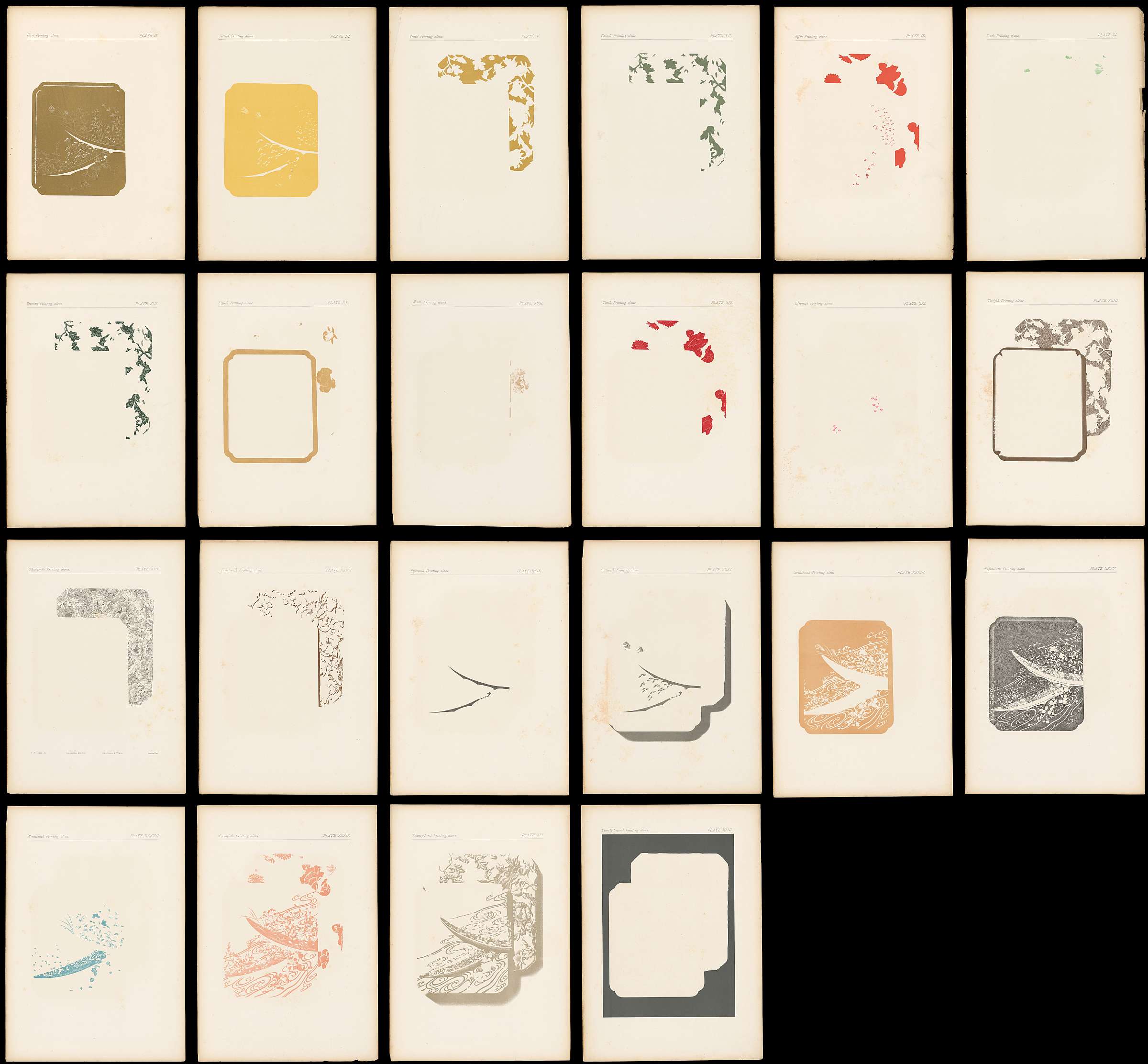
Designed by lithographers John H. Bingham and William H. Dodd, the game board for Rambles is a masterwork of chromolithography. To achieve its vibrant, jewel-toned landscape, Bingham and Dodd prepared seven separate lithographic stones–typically large, flat limestone blocks, one for each colored ink–and then aligned and pressed map paper onto each stone in sequence to create the final image. The resulting folded map is a spectacular visual document of the late nineteenth-century United States, both as it really was and as it was mythologized.
Yet, like many cultural artifacts of the Gilded Age, Rambles reveals as much through its omissions and racial caricatures as through its artistic beauty. Intended to instruct youth in American exceptionalism, the map presents a heavily curated narrative of national progress that socialized children into dominant Gilded Age racial ideologies.
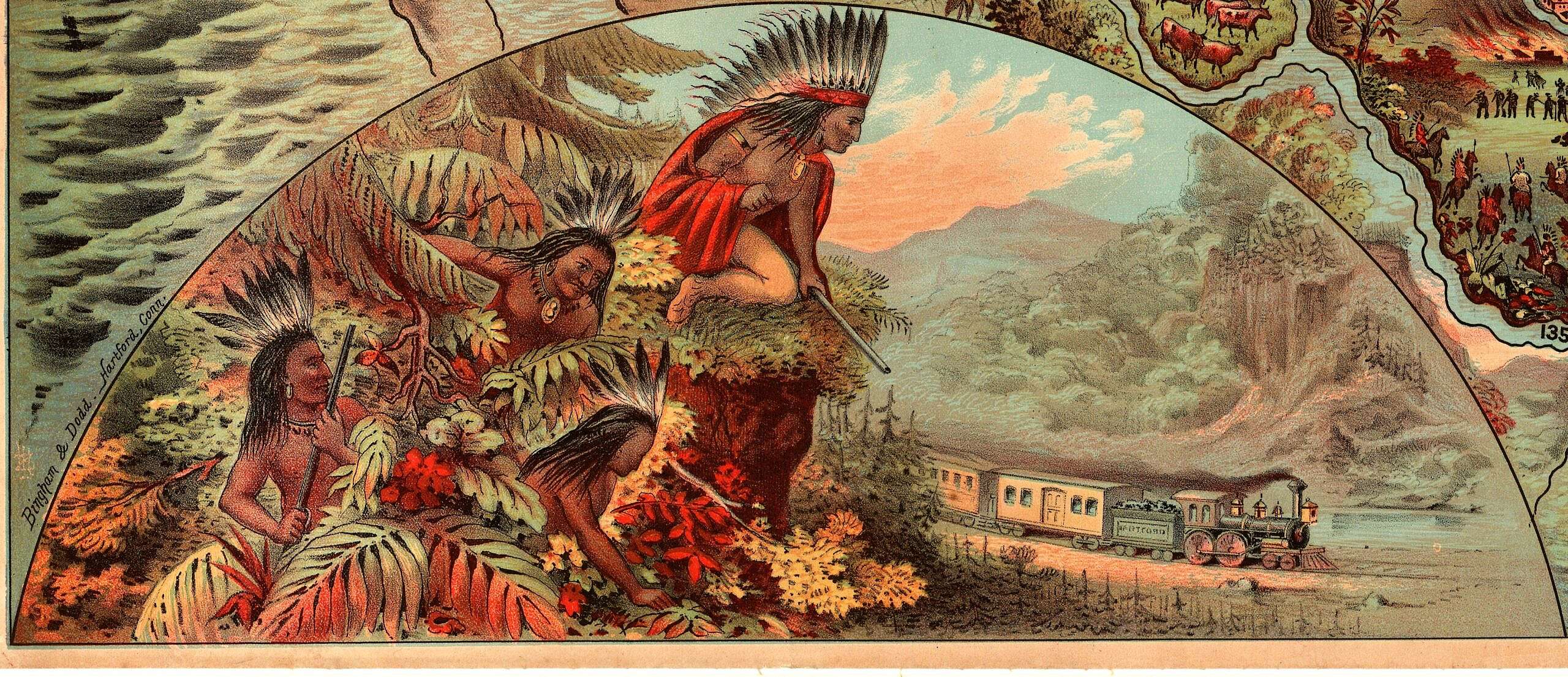
Western lands highlight industrial extraction alongside dramatic natural wonders. Meanwhile, Indigenous peoples are depicted as hostile obstacles to Manifest Destiny; strikingly, one vignette shows a Native raiding party lying in ambush as a locomotive thunders across their ancestral territory.
Detail on map for Rambles Through Our Country, 1881. McCracken Research Library E175.8 .R35 1881
In the Southern states, small vignettes depict Black agricultural workers picking cotton. Produced just years after the end of Reconstruction, the map glosses over the brutal realities of sharecropping, Jim Crow laws, and racial violence, reframing Black labor as a harmonious, contented engine of American economic growth.
By presenting imperial expansion in the West as inevitable progress and systemic exploitation in the South as peaceful industry, Rambles transformed complex, painful national realities into an innocent Sunday afternoon parlor game.
Detail on map for Rambles Through Our Country, 1881. McCracken Research Library E175.8 .R35 1881
Selling the Story of America
With no sales records available for Rambles, it is difficult to determine exactly how popular the game was, or how many prints were produced. The American Publishing Company, like many nineteenth-century publishers, did not distribute its titles through standard brick-and-mortar bookstores. Instead, they relied on subscription publishing.
Itinerant sales agents marched from town to town carrying “salesman’s samples” or “dummies,” abridged specimen volumes featuring sample bindings, prospectus sheets, and blank ledgers. Agents used these portable kits to pitch products like Rambles directly to local families, collecting advance orders before printing. Because salesmen were instructed to dispose of their sample kits once a campaign ended, very few survive today–talk about an archivist’s nightmare!
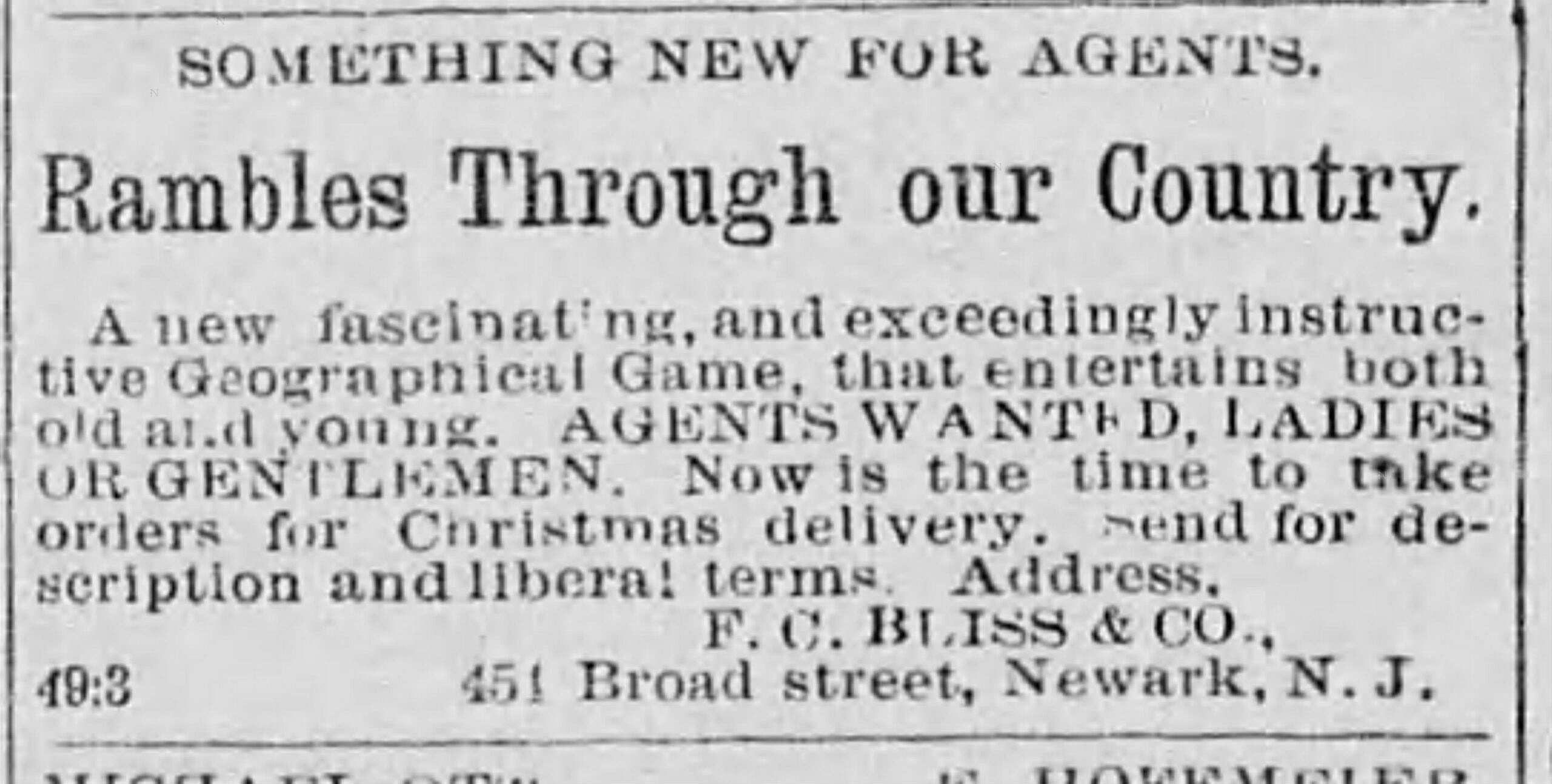
Clipping from the Everett Press in Everett, Pennsylvania, 1882. Newspapers.com
Yet archival records reveal fascinating details about how the game reached Victorian parlors. Notably, the American Publishing Company actively recruited women as bookselling agents for Rambles, likely reasoning that female agents were ideal for pitching educational items directly to mothers and homemakers.
Selling the game was one thing; whether or not families enjoyed it was another. Archival reviews show a decidedly mixed reception: while one contemporary reviewer praised Rambles as an indispensable educational tool, another grumbled that wading through its endless gazetteer facts made for a thoroughly boring afternoon!
But who was playing games like Rambles? By the 1880s, advances in paper manufacturing and chromolithography allowed complex board games to be produced en masse. While small card games cost as little as 25 cents, elaborate boxed board games ranged from $1.00 to $3.00, a reasonable sum for a rising middle class eager to invest in their children’s intellectual development. Thanks to an archival newspaper ad, we know that Rambles Through Our Country would have cost $2. Victorian board games, puzzles, parlor games, and card games could be found in the homes of both the elite and of the working class, with differences in quality and content present due to access and wealth disparities.
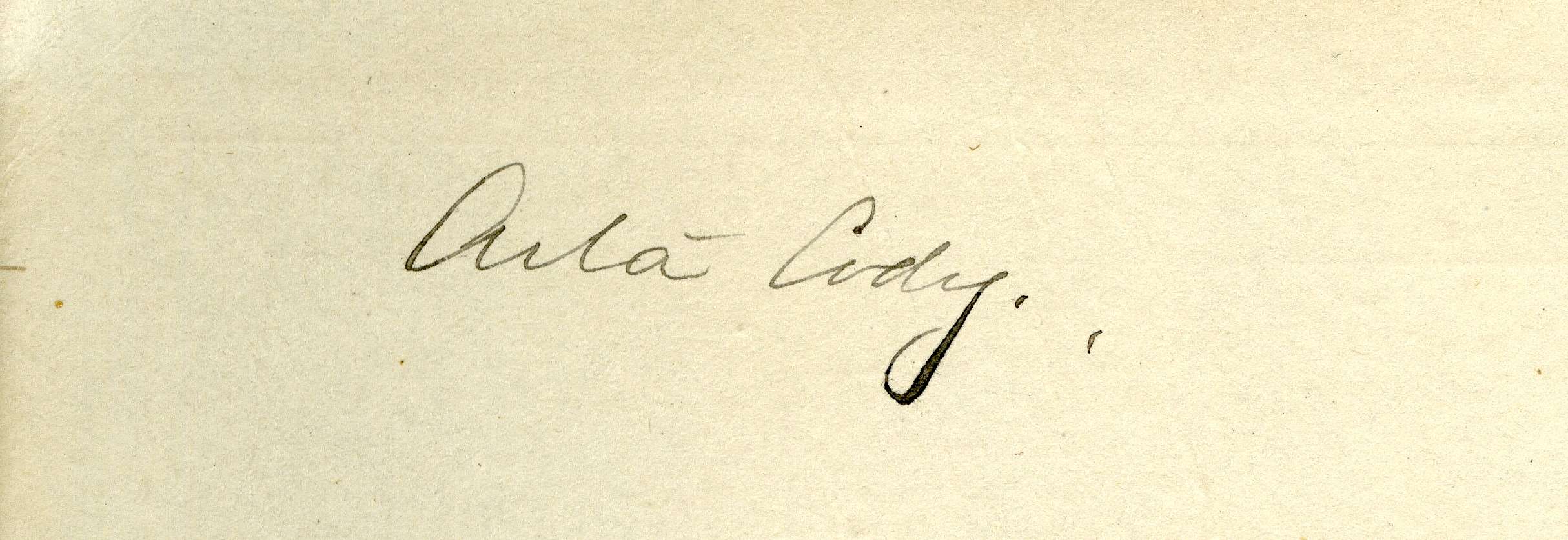
The historical significance of the McCracken’s copy of Rambles Through Our Country extends beyond its lithographic stones, missing maps, and Victorian morality. Opening the companion guidebook reveals an inscription penciled in a neat signature, indicating ownership, the signature of the one and only Arta Cody.
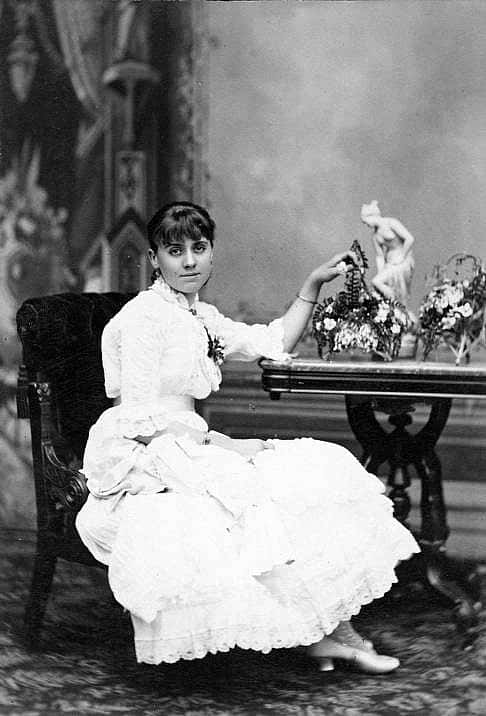
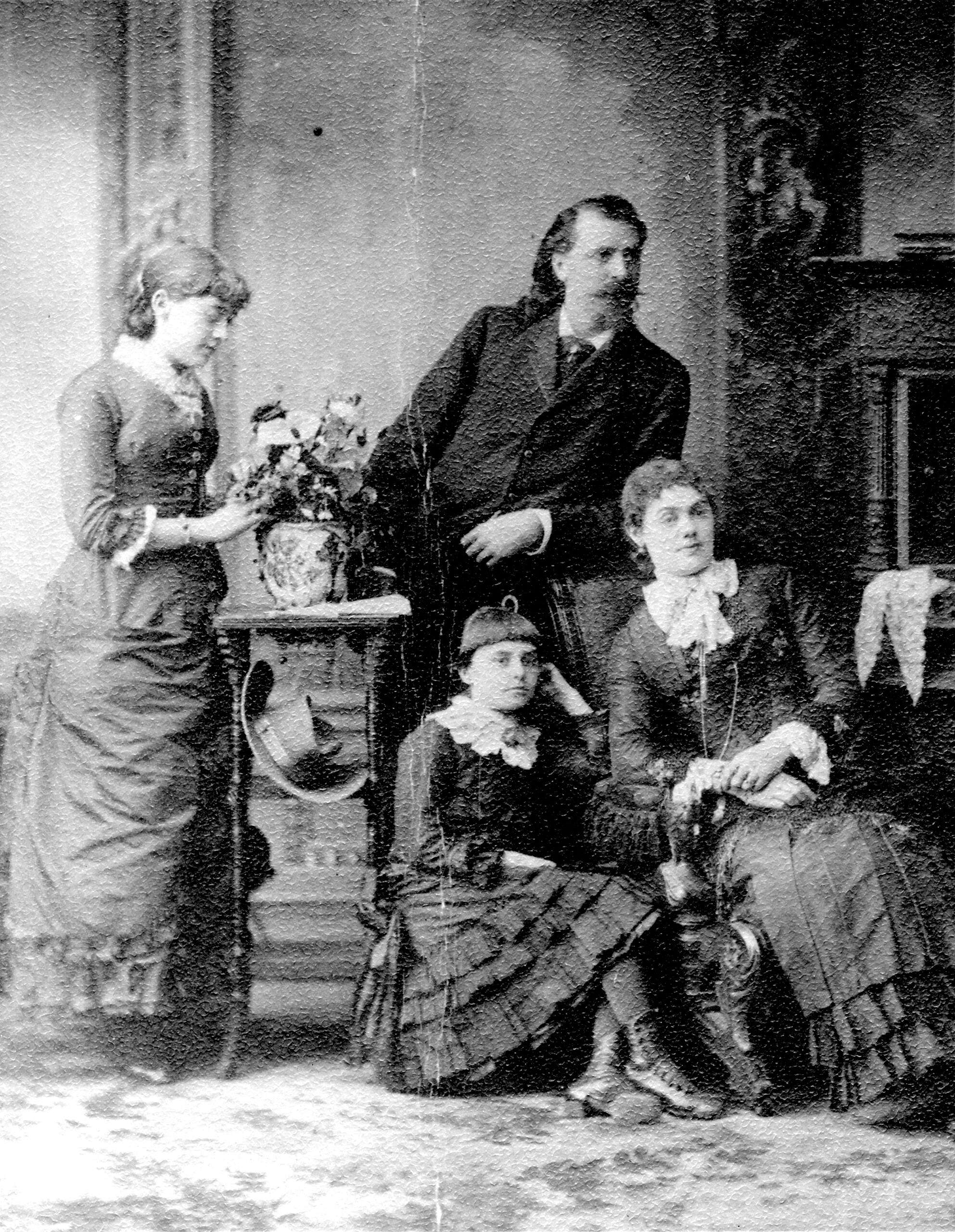
Arta was the eldest daughter of William F. “Buffalo Bill” Cody and Louisa Frederici Cody. Born in 1866, Arta grew up during the exact period when Victorian parlor culture and subscription publishing were at their peak. Newspapers published during her youth reveal that Arta was a spitfire personality in her father’s image, who spent much of her affluent upbringing socializing with her peers and playing–you guessed it–party games!
Arta Cody’s signature on the inside front cover of Rambles Through Our Country, 1881. McCracken Research Library E175.8 .R35 1881
Holding this booklet in the library, one can easily picture young Arta sitting in a parlor, spinning a teetotum, and reading aloud about the mines, mountains, and territories of the American West. It is a compelling coincidence: in 1881, as Arta traversed this paper version of North America, her father was on the cusp of launching his outdoor spectacle, Buffalo Bill’s Wild West, in 1883, taking the sights, sounds, and mythos of that same frontier to global audiences.
Whether the volume was a gift sent home by Cody during his travels or a staple of the family’s domestic life, Arta’s signature transforms the game from a generic commercial product into an intimate family artifact. Arta was not just Buffalo Bill’s eldest daughter, nor is she a ghost of the past: having what is most likely her game, book and board, illuminates that she was a living, breathing person, helping us connect even more intimately with the past. It makes the young woman who died tragically of appendicitis shortly after her wedding feel less like a line in a history textbook and more like a real person–someone you or I might have known or even played a board game with.
Preserving Play
Games are rarely just static playthings. They are physical vessels that reflect how a society understood itself, what values it prioritized, and what stories it wished to pass along to its youth. Rambles Through Our Country offered nineteenth-century children a chance to navigate a vast, rapidly changing continent from the safety of the living room table. Preserved today in the McCracken Research Library, stamped with the signature of Buffalo Bill’s daughter, Arta, it remains a captivating testament to the intersections of print, play, and memory in the American West.
Want to examine this rare volume for yourself–or uncover other stories hidden within our collection?
The McCracken Research Library is open for walk-in visitors and research appointments, Monday through Friday, 9:00 AM–12:00 PM and 12:00 PM–4:30 PM.
Hannah is a New Yorker with the adventurous spirit of the Old West. She has a BA in Creative Writing from Bard College and is currently studying at CUNY Queens toward an MA in History as well as an MS in Library Science. After 6 years of working in documentary film development and production, she pivoted to archival studies and began working at Planting Fields, the historic Long Island estate built by William Robertson Coe. Her latest adventures have taken her to the Buffalo Bill Center of the West, where she is the Library & Archives intern at the McCracken Research Library.