
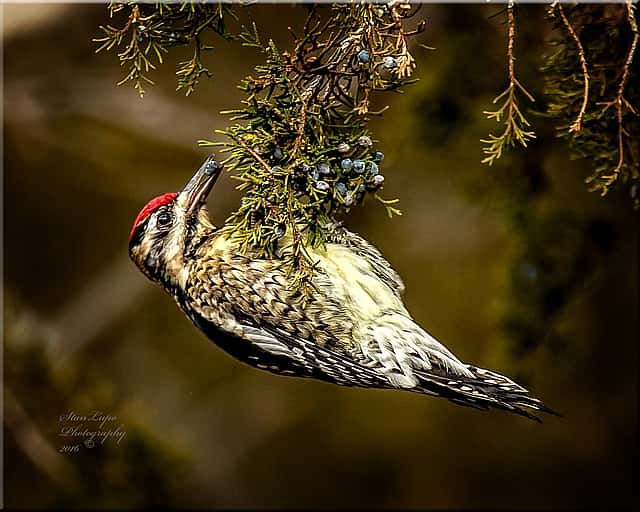
The Life Style of Yellow-bellied Sapsuckers

September 16, 2026
Sapsuckers (Piciformes or Picidae) are a group of woodpeckers that specialize in feeding on tree sap. They do this by drilling holes in trees, which in turn causes sap to flow out. Theses woodpeckers then eat the sugary liquid contained in these sap wells. They even have a brush-tipped tongue for lapping up sap.
Help With ID
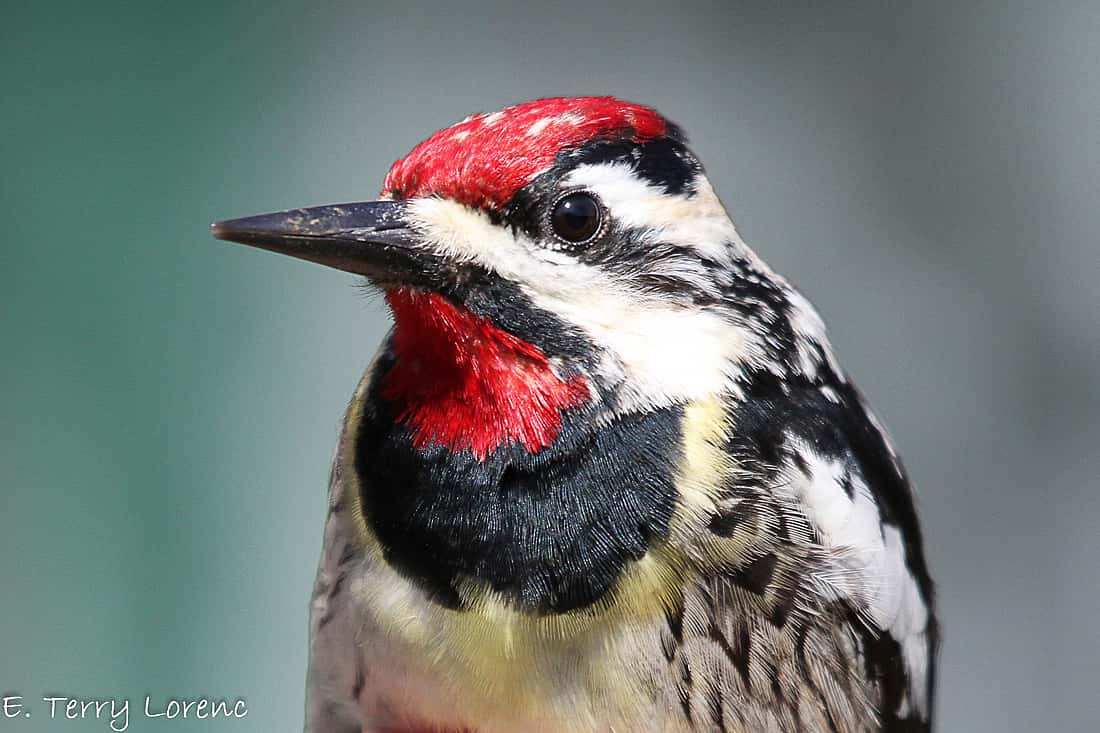
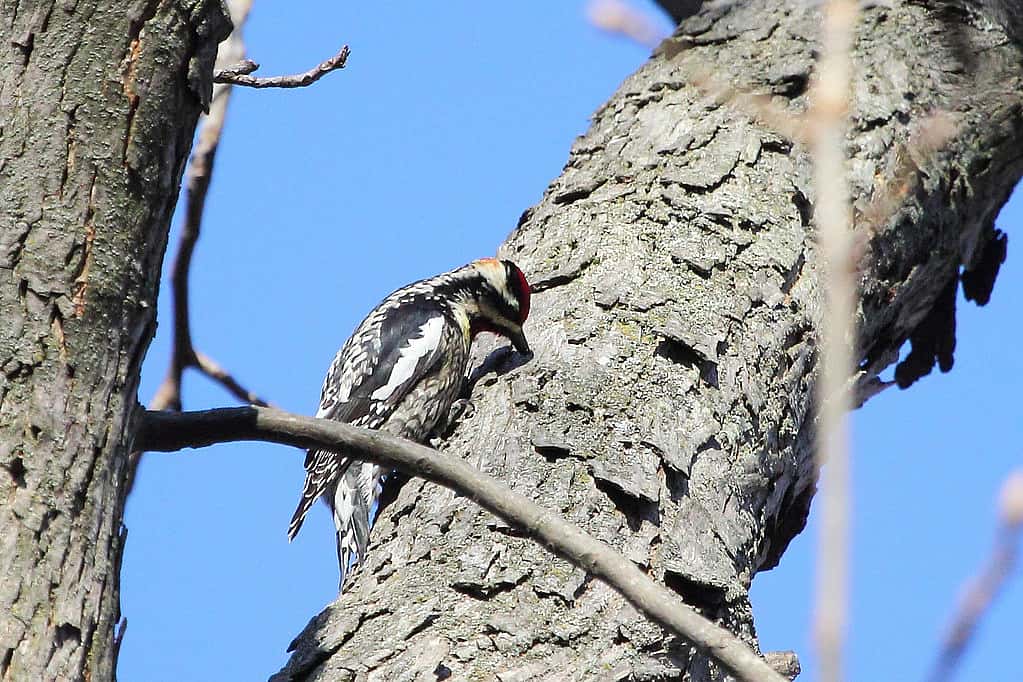
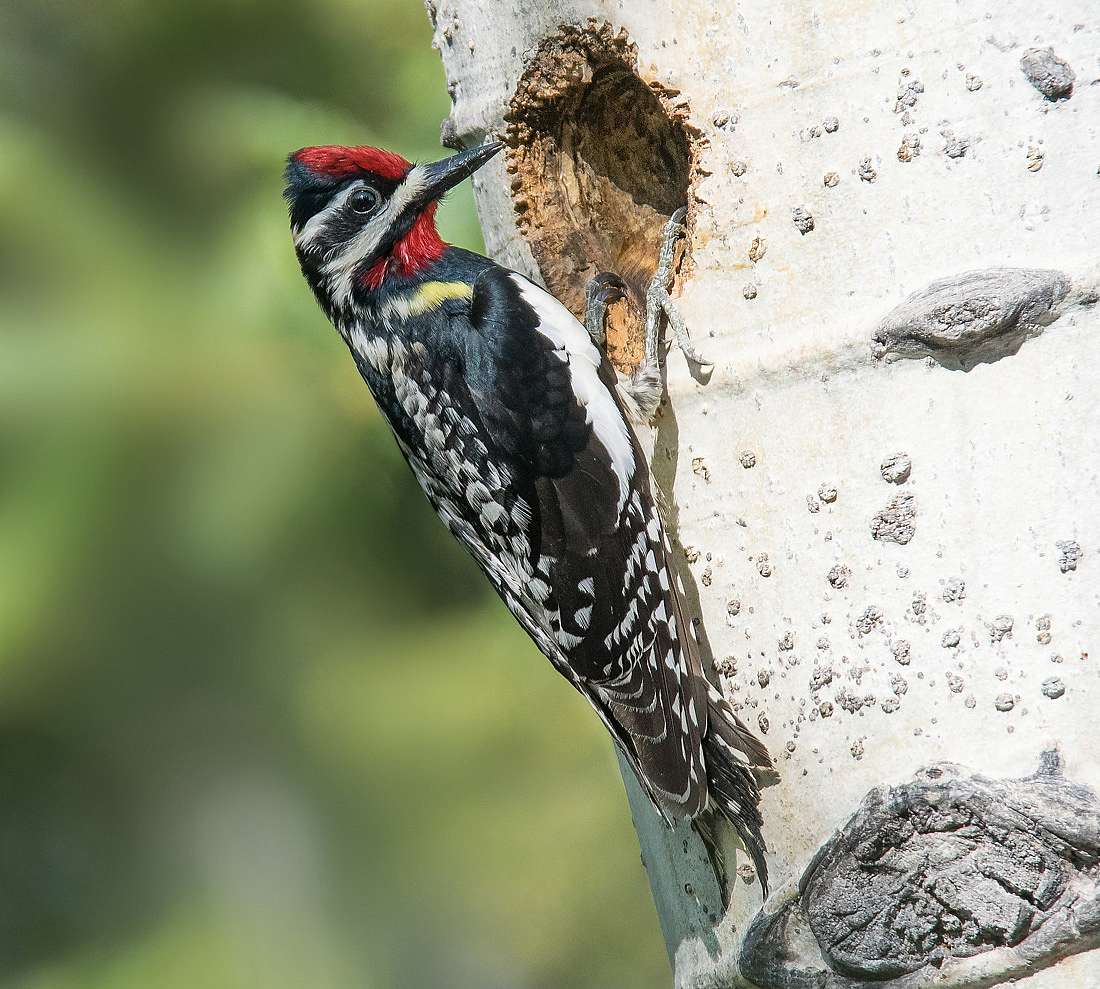
Yellow-bellied Sapsuckers (Sphyrapicus varius) are attractive birds with a barred, mottled black-and-white pattern. Their striped faces include a black band across their eyes. Both sexes also show a long vertical white patch along the sides of their closed wings. Along with this, Yellow-bellied Sapsuckers have an obvious red forehead. Males, however, also sport a red throat whereas the female’s throat is white. Although named for having a yellow belly, this can be deceptive, as the yellow can be very pale or can sometimes be completely absent.
Do Yellow-bellied Sapsuckers Only Eat Sap?
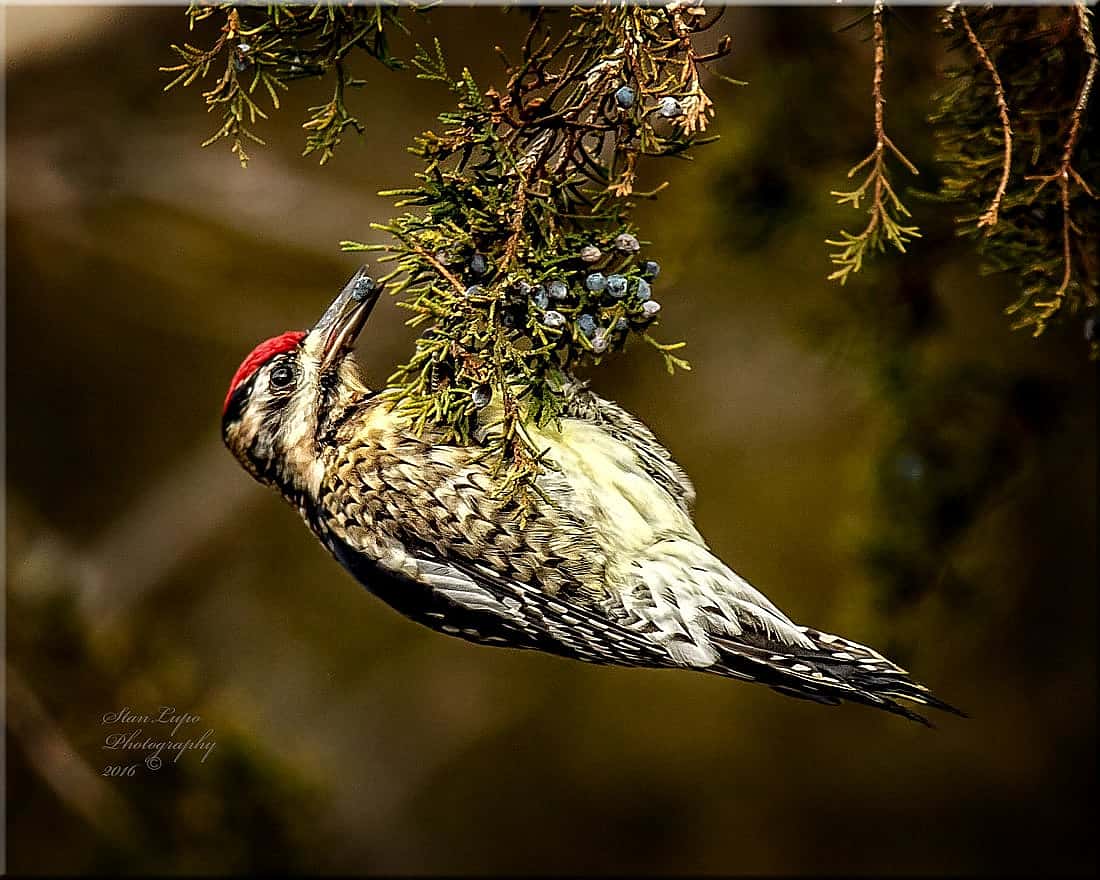
I would like to say that it is all in the name, but that isn’t the case. While it is true that Yellow-bellied Sapsuckers depend on sap, they also dine on a variety of other items. In addition to sap, Yellow-bellied Sapsuckers eat fruit, spiders, and insects (mainly ants). You may see them moving up and down trees, using their stiff tail feathers for support. Pausing, they examine the bark for insects hiding underneath. This is especially productive when gathering ants. At times, they may also eat flying insects, catching them right out of the air.
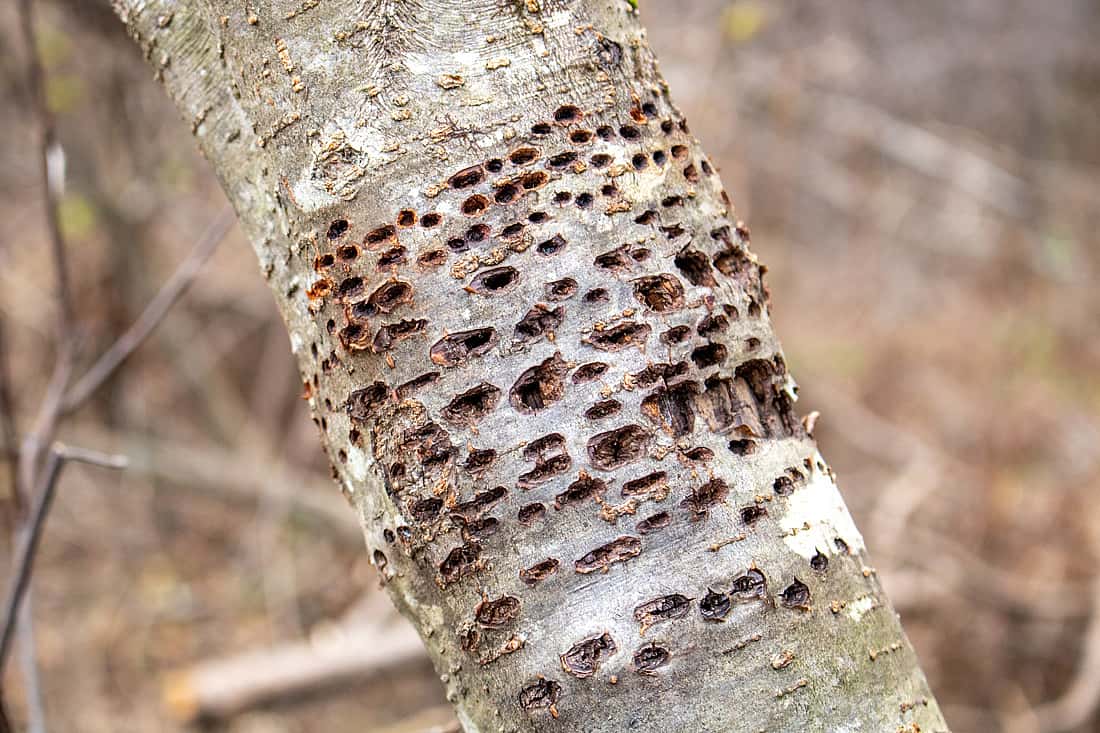
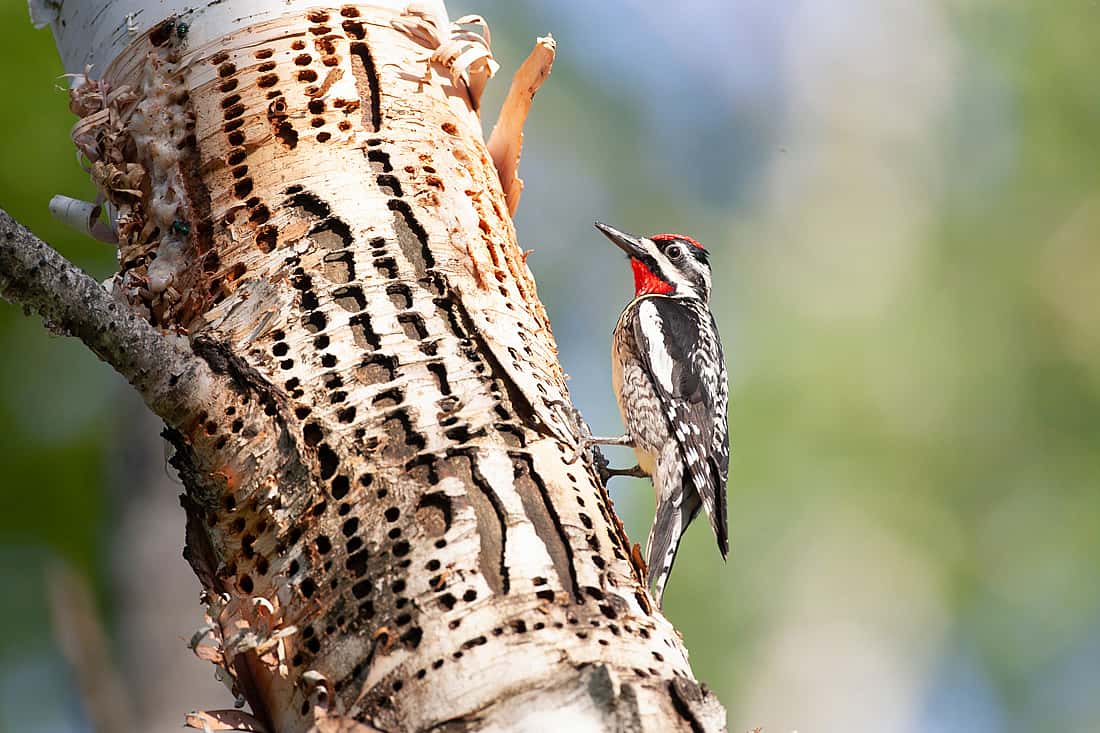
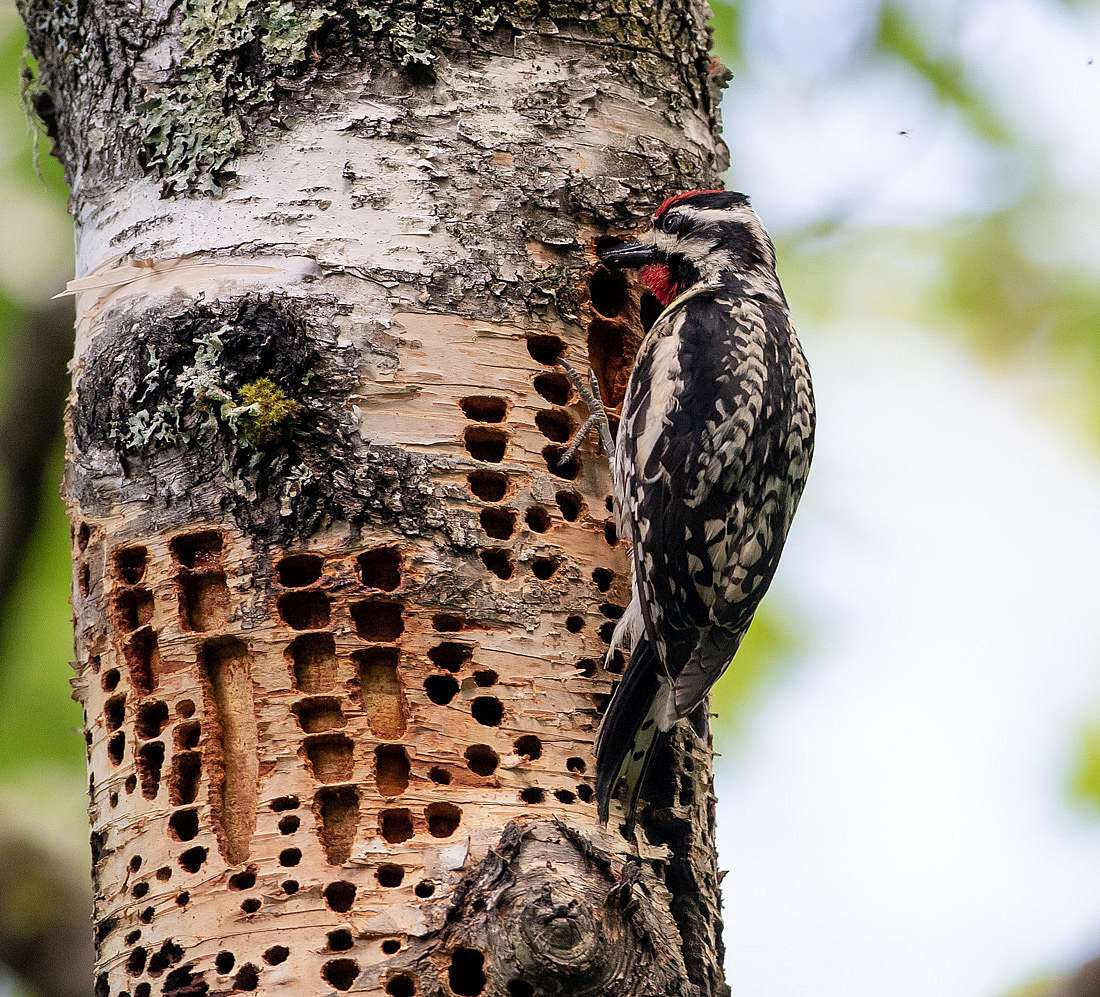
When drilling holes, Yellow-bellied Sapsuckers generally place the new holes in vertical or horizontal lines from the old holes. Furthermore, they drill two types, either round or rectangular.
The round holes are deeper than the rectangular holes. These are cut deep into the trees, but are not enlarged. They then simply put their beaks into the holes to lap up the sap. This type of hole is drilled in the spring in order to feed on the sap moving up to the branches.
The shallower, more rectangular holes are generally carved out after the trees leaf out. These holes collect sap moving down from the leaves. These shallower holes must be maintained in order to keep the sap continually flowing. The sapsucker will lick the sap from these holes, along with also feeding on the cambium of trees. This is a thin layer of living cells in a tree that produces new wood and bark. These sap pools will also attract insects, which the sapsucker may in turn eat.
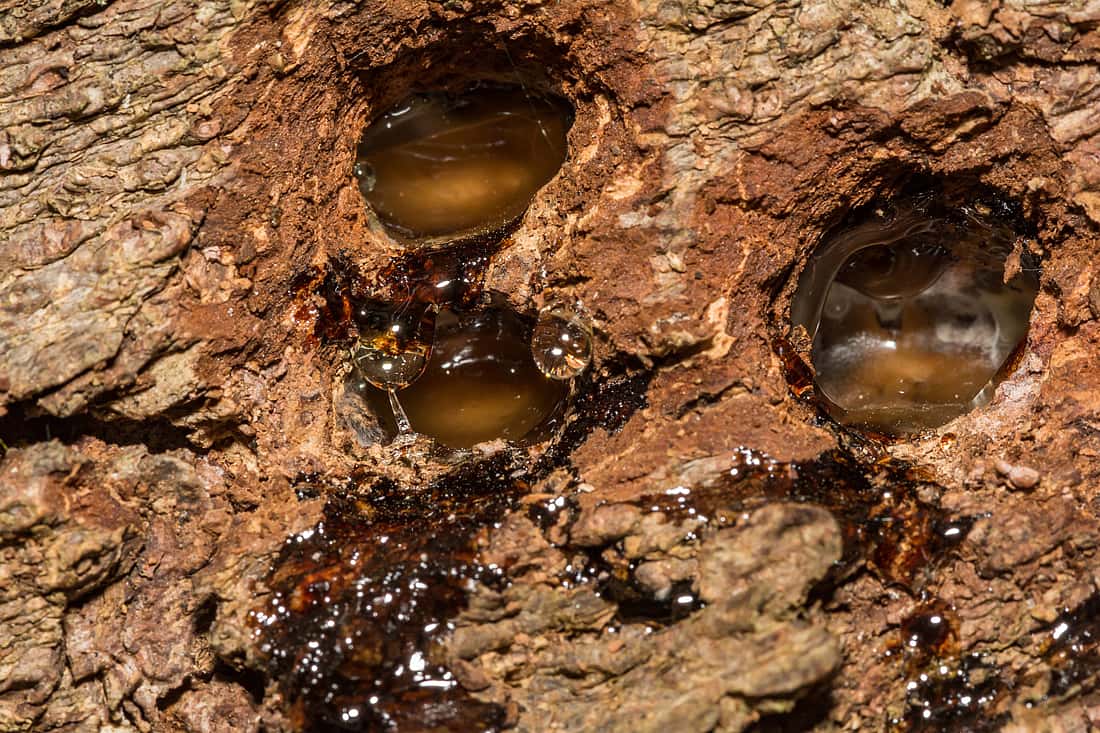
Yellow-bellied Sapsuckers are Beneficial to Nature
Yellow-bellied Sapsuckers winter in the southeastern U.S. and down through Central America. In the early spring, they migrate north at a time when the “sap is running.” Around the same time, Ruby-throated Hummingbirds also make their way north. As the Yellow-bellieds feed, the fresh holes they create along the way not only benefit sapsuckers, but also hummingbirds. Tree sap is similar in sugar content to the nectar hummingbirds rely on from flowers. Because of this, Ruby-throated Hummingbirds also feed from these wells.
Studies show that in some cases Ruby-throated Hummingbirds are so dependent on sapsuckers that they will sometimes nest close to active sap wells. Ruby-throated Hummingbirds have even been seen following sapsuckers as the woodpeckers fly from one sap tree to another. Besides Ruby-throated, Rufous and Anna’s Hummingbirds also benefit from the Yellow-bellied’s excavations. This is especially important in the early spring, when many of the flowers the birds depend on have not yet bloomed.
However, Yellow-bellied Sapsuckers and Hummingbirds aren’t the only ones who enjoy feeding on sap wells. Other birds such as Ruby-crowned Kinglets, nuthatches, and chickadees, as well as bats, squirrels, moths, bees, wasps, and porcupines also take advantage of these sap wells.
Choosing and Drilling a Nest
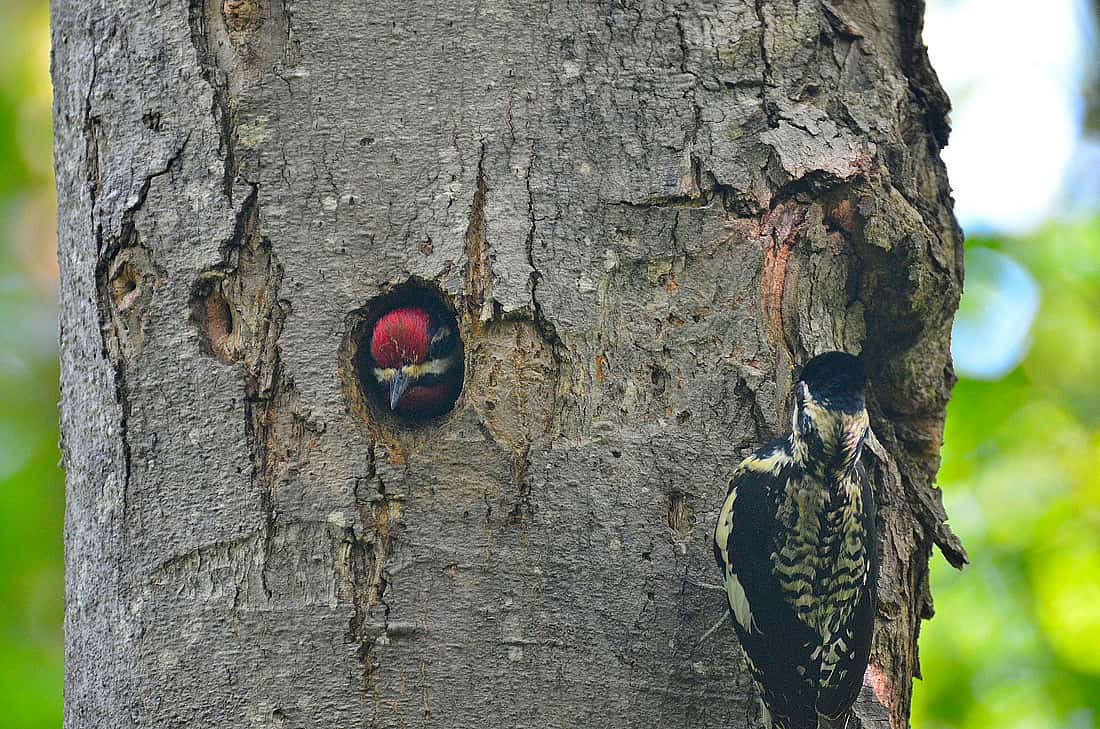
Yellow-bellied Sapsuckers are cavity nesters. Males arrive about a week ahead of females. As a result, the male usually chooses the tree. He announces and establishes his territory by drumming on trees as well as sometimes other objects. He also does most of the work of excavating, although at times the female may help. This work may take 2 or 3 weeks to complete. When choosing a tree, the male will often look for one that is infected with a fungus which causes the tree’s heartwood to decay. This in turn makes his work of excavating easier.
The nest cavity may be up to 10 inches deep, however the entrance hole is quite small, only about 2.5 inches in diameter. No further work is needed. No lining is added, and the eggs are simply laid on wood chips present from the excavation.
Sapsucker’s nest cavities may be used for a number of years. Cornell’s All About Birds reports that these nest holes may be used for up to 7 years. Even when not reused, old cavities may be used by other cavity nesting birds such as the Black-capped Chickadee and Tree Swallows.
Courtship and Parental Duties
During courtship, sapsuckers will chase each other around trees. Landing on a tree branch they will face each other, raising their bills and tails. They will fluff out crown feathers and move their heads from side to side. They will also do this facing off and head swinging as an aggressive move with sapsuckers of the same sex.
Sapsucker mates stay together throughout the nesting season. The female lays 4 – 6 eggs, which both parents take turns incubating for around 2 weeks. Thereafter, the parents will work jointly to raise the chicks, feeding them insects, which are dipped in sap for extra nutrition. The chicks fledge in about a month, with the parents often encouraging them with food.
Yellow-bellied Sapsuckers will often reunite in future breeding seasons, though not always. As with many other birds, researchers believe their loyalty is probably not the mate, but rather it is the nesting area, including the nest hole that attracts them.
Do Yellow-bellied Sapsuckers Damage Trees?
Yellow-bellied Sapsuckers are beneficial to a number of other animals. Moreover, they can help control invasive insects that are destructive to forests.
In most cases, the holes do not kill trees. Typically healthy trees will quickly seal off the holes. However, it is possible that at times the damage may kill trees. This happens when they severely girdle the trunk. As a result, their drilled holes may cut off the needed flow of water and nutrients in the cambium layer of the tree. However, the University of Arkansas’s Division of Agriculture Research reports that this happens in only about 1-2 percent of the time.
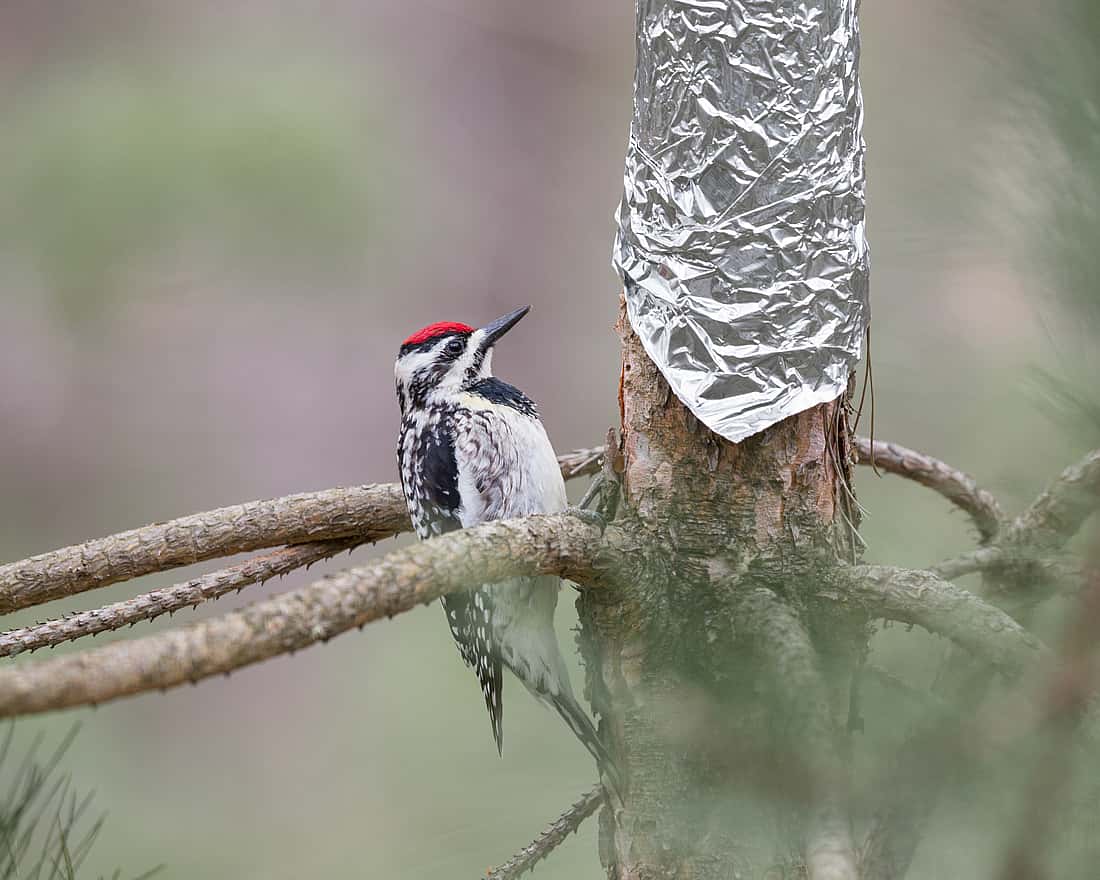
In cases where this seems to be happening near homes, many different things have been tried. These include wrapping the injured part of the trees with barriers of 1/4 inch hardware cloth, plastic mesh, aluminum flashing, or burlap in order to discourage further damage. Others have tried hanging shiny objects such as CDs to twirl in the breeze. However, the success rate of these methods brings mixed results.
Visiting the Buffalo Bill Center of the West
If you are traveling to or through Cody, the Buffalo Bill Center of the West is a must stop. It is a world-class center with 5 museums and a research library located under one roof. Each museum focuses on a different aspect of the west.
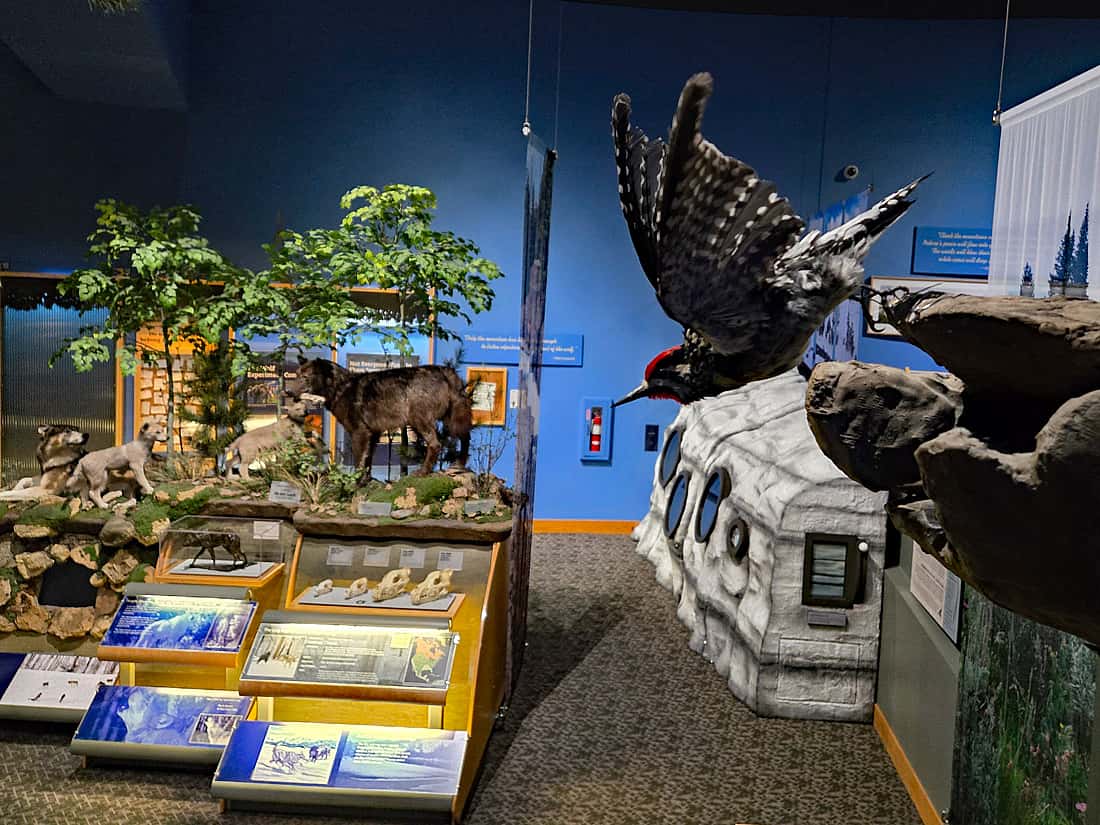
Be sure to take a slow walk through the Draper Natural History Museum where you will learn about wildlife, plants, and other natural history subjects.
https://centerofthewest.org/our-museums/yellowstone/
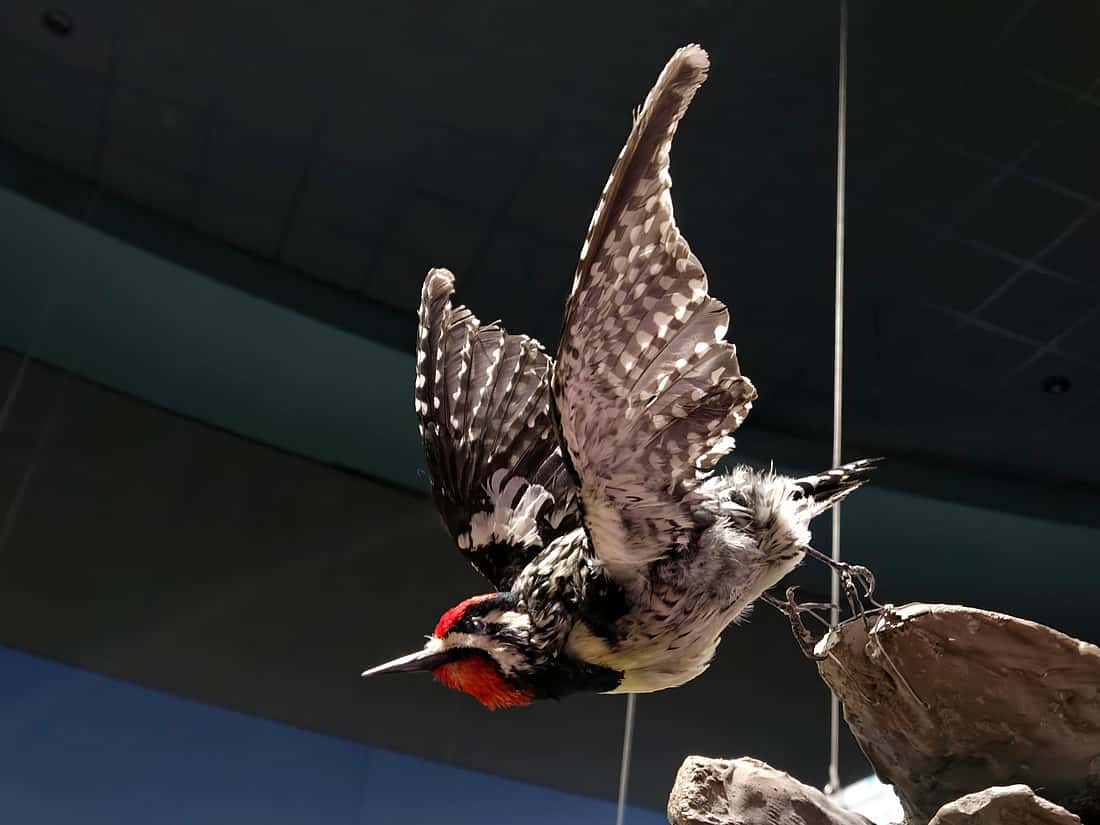
You can even complete a scavenger hunt while you walk through its various ecosystems. Look carefully for the hidden mounts displayed in their natural environments. And don’t forget to look up into trees. If you are observant you will find a Yellow-bellied Sapsucker taking flight from a tree.
To hear and see a Yellow-bellied Sapsucker in action watch this 1-minute video from the Cornell Lab of Ornithology: https://www.youtube.com/watch?v=fgO53943xrg
Photos
Note: Adobe Stock Photographs used through a license paid for by the Buffalo Bill Center of the West.
Male Yellow-bellied Sapsucker on a tree girdled by drillings, by Dennis Donohue
Birch Tree damage showing round and rectangular holes, by Lganz
Male at a nesting hole by Keith Williams, Attribution-NonCommercial 2.0 Generic license
Nesting hole with male and female by Richard Bonnett, Attribution-Noncommercial 2.0 Generic license
Tree with foil wrapped around injured part of tree, by James Pintar
Two photos within the Draper Natural History Museum by Curator, Corey Anco
Written By
Anne Hay
Anne Hay has a Bachelor's degree in Elementary Education and a Master's in Computers in Education. She spent most of her working years teaching third grade at Livingston School in Cody, Wyoming. After retiring she began doing a variety of volunteer work for the Buffalo Bill Center of the West’s Draper Natural History Museum. Anne loves nature and has a concern for the environment. She believes that educating the public, so that they will have a better understanding and appreciation for the natural world, is very important. Because of this belief, volunteering at the Center is a perfect fit. She spends time in the Draper Lab, observing eagle nests for Dr. Charles Preston’s long-term research project on nesting golden eagles, writing observation reports of raptor sightings in the Bighorn Basin, and working with the Draper Museum Raptor Experience. Anne states that, “Having a bird on my glove, is one of my all time favorite things in life.”
You May Also Like
Belted Kingfisher: A Water Dependent Bird
Jul 09, 2025

Belted King Fisher in Carondelet Park, St. Louis, Missouri ©...
Why are Red-Tailed Hawks So Common?
Oct 30, 2025
Red-tailed Hawks are the most common soaring hawk in North...
Grackles: Why Do They Look Upward?
May 07, 2025
A Flock of Grackles © Melissa McMaster / Flicker The...
From the Badlands to the Tetons: A 1930s Family Road Trip West
Sep 14, 2026

Long before smartphones and GPS guided travelers across the country,...
Buffalo Bill Center of the West Authenticates Trove of Historic Early 1800s Medals
Sep 08, 2026

Buffalo Bill Center of the West authenticates rare early 1800s...
The Ultimate Wyoming Wildlife Guide: Expert Viewing Tips
Sep 28, 2026
Grizzly Flowers. Photo by Julia Cook @julia.littlelightningnature Draper Elk Wyoming...
Don’t Let History Live in a Shoebox: How to Archive Your Family Treasures
Sep 18, 2026
Are you the designated "historian" in your family? Do you...
How Hawks and Falcons are Different, Plus Other Common Questions
Jul 05, 2026
Birds of the Draper Museum Raptor Experience (All but one...
Everything I Need to Know About Life I Learned From Birds
Aug 26, 2026

by Sophie Peterson, 2026 Raptor Intern As I near the...
Rare Book Highlights: The Indians’ Book
Sep 02, 2026

"Wellnigh impossible is it for civilized man to conceive of...
Rare Book Highlights: The Original Journals of the Lewis and Clark Expedition
Oct 01, 2026
"If not for the … epic the captains scratched out...
Exploring the Turkey Vulture’s Sense of Smell
Jun 19, 2026
Suli, the Draper Museum Raptor Experience’s Turkey Vulture © courtesy...