
How Hawks and Falcons are Different, Plus Other Common Questions

July 5, 2026
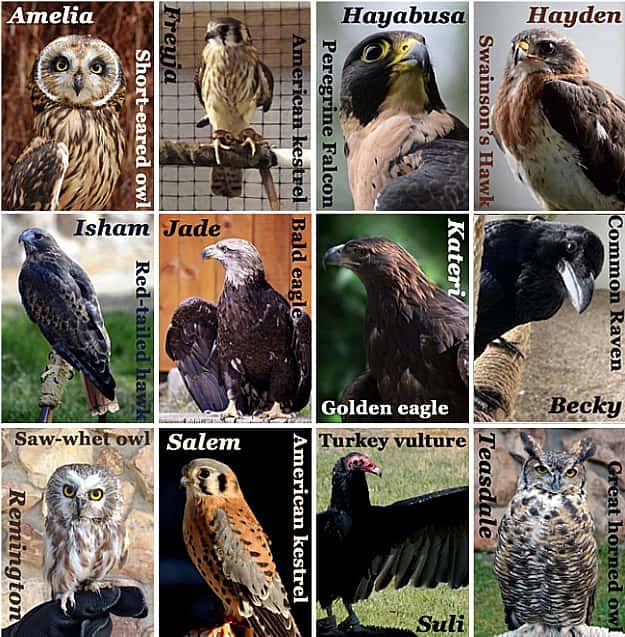
The Buffalo Bill Center of the West offers visitors collections and educational programs designed to stimulate people’s interest, and help them gain new knowledge. As part of this mission, the Draper Natural History Museum strives to connect its visitors with nature. As a result, we hope to give the pubic a better understanding and appreciation of the ecology of the Yellowstone area.
The Draper Museum Raptor Experience helps in reaching the museum’s ecological goals, as well as enhancing the overall museum experience. People often see raptors in nature, documentaries, on Social Media, and in web cams. However, few people have had the opportunity to view raptors up close.
At the end of each or our presentations we give visitors a chance to come up closer in order to get a better look at the raptors presented, take photos, and ask questions. In this blog I will answer some of the most common questions I am frequently asked about a few of our birds.
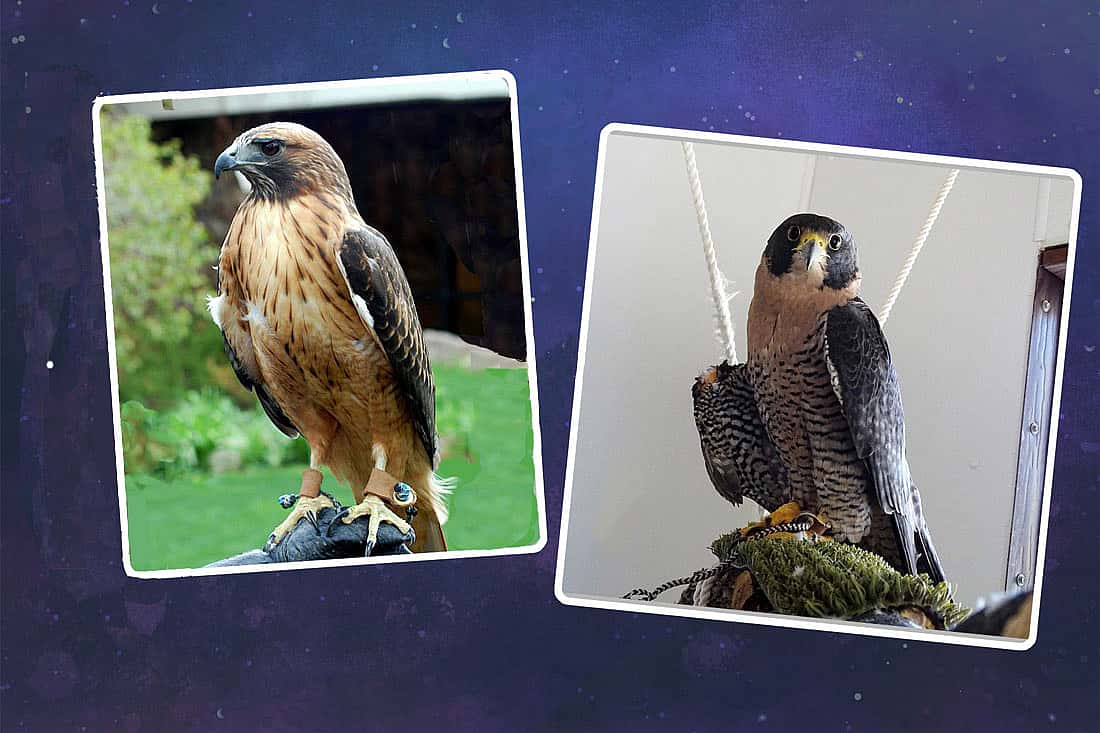
How can you tell a hawk from a falcon?
Facial Features
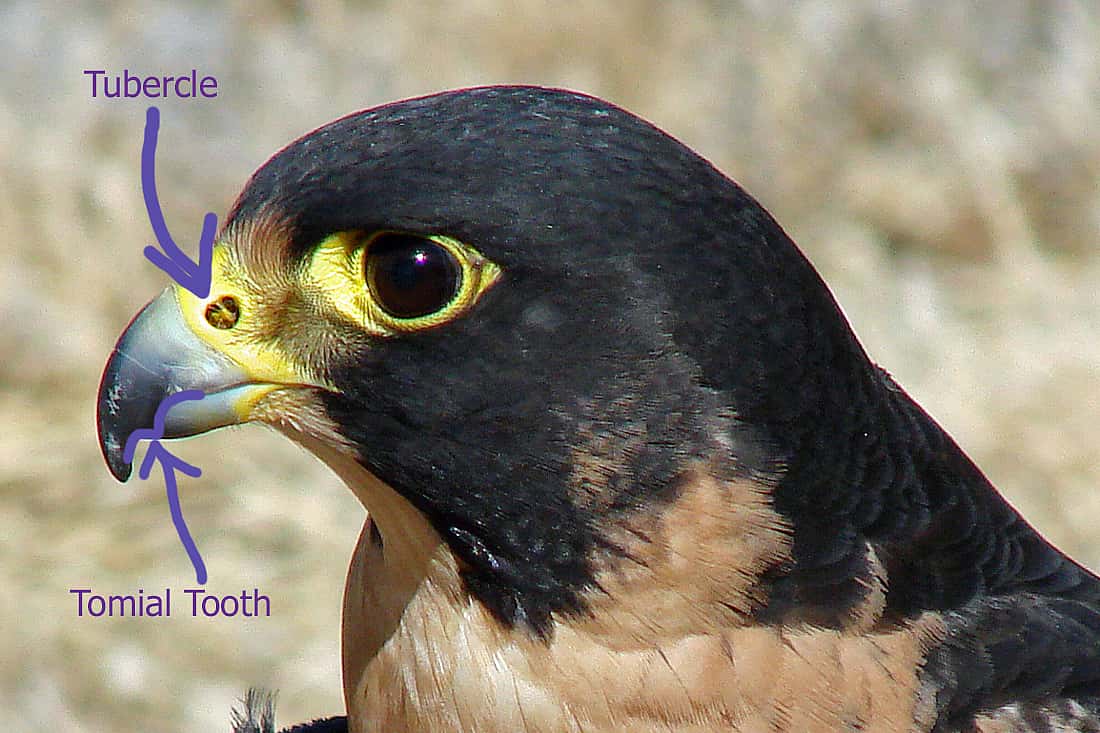
If you are able to get a close look at a raptor’s face, you’ll know for sure. Falcons typically have two features that no other type of raptors have. A tubercle and a tomial tooth.
The tomial tooth is a sharp projection located on the upper portion of the beak. The lower bill has a notch the tomial tooth fits into. When needed the falcon uses this to bite the neck of prey they have caught. The bite severs the vertebra and spinal cord of the prey. It has been documented in some falcons that this bite can even decapitate birds they have caught.
The other facial feature on falcons is the tubercle within the nostrils. This is a small, bony structure that breaks up air flow during high-speed dives so that air enters the lungs in a curved manner. This protects the lungs and allows the bird to continue breathing normally.
Body Shape
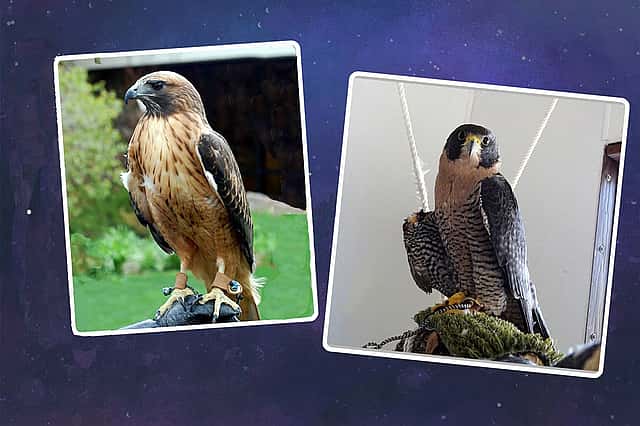
From a distance you may note that falcons have sleek, aerodynamic bodies built for speed. On the other hand, hawks are bulkier, and built better for soaring.
In relation to the size of their bodies, falcons have long, pointed wings, and the bony protrusion above their eyes is smaller than hawks. Hawks have broader, rounder looking wings. The feathers on a falcon’s back are stiff and compact, allowing them to slip through the air with less resistance while diving toward their pray.
Feet and Toes
Typically, most raptors have feet designed for catching and/or killing their prey. Even so, there’s a lot of variety among different specie’s feet.
Falcons have longer, thinner toes than hawks. Peregrine Falcons, the second largest falcon in North America, are a good example of this. Their prey is primarily other birds. These long toes can slip through the feathers of their prey as they grab a bird out of the air. The middle toe is especially long. It is believed this toe helps them to get a better grip on their prey while in flight. Along with this, the undersides of a falcon’s toes have pads (or knobs) that help when gripping prey.
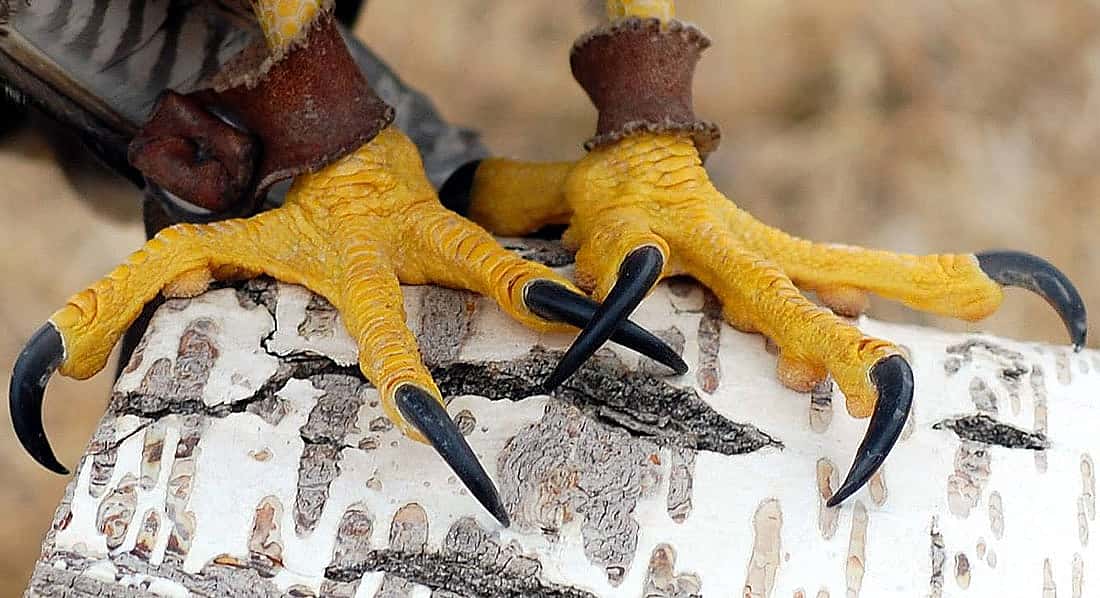
On the other hand, hawks tend to have shorter, broader, stronger toes. This is important, since a hawk such as a red-tailed hawk kills its prey almost exclusively with its feet.
Along with this, hawks, such as our Red-tailed, Isham, have thick scales that cover their toes. These scales go quite a way up their legs and are important in protecting the hawk’s feet while catching their prey. Hawks can be injured by animals such as mice, rats, squirrels, snakes, or rabbits as they may be bitten or scratched by struggling prey. A bite from a prey animal can lead to an infection. As a result, this could even cause death. Furthermore, a bite could cause the loss of a toe.
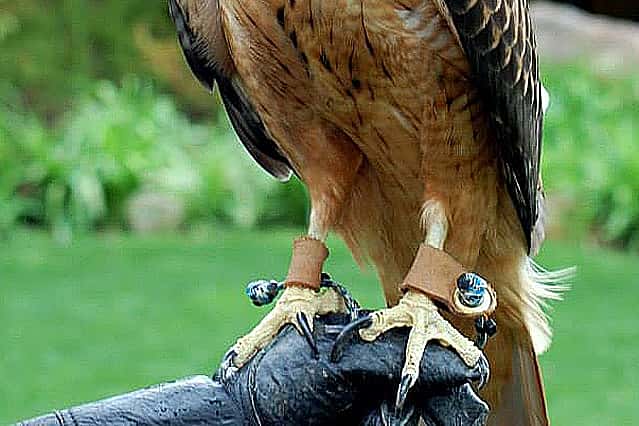
Red-tailed Hawks in particular, are famous for hunting rattlesnakes. Jumping on the rattlesnake as it lies coiled, giving its warning rattle, the hawk will grab the snake with its feet. The thick scales on their legs and feet are critical in helping to keep them safe. With these thick scales and very little “meat” in their toes and legs the snake has less of a chance of injecting venom into these protected areas. I’m not saying hawks can’t be killed by a rattlesnake. They certainly can. If the snake manages to bite them in their upper legs, abdomen, or chest they are just as prone to death as any other animal.
Watch this National Geographic video of a Red-tailed Hawk killing a rattlesnake.
Can I Pet Them?
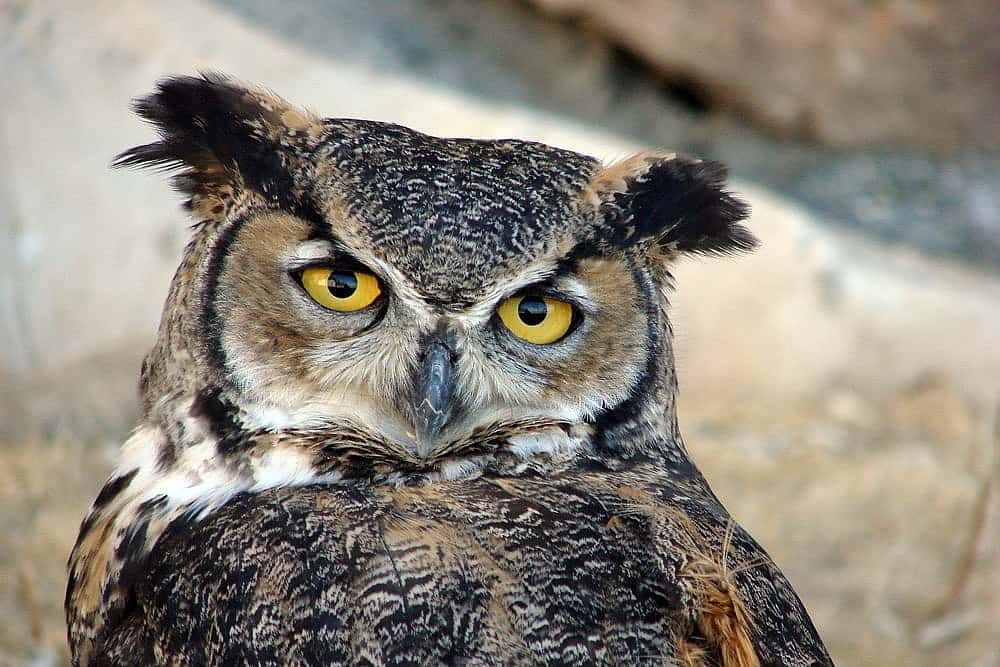
This question is especially common with our owls. Unfortunately, the answer is no. They wouldn’t even like it if I petted them even though I frequently work with them. Our birds still have a wild instinct, so value their personal space and are not comfortable with physical contact.
Along with this our federal permits do not allow us to let the public come in contact with the birds in our program.
Two Common Vulture Questions
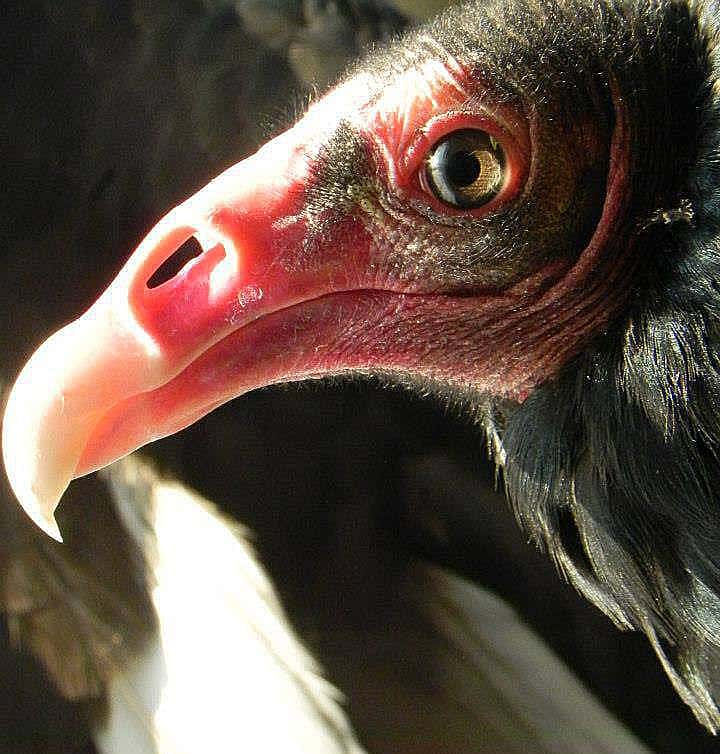
1) People often ask why our Turkey Vulture has such a large nostril. This is not a nostril, however, it is a bony structure that protects her nostrils from getting food in them as the vulture feeds. She actually has two nostrils, located just above and behind this opening. Vultures may put their head down inside a carcass to feed on the freshest pieces. This bony structure protects the nostrils from getting bits of meat, fat, or other scraps in them.
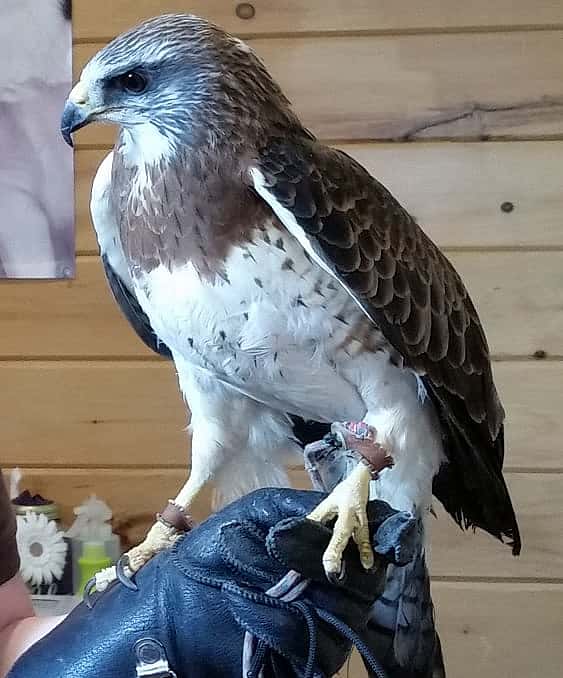
2) Are buzzard and vultures the same? In our country Turkey Vultures along with other vultures are sometimes inaccurately called buzzards. However, they are not really buzzards. This nickname is thought to have evolved from early settlers who saw our vultures, and thought they were buzzards. Buzzards are really hawks of the genus Buteo, as is our Swainson’s Hawk and Red-tailed Hawk. True buzzards live mainly in the British Isles.
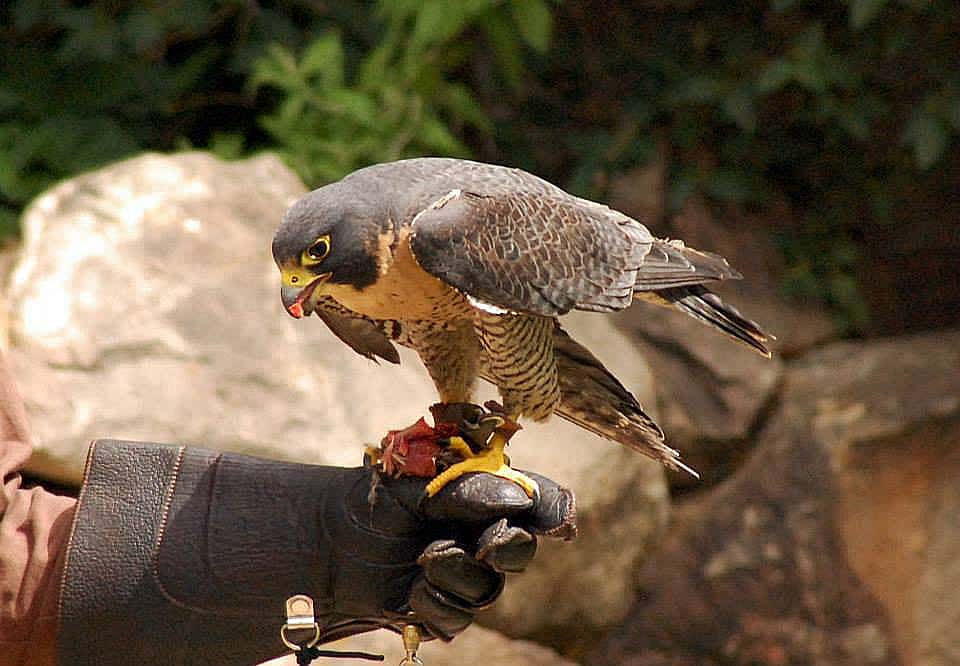
What do we feed our birds?
Visitors frequently ask me if we feed live animals to the birds.In the wild, all but our turkey vulture would hunt and kill a large portion of their own food. Even so, most raptors will also eat carrion. Therefore there is no need to feed live prey.
As mentioned in my section on feet, raptors can be injured by struggling prey if it is not killed quickly. Along with this, most of our birds are handicapped in a way that would make it difficult for them to catch live prey. Here at the museum there is no reason to put our birds in this danger. All of our birds are happy to see their nightly dinners arrive, gutted, and cut to size for their specie’s weight requirements.
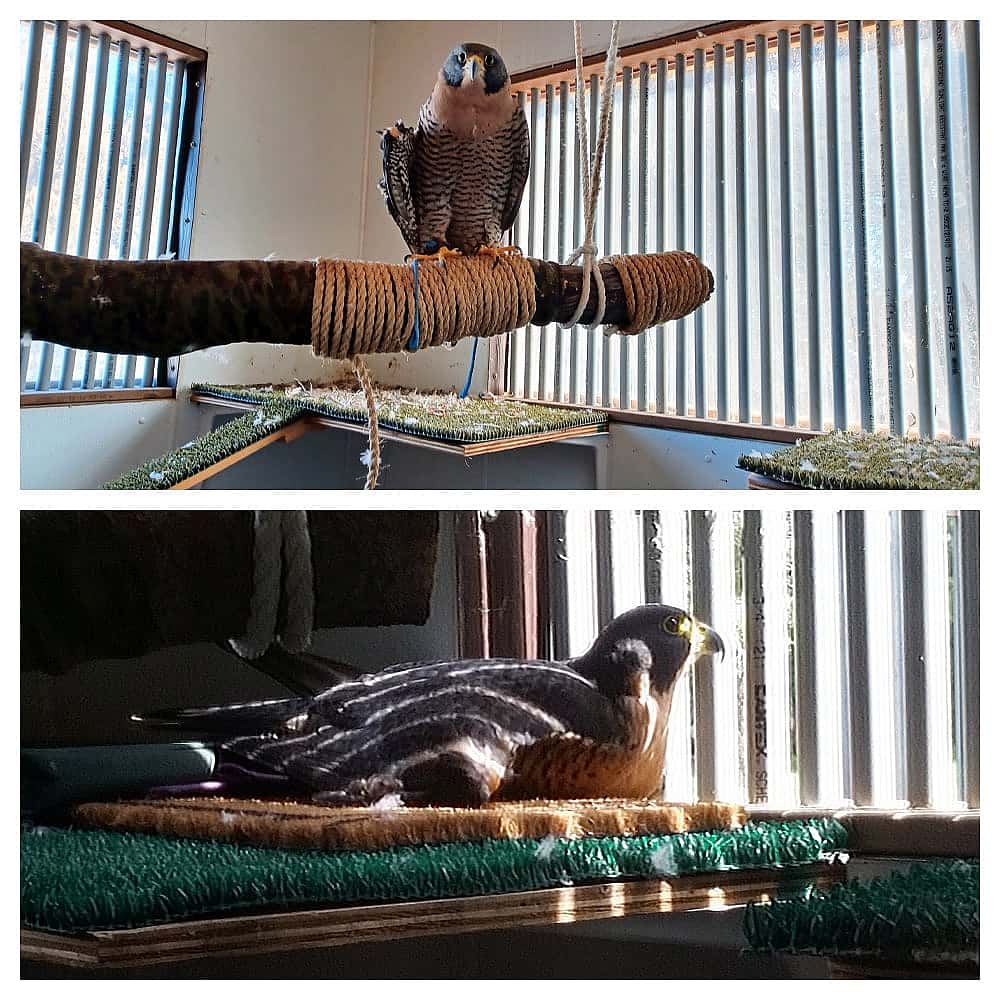
We gut our food animals as this is their least favorite part, therefore it would often be left behind. When stamped into their artificial turf platform coverings it is difficult to clean. Cleanliness is important to our bird’s health, and is one of our daily/weekly behind the scenes chores.
We have various businesses that raise and euthanize prey animals. They are boxed and frozen when we get them. We have menus based closely to their natural diets. Therefore you may find animals such as mice, rats, quail, chicks, fish, and rabbits in our freezer, along with venison and beef heart. Each day we remove what needs to be fed on the following day so that it will thaw overnight.
Where do the birds live and can I see them?
Our birds live in buildings with separate rooms called mews. This is similar to a small barn with individual stalls. These birds have no relationship with each other. They are not friends even though they are accustomed to seeing each other during programs. In the wild, our great-horned owl, Teasdale, could eat most of our other birds. And our smaller birds would be prey for many of our other birds. For this reason the mews have solid walls that block each bird’s view of their neighbors.
Every mew has at least one window with PVC bars to allow in fresh air and sunshine. Each mew has fresh water and a variety of perches and platforms to spend time on. If the bird has significantly limited flight ability, they are given ramps. The buildings are behind a privacy fence at the back of Jade, our Bald Eagle’s, enclosure.
After programs, visitors sometimes ask me if they can see the other birds. The answer is no. Their mews is their home. When not doing a program it is important for them to have their privacy where they feel safe and comfortable and therefore can relax. Having crowds of people wandering past would invade their home space.
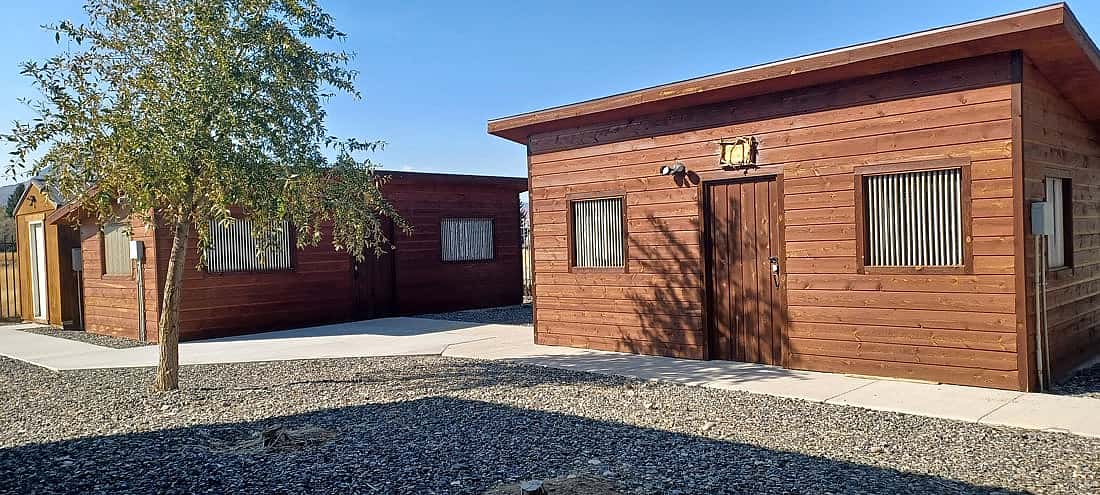
There is, however, a private opportunity to view the birds.
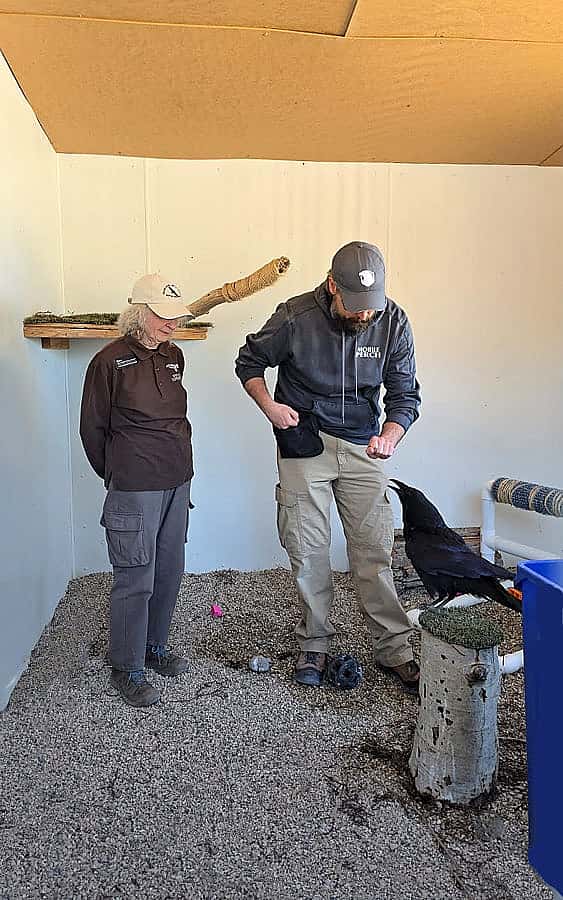
The Raptor Encounter is a private exclusive tour that takes you behind the scenes and into the working spaces of the Draper Natural History Museum’s raptor program. You will gain insight into training techniques, feeding practices, and care routines. You will even have photos to remember your encounter.
The photo below is an example that could be you! This is your opportunity to meet one of our avian ambassadors up close. With our exclusive behind the scenes Raptor Encounter, you might choose to visit Becky, our Draper Museum Raptor Experience’s Raven. She is our only non-raptor bird. With help from Brandon Lewis, Becky’s trainer, you can participate in a fun recycling activity, complete with photos. Or maybe there is another bird you would like to get to know better.
Only a limited number of guests will be allowed inside these private spaces each day. So it is best to reserve a spot ahead of time.
For questions or more information call Exclusive Tours at 307-578-4003 or 307-254-7073 or email us at [email protected]
To reserve an accouter spot with the Draper Museum Raptor Experience visit this link at Raptor Encounter.
In Closing
We understand that there are many people who know absolutely nothing about birds, so although we may sometimes smile inside, we do our best to answer questions in a manner that will not make the asker feel dumb for asking. We are here to help people appreciate raptors and we are always glad to have people interested enough to come forward with questions. So, if you visit and find our programs interesting, please feel free to come down and visit with us on a personal basis.
Photos:
All photos were taken by me or other members of the Draper Museum Raptor Experience.
Written By
Anne Hay
Anne Hay has a Bachelor's degree in Elementary Education and a Master's in Computers in Education. She spent most of her working years teaching third grade at Livingston School in Cody, Wyoming. After retiring she began doing a variety of volunteer work for the Buffalo Bill Center of the West’s Draper Natural History Museum. Anne loves nature and has a concern for the environment. She believes that educating the public, so that they will have a better understanding and appreciation for the natural world, is very important. Because of this belief, volunteering at the Center is a perfect fit. She spends time in the Draper Lab, observing eagle nests for Dr. Charles Preston’s long-term research project on nesting golden eagles, writing observation reports of raptor sightings in the Bighorn Basin, and working with the Draper Museum Raptor Experience. Anne states that, “Having a bird on my glove, is one of my all time favorite things in life.”
You May Also Like

Rare Book Highlights: The Indians’ Book
Sep 02, 2026

"Wellnigh impossible is it for civilized man to conceive of...
Grackles: Why Do They Look Upward?
May 07, 2025

A Flock of Grackles © Melissa McMaster / Flicker The...
The Ultimate Wyoming Wildlife Guide: Expert Viewing Tips
Sep 28, 2026

Grizzly Flowers. Photo by Julia Cook @julia.littlelightningnature Draper Elk Wyoming...
Long-eared Owls: Appearance, Habitat, and Behavior
Nov 25, 2024
Long-eared Owls are just one of about 250 species of...
Rare Book Highlights: The Original Journals of the Lewis and Clark Expedition
Oct 01, 2026
"If not for the … epic the captains scratched out...
Don’t Let History Live in a Shoebox: How to Archive Your Family Treasures
Sep 18, 2026

Are you the designated "historian" in your family? Do you...
Exploring the Turkey Vulture’s Sense of Smell
Jun 19, 2026
Suli, the Draper Museum Raptor Experience’s Turkey Vulture © courtesy...
Why are Red-Tailed Hawks So Common?
Oct 30, 2025
Red-tailed Hawks are the most common soaring hawk in North...
The Life Style of Yellow-bellied Sapsuckers
Sep 16, 2026
Tree girdled with Yellow-bellied Sapsucker Holes © Dennis Donohue /...
Belted Kingfisher: A Water Dependent Bird
Jul 09, 2025
Belted King Fisher in Carondelet Park, St. Louis, Missouri ©...
Buffalo Bill Center of the West Authenticates Trove of Historic Early 1800s Medals
Sep 08, 2026
Buffalo Bill Center of the West authenticates rare early 1800s...
From the Badlands to the Tetons: A 1930s Family Road Trip West
Sep 14, 2026
Long before smartphones and GPS guided travelers across the country,...