
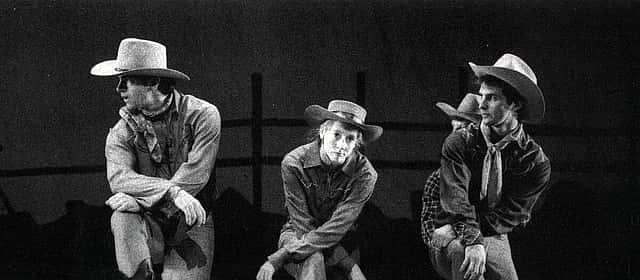
From Buffalo Bill to Balanchine: The Rise of Ballet Americana

July 2, 2026
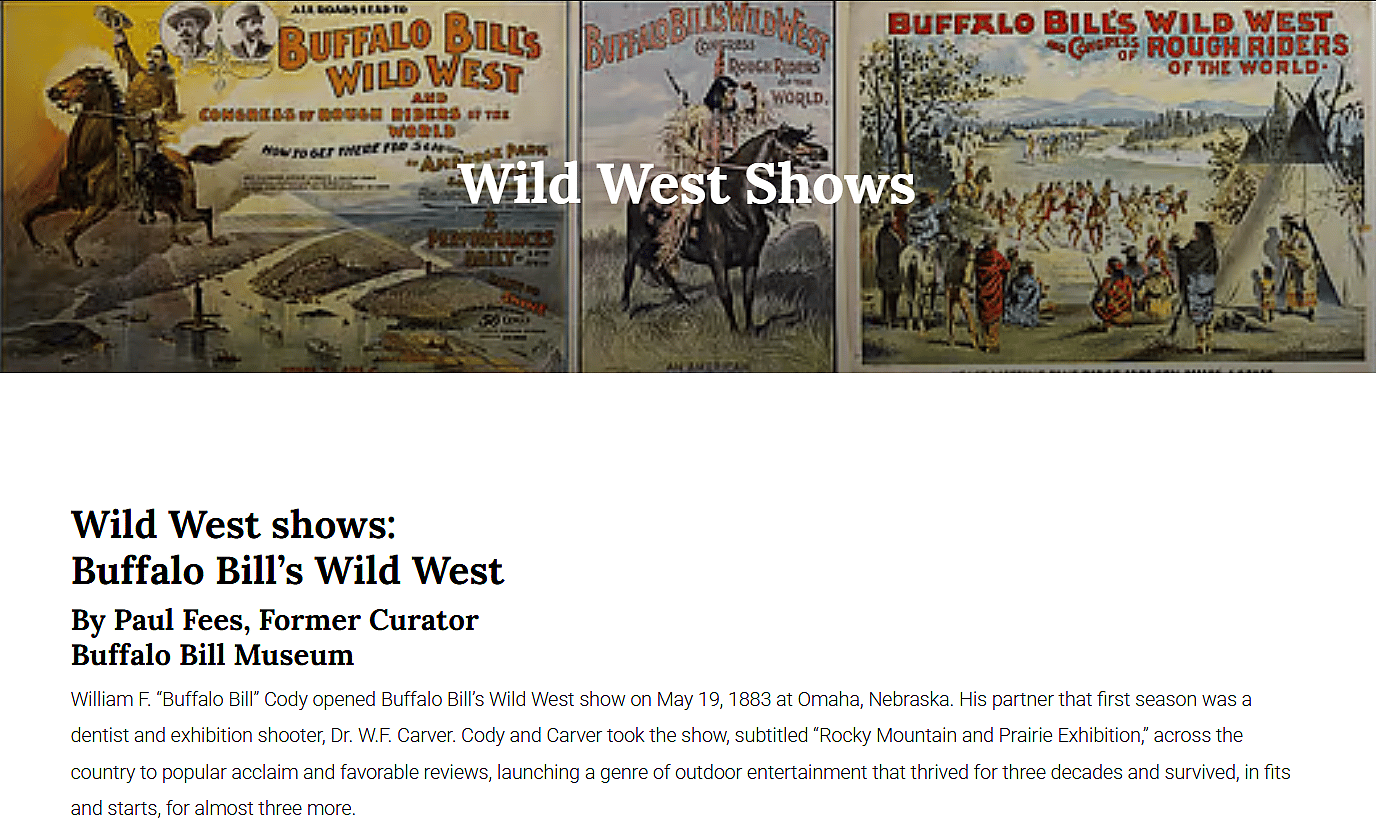
After thirty years of sensationalized touring performances, Buffalo Bill’s Wild West show closed its curtains for the final time in 1913. To many Americans, it seemed as though the era it celebrated was fading as well. The number of buffalo had diminished, Frederick Jackson Turner had declared the frontier “closed,” Rough Rider Teddy Roosevelt was out of office, and national attention was shifting away from Westward Expansion and toward industry and international affairs. Was the Wild West fading into a memory? Were cowboys becoming a thing of the past?
For a time, the answers to these questions may have been yes. During the decades following the closure of Buffalo Bill’s Wild West show, American culture became increasingly shaped by urbanization, industrialization, and modern consumer life. The nation was preoccupied with World War I, the prosperity and change of the Roaring Twenties, and the hardships of the Great Depression. Although competitive rodeos continued to attract audiences and Western stories persisted in novels and a select few motion pictures in the early 1930s, the romanticized West seemed to be drifting further and further away from American popular culture.
Yet in 1938, the frontier returned to the stage in a striking new form. Eugene Loring’s ballet Billy the Kid revived the performative mythology of the American West for live audiences. Set to music by Aaron Copland, the production was the first of the composer’s three major ballet scores. The inclusion of gunfights, jailbreaks, saloon scenes, and Billy’s eventual death after a life on the run creates an exciting narrative packed with action and intrigue. The ballet was marketed as a purely “American Ballet” distinct from the well-established Russian style, but rooted in the same impressive technique. It was performed by the company Ballet Caravan, a troupe composed entirely of American talent, headed by impresario Lincoln Kirstein.
Kirstein, best known as the co-founder of the New York City Ballet, was deeply committed to developing a distinctly American ballet style. To that end, he founded Ballet Caravan in 1936 as a company dedicated to commissioning and performing works rooted in American themes and experiences. Kirstein’s writings, described by the San Francisco Chronicle as “a gorgeous and gory attack on the present commercial supremacy of Russian ballet,” challenged the prevailing belief that ballet was an exclusively European art form. Through productions such as Billy the Kid, he sought to demonstrate that American stories, landscapes, and characters could serve as the foundation for a national ballet tradition.
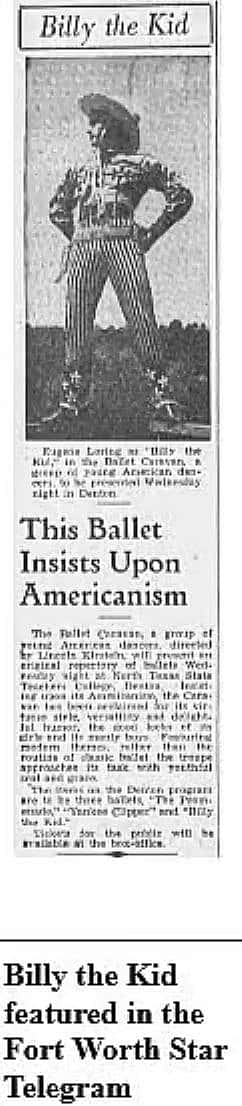
Although Billy the Kid is rarely performed today, its 1938 premiere was highly successful, and in 1940 it was incorporated into American Ballet Theatre’s official repertoire. As war loomed in Europe and democracy itself seemed increasingly under threat, the promotion of American themes became increasingly important. In this context, the American West proved particularly valuable. The frontier occupied a central place in the nation’s mythology, thanks in part to decades of popular culture stretching back to Buffalo Bill’s Wild West shows. At a time when the United States sought to present itself as strong, courageous, and committed to democratic ideals, the cowboy emerged as an especially powerful national symbol. The simultaneous resurgence of Western films in 1939, like Stagecoach and Union Pacific, further suggests that this renewed interest was not limited to ballet. Across multiple forms of popular culture, Americans were once again embracing the mythology of the frontier as a source of national identity and pride.
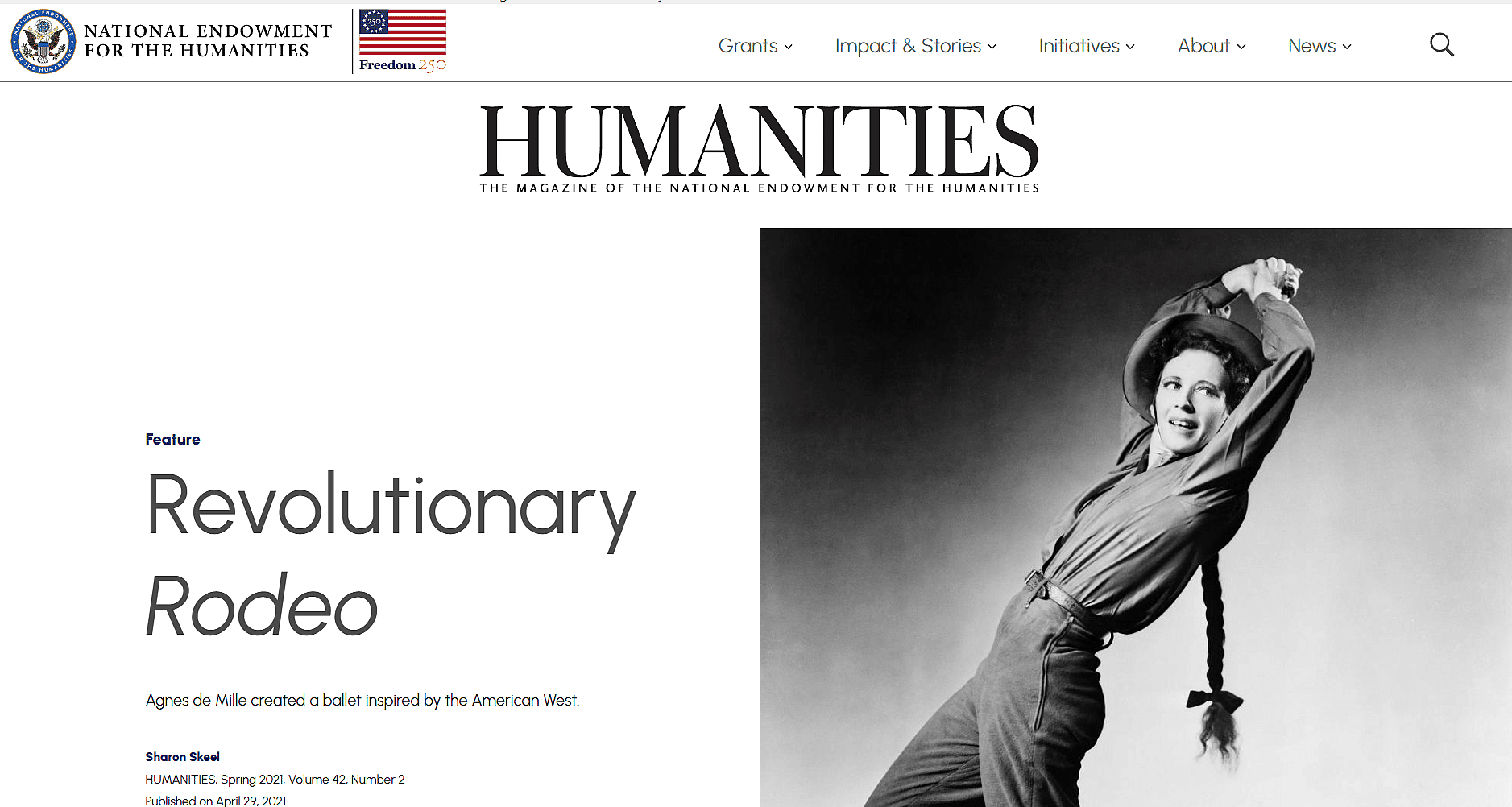
The success of Billy the Kid at the end of the decade inspired choreographer Agnes de Mille to approach Aaron Copland about collaborating on a new Western ballet commissioned by the Ballet Russe de Monte Carlo. Copland agreed to compose what would become his second major ballet score, and with that, Rodeo was born.
Unlike Ballet Caravan, the Ballet Russe de Monte Carlo was composed primarily of Eastern European dancers and artists. For perhaps the first time, Russian-trained performers found themselves contributing to the development of an American ballet tradition rather than serving as the standard against which American dancers were measured.
If Billy the Kid can be understood as a response to the growing nationalism of the late 1930s, then Rodeo was an even more direct response to the anxieties of a nation at war. Premiering in 1942, just months after the United States entered World War II, the ballet offered audiences a reassuring vision of American life. Its themes of humor, romance, community, and optimism provided a welcome contrast to the uncertainty of the wartime moment. Rather than focusing on violence and death, Rodeo celebrated the everyday experiences of ranch life, presenting the American West as a place of opportunity and hope.
Rodeo was widely celebrated upon its 1942 premiere. The Chicago Tribune described it as a “resounding success” and the “meal ticket of the season,” while the San Francisco Chronicle praised it as “the first American work produced by the economic royalists of ballet that is solidly American all the way through.” The review further argued that Rodeo demonstrated that the efforts of artists such as Lincoln Kirstein, Eugene Loring, and Martha Graham had finally gained widespread recognition, calling it “a ballet of life and drama and local color.” These overwhelmingly positive reviews suggest that Agnes de Mille’s Rodeo played a significant role in legitimizing the Ballet Americana genre as a respected artistic movement, securing its place in the history of American ballet.
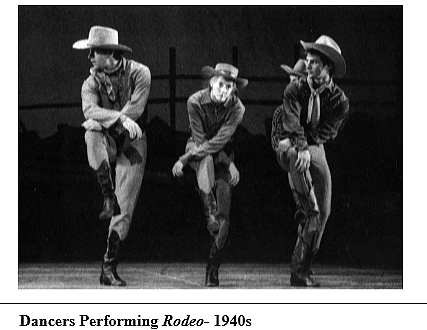
Following the premiere of Rodeo in 1942, Richard Rodgers and Oscar Hammerstein II commissioned de Mille to choreograph their new Broadway musical, Oklahoma!, a collaboration that would further cement her influence on American dance and theater. The legacy of Rodeo has endured long after its debut, remaining in the repertories of many major dance companies, including American Ballet Theatre and New York City Ballet. Its impact is also evident in contemporary adaptations, including Justin Peck’s Rodeo: Four Dance Episodes, which reimagines themes from de Mille’s original ballet for modern audiences.
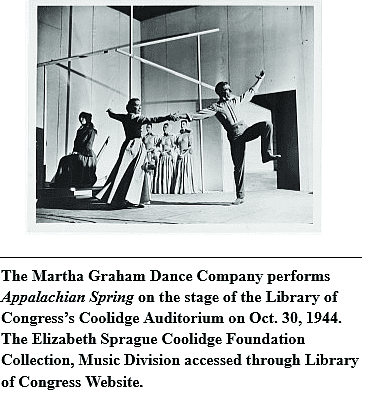
While de Mille’s Rodeo captured the essence of American Western romanticism through themes of joy and love, another ballet premiering just two years later portrayed a different facet of Western mythology—the challenges and promise of life on the American frontier. Martha Graham’s Appalachian Spring may be the most famous work of the Ballet Americana genre. Set to Aaron Copland’s Pulitzer Prize-winning third major ballet score, the piece follows a young pioneer couple as they establish a new life together in a frontier community. Commissioned by the Elizabeth Sprague Coolidge Foundation at the Library of Congress, the work was designed to project a vision of idealistic democracy, hope, and perseverance at a time when World War II continued to rage overseas.
Unlike Rodeo and Billy the Kid, Appalachian Spring was created within the modern dance tradition rather than the classical ballet tradition. Although it is often grouped within the Ballet Americana genre because of its American themes and Copland’s score, Martha Graham is best known as a pioneer of modern dance. Modern dance itself had strong American roots, tracing its development to figures such as Isadora Duncan, often called the “mother of modern dance.” Critics recognized both Graham’s place within this American artistic lineage and the powerful impact of Appalachian Spring. According to the New York Daily News, no dance work had inspired such a devoted following since the days of Duncan. In the same article, critic Robert Wahls argued that Graham “managed to convey everything that new life means—courage in the face of fear, and the inevitability of growth.” Such praise suggests that audiences viewed the piece as more than a performance; they understood it as an expression of enduring American ideals. As a result, Appalachian Spring was not merely a ballet about America but a work that emerged from a distinctly American artistic tradition. This gave the piece a unique cultural significance, allowing audiences to embrace it as an authentic expression of American values, identity, and optimism during the wartime years.
American patriotism did not end with the conclusion of World War II. Arguably, the postwar years inspired an even greater sense of national pride among U.S. citizens. By the late 1940s, the United States had entered the Cold War with the Soviet Union, and by the 1950s the ideological conflict had intensified. In 1954, President Dwight D. Eisenhower expanded the nation’s cultural diplomacy efforts by establishing the President’s Emergency Fund for International Affairs, which provided financial support for international tours by American performing artists. Dance was among the art forms that U.S. officials believed could successfully showcase American cultural achievement abroad and compete with Europe’s long-established artistic traditions.
That same year, the U.S. State Department sponsored an extensive European tour of the Martha Graham Dance Company, which included performances of Appalachian Spring in countries near the Soviet sphere of influence, such as Yugoslavia and Poland. Through these state-sponsored performances, Graham’s company presented a distinctly American style of dance to international audiences. At the same time, American ballet companies had also gained considerable domestic and international recognition.
By the 1950s, George Balanchine had established himself as the most prominent ballet choreographer and artistic director in the United States. Born Georgiy Melitonovich Balanchivadze in St. Petersburg, Russia, Balanchine embraced American culture to an extraordinary degree. Unlike many dancers associated with the Ballets Russes who sought to preserve the European traditions of ballet, Balanchine actively worked alongside Lincoln Kirstein to make the art form American. Reflecting on his early years in the United States, he later recalled, “I never felt that I was a stranger here, you know. I always wanted to be an American. I couldn’t even speak English at the time, but I really wanted to be an American.” Balanchine’s enthusiastic embrace of his adopted country helped legitimize ballet as a part of American culture and laid the foundation for the development of American ballet tradition.
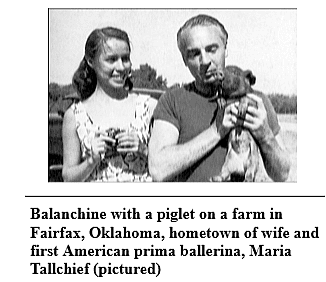
At the inception of American ballet in the 1930s-1940s, the success of theatrical narrative works by choreographers like Agnes de Mille and Ruth Page suggested that the future of ballet in the States might lie in theatrical storytelling. Balanchine, however, championed a different vision. Rather than emphasizing plot and characterization, his neoclassical works focused on movement, musicality, and the dancers’ athletic capabilities. As Cold War tensions increased and the United States sought to demonstrate its cultural achievements on the world stage, Balanchine faced the challenge of creating a ballet that would contribute to the growing tradition of the Ballet Americana genre while remaining true to his artistic ideals. The result was Western Symphony (1954), a work that embraced the popular imagery of the American West without relying on the kind of narrative structure that had defined earlier American ballets.
Balanchine’s adaptation of Ballet Americana to fit his neoclassical style made Western Symphony a uniquely American ballet. Featuring cowboy hats, Western-inspired costumes, and frontier imagery, the ballet drew on familiar symbols of the West while expressing them through speed, athleticism, and technical dancing. In many ways, the mythology of the cowboy was perfectly suited to Balanchine’s choreographic vision. The strength, independence, and physicality associated with the American frontier mirrored the qualities that critics increasingly identified as characteristic of the American ballet style. Rather than telling a detailed story, Western Symphony celebrated these ideals through movement itself, allowing Balanchine to leave his own mark on the Ballet Americana tradition while demonstrating the artistic potential of American neoclassical ballet.
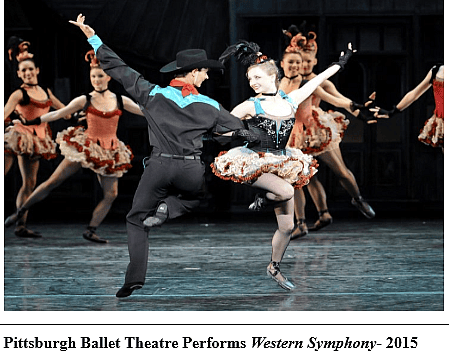
Western Symphony exceeded its mission in securing funding and recognition for the New York City Ballet. Following its immediate success, new costumes by renowned designer Barbara Karinska and scenery by John Boyt were commissioned for the production in 1955, less than a year after its premiere. In 1962, the New York City Ballet embarked on a state-sponsored tour of the Soviet Union, where Western Symphony was performed alongside Balanchine’s newer Western-inspired piece, Square Dance. Despite their distinctly American themes and imagery, both ballets were well received by Soviet audiences, who found similarities between Balanchine’s choreography and traditional Russian folk dancing. The success of these performances demonstrated that American ballet had developed into a respected cultural export, capable of representing the United States abroad while competing with the Soviet Union in an art form long associated with Russian cultural prestige.
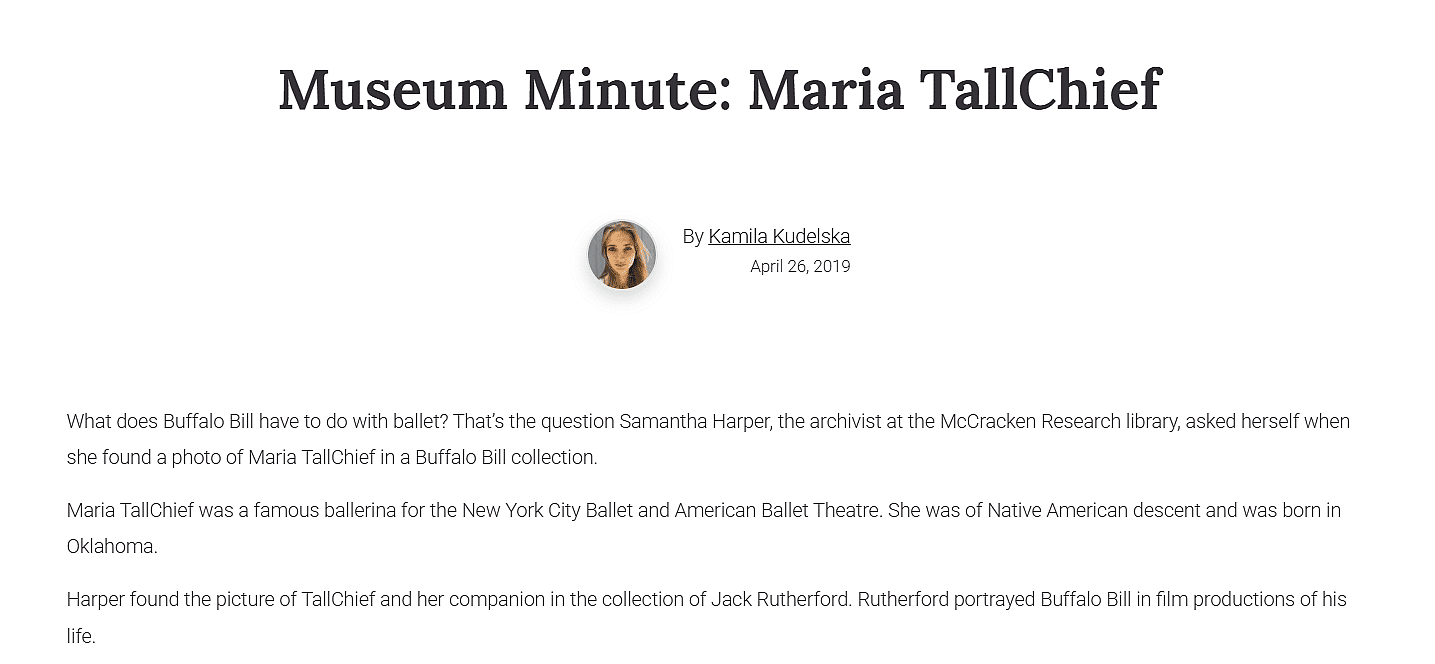
Could Buffalo Bill Cody ever have imagined that his Wild West shows would influence something as unlikely as American ballet? While a direct link cannot be drawn from Buffalo Bill’s Wild West to the emergence of Ballet Americana in the 1940s, the connection is hard to ignore: when Billy the Kid premiered in Chicago in 1938, the romanticism of the Wild West was brought back to the stage. Although films, novels, and dime-store stories had long kept the mythology of the frontier alive, ballet reintroduced the excitement of live performance, an element central to Buffalo Bill Cody’s fame that literature and film could not replicate. The Western ballets inspired live performances in other forms as well. Aaron Copland’s ballet scores, along with his other Western-inspired works, continue to be performed by orchestras around the world, and the landmark musical Oklahoma! was directly inspired by Agnes de Mille’s choreography for Rodeo.
In many ways, the ballet companies of the mid-twentieth century inherited the role Buffalo Bill had played decades earlier. Buffalo Bill’s extensive tours of Europe, where he performed for figures such as Queen Victoria, Pope Leo XIII, and King Edward VII, represented a form of international recognition for American culture and identity. Similarly, the European tours of American Ballet Theatre and New York City Ballet, whose audiences included figures such as Nikita Khrushchev, marked some of the most significant cultural achievements for the American people in the mid-twentieth century. Even though everything from the stage to the political landscape had changed, Buffalo Bill would likely have been pleased to know that the story of the American West continued to travel the world long after his lifetime.
Additional Videos and Further Information:
Written By
Caleigh Noonan
Caleigh Noonan is a recent graduate of the College of the Holy Cross in Worcester, Massachusetts. She is serving as the Indian Education for All Intern at the Buffalo Bill Center of the West for the summer. Her interests include Indigenous history, nineteenth- and twentieth-century American history, and the history of dance.
You May Also Like
Rare Book Highlights: The Original Journals of the Lewis and Clark Expedition
Oct 01, 2026

"If not for the … epic the captains scratched out...

The Ultimate Wyoming Wildlife Guide: Expert Viewing Tips
Sep 28, 2026

Grizzly Flowers. Photo by Julia Cook @julia.littlelightningnature Draper Elk Wyoming...
From the Cancan to the Wild West: The Remarkable Life of Giuseppina Morlacchi
Jul 14, 2026

The French didn't bring the Cancan to America; an Italian...
Your #AskAnArchivist Questions, Answered
Oct 14, 2026

There are few things an archivist enjoys more than a...
Before the White Man Came: Examining Native Representation in Early American Film
Aug 20, 2026
Popular films and television shows like Dances with Wolves and...
Eastern Chic and Western Mystique: New Yorkers and the Buffalo Bill Center of the West
Jun 23, 2026
"The Buffalo Bill Center is the best Western museum that...
Don’t Let History Live in a Shoebox: How to Archive Your Family Treasures
Sep 18, 2026
Are you the designated "historian" in your family? Do you...
Greasy Grass at 150: Art, Heroism, and the Tragedy at Little Bighorn
May 21, 2026

Lt. Colonel George Armstrong Custer stands just right of center,...
The Secret Custer Letter: Rediscovering Little Bighorn at 150
Jun 02, 2026
Earlier this year, while reprocessing the MS 89 Jack Richard...
The Life Style of Yellow-bellied Sapsuckers
Sep 16, 2026

Tree girdled with Yellow-bellied Sapsucker Holes © Dennis Donohue /...