
Breaking Records, Breaking Barriers: Margaret Thompson-Murdock’s Competitive Shooting Legacy

July 30, 2026
Believe it or not, two of the world’s best sharpshooters were not men.
First came Annie Oakley (1860-1926). Around age 8 she began shooting out of need to put food on her family’s table. She was later brought to public attention at age 15 when she defeated professional traveling marksman Frank E. Butler in a shooting match. She went on to become a world-famous trick-shooter and was given the nickname “Little Sure Shot’ by Lakota Sioux leader Sitting Bull in 1884. From there she toured the world with the Buffalo Bill Wild West show. She was a remarkable sharpshooter, and her legacy will live on forever.
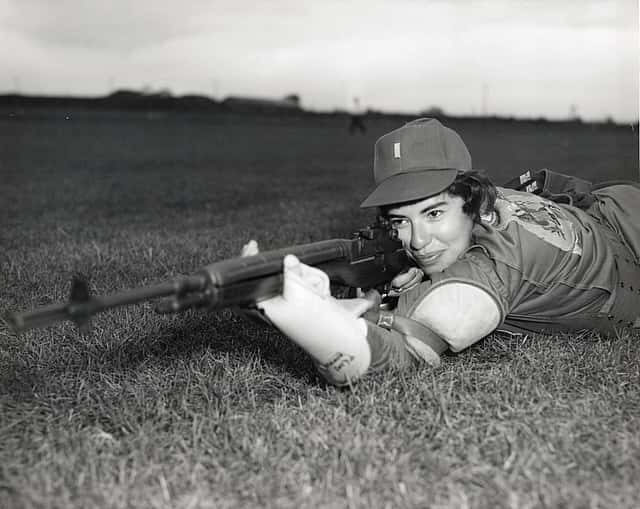
16 years after the death of Annie Oakley, was the birth of Margaret Louise Thompson, born in Topeka Kansas. At age 11 she began shooting with her father at the rifle range. By age 13 she won her first competition. That was just the beginning. She competed with both boys and girls, winning more awards.
Thompson attended Hayden High School which did not have a rifle team, nor any sports for girls in those days. So, she shot for Topeka Capitol City Junior Rifle Club where her expert skill proved to be an invaluable asset to the team. It is important to note that Thompson spent innumerable hours practicing shooting in all positions – standing, kneeling, and prone.
Shooting sports are not inherently sexist as the success of each shooter depends on his or her individual focus, skill, and discipline rather than physical strength or gender. Given Thompson’s shooting proficiency, it is safe to assume her male peers may have been intimidated by her prowess in the sport.
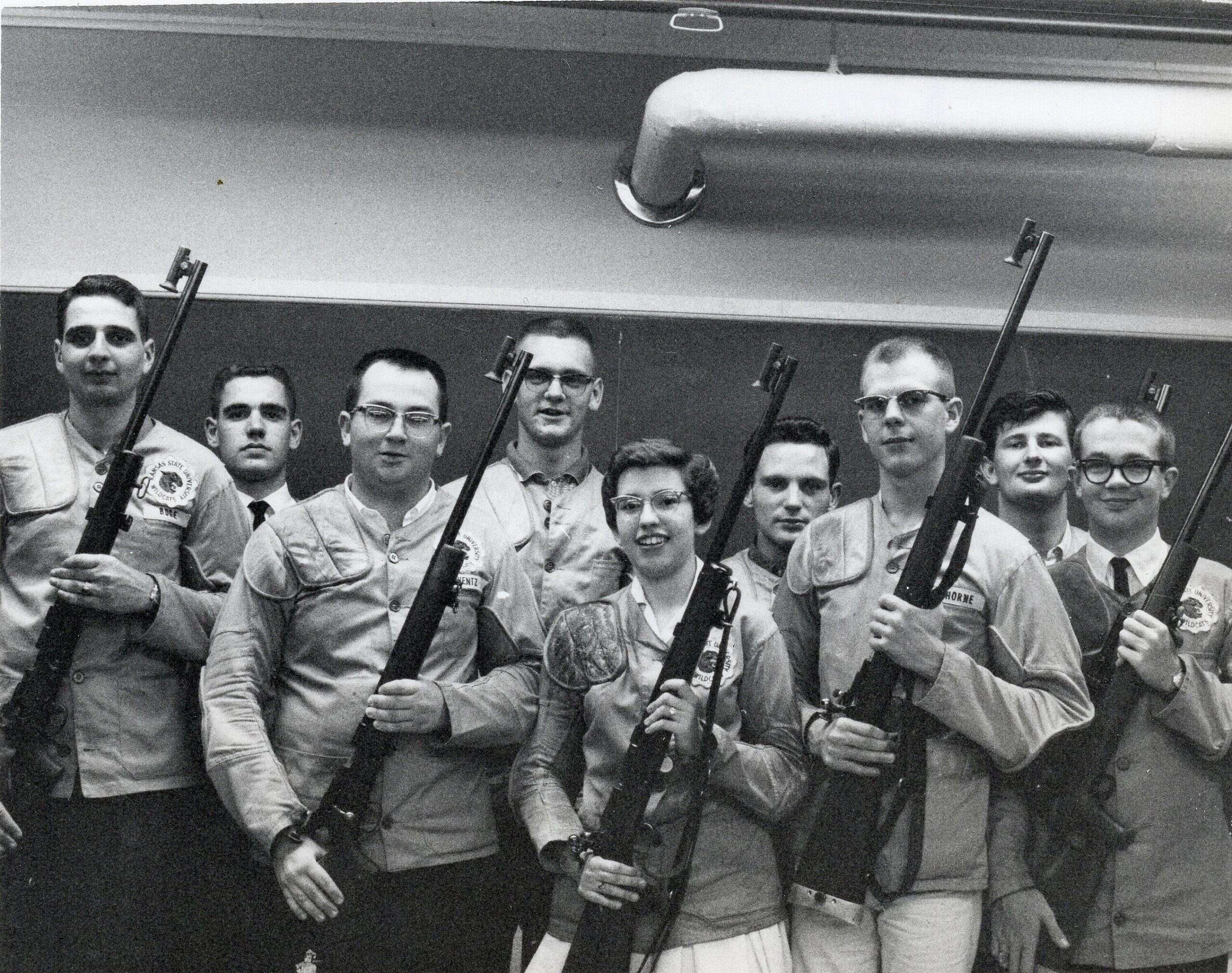
Thompson arrived at Kansas State University (KSU) and discovered the challenges women face in a male-dominated field. She was allowed to practice with the all-male shooting team but could not compete with them individually or on their team. A new coach arrived and saw that she was shooting better than her male counterparts. Thompson was assigned to the men’s team, quickly becoming the star sharpshooter and was the first woman to earn a letter at KSU, achieving a milestone in 1964. The team won many intercollegiate competitions with Thompson as the standout sharpshooter on the team. She went on to win two Big Eight Intercollegiate Individual Rifle Championships in1963 and 1964 and is a two-time All-American.
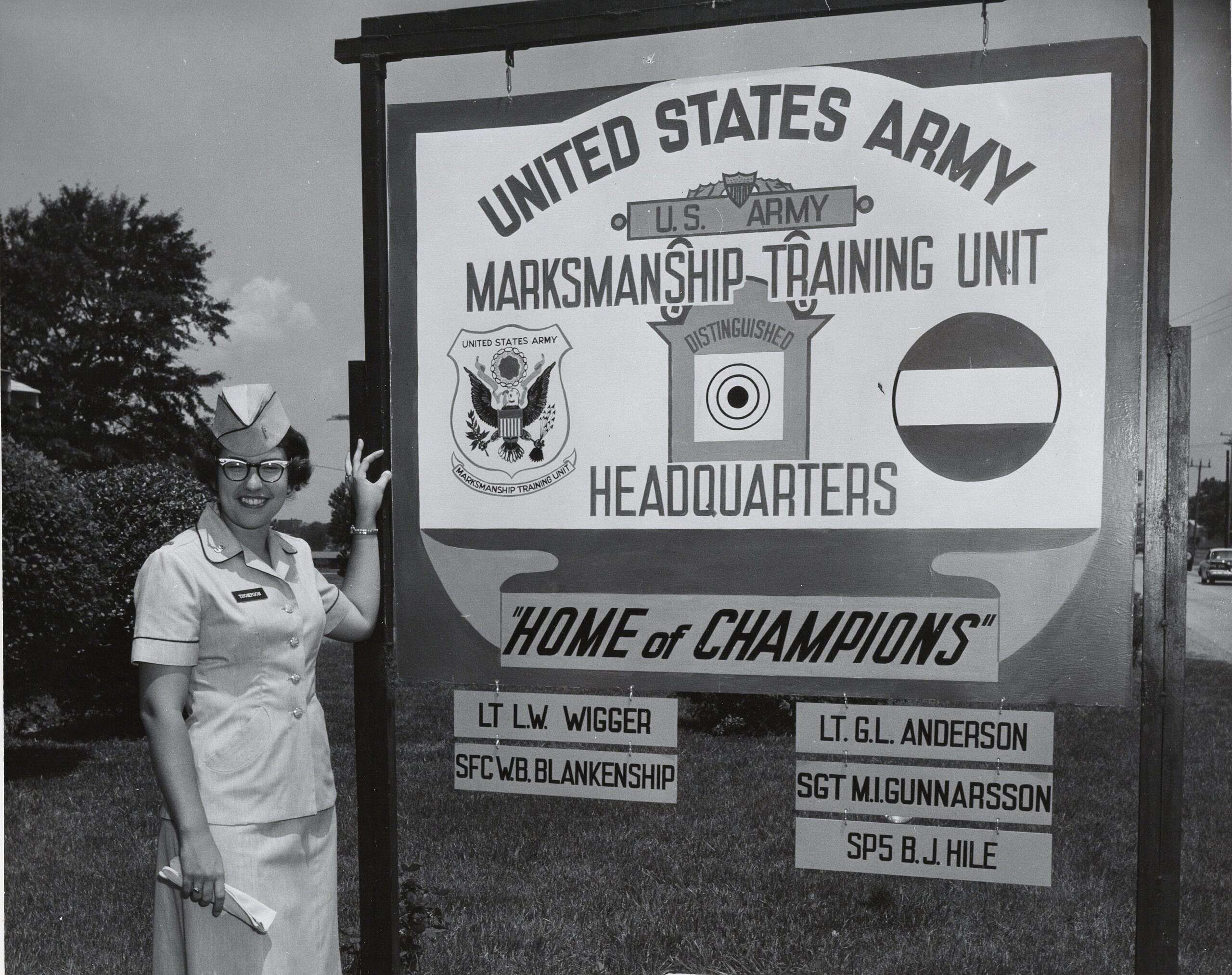
Thompson graduated with a degree in chemistry. She was commissioned into the United States Army in February 1965 which would allow her to devote more time to her favorite sport – shooting. She is believed to be the first direct commission of a Kansas State co-ed. Lt. Margaret Thompson joined the elite United States Army Marksmanship Unit (USAMU) at Fort Benning, GA. This would be the beginning of her yet undiscovered worldwide fame.
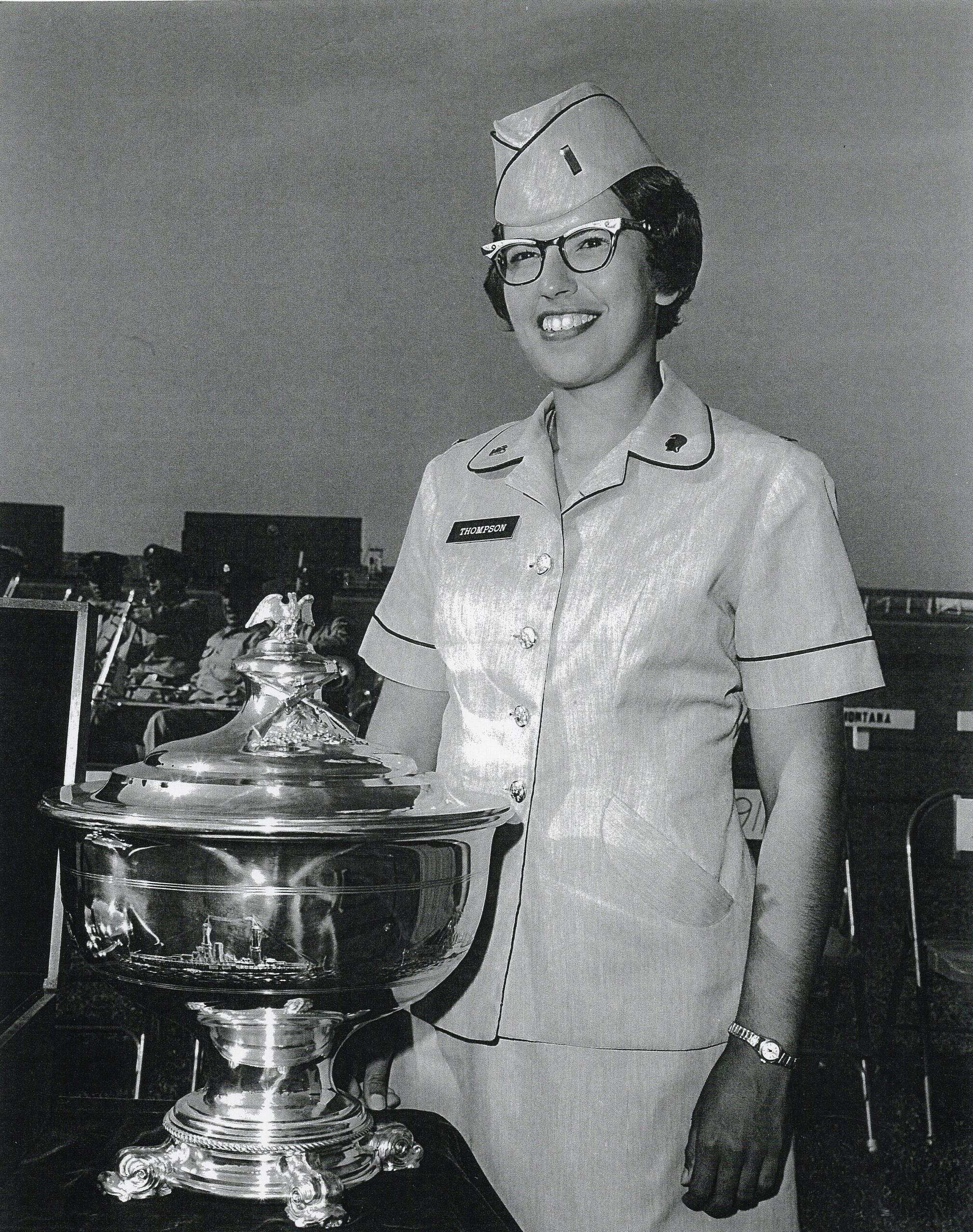
Between 1965 and 1969, Thompson established herself as one of the most accomplished competitive marksmen of her era, breaking barriers, and setting records in an overwhelmingly male-dominated sport. During this five-year period, she became the first woman in the 61-year history of the National Matches at Camp Perry to win the prestigious Navy Cup, a high-powered rifle standing competition. She also became the first woman to set an Open Individual World Record when she established the ISU Kneeling Record at the Pan American Games in Winnipeg, Canada.
Thompson’s achievements extend well beyond domestic shooting competitions. She was the first member of the Women’s Army Corps (WAC) assigned to the United States Army Marksmanship Unit (USAMU), paving the way for future generations of female military shooters. At the World Shooting Championships in Wiesbaden, Germany, she became the only woman to compete and win a medal in the 300-meter International Free Rifle event. In recognition of her exceptional marksmanship, she was invited to fire the ceremonial “First Shot” at the U. S. Army Twenty-First Division Marksmanship Matches in Germany.
Thompson’s competitive success was matched by numerous distinguished honors. She was awarded the Army Distinguished Rifleman Badge, High Power Service Rifle, by the United States Army. received the National Rifle Association’s (NRA) Smallbore Rifle Position Distinguished Medal and was awarded the International Distinguished Badge by the National Board for the Promotion of Rifle Practice, an organization chartered by the United States Congress.
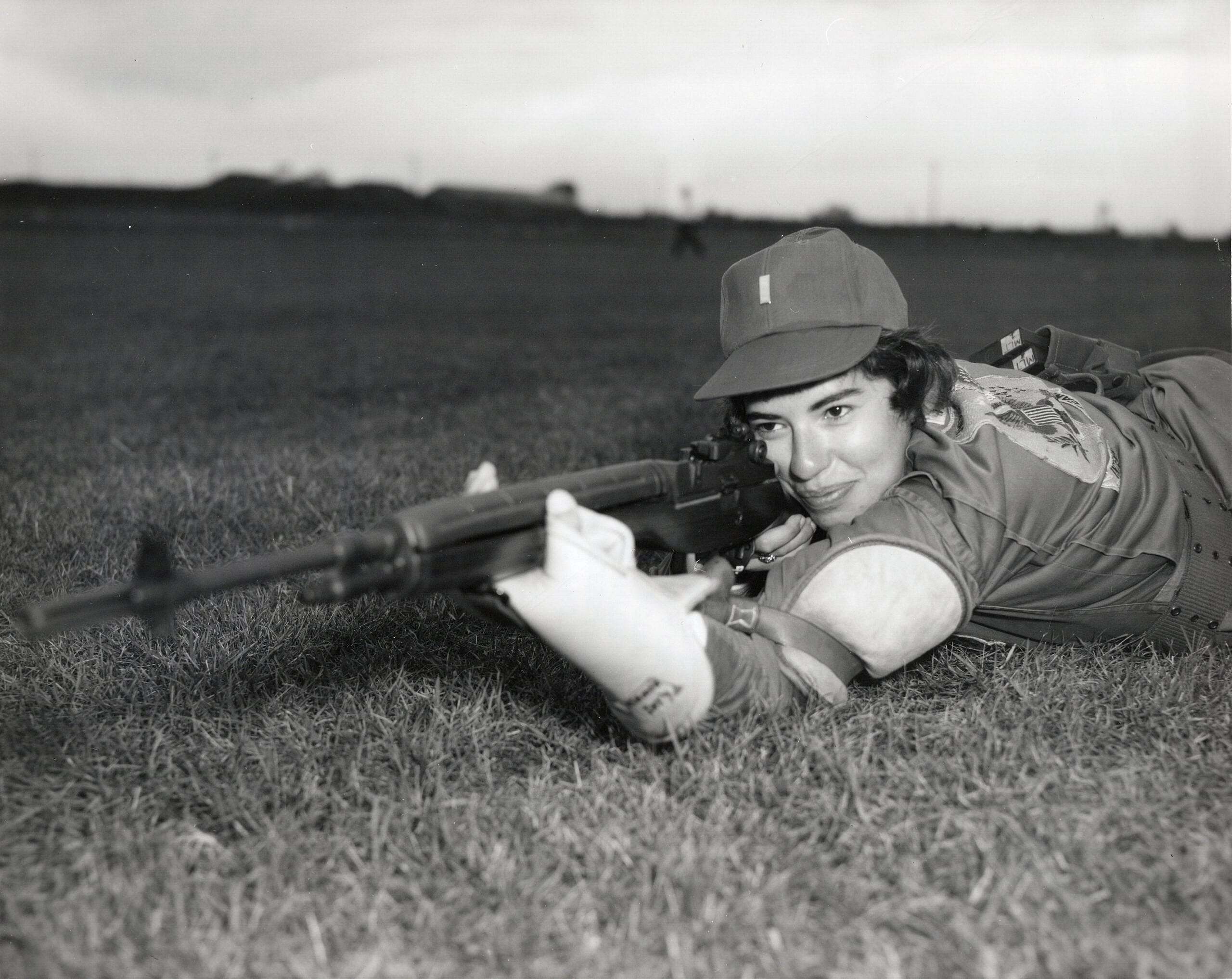
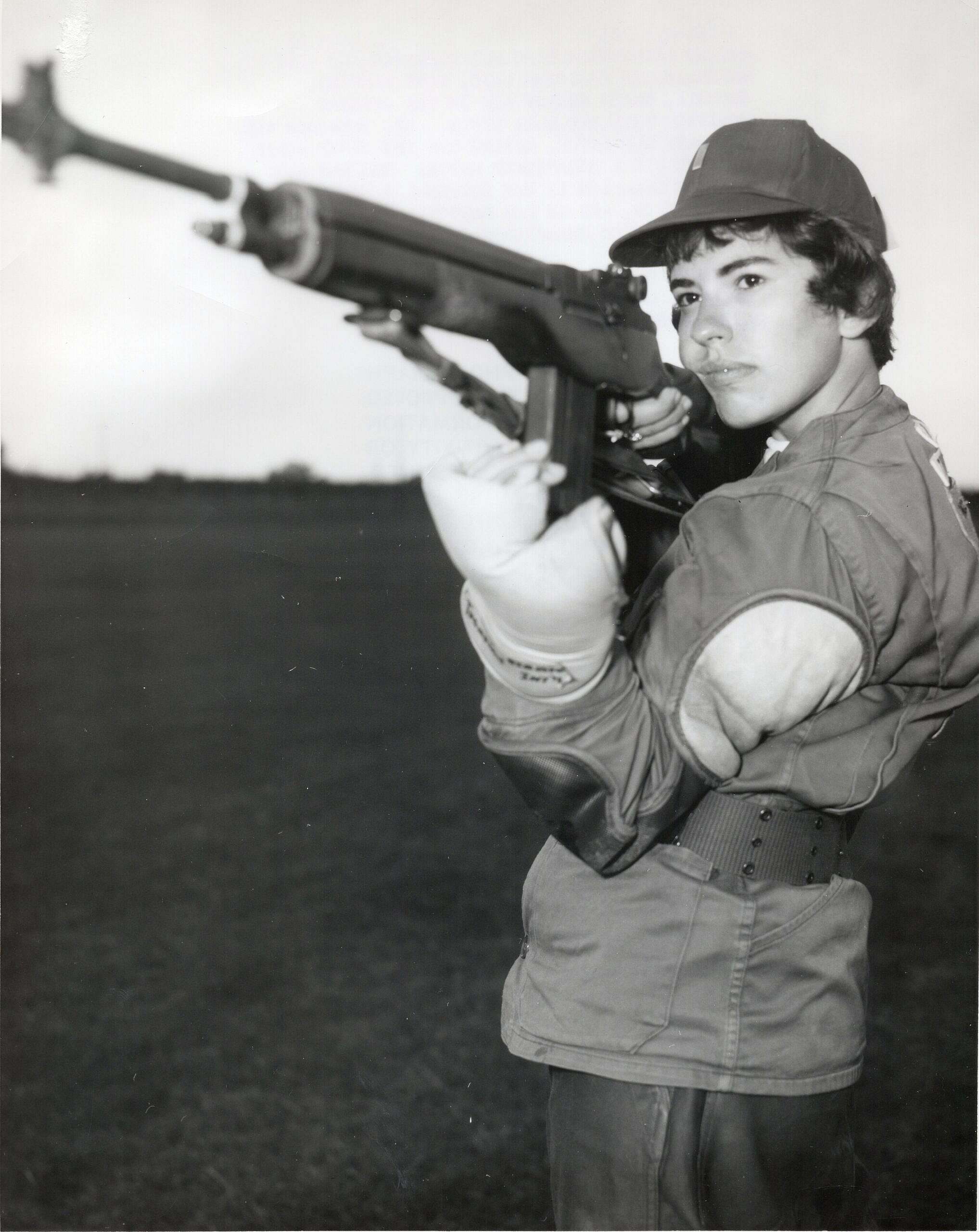
Her dominance in women’s competition was equally extraordinary. From 1965 through 1969, Thompson captured the NRA Women’s Position Championship every year at the National Matches at Camp Perry. In 1969, she added the Women’s Prone Championship to her list of titles, capping off one of the most impressive competitive runs in American shooting history. Her notoriety extended beyond America’s borders. Lt. Thompson was revered by fans across Europe, with fans lining up for her autograph.
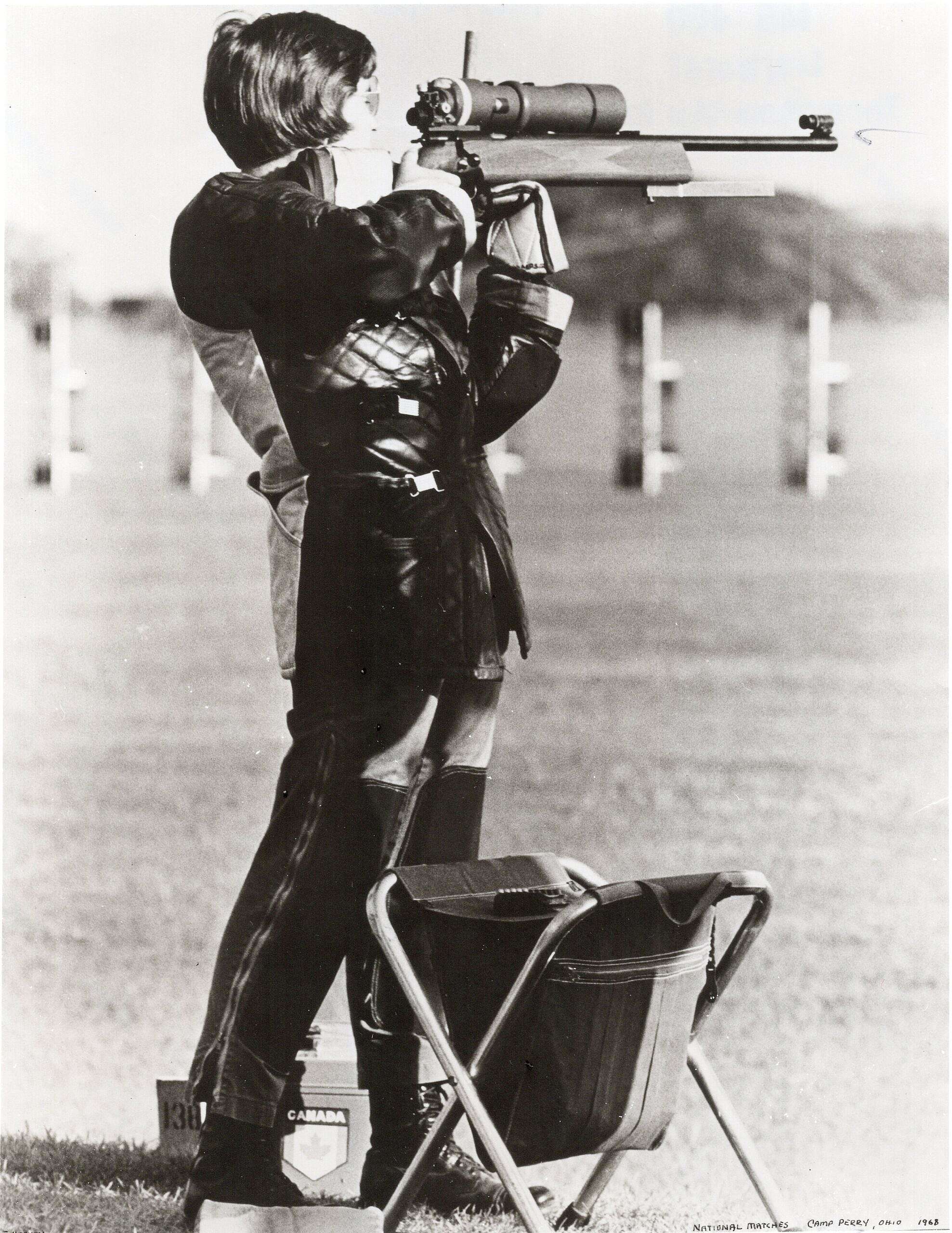
Maragret married Gil Murdock in 1969, living and competing as Margaret Thompson-Murdock from then on.
The momentum Thompson-Murdock built during the 1960s only accelerated throughout the 1970s, as she cemented her place among the world’s elite rifle shooters. At the 1970 World Shooting Championships, she delivered one of the strongest performances of her career, earning five gold medals and one silver medal across both team and individual events. Two years later, she returned to Camp Perry to claim to NRA Women’s Prone Championship, adding yet another national title to her growing list of accomplishments.
By 1973, Thompson-Murdock was competing alongside some of the greatest marksmen in the world. At the first Shooting Championships of the Americas, she joined Lones Wigger, John Writer, and Lanny Bassham on a U. S. team whose performance became legendary. Together, the Fab-4 set six world records, demonstrating the remarkable depth of American marksmanship during the era.
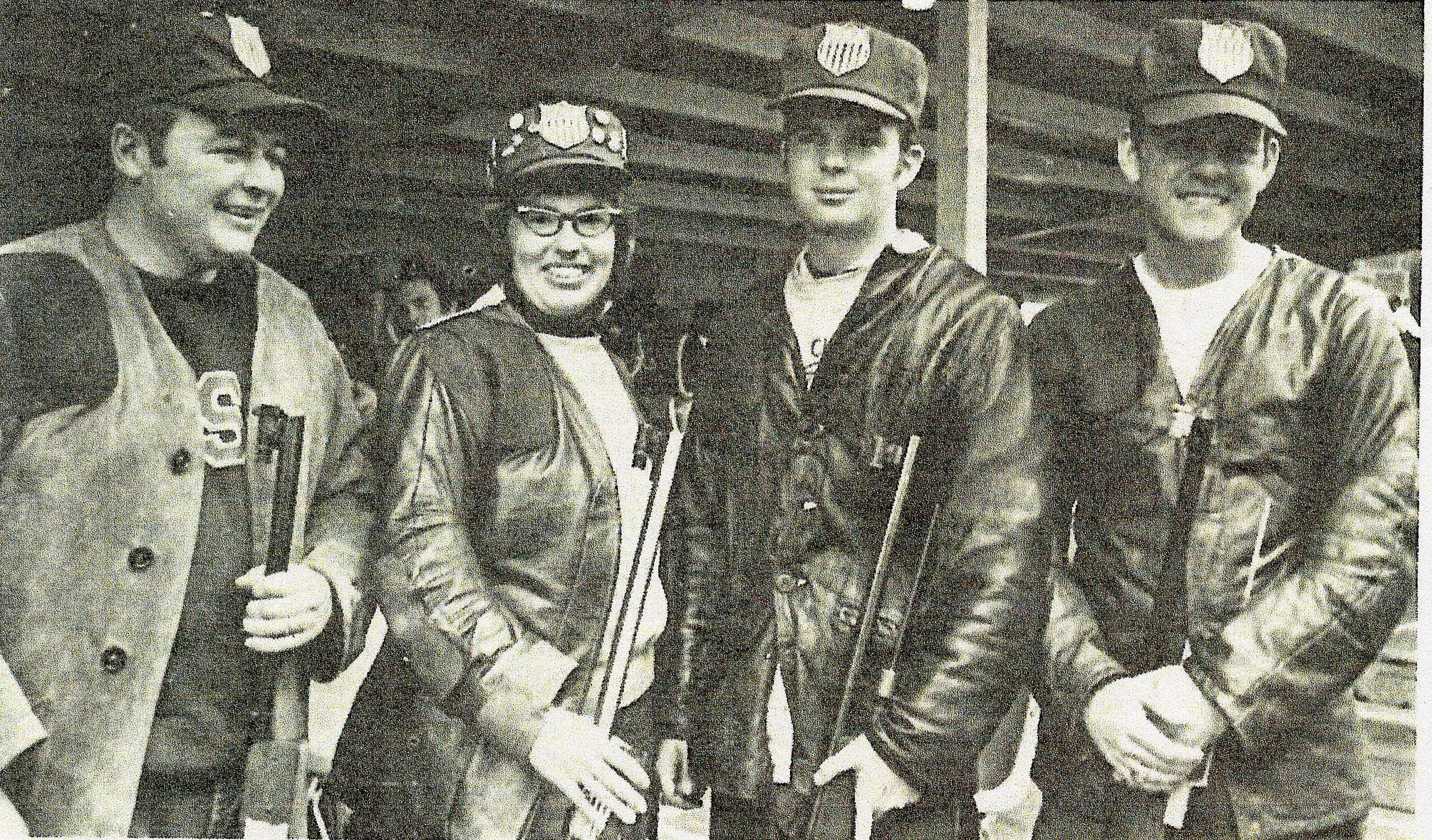
Thompson-Murdock’s success continued the following year at the 1974 World Shooting Championships in Thun, Switzerland. There she once again proved herself on the international stage, capturing an impressive five gold medals, one silver medal, and one bronze medal in a combination of team and individual competitions. By the middle of the decade, she had become one of the most decorated and respected competitors in international shooting, consistently demonstrating an extraordinary ability to perform at the sport’s highest levels.
The 1975 Pan American Games in Mexico City provided yet another opportunity for Thompson-Murdock to add to her already extraordinary legacy. She took home three more gold medals in both team and individual events.
Perhaps the most widely recognized competition of Thompson-Murdock’s career was the 1976 Olympics. Thompson-Murdock was the first and only United States woman to make an Open U.S. Olympic Shooting Team. The story ended up being the biggest nightmare of the most important win of her shooting career. In 1976, at the Montreal Olympic Games, Margaret Thompson-Murdock became the first woman in the 80-year history of the modern Games to win a medal in open shooting competition. Her winning score of 1162 was posted on the official scoreboard, making her Olympic gold medalist in the three-position rifle event. Six hours after the competition ended and three hours after the scores had been posted, it was determined by officials that a clerical error had been made. A point was added to the score of Lanny Bassham throwing the match into a tie. According to UIT rules, ties are broken by the highest point total on the final ten shot series. Thus, Bassham became the 1976 Olympic Champion by virtue of his final ten shots in the kneeling position. Both Bassham and Murdock requested dual Gold Medals or at least a shoot-off. Both requests were denied. As the Awards Ceremony began, Bassham raised Thompson-Murdock to the top step of the podium, and they turned to see the flags just as the anthem began.
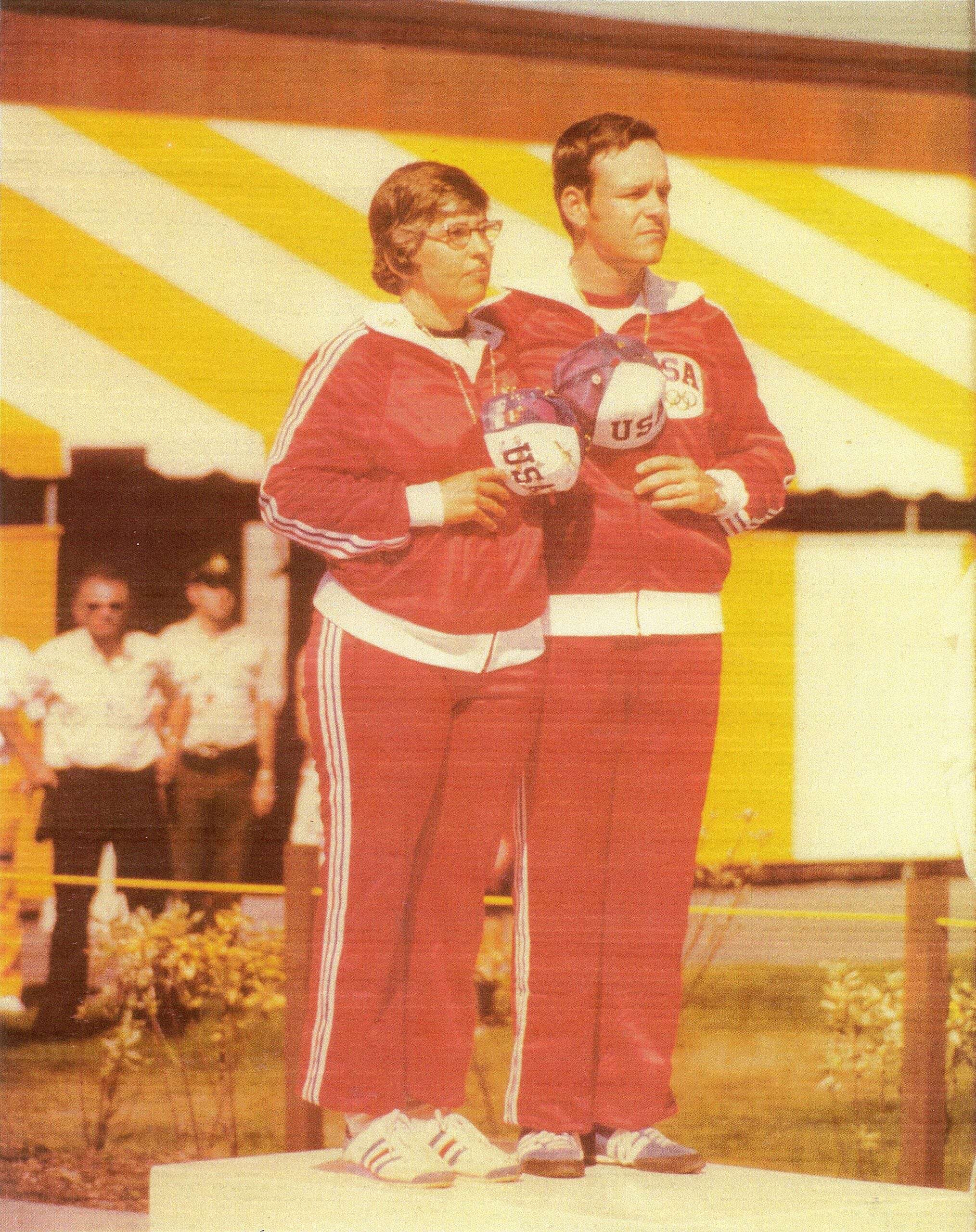
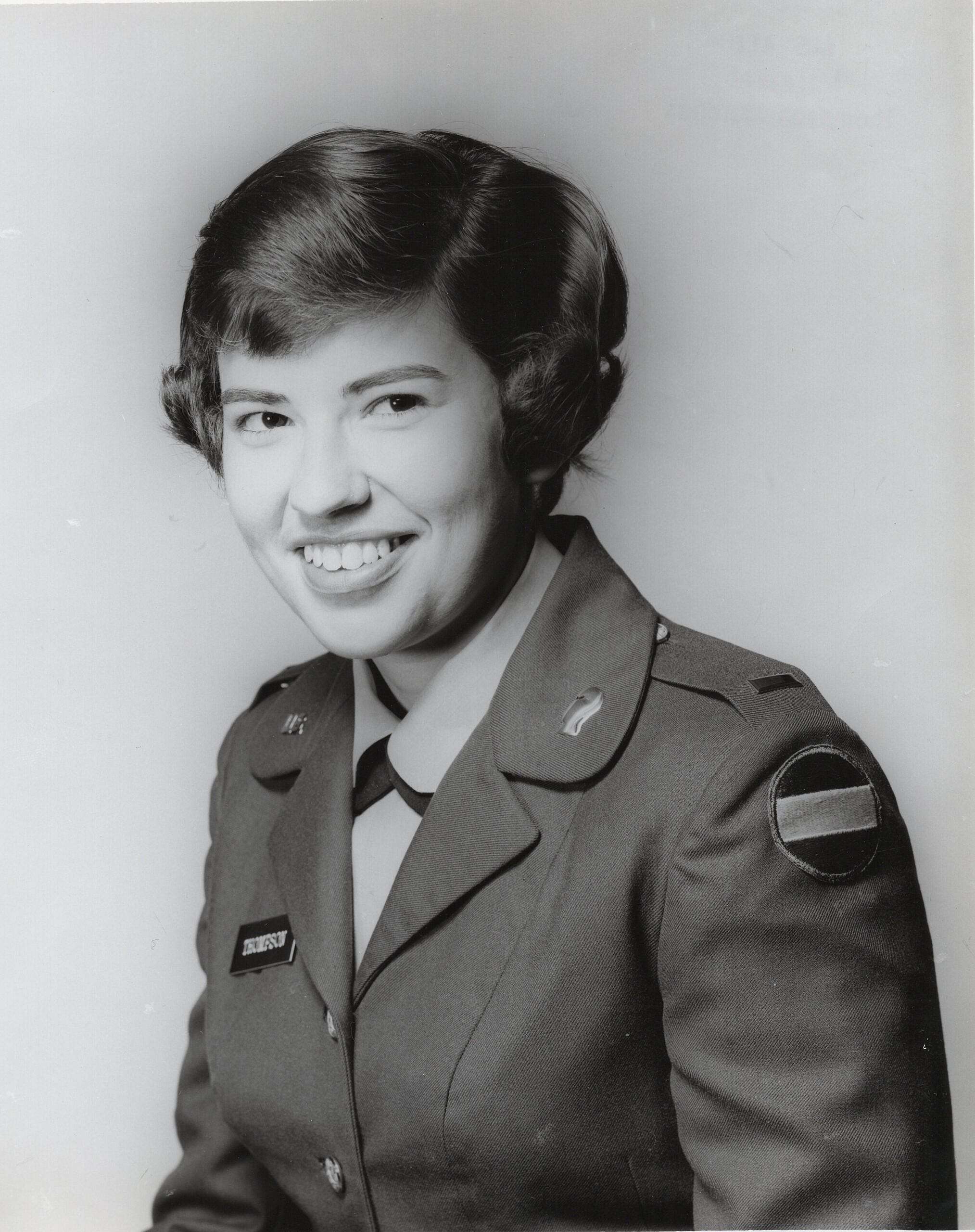
In her shooting career Margaret Thompson-Murdock won 29 National Championships, set 13 World Shooting Records, and is in seven Halls of Fame. When the International Shooting Sports Federation compiled its list of the top 12 shooters of all time, Margaret Thompson-Murdock was sixth and the only woman.
Arguably, competition shooting is much more difficult than trick-shooting because it’s a new challenge every time you shoot. Margaret Thompson-Murdock is a legend in her own right, and her legacy will live on as long as Annie Oakley’s.
In the words of LTC William Pullum, USA Olympic and USAMU International Rifle Coach (deceased), “You brought women’s shooting out of the closet and gave it world class respectability, and you did it with class. The entire world shooting community is in your debt.”
Curious to learn more about Margaret Thompson-Murdock? You can learn more about her in the archival collection MS 450 Margaret Thompson-Murdock here.
Written By
Judy Kauwell
Judy Kauwell joined the McCracken Research Library team in 2013, first as a dedicated volunteer before becoming Archives Assistant in 2020. Her enthusiasm, attention to detail, and deep respect for history make her an invaluable part of the archives staff. Judy works closely with a range of fascinating collections, with particular interest in materials related to the Heart Mountain Relocation Center, military figures John Foster and Charles King, philanthropist Paul Stock, and renowned Western artist James Bama. Among her most memorable discoveries is documentation on the Winchester Mystery House, uncovered while researching the Winchester Repeating Arms Company collections. This remarkable structure evolved from an eight-room farmhouse into a sprawling 24,000-square-foot mansion with thousands of windows and doors, numerous stairways and fireplaces, and an extraordinary history of continuous construction from 1886 to 1922. Judy’s curiosity and dedication help preserve and illuminate such remarkable stories within the McCracken’s extensive holdings.
You May Also Like
Buffalo Bill Center of the West Authenticates Trove of Historic Early 1800s Medals
Sep 08, 2026

Buffalo Bill Center of the West authenticates rare early 1800s...
The Firearm of the Mountains: The Hawken Rifle and the American West
Jul 30, 2026

When most people imagine the “rifle that won the west”...
Rare Book Highlights: The Indians’ Book
Sep 02, 2026

"Wellnigh impossible is it for civilized man to conceive of...
The Ultimate Wyoming Wildlife Guide: Expert Viewing Tips
Sep 28, 2026
Grizzly Flowers. Photo by Julia Cook @julia.littlelightningnature Draper Elk Wyoming...
Before the White Man Came: Examining Native Representation in Early American Film
Aug 20, 2026

Popular films and television shows like Dances with Wolves and...
Rare Book Highlights: The Original Journals of the Lewis and Clark Expedition
Oct 01, 2026
"If not for the … epic the captains scratched out...
Ultimate Trip Guide Through Yellowstone’s East Entrance
Aug 19, 2026
Yellowstone’s East Entrance offers one of America’s most spectacular drives....
Everything I Need to Know About Life I Learned From Birds
Aug 26, 2026

by Sophie Peterson, 2026 Raptor Intern As I near the...
From the Badlands to the Tetons: A 1930s Family Road Trip West
Sep 14, 2026

Long before smartphones and GPS guided travelers across the country,...
The Winchester Records Synopsis, or How I Learned to Stop Worrying and Love Cursive
Aug 18, 2026

The Cody Firearms Records office produces letters from the corporate...
The Life Style of Yellow-bellied Sapsuckers
Sep 16, 2026

Tree girdled with Yellow-bellied Sapsucker Holes © Dennis Donohue /...
Don’t Let History Live in a Shoebox: How to Archive Your Family Treasures
Sep 18, 2026
Are you the designated "historian" in your family? Do you...