
Revolutionary Readers: The Library as a Symbol for Freedom

July 30, 2026
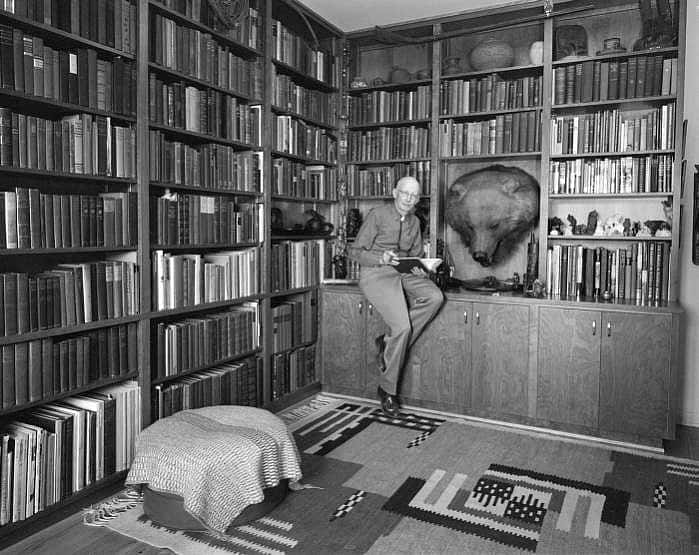
McCracken Research Library P.89.35.6034.01-N
In 18th-century America, a book was not merely an object for reading–it was a luxury item, a status symbol, and for the average colonist, completely out of reach. With paper costs inflating prices and texts painstakingly imported from London, private libraries were fortresses of wealth. But as the colonies marched toward revolution, a radical idea began to take root: if a nation wanted to break free from tyranny, its citizens couldn’t just fight for political independence; they had to fight for intellectual freedom. And the battlefield for that freedom was the local library.
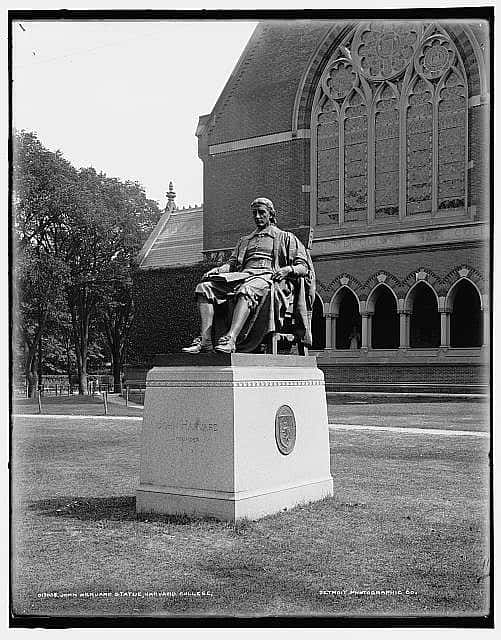
Library of Congress LC-D4-13055
From the Ashes of War
In 1638, shortly before he died of Tuberculosis, a Puritan minister named John Harvard gave half of his estate and his entire personal library, a collection of four hundred volumes, to a small seminary in Cambridge, Massachusetts. The bequest was so significant that the school named itself after him, thus becoming Harvard College. This first collection grew and grew, and, by 1764, the library reached its peak at five thousand volumes. But then fire struck, destroying the library and all of its contents. Harvard’s president at the time, Edward Holyoke, wrote, “In a very short time, this venerable Monument of the Piety of our Ancestors was turn’d into a heap of ruins.”
The collection returned to its former glory thanks to donations over the next several years. While unconfirmed, there is a theory that the American victory had more perks than independence from the British, especially for the library. When Loyalists fled Massachusetts after the Revolutionary War, they left their heavy books behind–and some historians claim that these books became the core of Harvard’s post-fire collection. Whether or not those books really made it into the collection, the Harvard University Library system has only grown in the time since, and now holds over 20 million items.
Ben Franklin’s Book Club
Prior to the American Revolution, Benjamin Franklin and his friends formed what was essentially a book club with the purpose of mutual enrichment. They called themselves Junto and held intellectual debates which required easy access to reference materials to fact-check one another’s arguments. Franklin soon realized that their meetings would benefit from access to a wide-ranging collection of texts held in a single location. Ever the inventor, Franklin had the idea to start a subscription library.
In 1731, fifty members of Junto contributed money to establish the Library Company of Philadelphia. By paying an initial sign-on fee as well as annual dues, subscribers contributed to a pool of money used for the purpose of buying more books. The idea was so popular that soon enough, dozens of subscription libraries were established across the colonies.
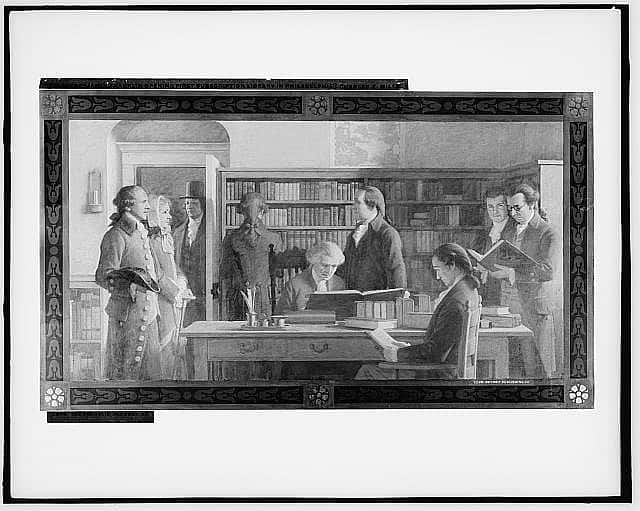
Library of Congress LC-DIG-det-4a26449
Library of Congress LC-USZ62
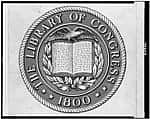
After the Revolution, James Madison proposed a Congressional library. It wasn’t until 1800, when President John Adams signed an act of Congress transferring the seat of government from Philadelphia to Washington D.C., when Madison’s dream of a Congressional library became reality. This is because the legislation included an appropriation of $5,000 “for the purchase of such books as may be necessary for the use of Congress… and for fitting up a suitable apartment for containing them.” 740 books and 3 maps were ordered from London and housed in the new Capitol. But then, British troops sacked D.C. in 1814, and the Library of Congress, like Harvard’s first library, burned to ashes. Thomas Jefferson urged Congress to accept his personal library to replace what had been lost, and his collection became the start of today’s Library of Congress.
Books for All
And yet, there were still barriers to entry for many Americans looking to borrow a book from a library. Since the Revolutionary War, independent thought, democratic processes, and religious morality gained significant cultural and ethical value. To be a truly free nation, citizens must have access to information–and for that, they had to be able to read. Thus, the concept of public education and public libraries in America was born.
Peterborough Town Library
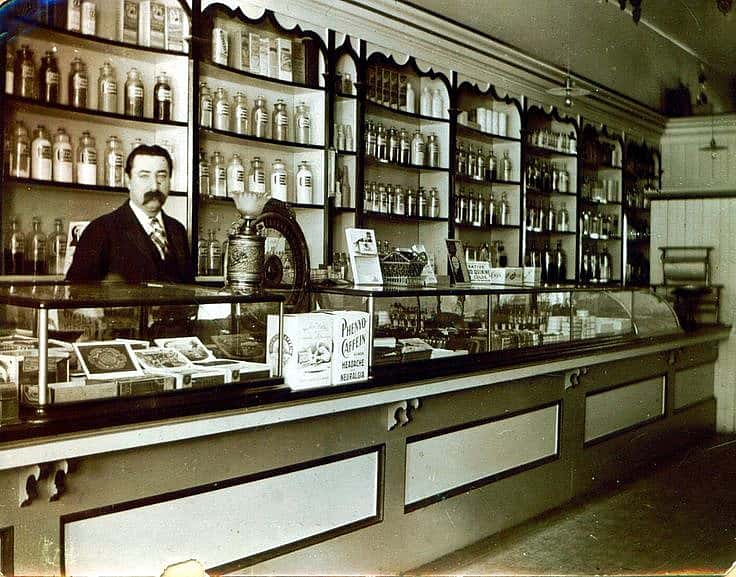
The first wholly public library in the United States was in Peterborough, New Hampshire. The Peterborough Town Library was proposed by Reverend Abiel Abbot as a central collection of books that would be owned by the people and be free to all the town’s inhabitants. The original collection was bought by Reverend Abbot and the library trustees and was first housed in Smith & Thompson’s general store, then a post office, and finally a pharmacy before a group of citizens purchased a piece of land.
The New Hampshire State Legislature was encouraged by the innovation of Abbot and in 1849 became the first state to pass a law authorizing towns to raise money to establish and maintain their own libraries. Philanthropists and businessmen, including John Passmore Edwards, Henry Tate, and Andrew Carnegie helped to increase the number of public libraries from the late 19th century.
From Carnegie to Cody
Between 1889 and 1919, Andrew Carnegie funded the construction of 1,689 libraries across the country, including the Park County Library in Cody. In fact, Wyoming boasted 16 Carnegie libraries built between 1899 and 1917, a surprisingly high number for a rural state with a small, scattered population. Today, just 10 Carnegie libraries remain standing, and only five are still used as libraries. Carnegie libraries represent a fascinating era in community development in the United States, when philanthropic funds and local initiatives combined to create free public libraries that became centers of community learning and gathering.
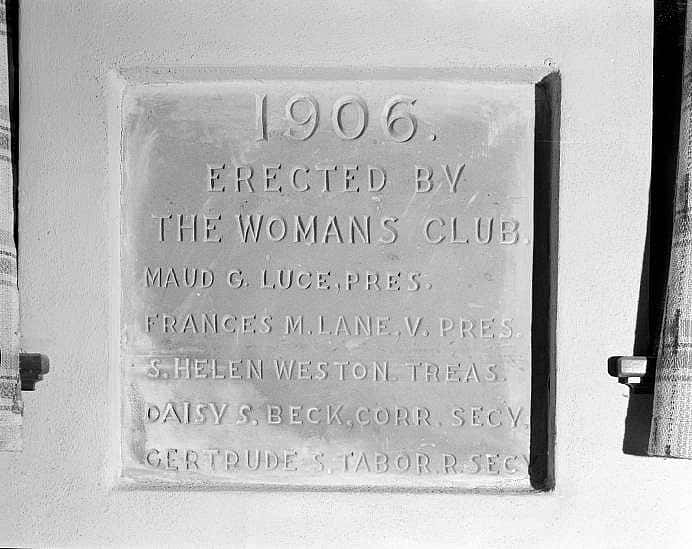
But long before a grand building ever took shape, the fight for books in Cody started with grassroots grit. In 1906, the Women’s Club of Cody stepped up to create the town’s very first public library. They threw fundraising “Mother Goose” dances and flour sack sales from the porch of the Irma Hotel to build Cody’s first “library.” This initial reading room was a tiny stone building measuring barely 20 square feet and comprised of a single room. It was so rustic that the back wall wasn’t even a true wall, but a few loose boards nailed up where masonry should be.
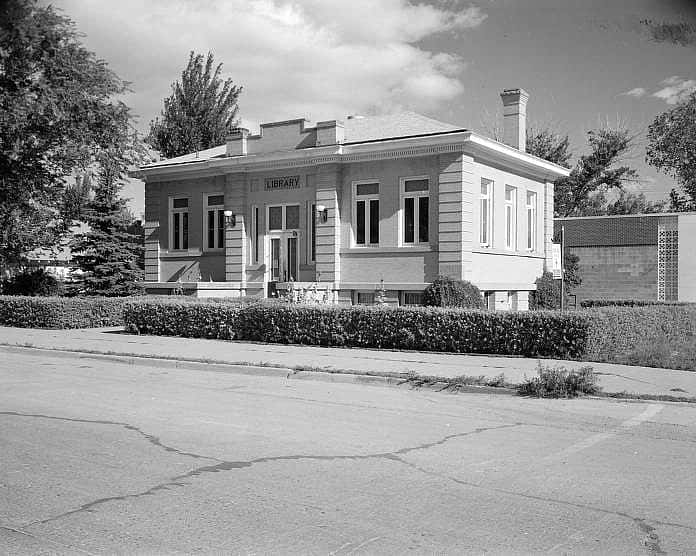
So, when Carnegie announced his library initiative, the Women’s Club of Cody was determined to win a Carnegie grant. At first, there were multiple roadblocks. Cody’s population was just over one thousand, which was too small to qualify. And because Cody was still a part of Big Horn County, it didn’t fulfil the requirement of being a county seat, either. But the independent spirit of Cody, and the tenacious women determined to bring learning to their hometown, wouldn’t back down.
After Park County officially split off and formed its own entity in 1911, local persistence paid off. Reviving their efforts in 1914, the Women’s Club even tapped into town legend–some correspondence suggests that Buffalo Bill himself, visiting New York City at the time, may have helped lobby Carnegie personally behind the scenes.
However it happened, their efforts succeeded, and Cody secured a $15,000 grant from Carnegie.
The Wild West Librarian
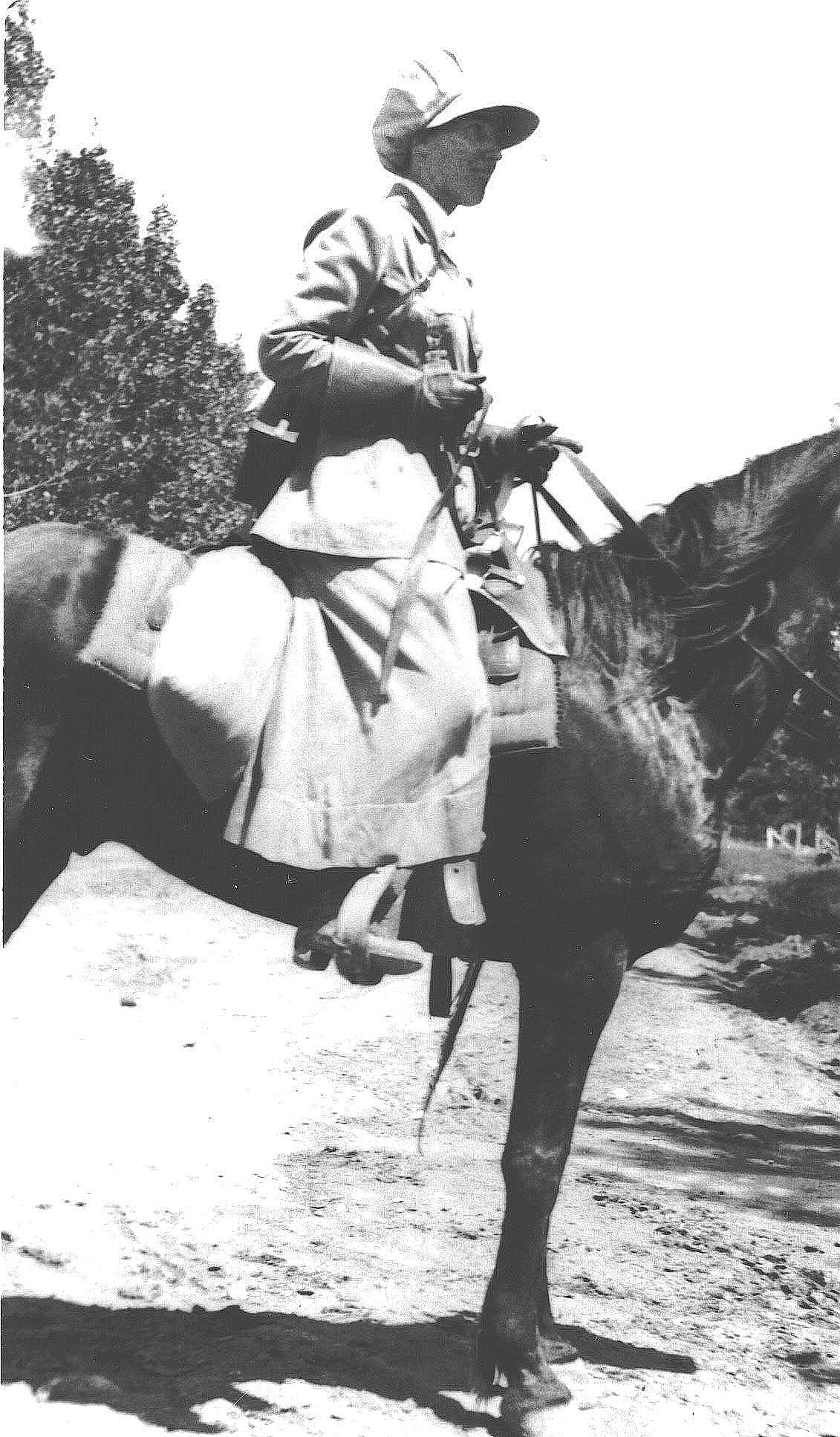
Even with the capital secured, you can’t have a library without a librarian. It was twenty-nine-year-old Mabel Wilkinson from Greeley, Colorado who answered the call for the first professional librarian in Cody. In a paper to the American Library Association, she recalled,
Wyoming State Archives
“Not long ago I was greatly surprised as well as amused when a library director in the northern part of Wyoming, upon requesting a library organizer for her county, required: ‘A young woman who is not only a college graduate with library school training and experience but in addition must be able to get along with Western people, ride and drive, as well as pack a horse, follow a trail, shoot straight, run an automobile, and be able to rough it whenever necessary.’ Now, it has been proved that those qualifications all come as part of the business, as well as the fun of organizing in Wyoming.” -Mabel Wilkinson, Establishing Libraries Under Difficulties
The Cody Enterprise reported her hire with a list of her qualifications: she was well-educated, having graduated from various professional and library programs at the State Teachers’ College, Simmons College, and Earlham College. Most recently, she’d successfully organized and expanded the Platte County Library, with past experience cataloging in the Newberry Reference Library, which at the time was “the largest reference library in the world.” The Park County Library board engaged Wilkinson for one year at $75 a month (in case you were wondering, that $75 a month in 1916 would be a whopping $2300 a month in today’s currency).
In Platte County, Wilkinson wasn’t merely checking out books and helping patrons from the safety of a building; she was in the field, on horseback, traveling to the farthest corners of the county to ensure that the library’s services and resources were accessible to all of its citizens. According to a paper Wilkinson wrote for the 1916 American Library Association meeting, one memorable “field experience” saw the stalwart librarian spend two weeks on her “library horse” Joker, traversing 400 miles “through very rough country, over poor roads, and worse trails with very few accommodations along the line.”
Though the historic Carnegie library was regrettably torn down in 1965 to make way for a growing town, the foundational momentum sparked by the Women’s Club of Cody and Carnegie’s generosity has since helped preserve and promote Wyoming’s legacy of determination, freedom, and curiosity.
Keep the Flame Alive
From Benjamin Franklin’s subscription service to the rustic boards of the Women’s Club’s first reading room, the American library has always been more than just four walls and a shelf of books. It is a living, breathing institution of self-governance.
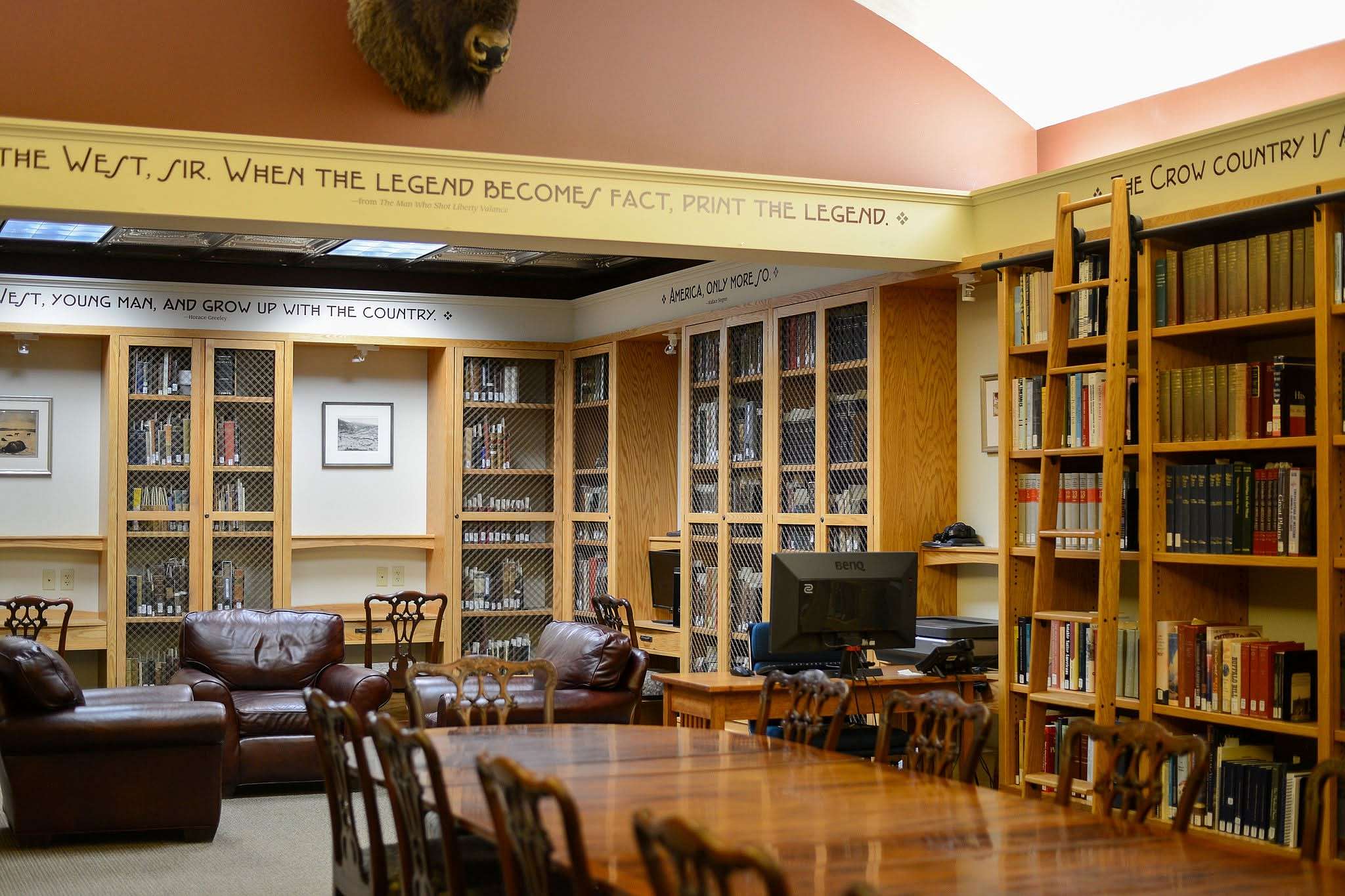
Today, that tradition continues whether you are picking up a book at your neighborhood public library or diving into the rare books or archives of specialized research institutions like the Buffalo Bill Center of the West’s own McCracken Research Library. These spaces protect our shared history, foster independent thought, and keep the doors of knowledge wide open to everyone.
Supporting your local library–whether through a donation, volunteering, attending community programs, or simply getting a card and checking out a book–is a deeply patriotic act. It ensures that the intellectual freedom our forefathers and veterans fought to secure remains safe, vibrant, and fiercely independent for generations to come.
Written By
Hannah Lomele
Hannah is a New Yorker with the adventurous spirit of the Old West. She has a BA in Creative Writing from Bard College and is currently studying at CUNY Queens toward an MA in History as well as an MS in Library Science. After 6 years of working in documentary film development and production, she pivoted to archival studies and began working at Planting Fields, the historic Long Island estate built by William Robertson Coe. Her latest adventures have taken her to the Buffalo Bill Center of the West, where she is the Library & Archives intern at the McCracken Research Library.
You May Also Like
The Ultimate Wyoming Wildlife Guide: Expert Viewing Tips
Sep 28, 2026

Grizzly Flowers. Photo by Julia Cook @julia.littlelightningnature Draper Elk Wyoming...
Everything I Need to Know About Life I Learned From Birds
Aug 26, 2026

by Sophie Peterson, 2026 Raptor Intern As I near the...
The Winchester Records Synopsis, or How I Learned to Stop Worrying and Love Cursive
Aug 18, 2026

The Cody Firearms Records office produces letters from the corporate...
The Firearm of the Mountains: The Hawken Rifle and the American West
Jul 30, 2026

When most people imagine the “rifle that won the west”...
Don’t Let History Live in a Shoebox: How to Archive Your Family Treasures
Sep 18, 2026

Are you the designated "historian" in your family? Do you...
Eastern Chic and Western Mystique: New Yorkers and the Buffalo Bill Center of the West
Jun 23, 2026

"The Buffalo Bill Center is the best Western museum that...
Rare Book Highlights: The Indians’ Book
Sep 02, 2026
"Wellnigh impossible is it for civilized man to conceive of...
From the Badlands to the Tetons: A 1930s Family Road Trip West
Sep 14, 2026
Long before smartphones and GPS guided travelers across the country,...
Before the White Man Came: Examining Native Representation in Early American Film
Aug 20, 2026

Popular films and television shows like Dances with Wolves and...
Ultimate Trip Guide Through Yellowstone’s East Entrance
Aug 19, 2026
Yellowstone’s East Entrance offers one of America’s most spectacular drives....
Buffalo Bill Center of the West Authenticates Trove of Historic Early 1800s Medals
Sep 08, 2026
Buffalo Bill Center of the West authenticates rare early 1800s...
The Life Style of Yellow-bellied Sapsuckers
Sep 16, 2026

Tree girdled with Yellow-bellied Sapsucker Holes © Dennis Donohue /...