
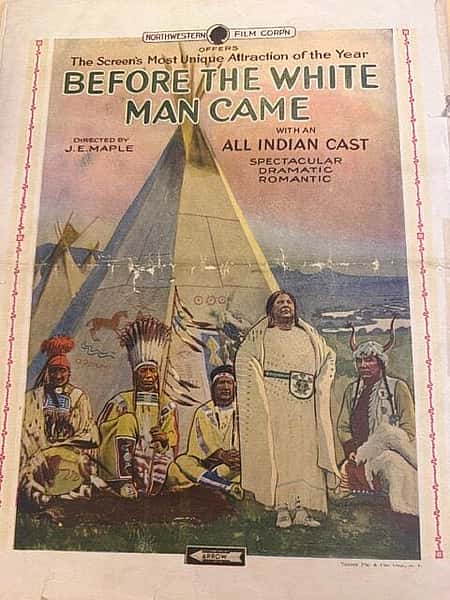
Before the White Man Came: Examining Native Representation in Early American Film

August 20, 2026
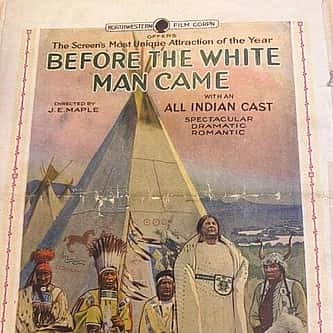
Popular films and television shows like Dances with Wolves and Yellowstone have showcased the landscapes of Wyoming and Montana while featuring Native actors and stories. But did you know that the first film ever shot in Wyoming’s Bighorn Mountains was a 1920 silent movie called Before the White Man Came?
Because the film was produced during the early years of American cinema, its entirely Native cast reminds us that Native actors were part of the American film industry from its earliest decades. When set against the backdrop of the criticism Hollywood has received for casting non-Native actors in Native roles or inaccurately portraying Indigenous cultures and ceremonies, many argue that Before the White Man Came stands out as an early film that provided a rare level of Native representation, especially for its time.
When we look back at the history of Native representation in entertainment, we often think of the sensationalized portrayals found in Buffalo Bill’s Wild West or the “Indian Princess” stereotype popularized through novels, stage productions, and later Disney’s Pocahontas, which romanticized a fictional relationship between the Powhatan woman Amonute or Matoaka, commonly known as Pocahontas, and English colonist John Smith. These narratives often contrasted white heroism with stereotypes of Native ‘savagery,’ shaping public perceptions of Indigenous peoples and leaving a lasting influence on Hollywood’s depiction of Native communities.
In the 2020s, films and television shows such as Rutherford Falls and Reservation Dogs have contributed to what has been described as a New Native Cinematic Renaissance, emphasizing Indigenous perspectives and Native-led storytelling. Looking back at early films such as Before the White Man Came allows us to trace a thread connecting the origins of American filmmaking to today’s growing movement for cultural authenticity and Indigenous self-representation on screen.
After finding Before the White Man Came on YouTube, I decided to watch the film myself and pair my own observations with historical research on its production and reception. Rather than simply asking whether the film was “ahead of its time,” I wanted to explore how it both challenged and reflected the ideas about Native representation that shaped early Hollywood.
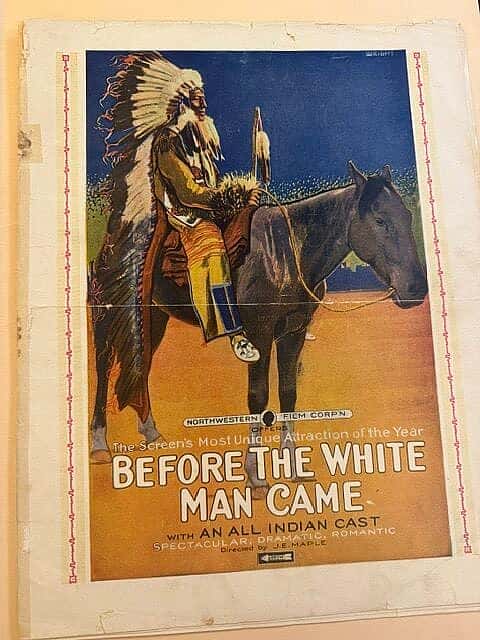
My first observation was that the message, “Produced with special permission of the U.S. government,” appeared during the opening credits. After some research, I learned this disclaimer was necessary because portions of the film were shot on reservation lands under U.S. government authority. What stood out to me, however, was that the film acknowledges permission from the U.S. government but makes no mention of the Apsáalooke (commonly known as Crow) or Tsitsistas (Cheyenne) communities themselves. Although both nations were living on reservations to which they had been forcibly removed in the early twentieth century, they maintained their own tribal governments and cultural institutions. It is certainly possible that tribal leaders or community members were consulted during the production, but if so, that recognition is absent from the film. The absence of any acknowledgment of the Apsáalooke or Tsitsistas communities reflects the extent to which the U.S. government controlled access to reservation lands during this period. While the relationship between the federal government and Tribal sovereignty is beyond the scope of this article, I do think that if the film truly sought to foreground Native participation, it could have more explicitly acknowledged the collaborative contributions of the Apsáalooke and Tsitsistas communities.
The opening disclaimer also complicates the film’s claim to depict a time “before the white man came.” Before European contact, the Tsitsistas and Apsáalooke peoples lived much farther East and did not reside on reservations until the U.S. government forcibly relocated them during the nineteenth century. The fact that the film required federal permission to be shot on reservation lands reminds us that its production was shaped by the very colonial history the title suggests precedes it.
Another clear complication to the film’s suggestion of life “before the white man came” is the prominent role of horses throughout the film. Much of the action depends on horseback travel, including warfare, raids, and the kidnapping of tribal members. Although evidence increasingly suggests that horses may have reached some areas of the Plains earlier than previously believed, the horses that transformed Plains life were ultimately descended from Spanish-introduced populations and spread widely among Indigenous communities through Native trade networks and intertribal relationships. Horses therefore became deeply integrated into Plains societies even in communities that had limited or no direct contact with Europeans. By 1920, however, the idea that horses were a post-contact development was much more firmly established than it is today. The filmmakers’ extensive use of horses is therefore revealing not necessarily because it proves that the events depicted could not have occurred before European contact, but because it reflects the filmmakers’ tendency to combine different periods of Plains Indian history into a generalized image of an earlier Indigenous past. The film presents a way of life shaped by developments associated with the post-contact Plains while simultaneously presenting a world that existed “before the white man came.”
One of the film’s greatest strengths is its use of authentic clothing and regalia. Rather than dressing Native actors in generic “Indian” costumes that misrepresented Indigenous cultures (a common practice in early Hollywood and the entertainment industry in general), many of the Tsitsistas and Apsáalooke actors wore their own traditional clothing. This decision made the film more historically and culturally accurate while respecting the distinct traditions of the communities represented.
Additionally, the film depicts conflict between two Native groups identified in the press book as the Crow and the Sioux. In early Western films, conflict was often portrayed as being between Native peoples and white settlers, reinforcing the misconception that Tribal Nations rarely came into conflict with one another. This film offers a different portrayal by depicting intertribal conflict, reflecting the reality that Native nations had complex relationships with one another, including both cooperation and conflict.
The film’s depiction of intertribal conflict is particularly notable given that the actors themselves came from two Tribal Nations with a long history of conflict. It is particularly interesting that Apsáalooke and Tsitsistas people worked together as actors during filming. Although the two nations had a history of conflict, by the time Before the White Man Came was filmed in 1918, they had been living on neighboring reservations in southeastern Montana for several decades after being forcibly confined there by the U.S. government. A formal declaration of peace between the Apsáalooke and Northern Tsitsistas would not take place until 1932, making their collaboration on the film a noteworthy part of its history.
In addition to using authentic regalia, the film depicts traditional ceremonies, including dancing, sweat lodges, and other ceremonial practices. It is difficult to fully assess the ethics of presenting these traditions on screen. While Apsáalooke and Tsitsistas participants appear to have been active collaborators in filming these ceremonies, portraying sacred traditions before a mass audience that may not understand their cultural and spiritual significance raises important ethical questions. Was the film intended to educate audiences about Indigenous traditions and encourage respect for Native cultures? Or did it use cultural authenticity to romanticize Indigenous life for white audiences, making authenticity part of its commercial appeal?
These questions motivated me to research the film’s director, John E. Maple, and screenwriter, William E. Wing. While very little biographical information about either man survives, I located several contemporary newspaper articles discussing the film’s production. In a 1921 article published in the Bristol Daily Courier (which I later learned was a pre-written article published in the press book for newspapers to use), Maple stated that he had “very little difficulty in getting them [the American Indian cast] to perform before the camera.” He explained that “the Indians were re-enacting a chapter of the history of their tribe and to them it was a serious, almost sacred thing.” Because he relied on an interpreter to communicate with the Apsáalooke and Tsitsistas actors, Maple said that “once the Indians found out what was wanted and learned that the history of their tribe was to be preserved forever on film, they did all in their power to make the picture a success.”
Maple’s comments also raise another question. By the time the film was made, many Indigenous ceremonies had been restricted through federal assimilation policies. Although it is impossible to know whether this influenced the participation of Apsáalooke and Tsitsistas tribal members, the opportunity to perform and record aspects of their traditions on film may have held significance. At the same time, it is important to remember that any such opportunity existed because Indigenous communities had first experienced the unjust suppression of their cultural and religious practices by the U.S. government.
Additionally, the reporter’s question about how Maple was able to “get them to perform” immediately stood out to me, as it reflects a broader attitude that treated Native people as fundamentally different from their non-Native counterparts. Maple’s own statement that “the Indian is a very intelligent individual” reinforces this perspective. Although likely intended as a compliment, it suggests that intelligence among Native people needed to be acknowledged rather than assumed. Throughout the article, the actors are discussed less as professional collaborators and more as curiosities.
At the same time, Maple’s comments about using an interpreter and preserving Apsáalooke and Tsitsistas’ history complicate my understanding of the film. If he genuinely believed the production would preserve tribal history, that intention seems at odds with the way the film was ultimately presented to audiences. Contemporary marketing emphasized the film’s authenticity while blurring the line between history and fiction. For example, an article published in the Edmonton Bulletin in 1921 described Before the White Man Came as a “true story” and advertised its “real Indian movie stars” and “full-blooded Indian” cast. Although these claims highlighted the Native actors involved in the production, they also suggested that the fictional narrative itself was historically accurate.
In reality, while the film captured authentic ceremonies, dances, and regalia, it was not a direct retelling of a historical event but rather a fictional story conceived by screenwriter William E. Wing. These authentic cultural elements were incorporated into an action narrative designed to entertain audiences. As a result, although the film now serves as a valuable historical record in some respects, its primary purpose seems to have been to entertain audiences rather than document Indigenous history.
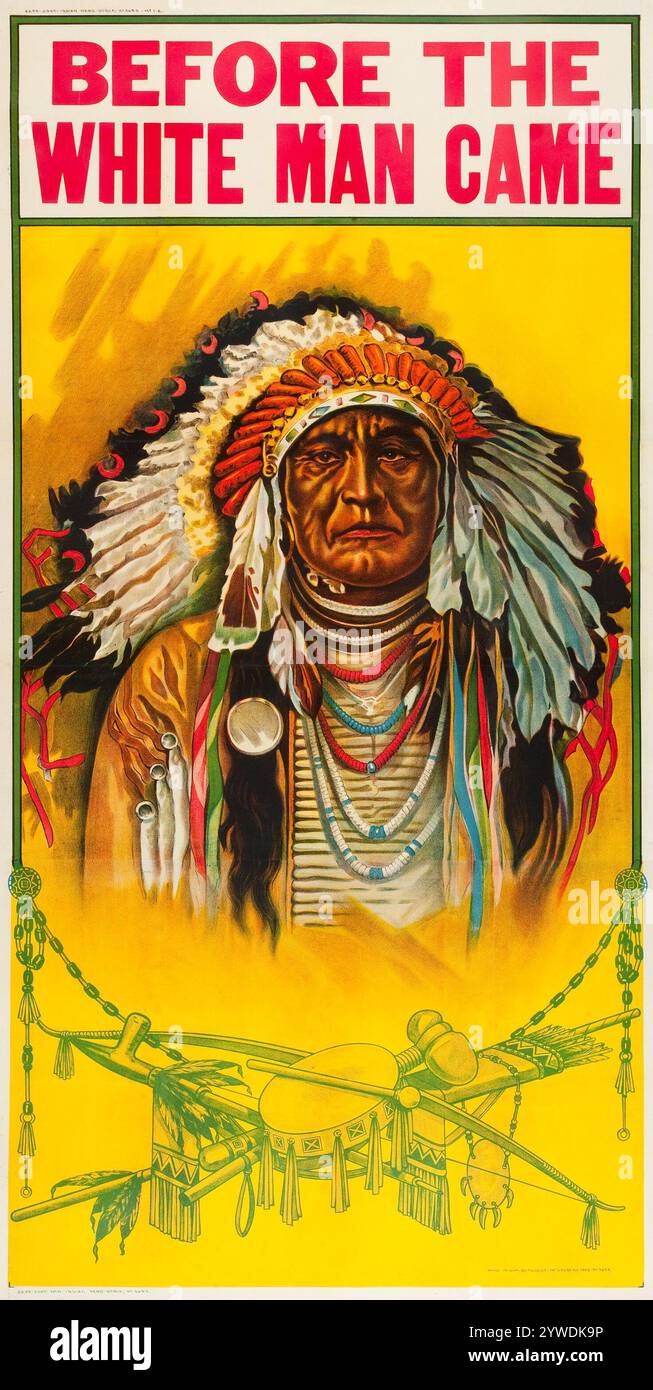
While this film is representative of the early Hollywood era, it is important to note that it was not the first film to fall under this genre. According to film historian Michael Hilger, hundreds of films featuring Indian subjects were produced between 1910 and 1913. One of these films, titled The Indian Wars, was produced by Buffalo Bill Cody himself. What is especially interesting is that even though both films claimed historical authenticity, Cody’s film was considered a failure, while Maple’s was extremely popular. In his book Indians in Unexpected Places, historian Philip J. Deloria argues that Cody’s “film flopped badly. Obsessed with precision reenactment, the film failed to pay enough attention to dramatic narrative structures and storylines.” He goes on to argue that “pacification and assimilation” created a problem for the film industry with regard to the Indian subject. White Americans were no longer fascinated with a group of people existing in the “same social, cultural, and historical moment as themselves.” This point helps explain why Before the White Man Came was so successful: it highlighted a theme that exoticized American Indians by emphasizing traditions that were presented as entirely different from those of white Americans. As we can see from the film’s marketing, this sense of exoticism was exactly what drew audiences to the film.
It is impossible to know whether the filmmakers consciously studied these trends and allowed them to influence their decision to highlight a time they viewed as “primitive.” However, the filmmakers clearly presented a story of difference, which helped distinguish the film from contemporary Euro-American life and attract audiences. Maple’s earlier attempt at filmmaking, Indian Life (1918), provides an interesting comparison. Unlike Before the White Man Came, which combined Native cultural traditions with a fictional dramatic narrative, Indian Life focused more directly on documenting Native life. The film was less successful, and Maple’s subsequent decision to make Before the White Man Came, incorporating scenes filmed for his previous film into a new dramatic story, suggests that he may have recognized the greater commercial appeal of combining Native subjects with a fictional narrative. Rather than simply documenting Native life, Before the White Man Came turned Native culture into part of a dramatic story designed to entertain audiences. If the filmmakers themselves did not consciously study these trends, those involved in distributing and promoting the film certainly recognized the appeal of its exoticism.
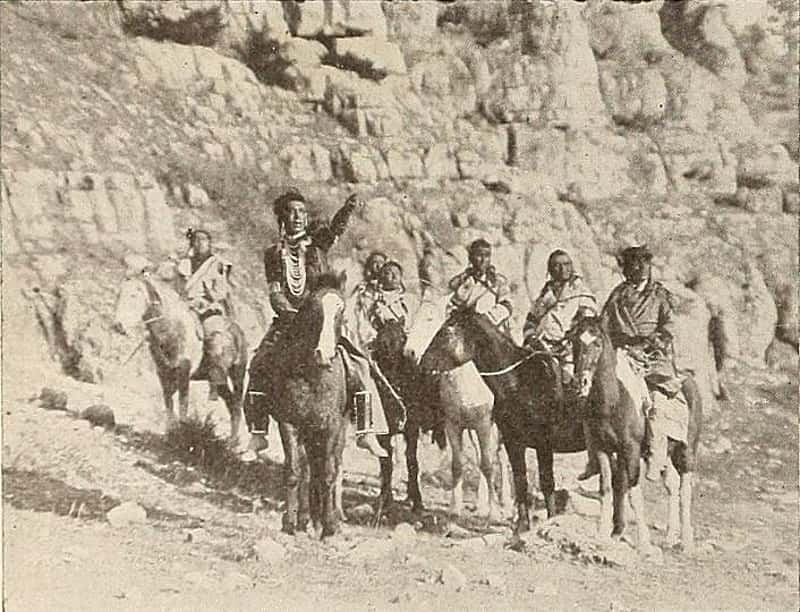
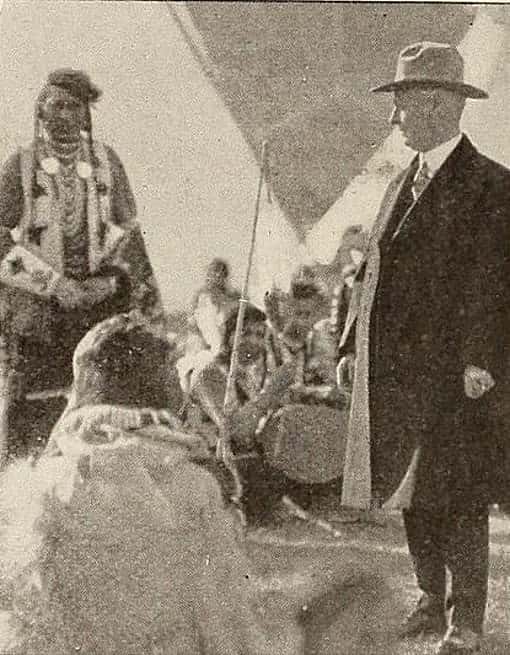
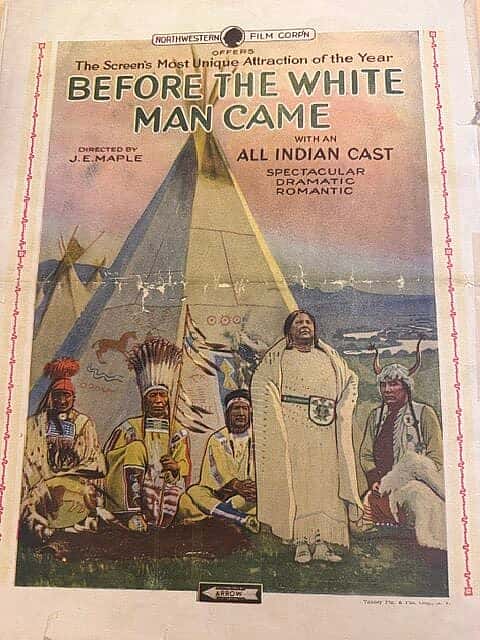
I was able to examine the film’s press book, which suggests that the Northwest Film Company, which produced the film, and Arrow Films, which distributed it, worked together to promote the picture. The press book described the film as “something out of the ordinary” that would interest audiences “both from the novel viewpoint and the educational aspect as well.” Marketing suggestions ranged from organizing morning showings for school groups to having people “dress up as Indian” or bringing tribal members to town wearing war paint and performing a war dance to generate excitement around the film.
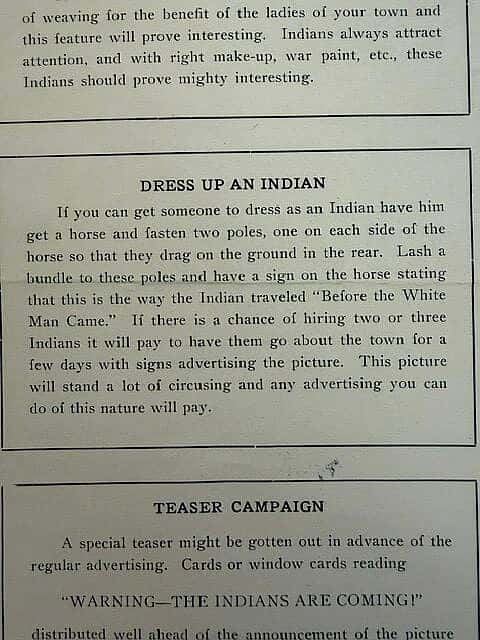
These suggestions are quite ironic. How could the film be promoted as both an educational experience and a dramatic romance and novelty? While these suggestions were not necessarily promoted by Maple or Wing themselves, they do complicate the idea that the film was meant to preserve Tribal history. The idea of performing a war dance in a theater or encouraging people to casually wear war paint around town completely contradicts the sense of authenticity that the film’s marketing promoted. Instead, these suggestions turned Native culture into part of the entertainment surrounding the film.
While it is important to analyze these promotional strategies within the context of the time rather than judging them solely by modern standards, I do think it is appropriate to critique the fact that they contributed to the larger pattern of presenting Native people and cultures as something exotic for audiences to experience. Again, ironically, a film that claimed, at least in part, to preserve Tribal history and portray historical authenticity also participated in a form of entertainment that could contribute to inaccurate and stereotypical ideas about Native culture.
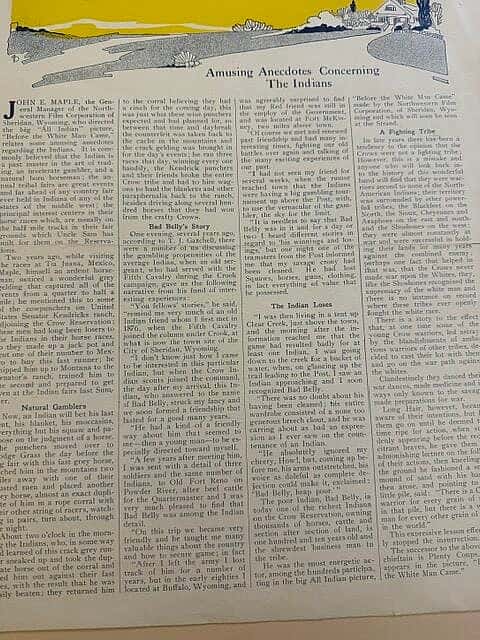
Additionally, while examining the press book, I came across a section titled “Amusing Anecdotes Concerning the Indians.” These stories were documented as being “offered up” by John Maple himself, and many of them mocked reservation culture and the behavior of the Native actors. Stories about gambling and tricking Native American horsemen were included in the press book specifically to amuse audiences. The section also claimed that the Crow were more “sophisticated” than other tribes because they “recognized the supremacy of the white man” and that there was “no instance on record where these tribes ever openly fought the white race.” It went on to describe resistance against white Americans as “savage.” The praise of the Crow for cooperating with the U.S. government is particularly significant when considered alongside the film’s portrayal of the Crow as the protagonists and the Sioux, who in the minds of Euro-Americans were associated with resistance to white expansion and government orders, as antagonists. This framing and film portrayal once again shaped the way audiences were encouraged to understand Native peoples and their relationships with the U.S. government. These stories demonstrate that while John Maple may have had genuine respect for the Apsáalooke people and may have sincerely believed that his film could help preserve and represent their history, his own ideas were still shaped by the racism of his time. His relationship with the Apsáalooke and his efforts to include Native people in his film should therefore not be viewed as purely remarkable or progressive without also acknowledging the paternalistic and racist attitudes that appear in his own film’s promotional material.
One final detail further complicates Maple’s role in the production. Contemporary accounts state that he was adopted into the Apsáalooke Tribe after living among community members and studying their culture while making the film. Unfortunately, there is little surviving information that explains what this adoption meant or how the Apsáalooke themselves understood the relationship. Rather than resolving the contradictions surrounding the film, this fact raises even more questions about Maple’s intentions and his relationship with the communities he worked alongside.
I do want to point out that the biggest challenge in evaluating the film is that most surviving sources were produced by non-Native writers, journalists, and filmmakers. As a result, the perspectives of the Apsáalooke and Tsitsistas participants are difficult to recover directly. While I was not able to locate these perspectives in the surviving sources, further research, including interviews with descendants of the film’s participants, could potentially provide additional insight into their experiences and perspectives and contribute to a fuller analysis of the film.
After researching the film, I don’t think Before the White Man Came fits neatly into either a positive or negative interpretation of Native representation. It gave Apsáalooke and Tsitsistas people the opportunity to appear on screen wearing their own clothing, regalia, and practicing their own traditions, something that was uncommon for the time. At the same time, it was created within a colonial system and marketed to a largely white audience through a fictional story that romanticized Native life. To me, both of those realities can exist at the same time.
As someone approaching this film as a historian rather than as a member of the Apsáalooke or Tsitsistas communities, I came away with more questions than definitive answers. Rather than weakening the film’s significance, I think those questions are exactly what make it worth studying. Before the White Man Came reminds us that the history of Native representation has never been simple. Looking at films like this encourages us to think critically about authenticity, collaboration, and representation, while also reinforcing why Indigenous voices remain essential in telling Indigenous histories and cultures.
Bibliography
Before the White Man Came Press Book. 1920. MS 424.1.01, Box SCOSS BOX1, Folder
MS424.1.01. MS 424, Before the White Man Came (Northwestern Film Company) Collection. McCracken Research Library, Cody, WY.
Bristol Daily Courier. “Theatres.” March 16, 1921. https://www.newspapers.com/image/81535725/?match=8&terms=John%20E%20Maple&search-id=bfe37507-76cb-4187-ae03-7ec17733a82f&search-rank=20.
Deloria, Philip J. 2004. Indians in Unexpected Places. Lawrence, Kan. Univ. Press of Kansas.
Dunning, Shane. 2026. “When the Crow and the Cheyenne Made Peace.” Powder River Examiner. https://www.powderriverexaminer.com/story/2025/03/20/news/when-the-crow-and-the-cheyenne-made-peace/5884.html.
Pitts, Michael R. Astor Pictures: A Filmography and History of the Reissue King. McFarland, 2019.
Sullivan, Will. 2023. New Research Rewrites the History of American Horses. April 3. https://www.smithsonianmag.com/smart-news/native-americans-spread-horses-through-the-west-earlier-than-thought-180981912/.
The Edmonton Bulletin. “Before the White Man Came; Rialto.” December 24, 1921. https://www.newspapers.com/image/738566248/?match=17&terms=before%20the%20white%20man%20came&search-id=aa481360-b8dd-48d6-a170-e3ac39bdf173&search-rank=1.
What Is Old Is New Again. “Before the White Man Came 1920 Milestone Films American Silent Film Drama.” YouTube, March 12, 2022. https://www.youtube.com/watch?v=JgUyEy1D5Eo.
Written By
Caleigh Noonan
Caleigh Noonan is a recent graduate of the College of the Holy Cross in Worcester, Massachusetts. She is serving as the Indian Education for All Intern at the Buffalo Bill Center of the West for the summer. Her interests include Indigenous history, nineteenth- and twentieth-century American history, and the history of dance.
You May Also Like
Rare Book Highlights: The Original Journals of the Lewis and Clark Expedition
Oct 01, 2026

"If not for the … epic the captains scratched out...
Buffalo Bill Center of the West Authenticates Trove of Historic Early 1800s Medals
Sep 08, 2026

Buffalo Bill Center of the West authenticates rare early 1800s...
The Life Style of Yellow-bellied Sapsuckers
Sep 16, 2026

Tree girdled with Yellow-bellied Sapsucker Holes © Dennis Donohue /...
The Winchester Records Synopsis, or How I Learned to Stop Worrying and Love Cursive
Aug 18, 2026

The Cody Firearms Records office produces letters from the corporate...
The Ultimate Wyoming Wildlife Guide: Expert Viewing Tips
Sep 28, 2026
Grizzly Flowers. Photo by Julia Cook @julia.littlelightningnature Draper Elk Wyoming...
From the Badlands to the Tetons: A 1930s Family Road Trip West
Sep 14, 2026

Long before smartphones and GPS guided travelers across the country,...
Everything I Need to Know About Life I Learned From Birds
Aug 26, 2026

by Sophie Peterson, 2026 Raptor Intern As I near the...
From Buffalo Bill to Balanchine: The Rise of Ballet Americana
Jul 02, 2026

After thirty years of sensationalized touring performances, Buffalo Bill's Wild...
Rare Book Highlights: The Indians’ Book
Sep 02, 2026
"Wellnigh impossible is it for civilized man to conceive of...
Ultimate Trip Guide Through Yellowstone’s East Entrance
Aug 19, 2026
Yellowstone’s East Entrance offers one of America’s most spectacular drives....
Don’t Let History Live in a Shoebox: How to Archive Your Family Treasures
Sep 18, 2026
Are you the designated "historian" in your family? Do you...
From the Cancan to the Wild West: The Remarkable Life of Giuseppina Morlacchi
Jul 14, 2026
The French didn't bring the Cancan to America; an Italian...